Rad Mohammad Goudarzi, Ghanbari-Afra Leila, Hoseini Mahsa Haji Mohammad, Afra Monireh Ghanbari, Asayesh Hamid
Master of Critical Care Nursing, Faculty of Nursing and Midwifery, Tehran University of Medical Sciences, Tehran, Iran.
Trauma Nursing Research Center, Faculty of Nursing and Midwifery, Kashan University of Medical Sciences, Kashan, Iran.
J Educ Health Promot. 2021 Oct 29;10:375. doi: 10.4103/jehp.jehp_70_21. eCollection 2021.
Coronary artery disease (CAD) is a life-threatening condition that causes physical and psychological disorders and decreases patients' quality of life (QoL). Performing proper educational self-care program may lead to higher QoL in these patients. This study was performed to investigate the effectiveness of a self-care educational program on QoL in patients with CAD.
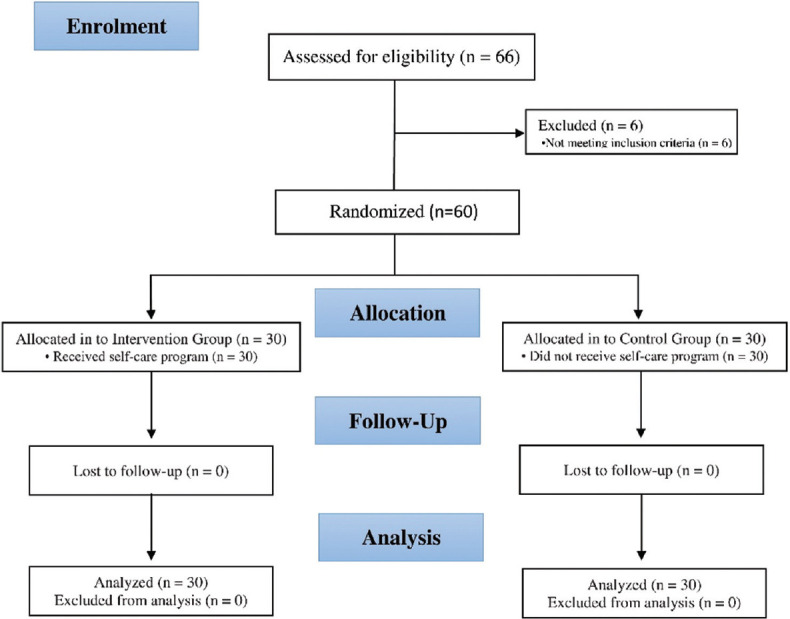
This semi-experimental study was performed on 60 patients with CAD referred to the cardiac rehabilitation (CR) center of Vali Asr hospital in Qom, Iran, in 2018-2019. Patients were divided into control and intervention groups by randomized sampling. The self-care educational program was provided through lectures and booklet. Data collection was done using the "demographic and clinical data questionnaire," and "Seattle Angina questionnaire." Questionnaires were completed in both groups, before and at least 1 month after education. Analysis of the obtained data was performed using SPSS software (version 25), central indexes, Mann-Whitney test, and Wilcoxon test.
No significant differences were observed between the two groups for demographics characteristics and quality of life before the intervention. Before the self-care program, the mean score of the QoL in the intervention and control group were 56.14 ± 9.75 and 58.46 ± 11.71, respectively. After that, the mean score of the QoL in the intervention and control group were 59.25 ± 10.56 and 59.7 ± 13.33, respectively. The statistical analysis showed significant differences in the mean scores of QoL in the intervention group before and after the intervention ( < 0.05). However, no statistically significant differences were seen in the control group before and after the study ( > 0.05).
The self-care educational program improved the QoL in patients with CAD. Therefore, lectures and educational booklets should be considered by CR nurses.
冠状动脉疾病(CAD)是一种危及生命的疾病,会导致身体和心理障碍,并降低患者的生活质量(QoL)。实施适当的自我护理教育计划可能会提高这些患者的生活质量。本研究旨在调查自我护理教育计划对CAD患者生活质量的有效性。
本半实验性研究于2018 - 2019年对转诊至伊朗库姆瓦利阿斯尔医院心脏康复(CR)中心的60例CAD患者进行。通过随机抽样将患者分为对照组和干预组。自我护理教育计划通过讲座和手册提供。使用“人口统计学和临床数据问卷”以及“西雅图心绞痛问卷”进行数据收集。两组在教育前和教育后至少1个月均完成问卷。使用SPSS软件(版本25)、中心指标、曼 - 惠特尼检验和威尔科克森检验对获得的数据进行分析。
干预前两组在人口统计学特征和生活质量方面未观察到显著差异。在自我护理计划之前,干预组和对照组的生活质量平均得分分别为56.14±9.75和58.46±11.71。之后,干预组和对照组的生活质量平均得分分别为59.25±10.56和59.7±13.33。统计分析显示干预组干预前后生活质量平均得分存在显著差异(<0.05)。然而,研究前后对照组未观察到统计学上的显著差异(>0.05)。
自我护理教育计划改善了CAD患者的生活质量。因此,CR护士应考虑采用讲座和教育手册。