Charokar Kailash, Modi Jyoti Nath
Department of General Surgery, People's College of Medical Sciences and Research Centre, Bhopal, Madhya Pradesh, India.
Department of Obstetrics and Gynaecology, AIIMS, Bhopal, Madhya Pradesh, India.
J Educ Health Promot. 2021 Oct 29;10:387. doi: 10.4103/jehp.jehp_48_21. eCollection 2021.
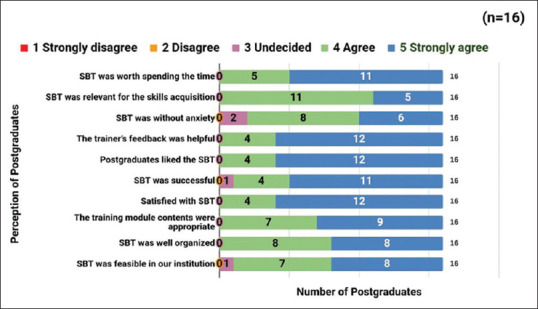
Simulation-based training is an important strategy for skill development in a competency-based curriculum, especially so for laparoscopic surgery given its unique learning curve, need for practice, and patient safety concerns. The study was conducted for postgraduates in two surgical disciplines in a medical college tertiary care center. The study evaluates the acceptability and utility of structured simulation-based training for laparoscopic skills. Simulations provide deliberate practice in the leaner supportive environment.
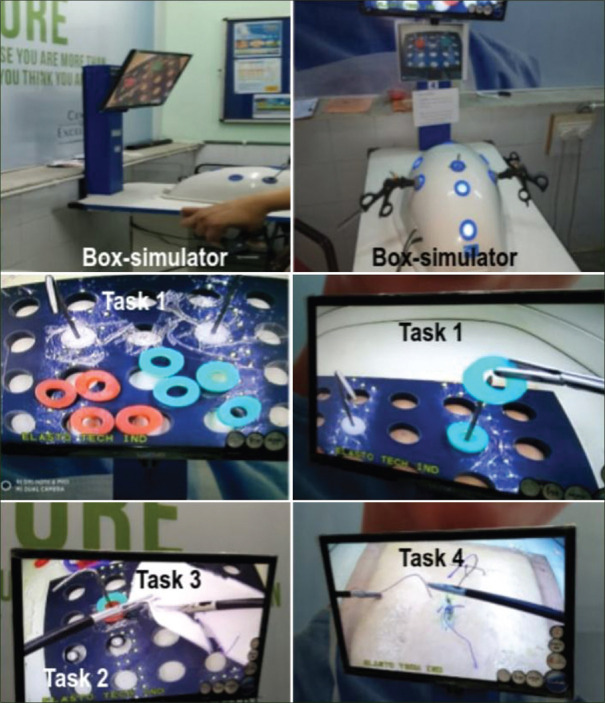
The educational intervention was carried out among the 16 postgraduates from year 2 and year 3 of general surgery and obstetrics and gynecology. A structured training and assessment module was designed and validated, and a 12-week structured training on laparoscopic box trainers was given to postgraduates under faculty guidance. Feedback from postgraduates and faculty was obtained using separate validated questionnaires. The pre- and post-training assessment scores were compared applying the Wilcoxon matched-pairs signed-rank (2-tailed) test using the SPSS Windows Version 20.0 (IBM Corporation).
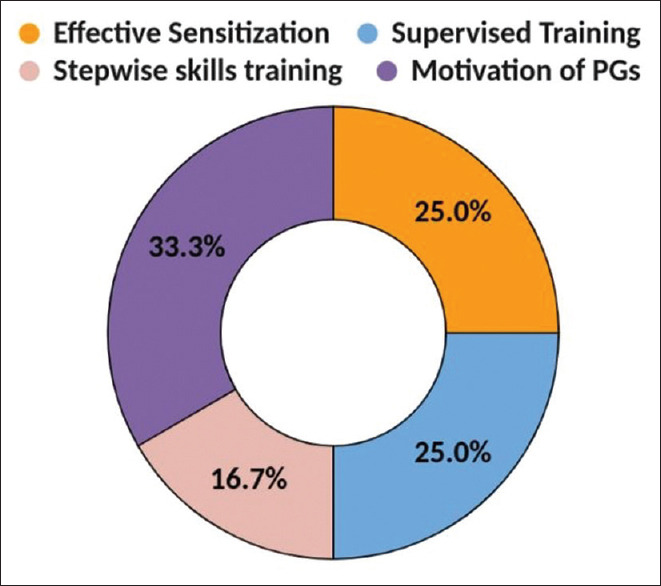
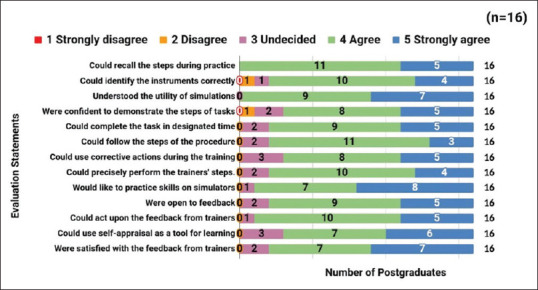
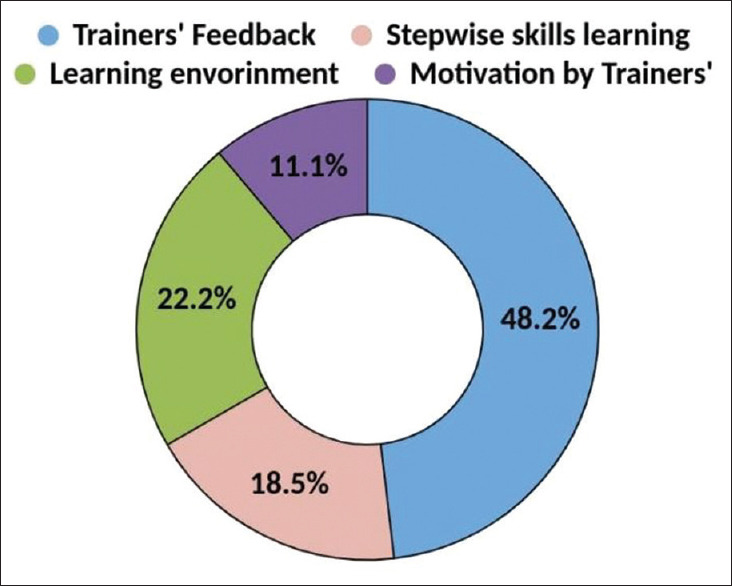
Sixteen postgraduates participated in the study. The median satisfaction score of the postgraduates was 4 (range 3-5), a scale of a maximum of 5. The group identified faculty feedback, stepwise skills learning, supportive learning environment, and trainers' motivation as enabling factors in the training. The faculty observed that the trainees were effectively engaged. The group mean improvement scores in percentage were 40.08 for task 1, 42.08 for task 2, 43.13 for task 3, and 45.63 for task 4.
It is feasible to incorporate faculty-guided sessions of simulation training in basic laparoscopy skills for postgraduates in our setup. It is well accepted by the key stakeholders, and we recommend it to be incorporated in the formal training program.
基于模拟的培训是基于能力的课程中技能发展的重要策略,对于腹腔镜手术而言尤其如此,因为其具有独特的学习曲线、对实践的需求以及患者安全问题。该研究在一所医学院三级护理中心的两个外科学科的研究生中进行。该研究评估了基于模拟的结构化培训对腹腔镜技能的可接受性和实用性。模拟在更有利于学习者的环境中提供刻意练习。
对来自普通外科和妇产科二年级和三年级的16名研究生进行了教育干预。设计并验证了一个结构化培训和评估模块,并在教师指导下为研究生提供了为期12周的腹腔镜箱式训练器结构化培训。使用单独的经过验证的问卷获取研究生和教师的反馈。使用SPSS Windows版本20.0(IBM公司)应用Wilcoxon配对符号秩(双侧)检验比较培训前后的评估分数。
16名研究生参与了该研究。研究生的中位满意度得分为4(范围3 - 5),满分5分。该组将教师反馈、逐步技能学习、支持性学习环境和培训师的积极性确定为培训中的促成因素。教师观察到学员有效地参与其中。任务1的小组平均提高分数百分比为40.08,任务2为42.08,任务3为43.13,任务4为45.63。
在我们的设置中,将教师指导的模拟培训课程纳入研究生基本腹腔镜技能培训是可行的。它得到了关键利益相关者的认可,我们建议将其纳入正式培训计划。