Department of Pediatrics, Chang Bing Show Chwan Memorial Hospital, Changhua, Taiwan.
Institute of Clinical Medicine, National Yang Ming Chiao Tung University, Taipei, Taiwan.
Influenza Other Respir Viruses. 2022 May;16(3):511-520. doi: 10.1111/irv.12951. Epub 2021 Dec 16.
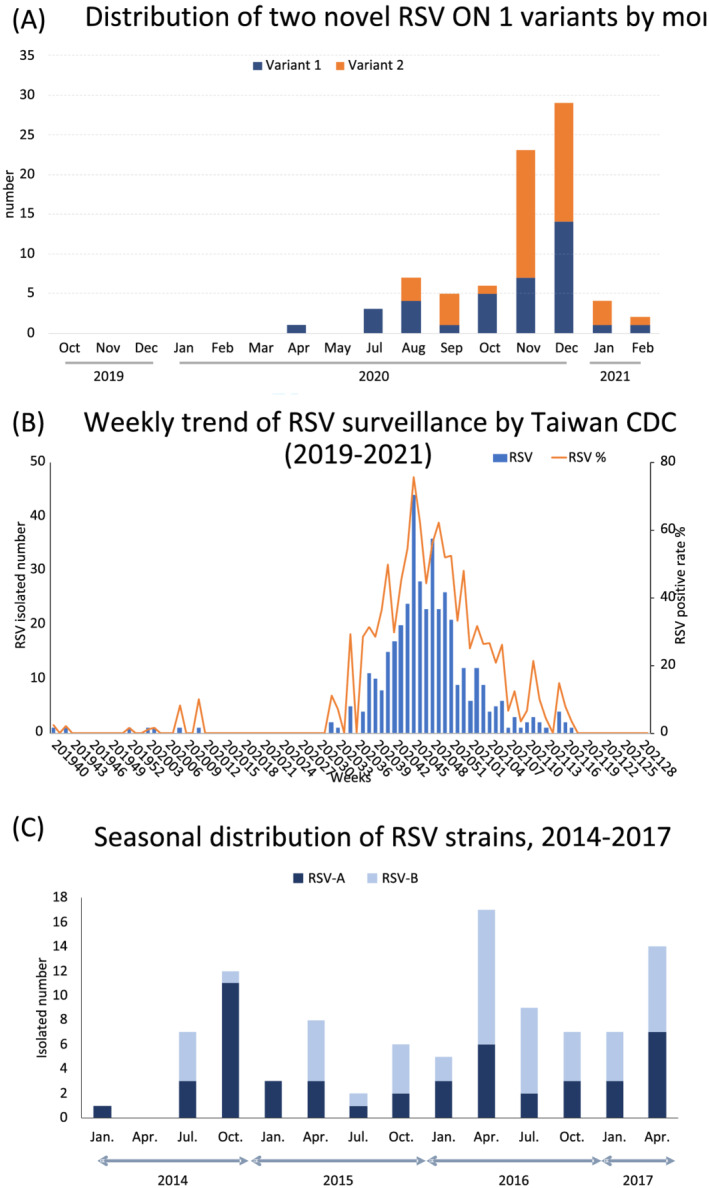
Human respiratory syncytial virus (RSV) is a leading pathogen of acute respiratory tract disease among infants and young children. Compared with previous seasons, RSV outbreaks in Taiwan during the 2020-2021 season were delayed because of COVID-19 mitigation measures. We conducted this study to determine the association of viral factors with clinical characteristics of preschool children with RSV infection.
We performed a molecular epidemiology analysis of RSV among inpatient preschool children in Taiwan. In 80 nasopharyngeal samples positive for RSV, we sequenced and analyzed viral genotypes according to patient data. Patients' clinical data were obtained from medical files, and their clinical profiles were compared with those of RSV cases recorded during the 2014-2017 seasons.
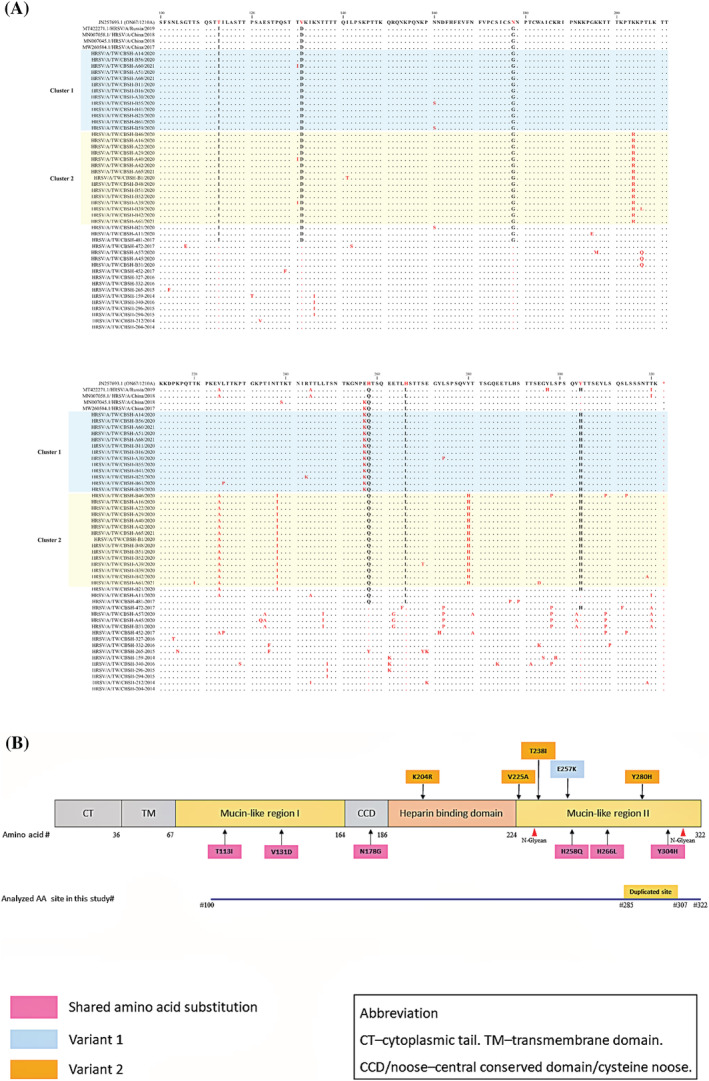
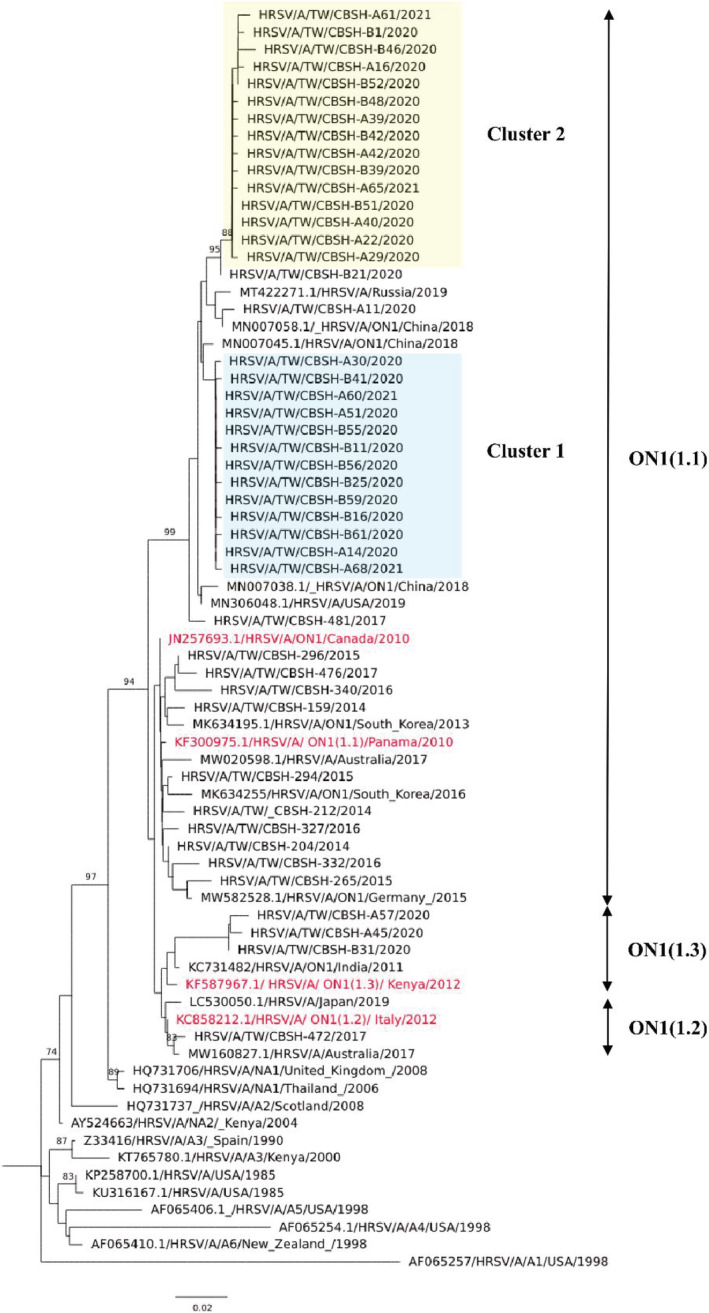
Phylogenetic analysis revealed that among the RSV-positive samples, all RSV strains identified during the 2020-2021 season belonged to the ON1 genotype. Most of the Taiwan ON1 strains were categorized into two well-supported clusters with distinct G protein amino acid substitution patterns that had never been demonstrated previously. Furthermore, the proportion of cases among children aged >24 months increased (P < 0.001). Compared with patients infected during the 2014-2017 seasons, patients infected during the 2020-2021 season were hospitalized for shorter days from hospital admission to dereference (P = 0.004) and had a greater need for oxygen supplements (P = 0.021) and systemic steroid therapy (P = 0.026).
The delayed 2020-2021 RSV outbreak in Taiwan was caused by two novel RSV ON1.1 variants. How the change in RSV epidemiology affects future RSV outbreaks warrants exploration.
人类呼吸道合胞病毒(RSV)是婴幼儿急性呼吸道疾病的主要病原体。由于 COVID-19 缓解措施,与以往季节相比,台湾在 2020-2021 季节的 RSV 爆发有所延迟。我们进行这项研究是为了确定病毒因素与学龄前儿童 RSV 感染的临床特征之间的关系。
我们对台湾住院学龄前儿童中的 RSV 进行了分子流行病学分析。在 80 例 RSV 阳性的鼻咽样本中,我们根据患者数据对病毒基因型进行了测序和分析。患者的临床数据从病历中获得,并将其临床特征与 2014-2017 季节记录的 RSV 病例进行了比较。
系统发育分析显示,在 RSV 阳性样本中,2020-2021 季节鉴定的所有 RSV 株均属于 ON1 基因型。台湾 ON1 株的大多数分为两个具有明显 G 蛋白氨基酸替代模式的支持度较高的簇,这些模式以前从未显示过。此外,年龄>24 个月的病例比例增加(P<0.001)。与 2014-2017 季节感染的患者相比,2020-2021 季节感染的患者从住院到出院的住院天数更短(P=0.004),需要氧气补充(P=0.021)和全身类固醇治疗(P=0.026)的可能性更大。
台湾延迟的 2020-2021 RSV 爆发是由两种新型 RSV ON1.1 变体引起的。RSV 流行病学的变化如何影响未来的 RSV 爆发值得探讨。