Department of Pathology, National Taiwan University Hospital, Taipei, Taiwan.
Department of Oncology, National Taiwan University Hospital, Taipei, Taiwan.
Cancer Med. 2022 Feb;11(3):555-570. doi: 10.1002/cam4.4466. Epub 2021 Dec 16.
Gastric diffuse large B-cell lymphoma (DLBCL) is often associated with Helicobacter pylori (H. pylori) infection. Those in the early stage could be treated with H. pylori eradication therapy, and are classified into a sensitive group and a resistant group.
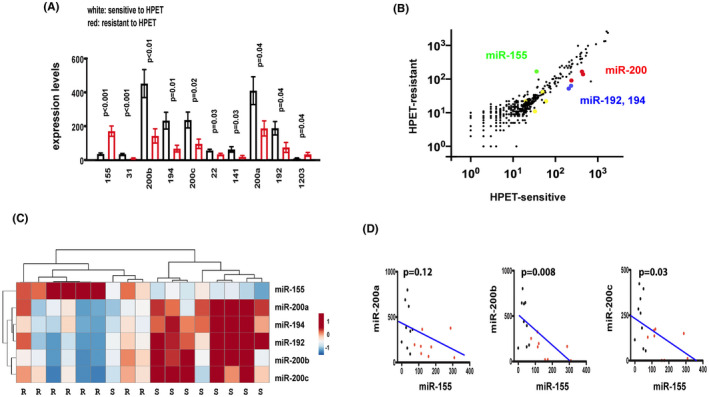
Genome-wide miRNA and miRNA expression profiles were obtained from biopsy specimens of gastric DLBCL. MiRNAs and their targets as predictors of responses to H. pylori eradication therapy were identified through differential expression and pathway enrichment analysis, and further confirmed with transfection experiments in lymphoma cell lines of B-cell origin.
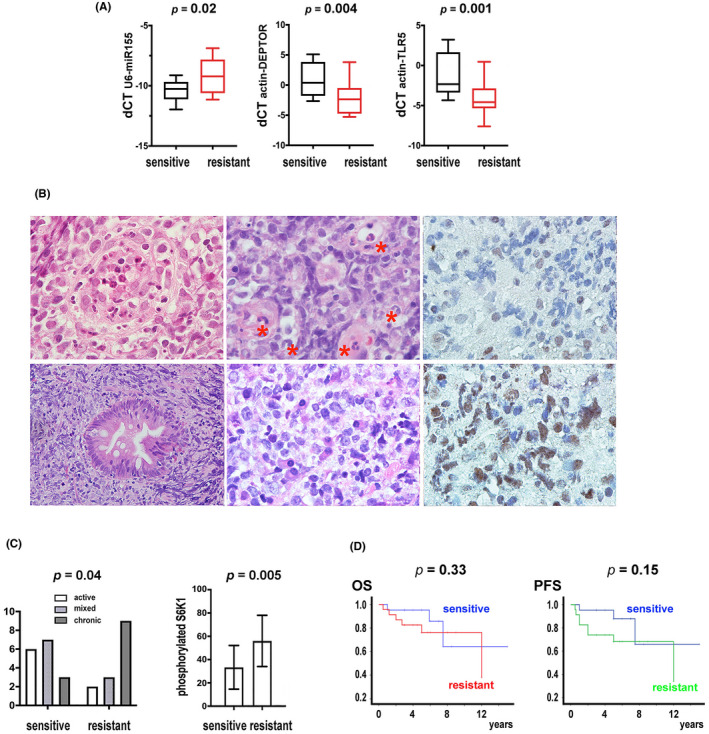
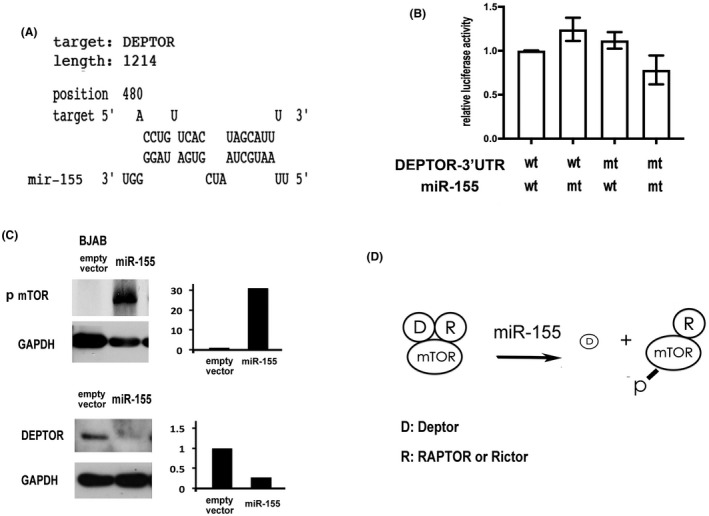
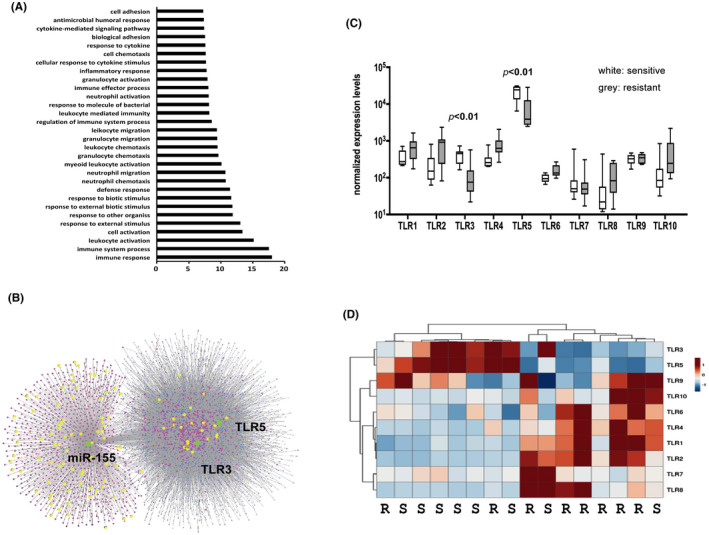
Genome-wide miRNA and mRNA profiles showed miR-200 was associated with the sensitive group, and that the resistant group had higher levels of miR-155 and lower levels of DEPTOR (an inhibitor of mTOR) than the sensitive group. BJAB cells transfected with miR-155 also had lower DEPTOR and higher mTOR levels. Therefore, miR-155-mediated inhibition of DEPTOR with secondary activation of mTOR was a potential marker for resistance to H. pylori eradication therapy. In contrast, pathway enrichment analysis showed that Toll-like receptor 5 (TLR5), the receptor for bacterial flagellin, was a potential marker for sensitivity to H. pylori eradication therapy. In an independent series, stronger expression of pS6K1 (a direct target of mTOR) was associated with the resistant group and morphologic evidence of active gastritis was associated with the sensitive group.
These findings showed that activation of the miR-155-DEPTOR pathway is a marker for resistance to H. pylori eradication therapy, and that histological evaluation of active gastritis might be used as a surrogate marker to predict responses to H. pylori eradication therapy in gastric DLBCL.
胃弥漫性大 B 细胞淋巴瘤(DLBCL)常与幽门螺杆菌(H. pylori)感染相关。早期患者可采用 H. pylori 根除疗法治疗,分为敏感组和耐药组。
从胃 DLBCL 活检标本中获得全基因组 miRNA 和 miRNA 表达谱。通过差异表达和通路富集分析,确定 miRNA 及其靶标作为对 H. pylori 根除治疗反应的预测因子,并通过源自 B 细胞的淋巴瘤细胞系的转染实验进一步验证。
全基因组 miRNA 和 mRNA 谱显示 miR-200 与敏感组相关,耐药组的 miR-155 水平高于敏感组,DEPTOR(mTOR 的抑制剂)水平低于敏感组。转染 miR-155 的 BJAB 细胞的 DEPTOR 和 mTOR 水平也较低。因此,miR-155 介导的 DEPTOR 抑制及 mTOR 的继发激活是对 H. pylori 根除治疗耐药的潜在标志物。相反,通路富集分析显示,细菌鞭毛蛋白的受体 Toll 样受体 5(TLR5)是对 H. pylori 根除治疗敏感的潜在标志物。在独立系列中,pS6K1(mTOR 的直接靶标)的表达较强与耐药组相关,而活跃性胃炎的形态学证据与敏感组相关。
这些发现表明,miR-155-DEPTOR 通路的激活是 H. pylori 根除治疗耐药的标志物,而活跃性胃炎的组织学评估可能作为预测胃 DLBCL 对 H. pylori 根除治疗反应的替代标志物。