Oana Săsăran Maria, Claudia Bănescu, Lelia Riza Anca, Simona Mocan, Claudia Cârstea, Daniela Dobru Ecaterina
Department of Pediatrics III, George Emil Palade University of Medicine, Pharmacy, Science and Technology of Targu Mures, Gheorghe Marinescu Street No 38, 540136 Targu Mures, Romania.
Genetics Department, Center for Advanced Medical and Pharmaceutical Research, George Emil Palade University of Medicine, Pharmacy, Science and Technology of Targu Mures, Romania, Gheorghe Marinescu Street No 38, 540136 Targu Mures, Romania.
J Clin Med. 2022 Jun 10;11(12):3351. doi: 10.3390/jcm11123351.
MicroRNA molecules, among them the intensely studied miRNA-155 (miR-155), are regarded as potential biomarkers of chronic gastric inflammation and premalignant lesion progression. However, literature data are scarce in terms of pediatric studies and in the evaluation of the predictive role of miRNA in early gastric inflammation. This study aims to assess the differential expression of miR-155 in relation to pediatric gastritis.
The present research was conducted on 192 patients with chronic dyspeptic symptoms who underwent upper digestive endoscopy. Bioptic samples were harvested for histopathological analysis and tissue miR-155 depiction. MiR-155 expression analysis was carried out through quantitative real-time polymerase chain reaction (qRT-PCR). The study population was divided into two groups: controls (93 patients) and study group (99 patients) with inflammatory modifications.
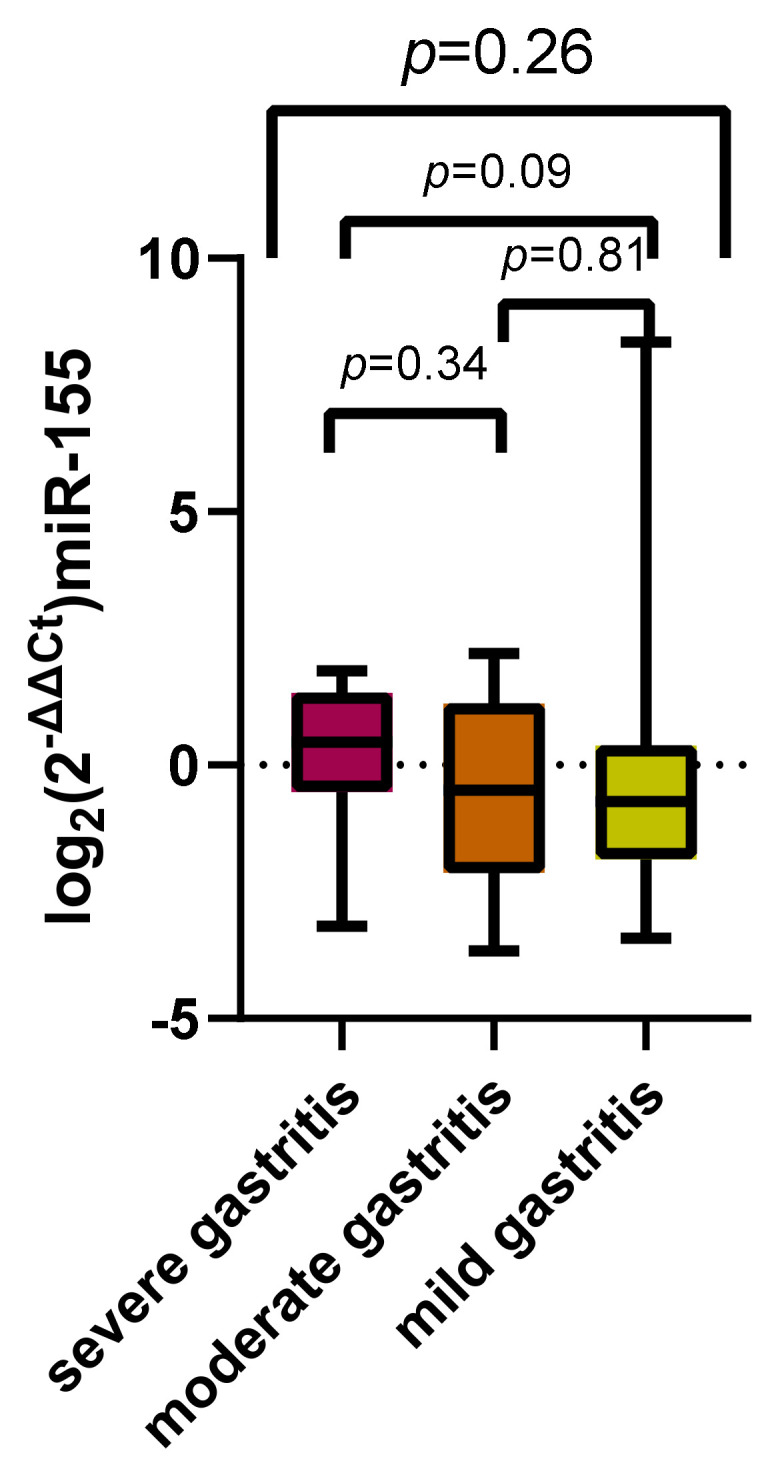
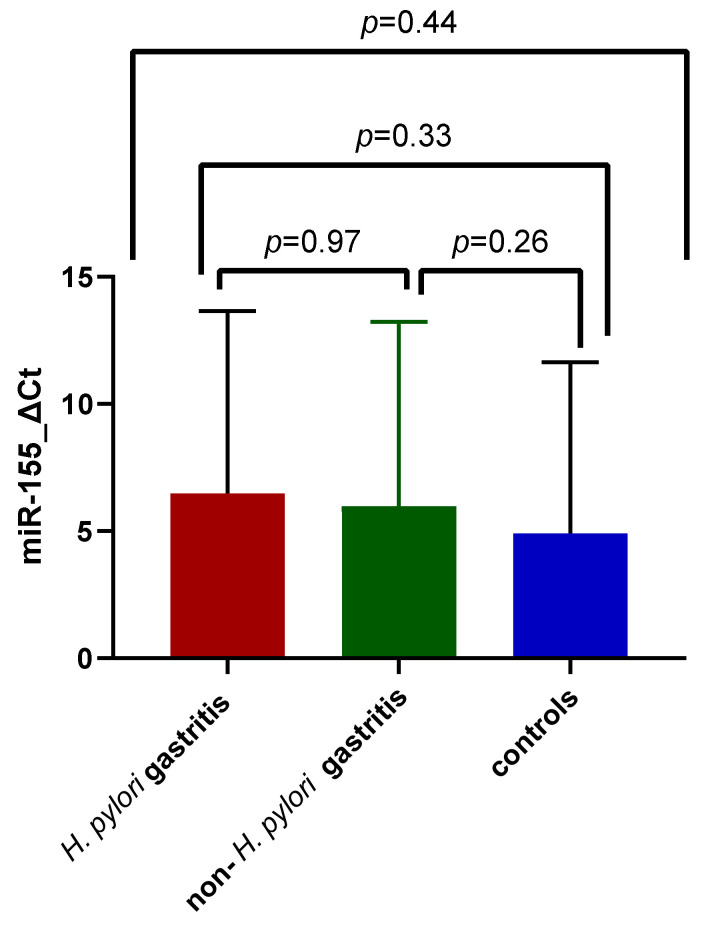
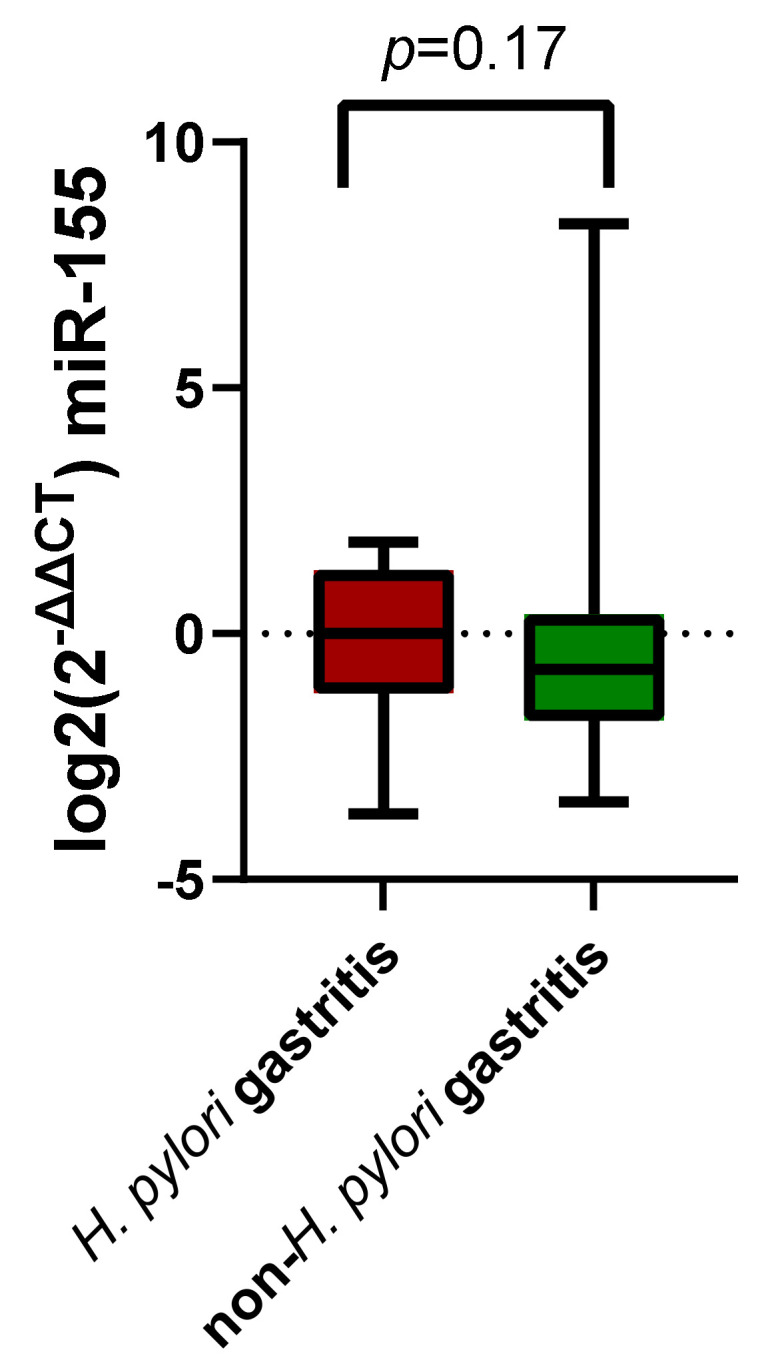
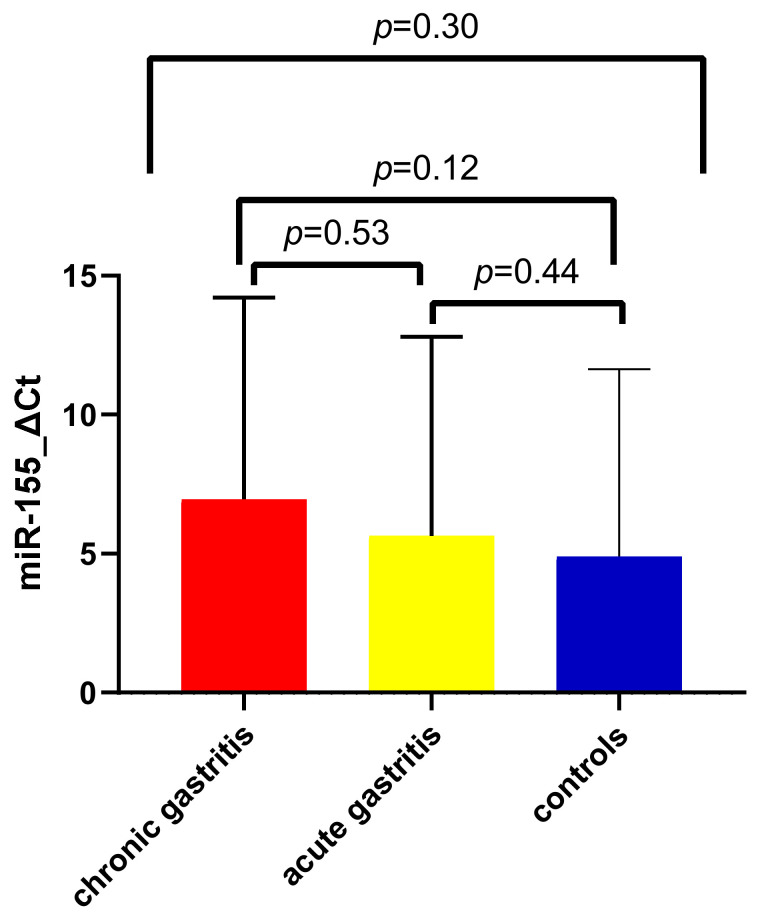
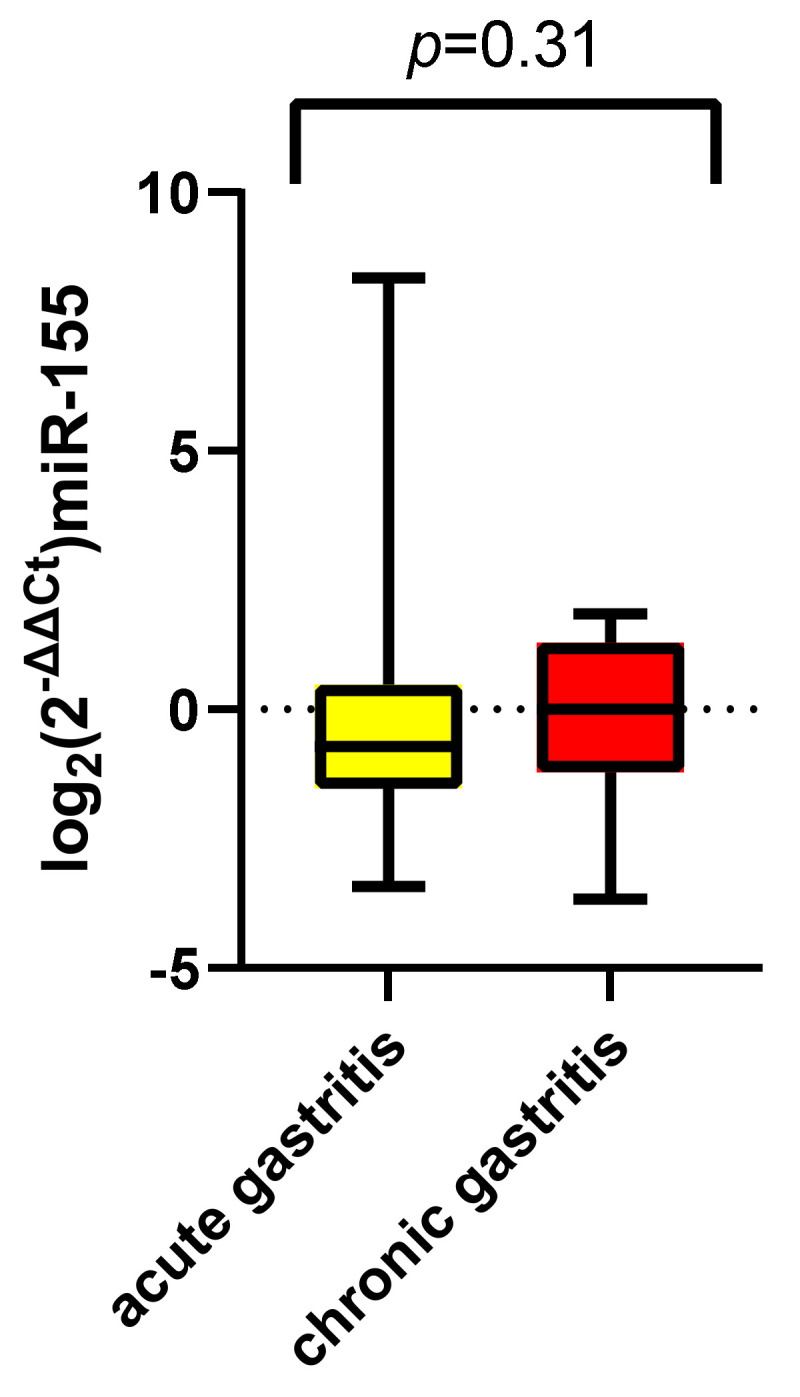
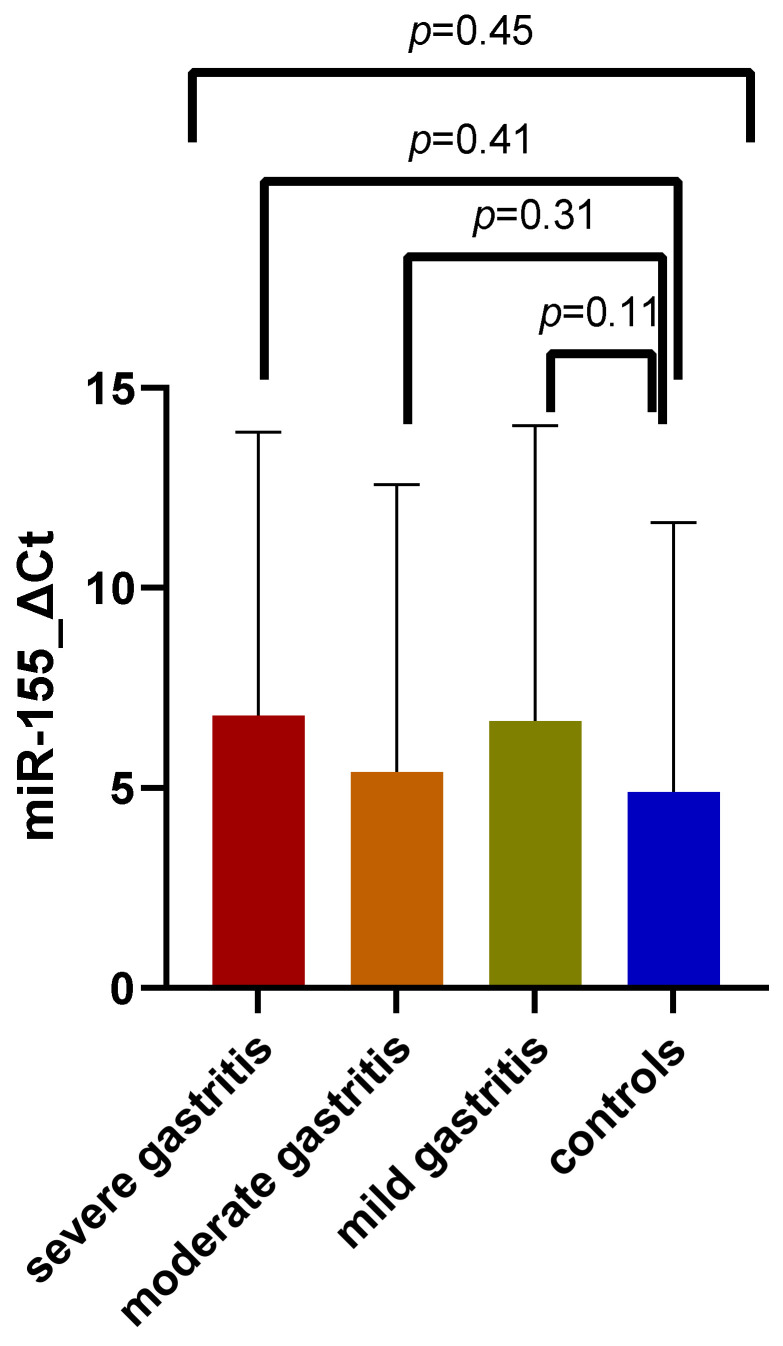
MiR-155 expression was augmented in patients with gastritis but did not differ significantly from controls ( = 0.16). An increase in miR-155 expression was noted in relation to chronic gastritis, infection, or increase in gastritis severity, but these variations were not important ( = 0.30, = 0.44, and = 0.45, respectively).
According to our study, pediatric gastritis increases, but does not greatly influence, miR-155 expression. Dynamic evaluation of miR-155 might enlighten its prognostic role in pediatric gastritis.
微小RNA分子,其中被深入研究的miRNA - 155(miR - 155),被视为慢性胃炎症和癌前病变进展的潜在生物标志物。然而,关于儿科研究以及miRNA在早期胃炎症中预测作用的评估,文献数据较少。本研究旨在评估miR - 155与小儿胃炎相关的差异表达。
本研究对192例有慢性消化不良症状并接受上消化道内镜检查的患者进行。采集活检样本用于组织病理学分析和组织miR - 155描述。通过定量实时聚合酶链反应(qRT - PCR)进行miR - 155表达分析。研究人群分为两组:对照组(93例患者)和有炎症改变的研究组(99例患者)。
胃炎患者中miR - 155表达增加,但与对照组相比无显著差异( = 0.16)。观察到miR - 155表达在慢性胃炎、感染或胃炎严重程度增加方面有所增加,但这些变化并不显著(分别为 = 0.30、 = 0.44和 = 0.45)。
根据我们的研究,小儿胃炎会增加但不会极大地影响miR - 155表达。对miR - 155的动态评估可能会揭示其在小儿胃炎中的预后作用。