Institute for Carbon Cycles, Helmholtz-Zentrum Hereon, Geesthacht, Germany.
Institute of Soil Science, Universität Hamburg, Allende-Platz 2, 20146, Hamburg, Germany.
Ambio. 2022 Feb;51(2):423-438. doi: 10.1007/s13280-021-01665-0. Epub 2021 Dec 16.
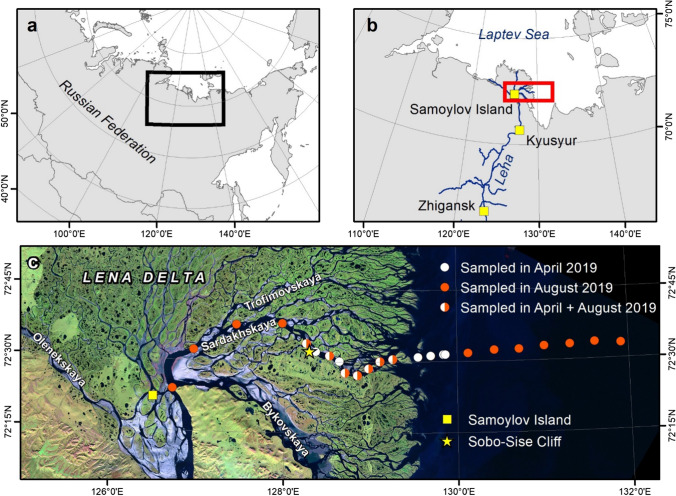
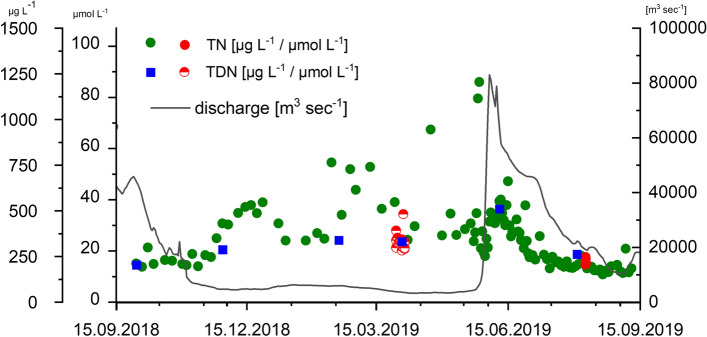
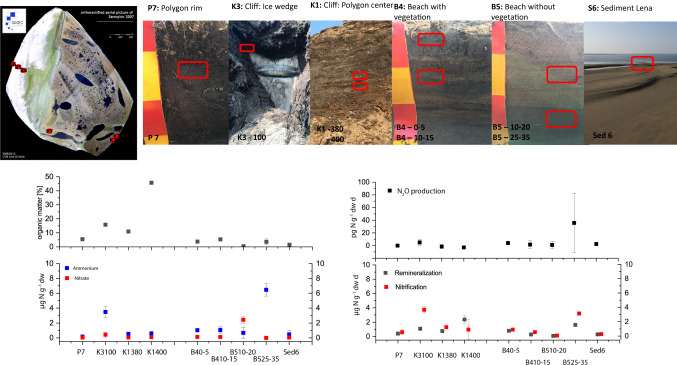
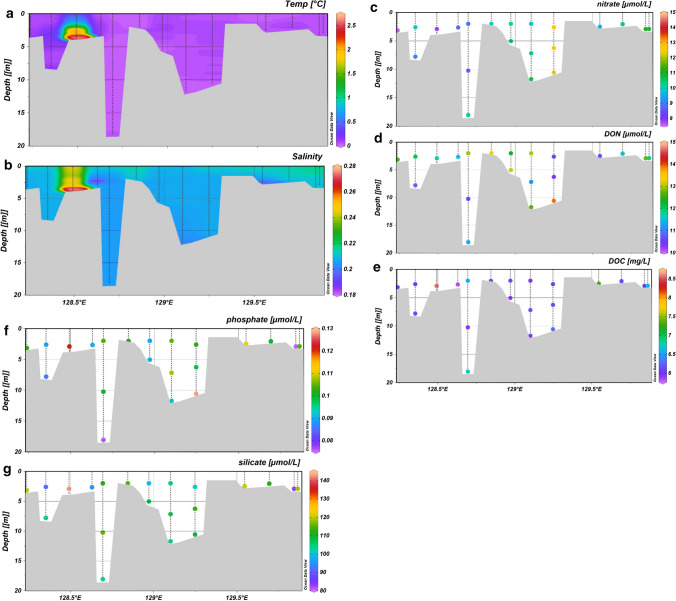
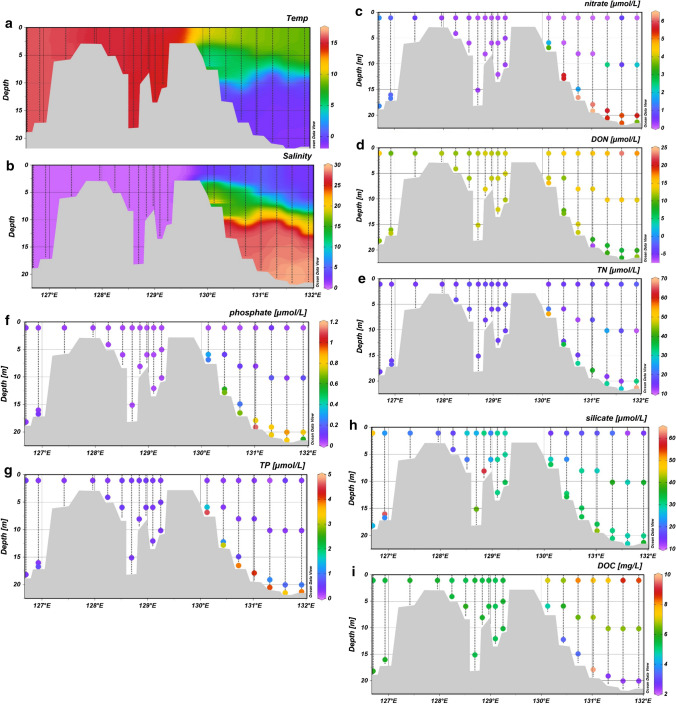
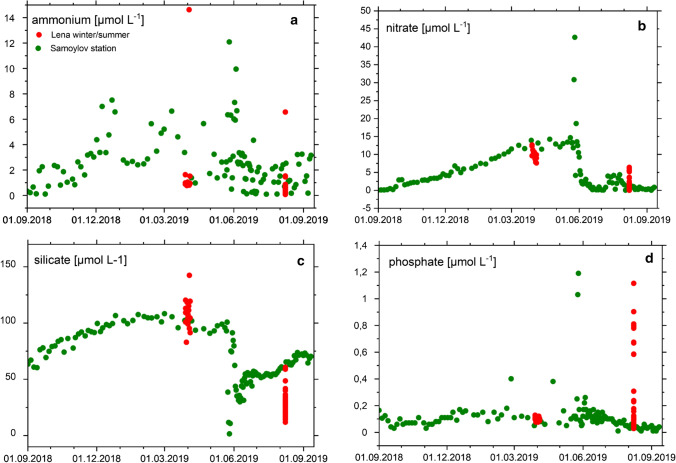
The Arctic is nutrient limited, particularly by nitrogen, and is impacted by anthropogenic global warming which occurs approximately twice as fast compared to the global average. Arctic warming intensifies thawing of permafrost-affected soils releasing their large organic nitrogen reservoir. This organic nitrogen reaches hydrological systems, is remineralized to reactive inorganic nitrogen, and is transported to the Arctic Ocean via large rivers. We estimate the load of nitrogen supplied from terrestrial sources into the Arctic Ocean by sampling in the Lena River and its Delta. We took water samples along one of the major deltaic channels in winter and summer in 2019 and sampling station in the central delta over a one-year cycle. Additionally, we investigate the potential release of reactive nitrogen, including nitrous oxide from soils in the Delta. We found that the Lena transported nitrogen as dissolved organic nitrogen to the coastal Arctic Ocean and that eroded soils are sources of reactive inorganic nitrogen such as ammonium and nitrate. The Lena and the Deltaic region apparently are considerable sources of nitrogen to nearshore coastal zone. The potential higher availability of inorganic nitrogen might be a source to enhance nitrous oxide emissions from terrestrial and aquatic sources to the atmosphere.
北极地区的营养物质(尤其是氮)有限,并且受到人为全球变暖的影响,其变暖速度比全球平均水平快约两倍。北极变暖加剧了受永久冻土影响的土壤的融化,释放出大量有机氮库。这些有机氮进入水文系统,被矿化为活性无机氮,并通过大河输送到北极海洋。我们通过在勒拿河及其三角洲进行采样来估算从陆地进入北极海洋的氮负荷。我们在 2019 年冬季和夏季沿着主要三角洲河道之一以及三角洲中心的一个采样站进行了为期一年的采样。此外,我们还研究了三角洲土壤中活性氮(包括一氧化二氮)的潜在释放。我们发现,勒拿河将氮作为溶解有机氮输送到沿海北极海洋,而侵蚀的土壤是铵和硝酸盐等活性无机氮的来源。勒拿河和三角洲地区显然是近岸沿海地区氮的重要来源。无机氮的更高可用性可能是增强陆地和水生来源向大气排放一氧化二氮的一个因素。