Board of Governors Regenerative Medicine Institute, Cedars-Sinai Medical Center, Los Angeles, CA, USA.
Division of Pediatric Gastroenterology, Cedars-Sinai Medical Center, Los Angeles, CA, USAand.
Inflamm Bowel Dis. 2022 May 4;28(5):667-679. doi: 10.1093/ibd/izab292.
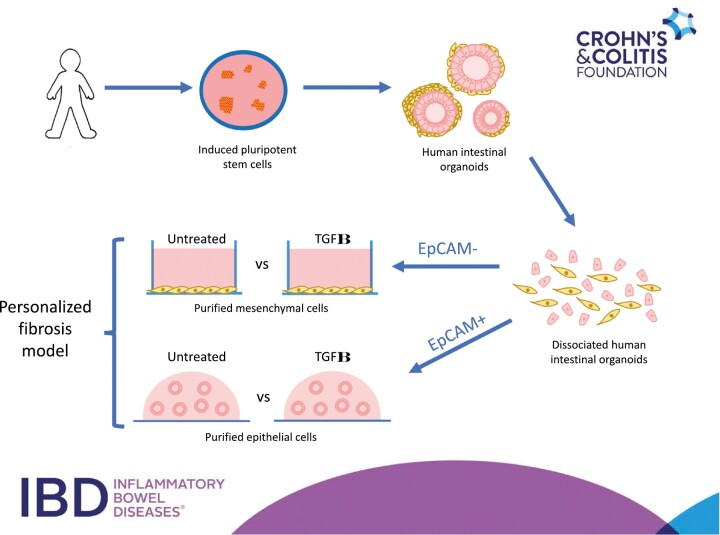
Intestinal fibrosis is a serious complication of Crohn's disease. Numerous cell types including intestinal epithelial and mesenchymal cells are implicated in this process, yet studies are hampered by the lack of personalized in vitro models. Human intestinal organoids (HIOs) derived from induced pluripotent stem cells (iPSCs) contain these cell types, and our goal was to determine the feasibility of utilizing these to develop a personalized intestinal fibrosis model.
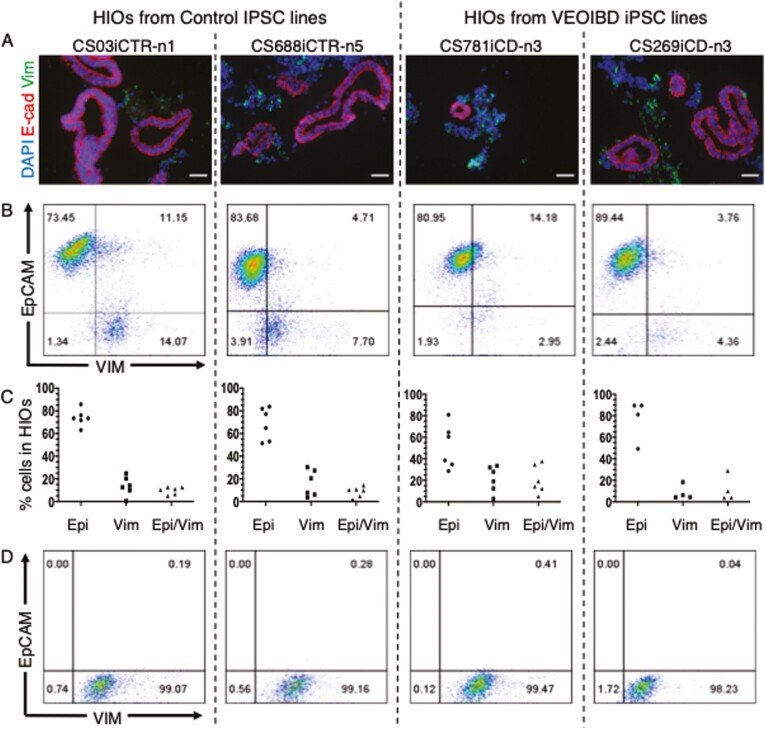
iPSCs from 2 control individuals and 2 very early onset inflammatory bowel disease patients with stricturing complications were obtained and directed to form HIOs. Purified populations of epithelial and mesenchymal cells were derived from HIOs, and both types were treated with the profibrogenic cytokine transforming growth factor β (TGFβ). Quantitative polymerase chain reaction and RNA sequencing analysis were used to assay their responses.
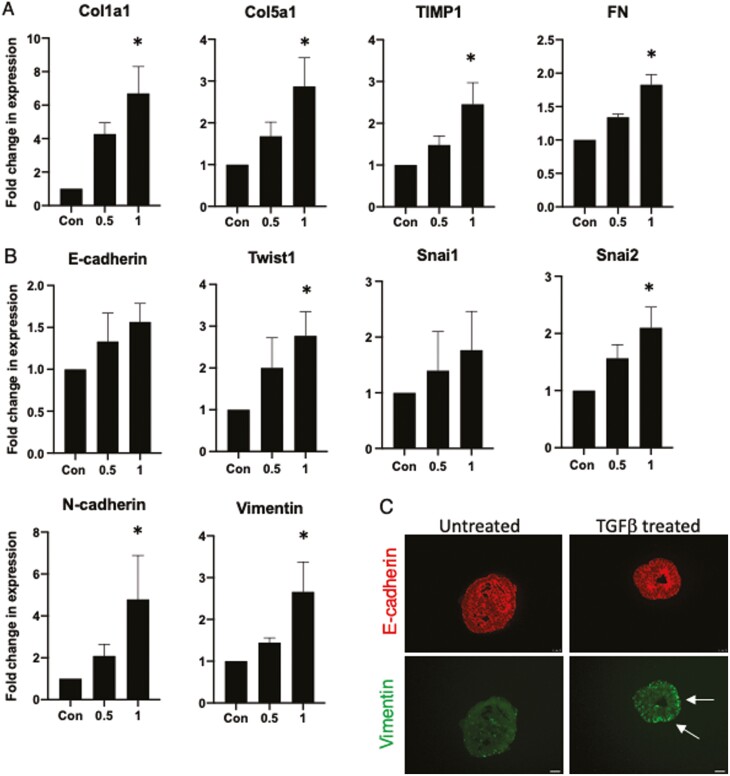
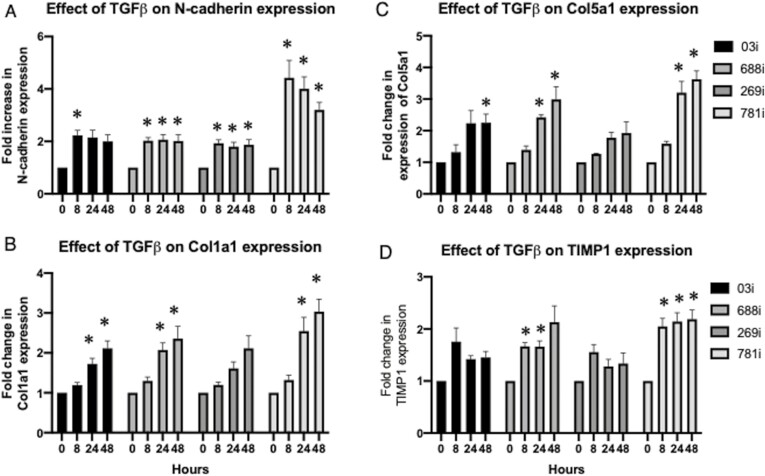
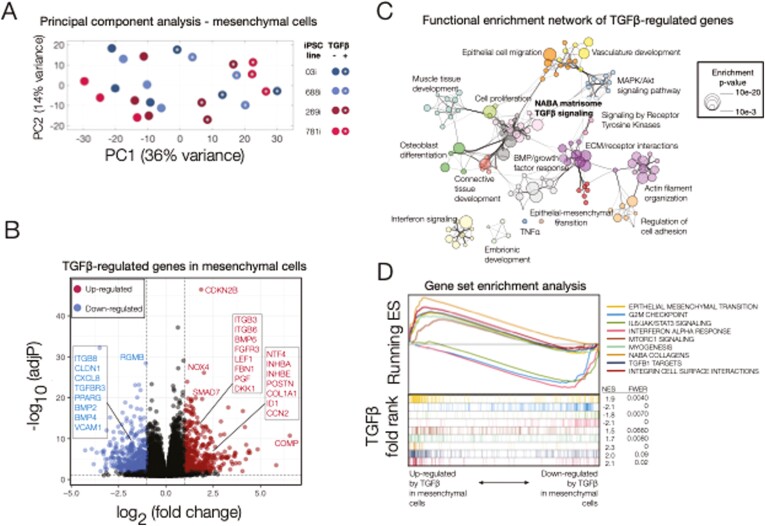
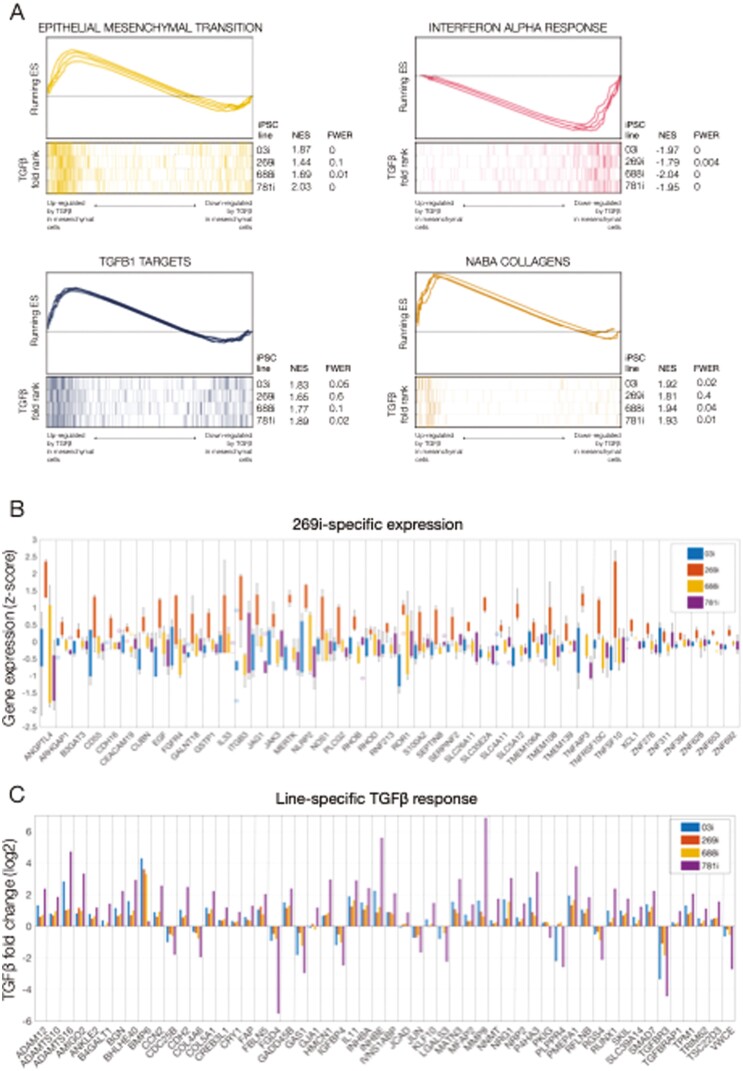
In iPSC-derived mesenchymal cells, there was a significant increase in the expression of profibrotic genes (Col1a1, Col5a1, and TIMP1) in response to TGFβ. RNA sequencing analysis identified further profibrotic genes and demonstrated differential responses to this cytokine in each of the 4 lines. Increases in profibrotic gene expression (Col1a1, FN, TIMP1) along with genes associated with epithelial-mesenchymal transition (vimentin and N-cadherin) were observed in TGFβ -treated epithelial cells.
We demonstrate the feasibility of utilizing iPSC-HIO technology to model intestinal fibrotic responses in vitro. This now permits the generation of near unlimited quantities of patient-specific cells that could be used to reveal cell- and environmental-specific mechanisms underpinning intestinal fibrosis.
肠纤维化是克罗恩病的严重并发症。包括肠上皮细胞和间充质细胞在内的众多细胞类型都参与了这一过程,但由于缺乏个性化的体外模型,研究受到了阻碍。源自诱导多能干细胞(iPSC)的人肠类器官(HIO)包含这些细胞类型,我们的目标是确定利用这些细胞来开发个性化肠纤维化模型的可行性。
从 2 名对照个体和 2 名患有狭窄并发症的早期炎症性肠病患者中获得 iPSC,并指导其形成 HIO。从 HIO 中分离出纯化的上皮和间充质细胞群体,并用致纤维化细胞因子转化生长因子β(TGFβ)处理这两种细胞类型。采用定量聚合酶链反应和 RNA 测序分析来检测它们的反应。
在 iPSC 衍生的间充质细胞中,TGFβ 刺激后,致纤维化基因(Col1a1、Col5a1 和 TIMP1)的表达显著增加。RNA 测序分析进一步鉴定了致纤维化基因,并表明在这 4 条线中的每一条中对这种细胞因子都有不同的反应。在 TGFβ 处理的上皮细胞中,观察到致纤维化基因表达(Col1a1、FN、TIMP1)的增加以及与上皮-间充质转化相关的基因(波形蛋白和 N-钙粘蛋白)的增加。
我们证明了利用 iPSC-HIO 技术在体外模拟肠纤维化反应的可行性。这使得生成近乎无限数量的患者特异性细胞成为可能,这些细胞可用于揭示肠道纤维化的细胞和环境特异性机制。