Department of Inflammation and Immunity, Lerner Research Institute, Cleveland Clinic Foundation, Cleveland, OH, United States.
Department of Gastroenterology, Hepatology and Nutrition, Digestive Diseases and Surgery Institute, Cleveland Clinic Foundation, Cleveland, OH, United States.
Front Immunol. 2023 Feb 16;14:1108289. doi: 10.3389/fimmu.2023.1108289. eCollection 2023.
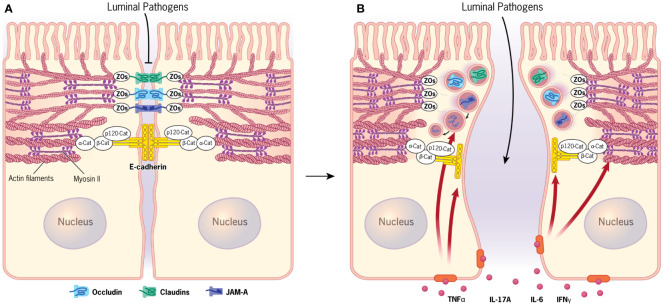
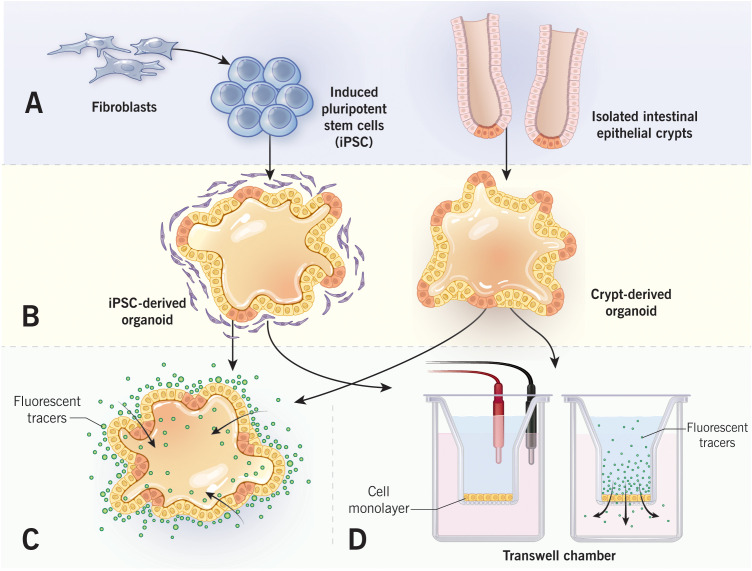
Disruption of the intestinal epithelial barrier is a hallmark of mucosal inflammation. It increases exposure of the immune system to luminal microbes, triggering a perpetuating inflammatory response. For several decades, the inflammatory stimuli-induced breakdown of the human gut barrier was studied by using colon cancer derived epithelial cell lines. While providing a wealth of important data, these cell lines do not completely mimic the morphology and function of normal human intestinal epithelial cells (IEC) due to cancer-related chromosomal abnormalities and oncogenic mutations. The development of human intestinal organoids provided a physiologically-relevant experimental platform to study homeostatic regulation and disease-dependent dysfunctions of the intestinal epithelial barrier. There is need to align and integrate the emerging data obtained with intestinal organoids and classical studies that utilized colon cancer cell lines. This review discusses the utilization of human intestinal organoids to dissect the roles and mechanisms of gut barrier disruption during mucosal inflammation. We summarize available data generated with two major types of organoids derived from either intestinal crypts or induced pluripotent stem cells and compare them to the results of earlier studies with conventional cell lines. We identify research areas where the complementary use of colon cancer-derived cell lines and organoids advance our understanding of epithelial barrier dysfunctions in the inflamed gut and identify unique questions that could be addressed only by using the intestinal organoid platforms.
肠道上皮屏障的破坏是黏膜炎症的一个标志。它增加了免疫系统对腔微生物的暴露,引发持续的炎症反应。几十年来,人们一直使用结肠癌衍生的上皮细胞系来研究炎症刺激引起的人类肠道屏障的破坏。虽然这些细胞系提供了大量重要的数据,但由于与癌症相关的染色体异常和致癌突变,它们并不能完全模拟正常的人类肠道上皮细胞(IEC)的形态和功能。人类肠道类器官的发展提供了一个与生理相关的实验平台,用于研究肠道上皮屏障的稳态调节和疾病相关的功能障碍。需要将使用肠道类器官获得的新兴数据与利用结肠癌细胞系进行的经典研究进行整合和整合。这篇综述讨论了利用人类肠道类器官来剖析黏膜炎症期间肠道屏障破坏的作用和机制。我们总结了两种主要类型的类器官(来源于肠隐窝或诱导多能干细胞)所产生的可用数据,并将其与早期使用传统细胞系的研究结果进行了比较。我们确定了研究领域,其中结肠癌细胞系和类器官的互补使用可以促进我们对炎症肠道中上皮屏障功能障碍的理解,并确定了只有使用肠道类器官平台才能解决的独特问题。