WSU School of Molecular Biosciences, Washington State University, Pullman, Washington, USA.
WSU School of Molecular Biosciences, Washington State University, Pullman, Washington, USA; Center for Reproductive Biology, Washington State University, Pullman, Washington, USA.
J Invest Dermatol. 2022 Jul;142(7):1812-1823.e3. doi: 10.1016/j.jid.2021.11.032. Epub 2021 Dec 17.
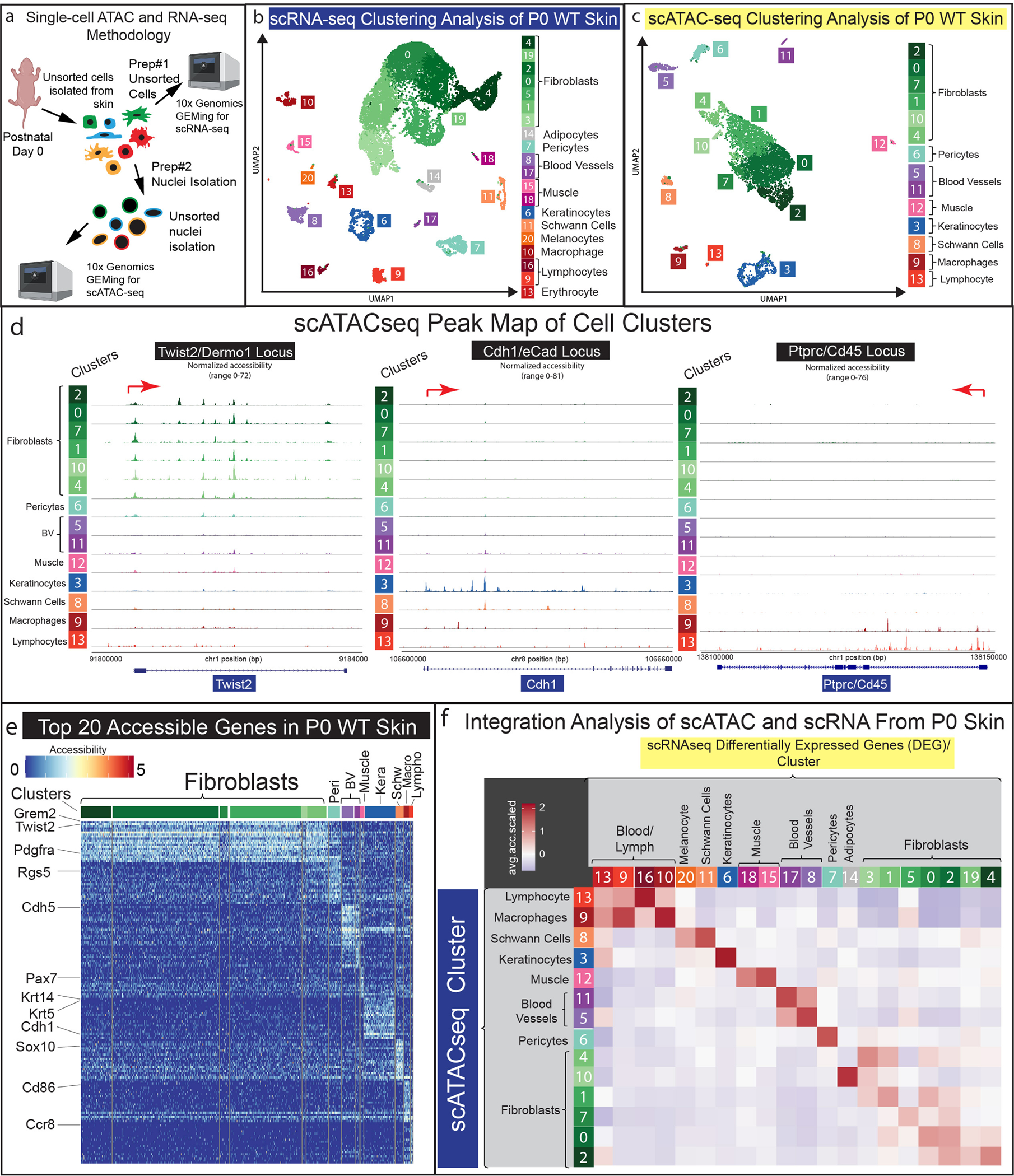
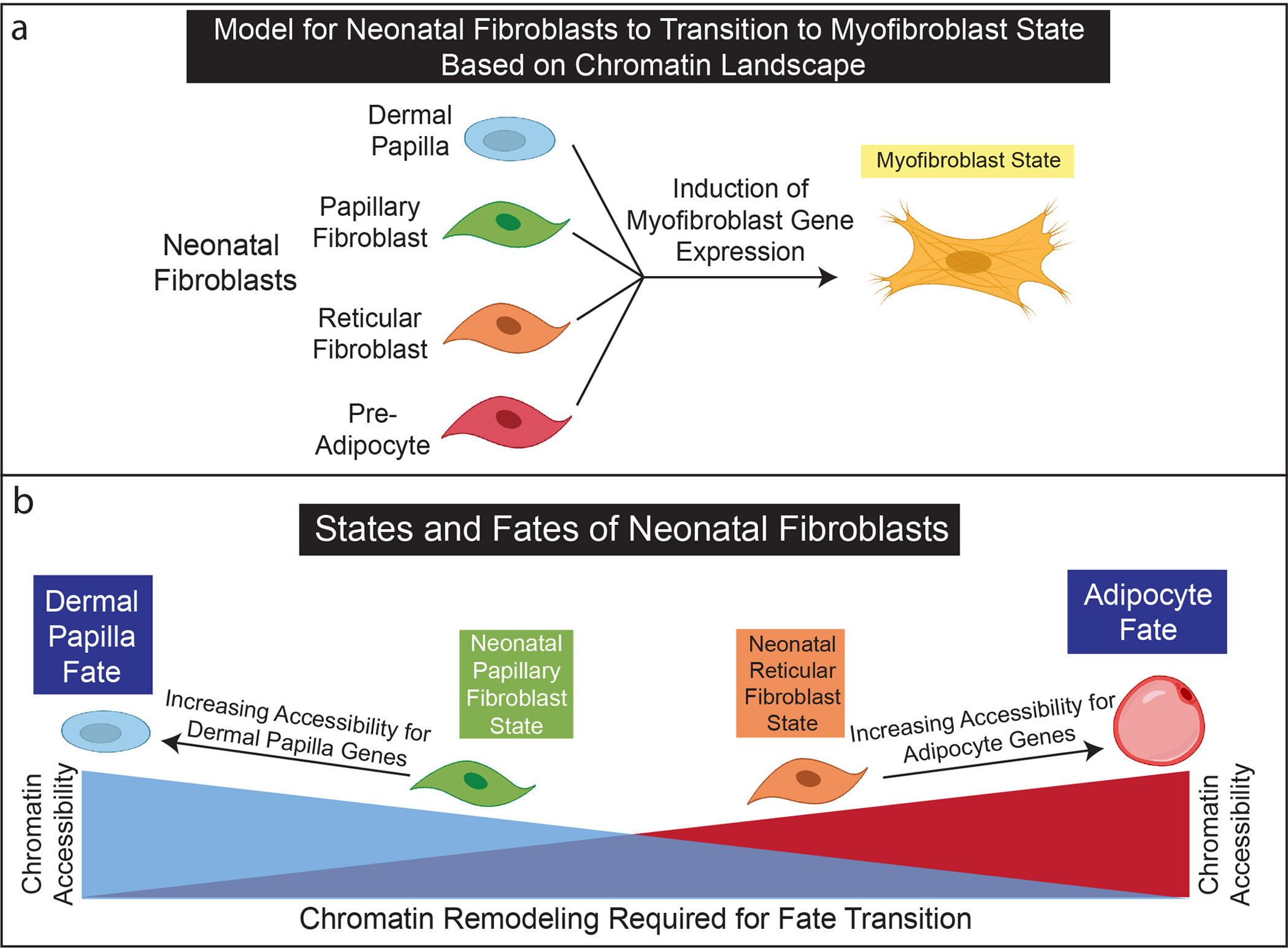
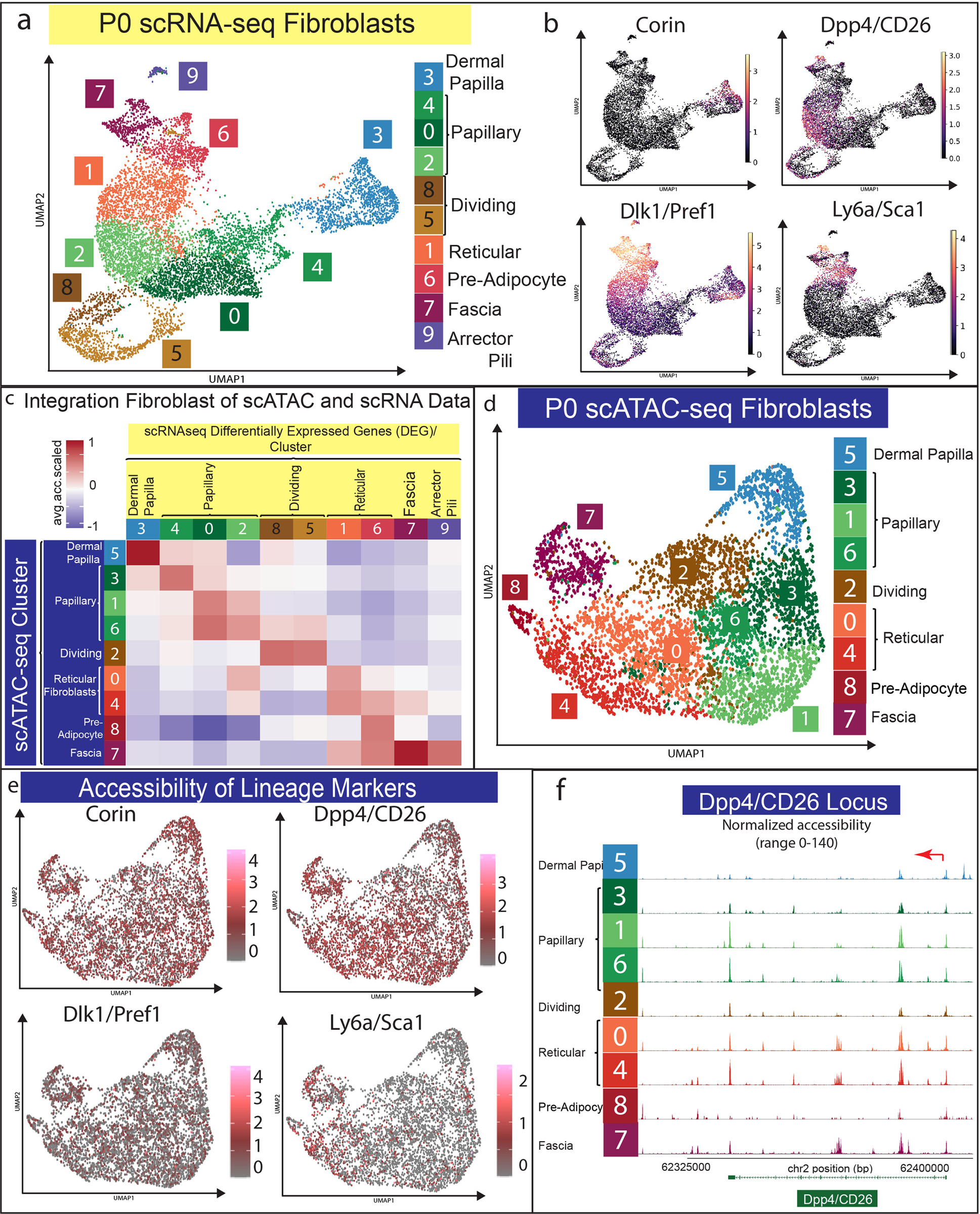
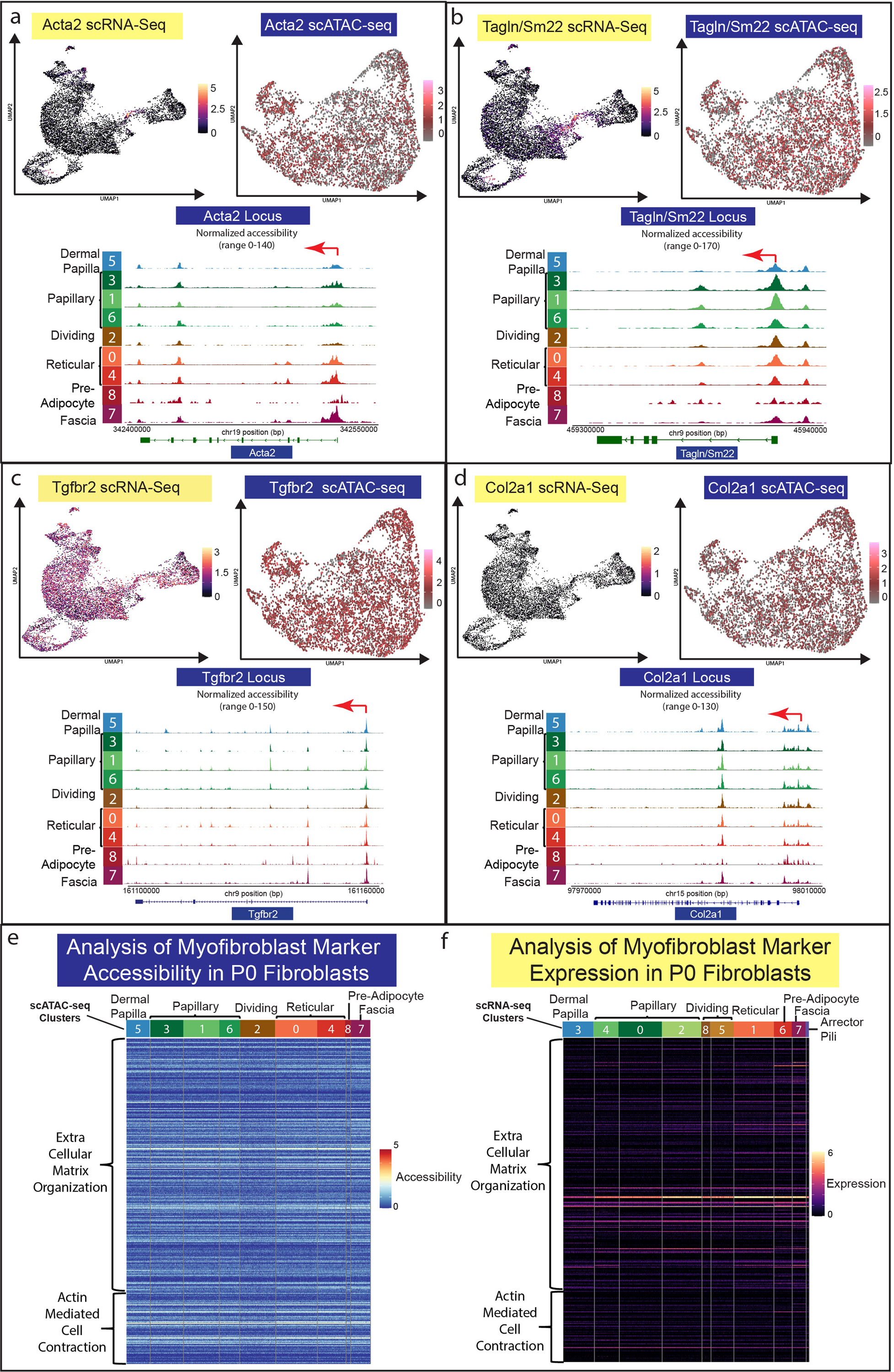
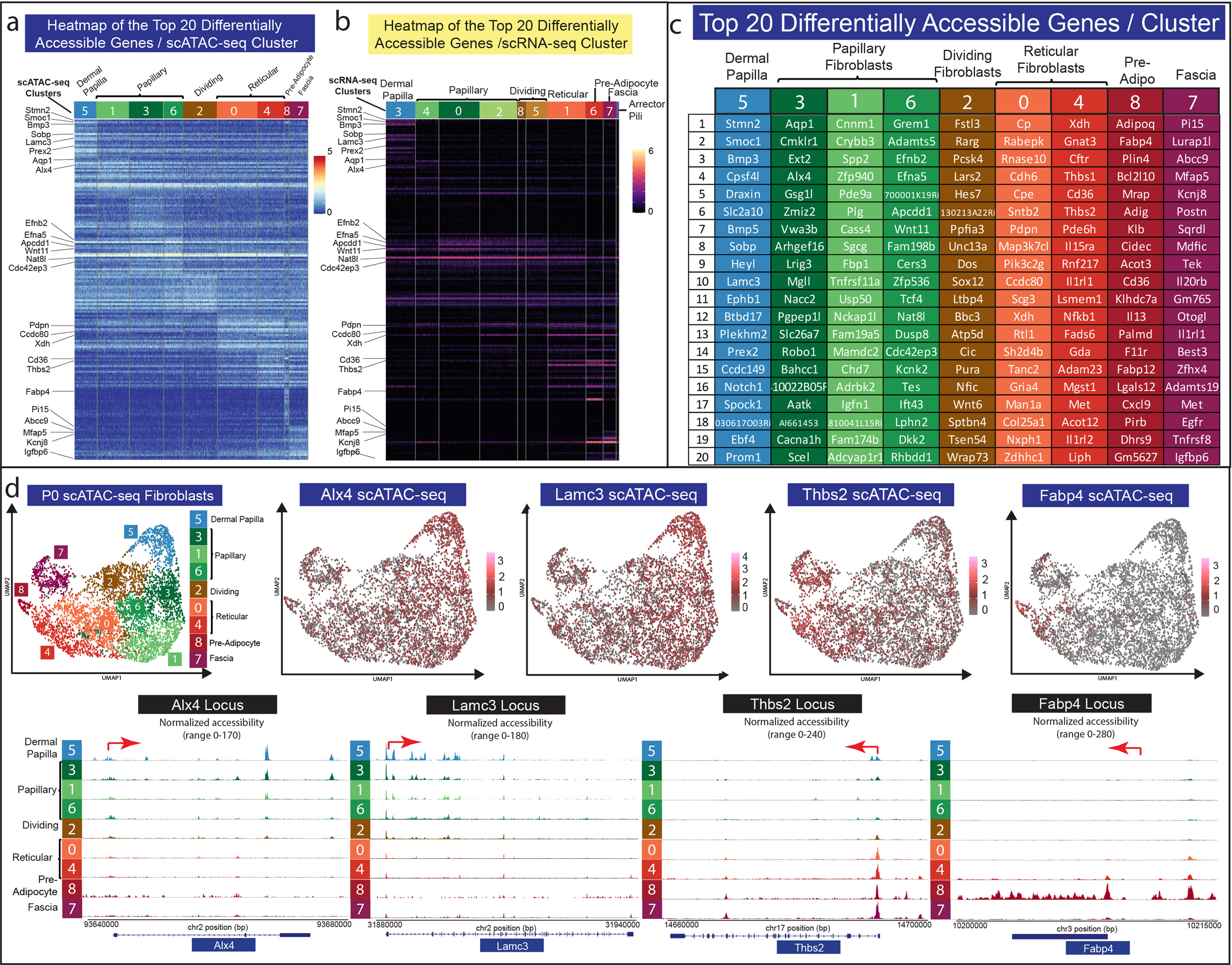
One of the keys to achieving skin regeneration lies within understanding the heterogeneity of neonatal fibroblasts, which support skin regeneration. However, the molecular underpinnings regulating the cellular states and fates of these cells are not fully understood. To investigate this, we performed a parallel multiomics analysis by processing neonatal murine skin for single-cell Assay for Transposase-Accessible Chromatin sequencing and single-cell RNA sequencing separately. Our approach revealed that fibroblast clusters could be sorted into papillary and reticular lineages on the basis of transcriptome profiling, as previously reported. However, single-cell Assay for Transposase-Accessible Chromatin sequencing analysis of neonatal fibroblast lineage markers, such as Dpp4/Cd26, Corin, and Dlk1 along with markers of myofibroblasts, revealed accessible chromatin in all fibroblast populations despite their lineage-specific transcriptome profiles. These results suggest that accessible chromatin does not always translate to gene expression and that many fibroblast lineage markers reflect a fibroblast state, which includes neonatal papillary fibroblasts, reticular fibroblasts, and myofibroblasts. This analysis also provides a possible explanation as to why these marker genes can be promiscuously expressed in different fibroblast populations under different conditions. Our single-cell Assay for Transposase-Accessible Chromatin sequencing analysis also revealed that the functional lineage restriction between dermal papilla and adipocyte fates is regulated by distinct chromatin landscapes. Finally, we have developed a webtool for our multiomics analysis: https://skinregeneration.org/scatacseq-and-scrnaseq-data-from-thompson-et-al-2021-2/.
实现皮肤再生的关键之一在于了解支持皮肤再生的新生儿成纤维细胞的异质性。然而,调节这些细胞的细胞状态和命运的分子基础尚未完全理解。为了研究这一点,我们分别对新生鼠皮肤进行单细胞转座酶可及染色质测序和单细胞 RNA 测序的平行多组学分析。我们的方法表明,基于转录组谱分析,成纤维细胞簇可以分为乳头和网状谱系,如前所述。然而,对新生儿成纤维细胞谱系标记物(如 Dpp4/Cd26、Corin 和 Dlk1)以及成肌纤维细胞标记物的单细胞转座酶可及染色质测序分析显示,尽管其谱系特异性转录组谱不同,但所有成纤维细胞群体中都存在可及染色质。这些结果表明,可及染色质并不总是转化为基因表达,许多成纤维细胞谱系标记物反映了成纤维细胞状态,包括新生儿乳头成纤维细胞、网状成纤维细胞和成肌纤维细胞。该分析还提供了一个可能的解释,即为什么这些标记基因在不同条件下不同的成纤维细胞群体中可以随意表达。我们的单细胞转座酶可及染色质测序分析还表明,真皮乳头和脂肪细胞命运之间的功能谱系限制受不同染色质景观的调节。最后,我们为我们的多组学分析开发了一个网络工具:https://skinregeneration.org/scatacseq-and-scrnaseq-data-from-thompson-et-al-2021-2/。