Institute of Anatomy, Faculty of Medicine, University of Leipzig, Germany.
Department of Diagnostics, Fraunhofer Institute of Cell Therapy and Immunology, Leipzig, Germany.
FEBS Open Bio. 2022 Feb;12(2):480-493. doi: 10.1002/2211-5463.13353. Epub 2021 Dec 29.
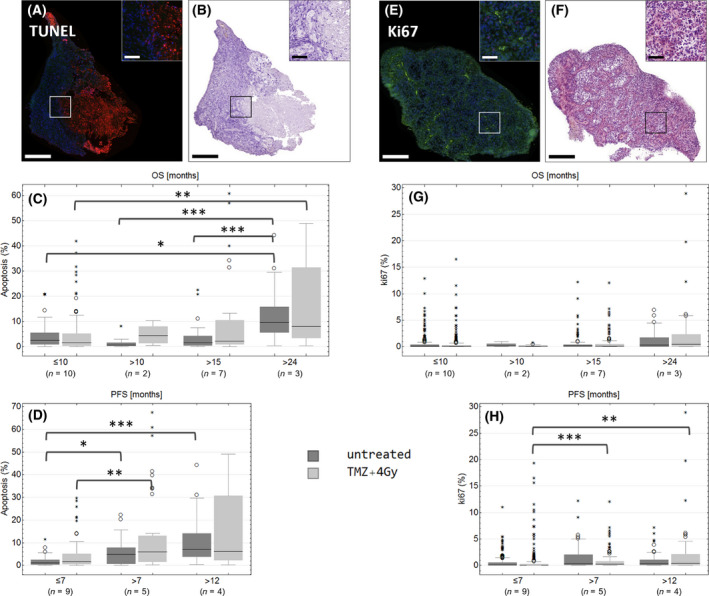
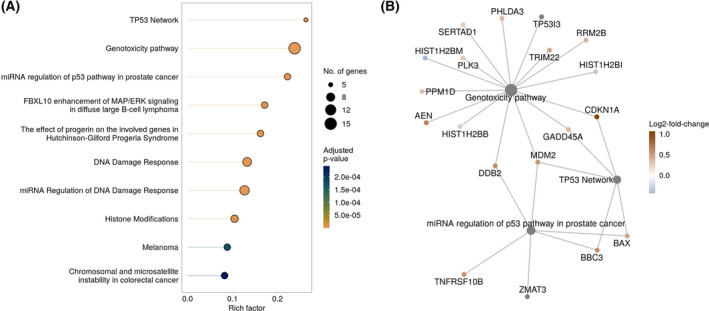
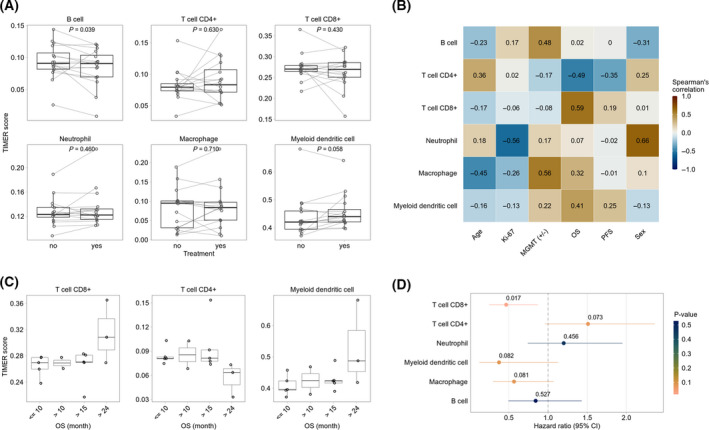
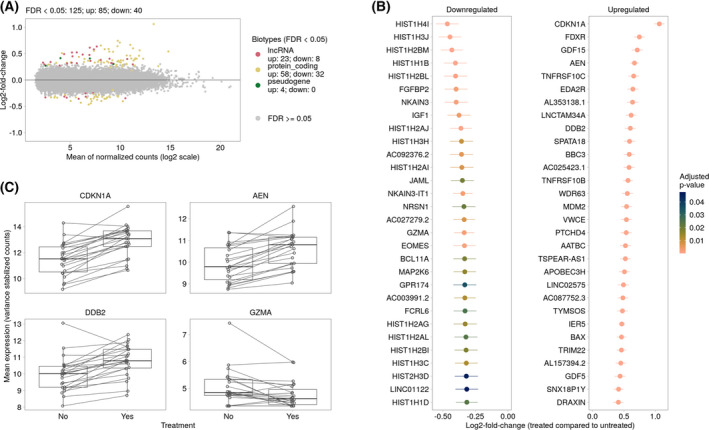
One of the major challenges in cancer research is finding models that closely resemble tumors within patients. Human tissue slice cultures are a promising approach to provide a model of the patient's tumor biology ex vivo. Recently, it was shown that these slices can be successfully analyzed by whole transcriptome sequencing as well as automated histochemistry, increasing their usability as preclinical model. Glioblastoma multiforme (GBM) is a highly malignant brain tumor with poor prognosis and little is known about its genetic background and heterogeneity regarding therapy success. In this study, tissue from the tumors of 25 patients with primary GBM was processed into slice cultures and treated with standard therapy (irradiation and temozolomide). Total RNA sequencing and automated histochemistry were performed to enable analysis of treatment effects at a transcriptional and histological level. Slice cultures from long-term survivors (overall survival [OS] > 24 months) exhibited more apoptosis than cultures from patients with shorter OS. Proliferation within these slices was slightly increased in contrast to other groups, but not significantly. Among all samples, 58 protein-coding genes were upregulated and 32 downregulated in treated vs. untreated slice cultures. In general, an upregulation of DNA damage-related and cell cycle checkpoint genes as well as enrichment of genotoxicity pathways and p53-dependent signaling was found after treatment. Overall, the current study reproduces knowledge from former studies regarding the feasibility of transcriptomic analyses and automated histology in tissue slice cultures. We further demonstrate that the experimental data merge with the clinical follow-up of the patients, which improves the applicability of our model system.
癌症研究中的主要挑战之一是寻找与患者体内肿瘤非常相似的模型。人体组织切片培养是提供患者肿瘤生物学体外模型的有前途的方法。最近,已经证明这些切片可以通过全转录组测序以及自动化组织化学成功地进行分析,从而增加了它们作为临床前模型的可用性。多形性胶质母细胞瘤(GBM)是一种高度恶性的脑肿瘤,预后不良,关于其遗传背景和治疗成功的异质性知之甚少。在这项研究中,25 名原发性 GBM 患者的肿瘤组织被加工成切片培养物,并接受标准治疗(放疗和替莫唑胺)。进行总 RNA 测序和自动化组织化学分析,以在转录和组织学水平上分析治疗效果。长期存活者(总生存期 [OS] > 24 个月)的切片培养物比 OS 较短的患者的切片培养物表现出更多的细胞凋亡。与其他组相比,这些切片中的增殖略有增加,但没有显着增加。在所有样本中,与未处理的切片培养物相比,处理过的切片培养物中有 58 个蛋白质编码基因上调,32 个基因下调。总的来说,在治疗后发现 DNA 损伤相关和细胞周期检查点基因上调以及基因毒性途径和 p53 依赖性信号转导富集。总体而言,本研究再现了以前关于组织切片培养物中转录组分析和自动化组织化学的可行性的研究结果。我们进一步证明,实验数据与患者的临床随访相吻合,从而提高了我们模型系统的适用性。