Zhong Mengya, Tan Jinshui, Pan Guangchao, Jiang Yuelong, Zhou Hui, Lai Qian, Chen Qinwei, Fan Liyuan, Deng Manman, Xu Bing, Zha Jie
Department of Hematology, The First Affiliated Hospital of Xiamen University and Institute of Hematology, School of Medicine, Xiamen University, Xiamen, China.
Department of Hematology, Key Laboratory of Xiamen for Diagnosis and Treatment of Hematological Malignancy, Xiamen, China.
Front Oncol. 2021 Dec 3;11:780118. doi: 10.3389/fonc.2021.780118. eCollection 2021.
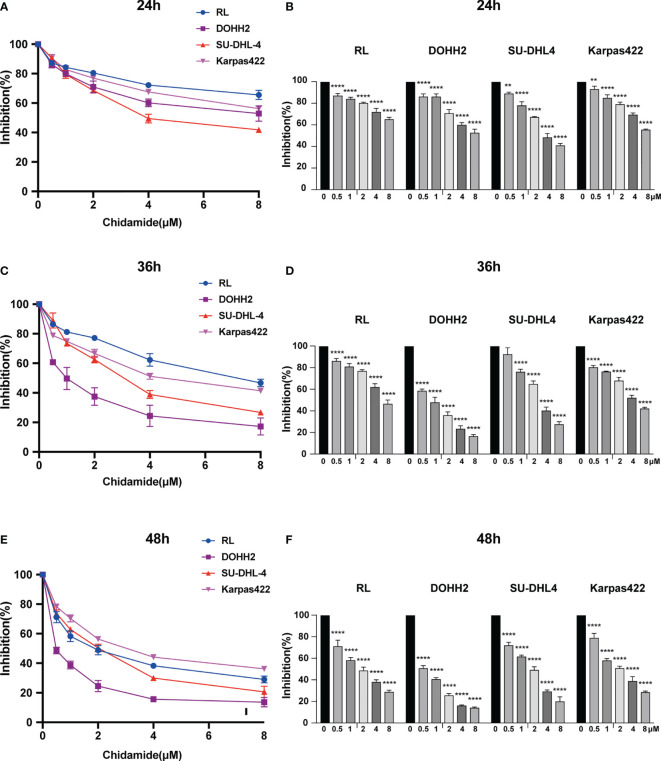
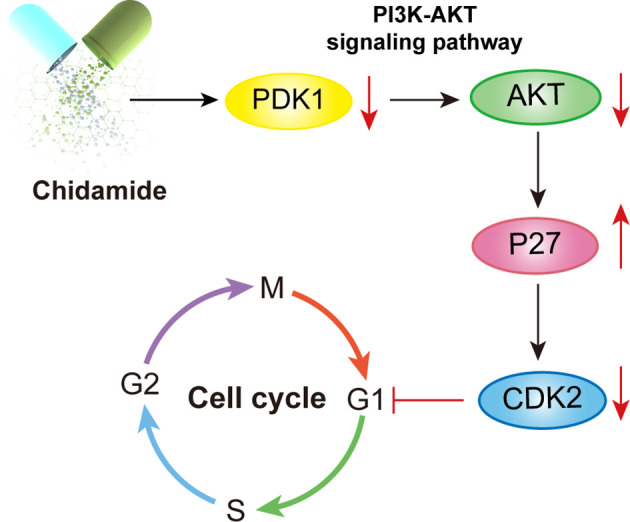
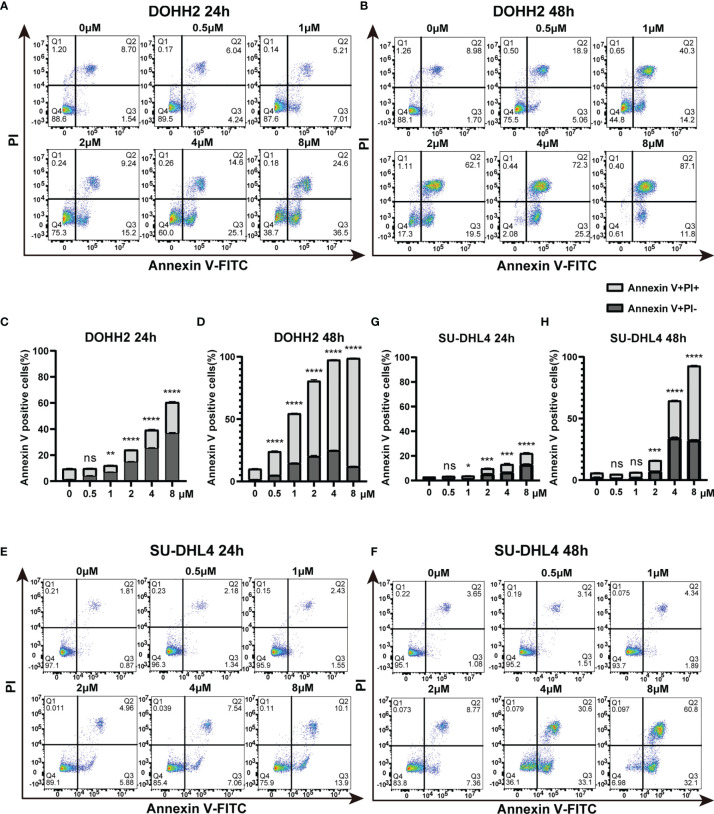
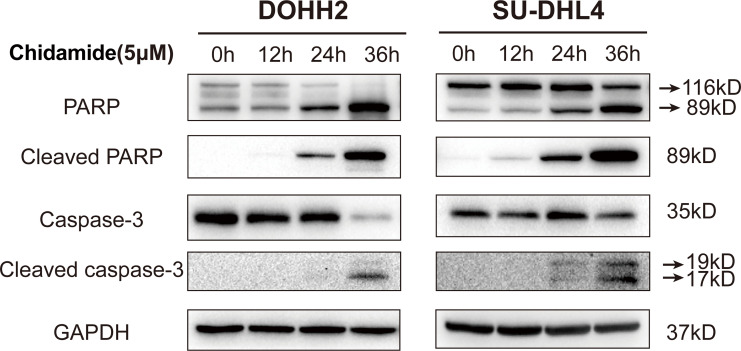
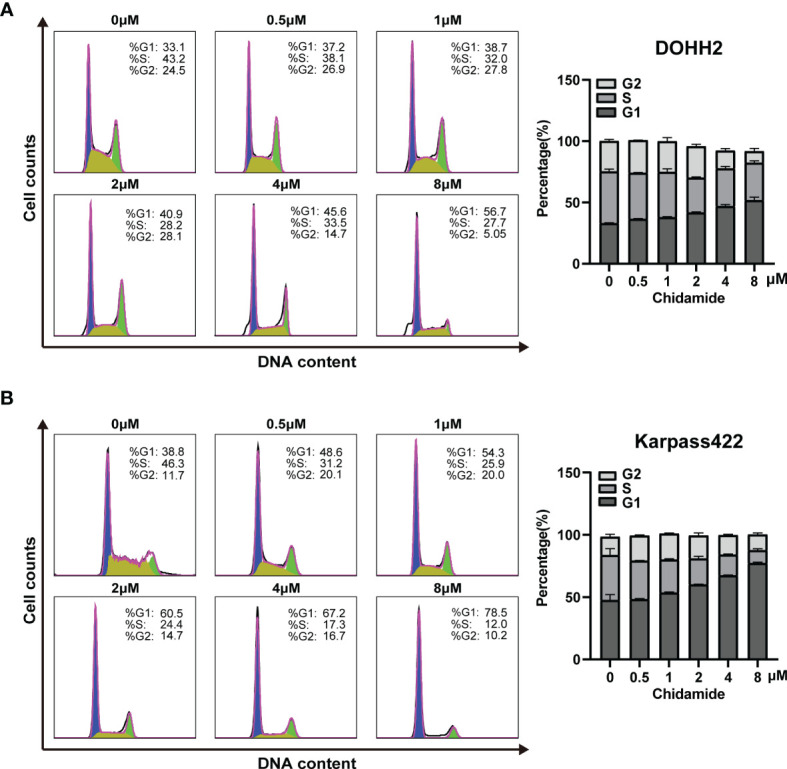
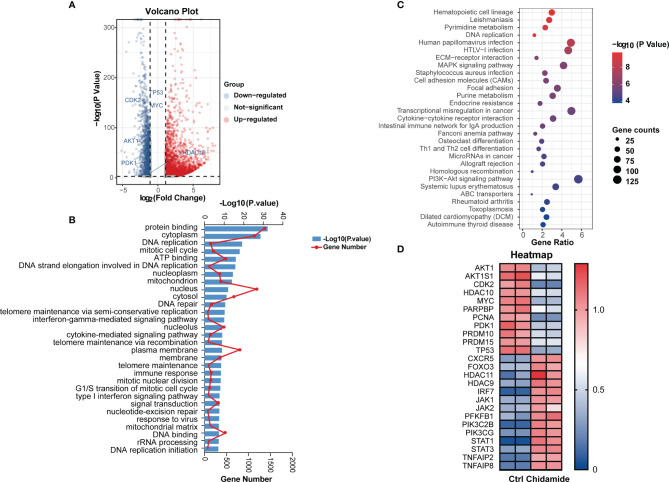
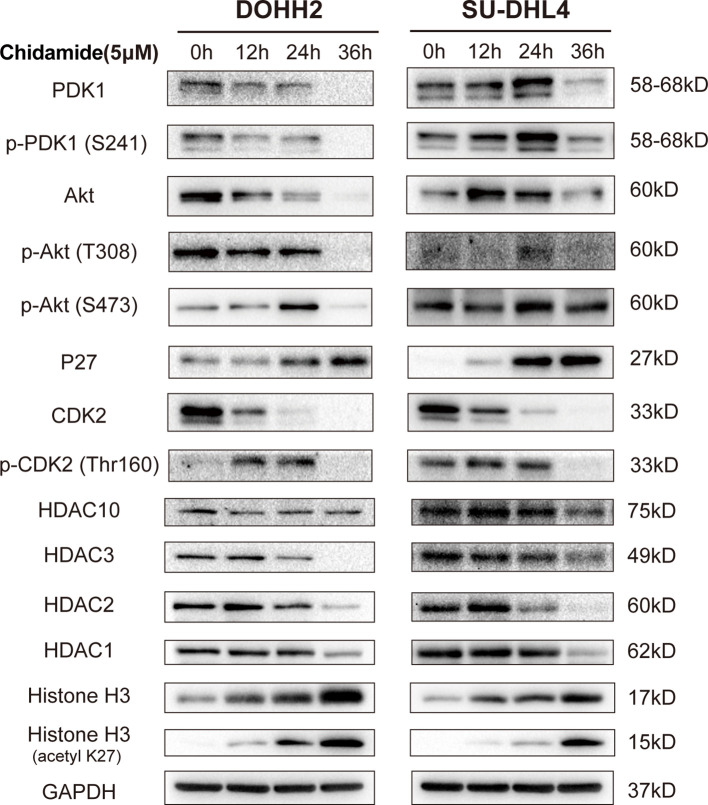
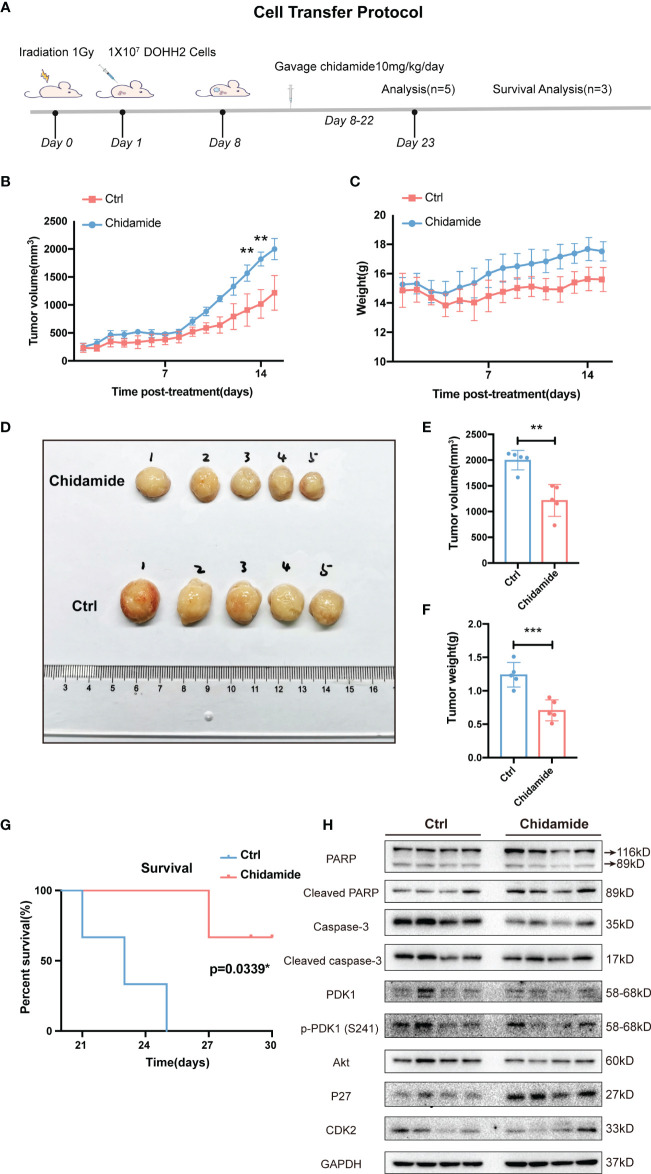
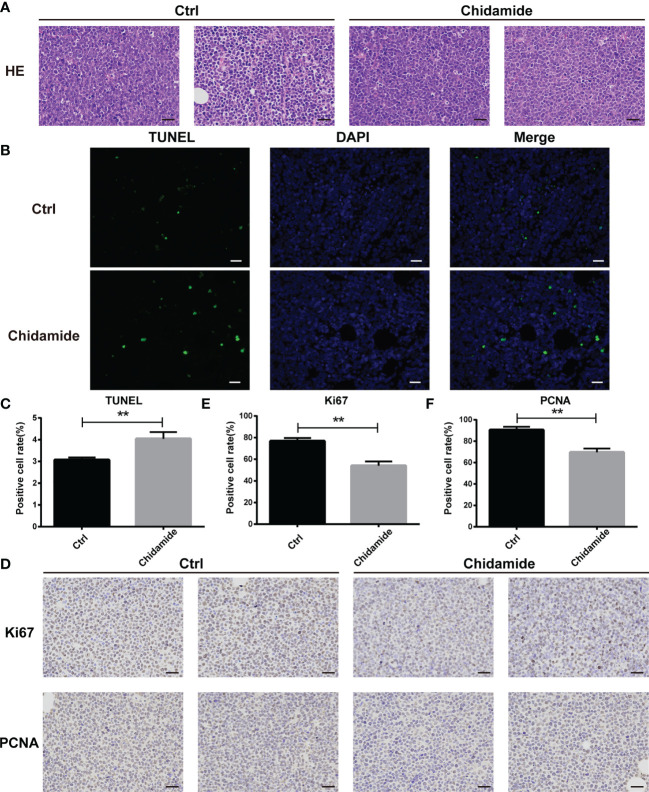
The key factors leading to transformed follicular lymphoma (t-FL) include the aberrations of epigenetic modifiers as early and driving events, especially mutations in the gene encoding for histone acetyltransferase. Therefore, reversal of this phenomenon by histone deacetylase (HDAC) inhibitors is essential for the development of new treatment strategies in t-FL. Several t-FL cell lines were treated with various doses of chidamide and subjected to cell proliferation, apoptosis and cell cycle analyses with CCK-8 assay, Annexin V/PI assay and flow cytometry, respectively. Chidamide dose-dependently inhibited cell proliferation, caused G0/G1 cycle arrest and triggered apoptosis in t-FL cells. In addition, the effects of chidamide on tumor growth were evaluated in xenograft models. RNA-seq analysis revealed gene expression alterations involving the PI3K-AKT signaling pathway might account for the mechanism underlying the antitumor activity of chidamide as a single agent in t-FL. These findings provide a basis for further clinical exploration of chidamide as a promising treatment for FL.
导致转化型滤泡性淋巴瘤(t-FL)的关键因素包括表观遗传修饰因子的异常作为早期驱动事件,尤其是编码组蛋白乙酰转移酶的基因突变。因此,通过组蛋白去乙酰化酶(HDAC)抑制剂逆转这种现象对于t-FL新治疗策略的开发至关重要。用不同剂量的西达本胺处理几种t-FL细胞系,并分别通过CCK-8法、Annexin V/PI法和流式细胞术进行细胞增殖、凋亡和细胞周期分析。西达本胺剂量依赖性地抑制t-FL细胞的增殖,导致G0/G1期阻滞并引发凋亡。此外,在异种移植模型中评估了西达本胺对肿瘤生长的影响。RNA测序分析显示,涉及PI3K-AKT信号通路的基因表达改变可能解释了西达本胺作为单一药物在t-FL中的抗肿瘤活性机制。这些发现为进一步临床探索西达本胺作为FL的一种有前景的治疗方法提供了依据。