Department of Microbiology, Kindai University Faculty of Medicine, Osaka, Japan.
Department of Genome Biology, Kindai University Faculty of Medicine, Osaka, Japan.
Front Cell Infect Microbiol. 2021 Dec 3;11:772962. doi: 10.3389/fcimb.2021.772962. eCollection 2021.
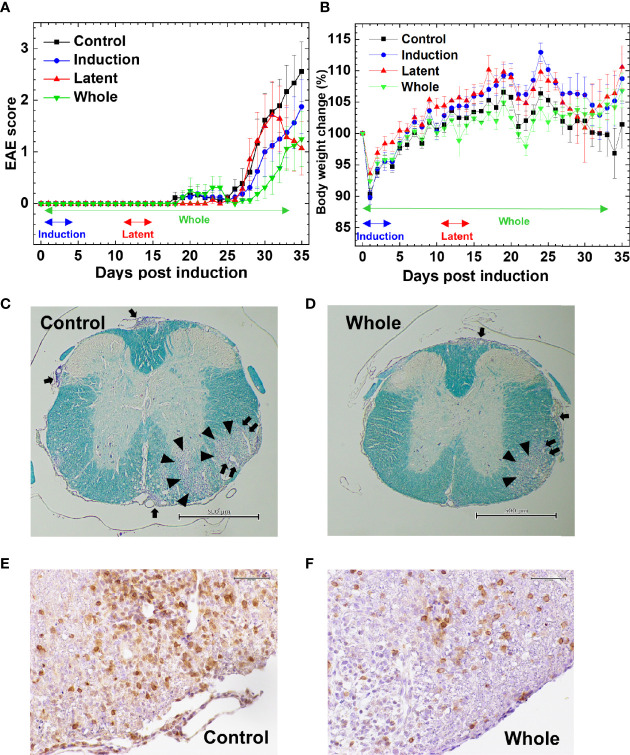
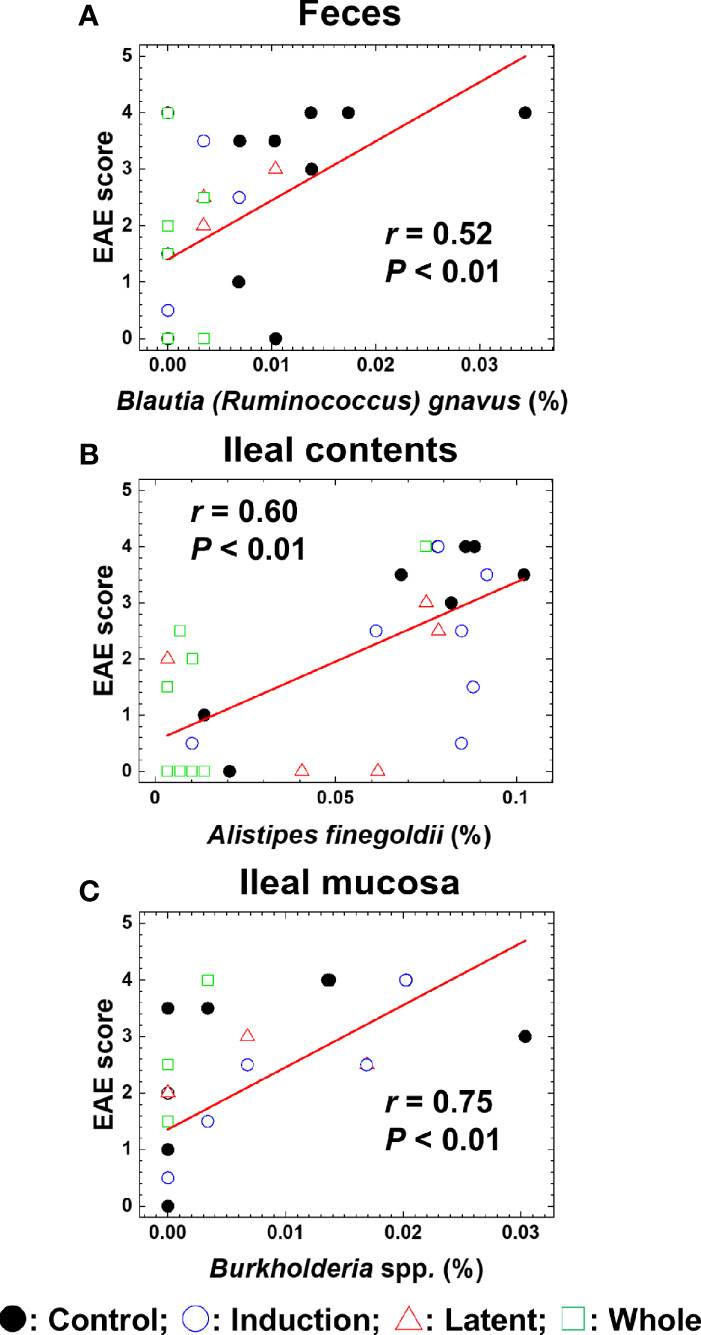
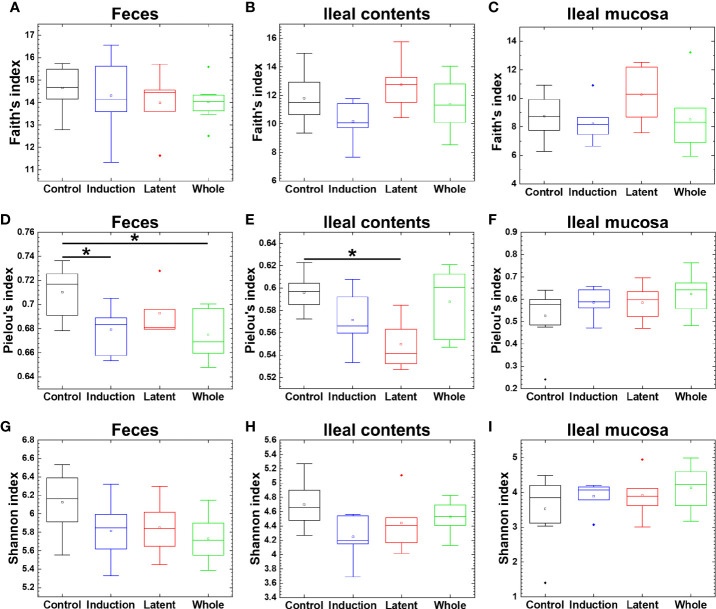
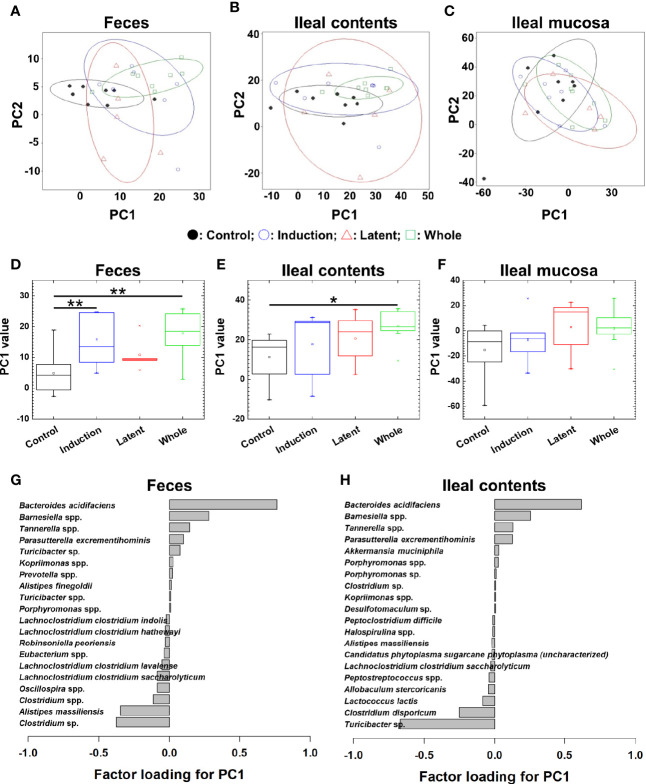
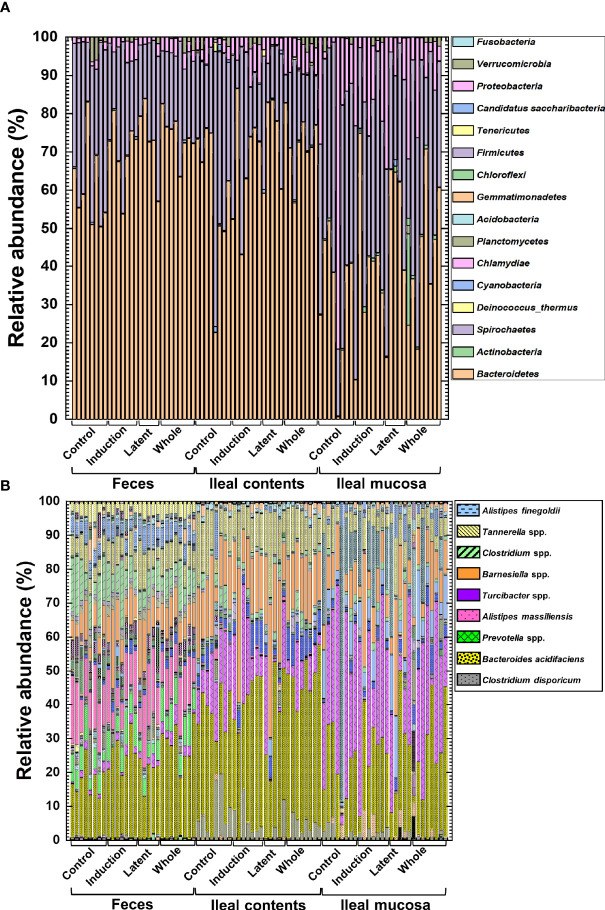
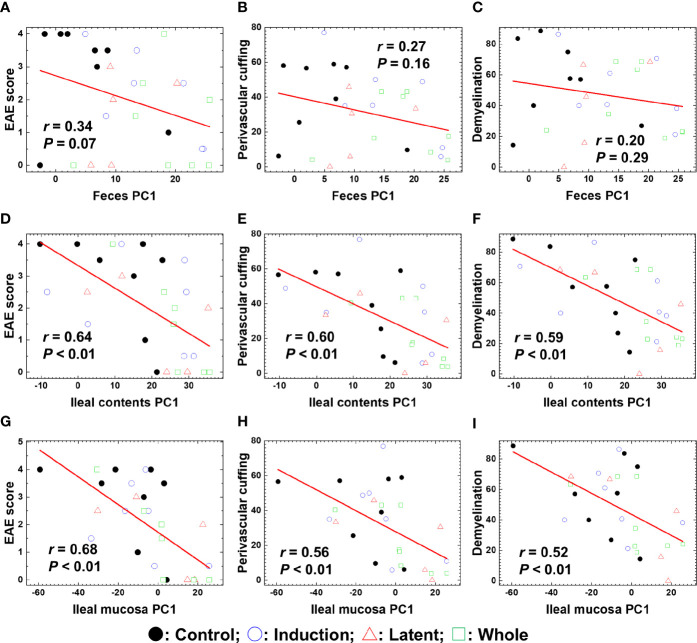
We developed a prodrug type of curcumin, curcumin monoglucuronide (CMG), whose intravenous/intraperitoneal injection achieves a high serum concentration of free-form curcumin. Although curcumin has been reported to alter the gut microbiota and immune responses, it is unclear whether the altered microbiota could be associated with inflammation in immune-mediated diseases, such as multiple sclerosis (MS). We aimed to determine whether CMG administration could affect the gut microbiota at three anatomical sites (feces, ileal contents, and the ileal mucosa), leading to suppression of inflammation in the central nervous system (CNS) in an autoimmune model for MS, experimental autoimmune encephalomyelitis (EAE). We injected EAE mice with CMG, harvested the brains and spinal cords for histological analyses, and conducted microbiome analyses using 16S rRNA sequencing. CMG administration modulated EAE clinically and histologically, and altered overall microbiota compositions in feces and ileal contents, but not the ileal mucosa. Principal component analysis (PCA) of the microbiome showed that principal component (PC) 1 values in ileal contents, but not in feces, correlated with the clinical and histological EAE scores. On the other hand, when we analyzed the individual bacteria of the microbiota, the EAE scores correlated with significant increases in the relative abundance of two bacterial species at each anatomical site: and in feces, sp. and in ileal contents, and spp. and spp. in the ileal mucosa. Therefore, CMG administration could alter the gut microbiota at the three different sites differentially in not only the overall gut microbiome compositions but also the abundance of individual bacteria, each of which was associated with modulation of neuroinflammation.
我们开发了一种姜黄素前药,即姜黄素单葡萄糖醛酸苷(CMG),其静脉/腹腔注射可使游离形式姜黄素的血清浓度升高。虽然已有报道称姜黄素可改变肠道菌群和免疫反应,但尚不清楚改变的菌群是否与免疫介导的疾病(如多发性硬化症(MS))中的炎症有关。我们旨在确定 CMG 给药是否会影响三个解剖部位(粪便、回肠内容物和回肠黏膜)的肠道菌群,从而在 MS 的自身免疫模型实验性自身免疫性脑脊髓炎(EAE)中抑制中枢神经系统(CNS)的炎症。我们给 EAE 小鼠注射 CMG,采集大脑和脊髓进行组织学分析,并使用 16S rRNA 测序进行微生物组分析。CMG 给药在临床上和组织学上调节 EAE,并改变粪便和回肠内容物中的整体微生物群落组成,但不改变回肠黏膜。微生物组的主成分分析(PCA)表明,回肠内容物中的主成分(PC)1 值,但不是粪便中的 PC1 值,与 EAE 的临床和组织学评分相关。另一方面,当我们分析微生物组的单个细菌时,EAE 评分与每个解剖部位的两种细菌相对丰度的显著增加相关:粪便中的 和 ,回肠内容物中的 sp. 和 ,以及回肠黏膜中的 spp. 和 spp.。因此,CMG 给药不仅可以改变整体肠道微生物组组成,还可以改变个体细菌的丰度,从而改变三个不同部位的肠道菌群,而这两者都与神经炎症的调节有关。