Wang Yang, Tan Jing, Wang Lu, Pei Gaiqin, Cheng Hongxin, Zhang Qing, Wang Shiqi, He Chengqi, Fu Chenying, Wei Quan
Department of Rehabilitation Medicine Center, West China Hospital, Sichuan University, Chengdu, China.
Key Laboratory of Rehabilitation Medicine in Sichuan Province, Chengdu, China.
Front Cell Dev Biol. 2021 Dec 2;9:799049. doi: 10.3389/fcell.2021.799049. eCollection 2021.
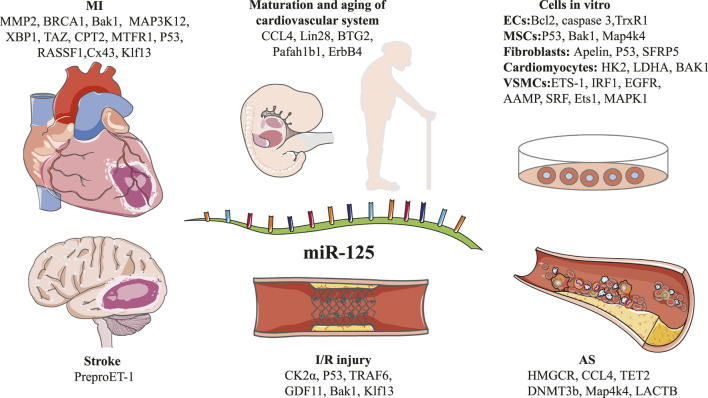
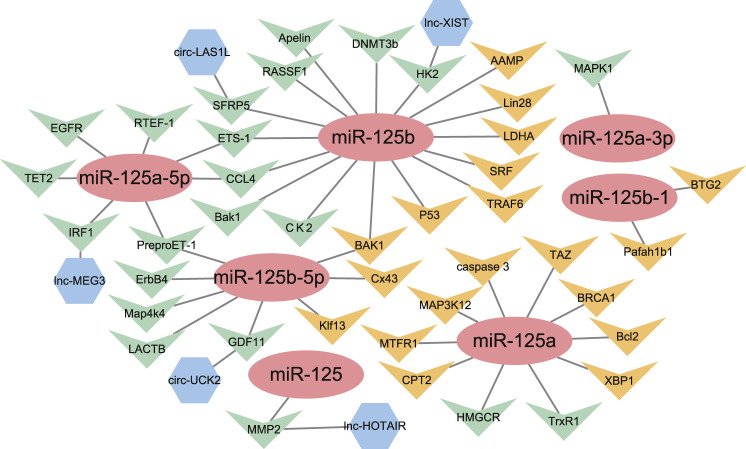
Cardiovascular and cerebrovascular diseases are a serious threaten to the health of modern people. Understanding the mechanism of occurrence and development of cardiovascular and cerebrovascular diseases, as well as reasonable prevention and treatment of them, is a huge challenge that we are currently facing. The miR-125 family consists of hsa-miR-125a, hsa-miR-125b-1 and hsa-miR-125b-2. It is a kind of miRNA family that is highly conserved among different species. A large amount of literature shows that the lack of miR-125 can cause abnormal development of the cardiovascular system in the embryonic period. At the same time, the miR-125 family participates in the occurrence and development of a variety of cardiovascular and cerebrovascular diseases, including myocardial ischemia, atherosclerosis, ischemia-reperfusion injury, ischemic stroke, and heart failure directly or indirectly. In this article, we summarized the role of the miR-125 family in the development and maturation of cardiovascular system, the occurrence and development of cardiovascular and cerebrovascular diseases, and its important value in the current fiery stem cell therapy. In addition, we presented this in the form of table and diagrams. We also discussed the difficulties and challenges faced by the miR-125 family in clinical applications.
心脑血管疾病严重威胁着现代人的健康。了解心脑血管疾病的发生发展机制以及对其进行合理防治,是我们当前面临的巨大挑战。miR-125家族由hsa-miR-125a、hsa-miR-125b-1和hsa-miR-125b-2组成。它是一种在不同物种间高度保守的miRNA家族。大量文献表明,miR-125缺失可导致胚胎期心血管系统发育异常。同时,miR-125家族直接或间接参与多种心脑血管疾病的发生发展,包括心肌缺血、动脉粥样硬化、缺血再灌注损伤、缺血性中风和心力衰竭。在本文中,我们总结了miR-125家族在心血管系统发育成熟、心脑血管疾病发生发展以及在当前热门的干细胞治疗中的重要价值。此外,我们以表格和图表的形式呈现了这些内容。我们还讨论了miR-125家族在临床应用中面临的困难和挑战。