Peng Linbo, Wang Kexin, Zeng Yi, Wu Yuangang, Si Haibo, Shen Bin
Department of Orthopedics, Orthopedic Research Institute, West China Hospital, Sichuan University, Chengdu, China.
Department of Clinical Research Management, West China Hospital, Sichuan University, Chengdu, China.
Front Med (Lausanne). 2021 Dec 3;8:779019. doi: 10.3389/fmed.2021.779019. eCollection 2021.
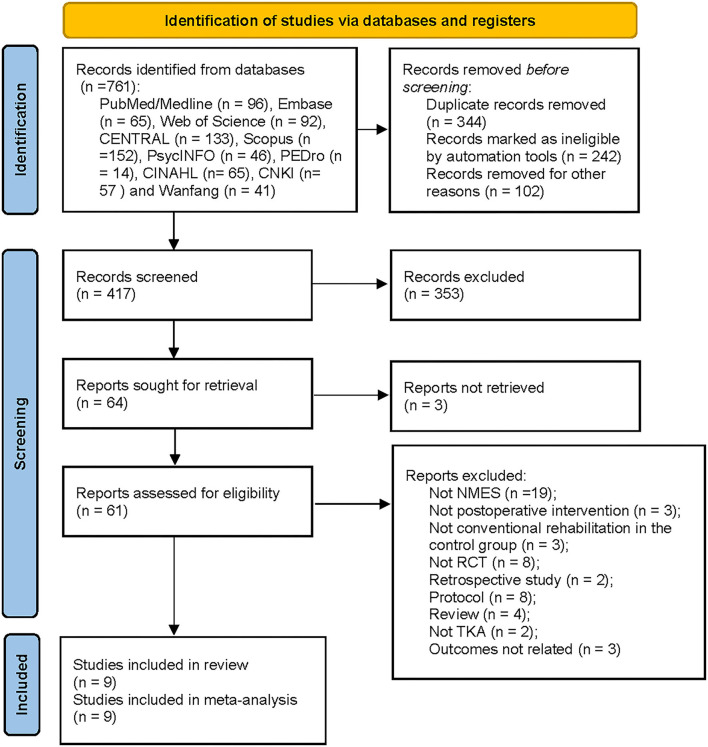
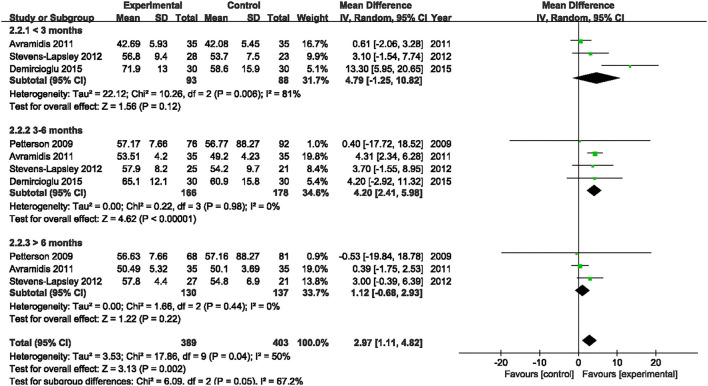
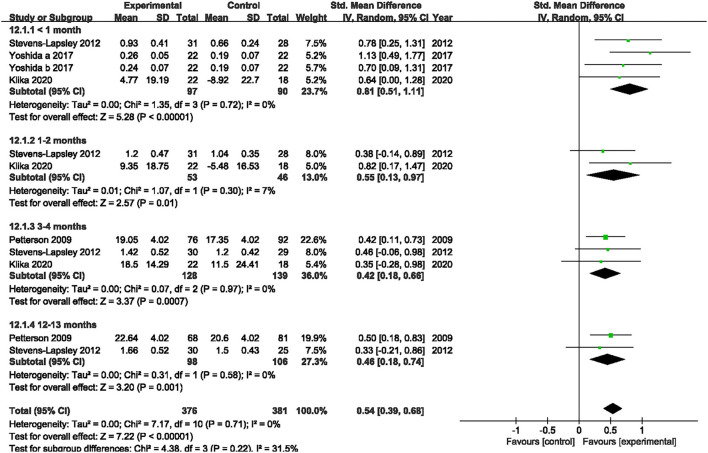
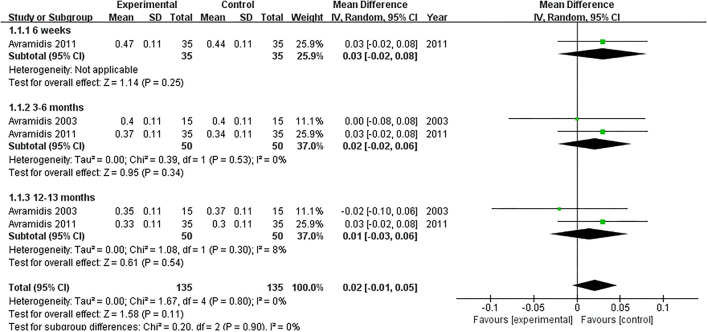
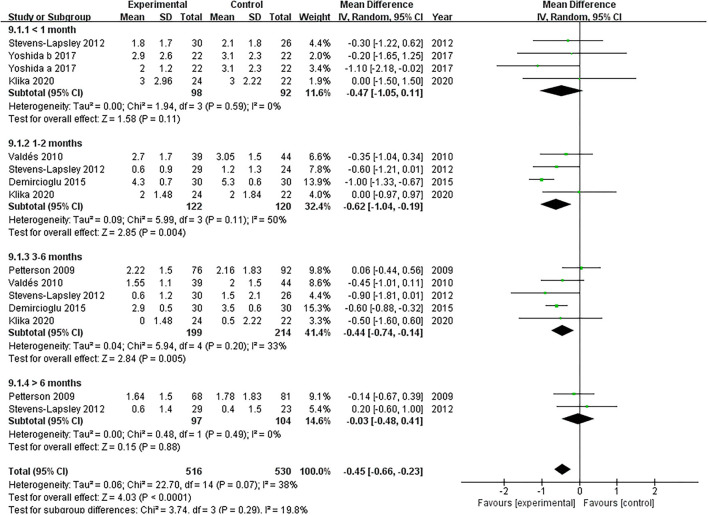
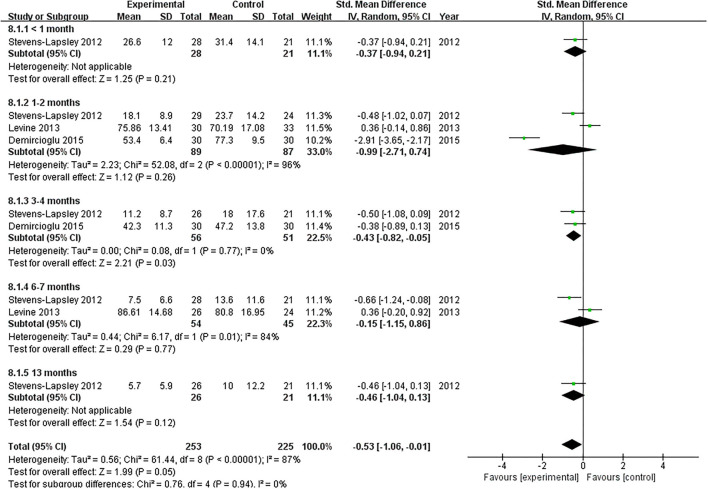
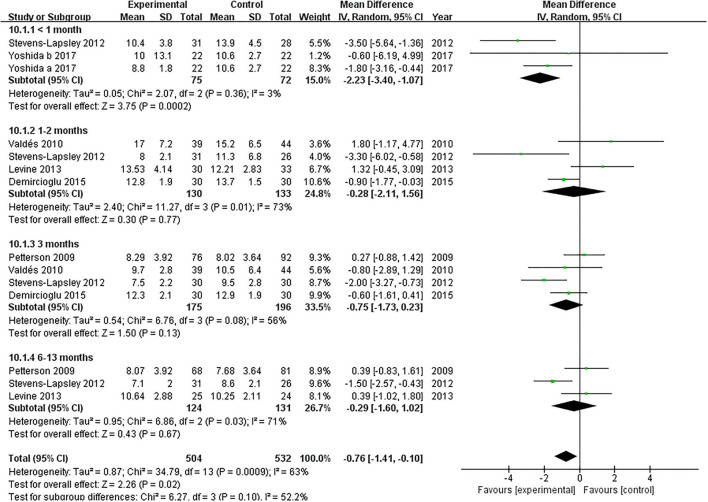
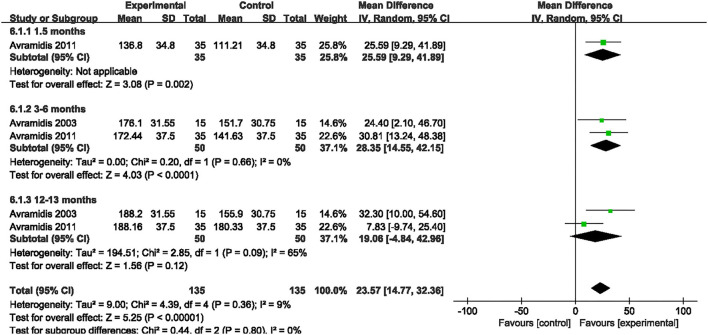
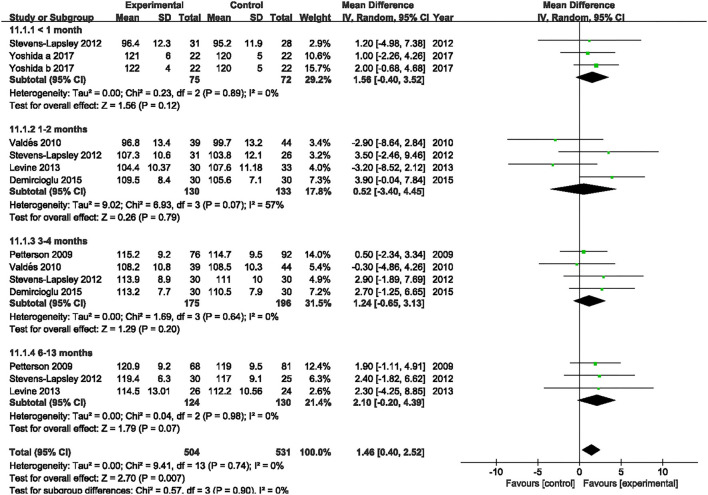
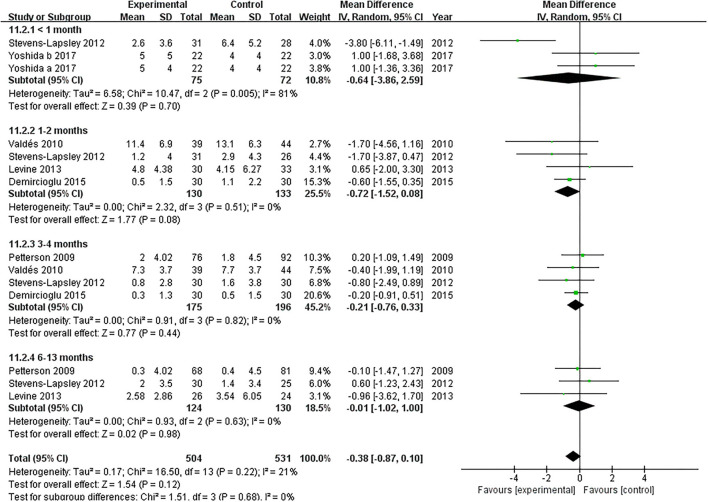
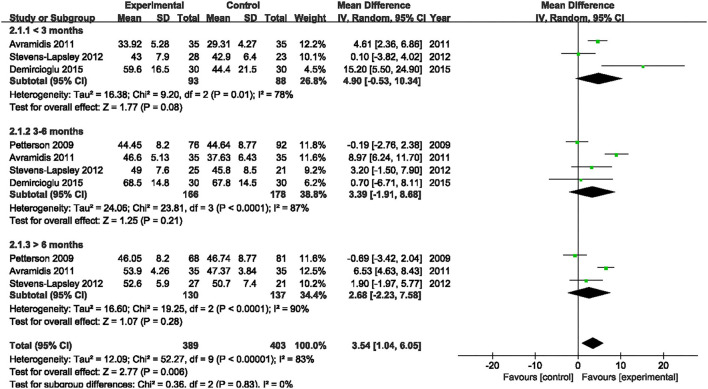
This systematic review and meta-analysis aimed to evaluate the effect of neuromuscular electrical stimulation (NMES) on quadriceps muscle strength, pain, and function outcomes following total knee arthroplasty (TKA). PubMed/Medline, Embase, Web of Science, CENTRAL, Scopus, PsycINFO, PEDro, CINAHL, CNKI, and Wanfang were systematically searched for randomized controlled trials (RCTs) from their inception to 18 June 2021. Nine RCTs that involving 691 patients were included in the meta-analysis. Our pooled analysis showed that NMES improved quadriceps muscle strength after TKA within 1 months [standardized mean difference (SMD): 0.81; 95% CI: 0.51-1.11], 1-2 months (SMD: 0.55; 95% CI: 0.13-0.97), 3-4 months (SMD: 0.42; 95% CI: 0.18-0.66), and 12-13 months (SMD: 0.46; 95% CI: 0.18-0.74), pain between 1 and 2 months [mean difference (MD): -0.62; 95% CI: -1.04 to -0.19], pain between 3 and 6 months (MD: -0.44; 95% CI: -0.74 to -0.14) Western Ontario and McMaster Universities Osteoarthritis Index (WOMAC) between 3 and 4 months (MD: -0.43; 95% CI: -0.82 to -0.05), timed up and go test (TUG) within 1 month (MD: -2.23; 95% CI: -3.40 to -1.07), 3 minutes walk test between 3 and 6 months (MD: 28.35; 95% CI: 14.55-42.15), and SF-36 MCS between 3 and 6 months after TKA (MD: 4.20, 95% CI: 2.41-5.98). As a supplementary treatment after TKA, postoperative NMES could improve the short-term to long-term quadriceps muscle strength, mid-term pain, and mid-term function following TKA. However, many outcomes failed to achieve statistically meaningful changes and minimal clinically important difference (MCID), thus the clinical benefits remained to be confirmed. Therapeutic level I. https://www.crd.york.ac.uk/PROSPERO/, identifier CRD42021265609.
本系统评价和荟萃分析旨在评估神经肌肉电刺激(NMES)对全膝关节置换术(TKA)后股四头肌力量、疼痛及功能结局的影响。系统检索了PubMed/Medline、Embase、Web of Science、CENTRAL、Scopus、PsycINFO、PEDro、CINAHL、中国知网(CNKI)和万方数据库,纳入从建库至2021年6月18日的随机对照试验(RCT)。荟萃分析纳入了9项涉及691例患者的RCT。我们的汇总分析显示,NMES可在TKA术后1个月内[标准化均数差(SMD):0.81;95%置信区间(CI):0.51 - 1.11]、1 - 2个月(SMD:0.55;95% CI:0.13 - 0.97)、3 - 4个月(SMD:0.42;95% CI:0.18 - 0.66)和12 - 13个月(SMD:0.46;95% CI:0.18 - 0.74)提高股四头肌力量,在1至2个月时减轻疼痛[均数差(MD): - 0.62;95% CI: - 1.04至 - 0.19],在3至6个月时减轻疼痛(MD: - 0.44;95% CI: - 0.74至 - 0.14),在3至4个月时改善西部安大略和麦克马斯特大学骨关节炎指数(WOMAC)(MD: - 0.43;95% CI: - 0.82至 - 0.05),在1个月内改善计时起立行走测试(TUG)(MD: - 2.23;95% CI: - 3.40至 - 1.07),在3至6个月时改善3分钟步行测试(MD:28.35;95% CI:14.55 - 42.15),以及在TKA术后3至6个月时改善SF - 36精神健康分量表(MCS)(MD:4.20,95% CI:2.41 - 5.98)。作为TKA术后的辅助治疗,术后NMES可改善TKA后的短期至长期股四头肌力量、中期疼痛和中期功能。然而,许多结局未能达到统计学上有意义的变化及最小临床重要差异(MCID),因此临床益处仍有待证实。治疗水平I。https://www.crd.york.ac.uk/PROSPERO/,标识符CRD42021265609 。