Department of Chemistry, UiT-The Arctic University of Norway, 9037, Tromsø, Norway.
Department of Chemistry, Umeå University, 90187, Umeå, Sweden.
Microb Cell Fact. 2021 Dec 20;20(1):225. doi: 10.1186/s12934-021-01713-0.
Several members of the bacterial Halomonadacea family are natural producers of polyhydroxyalkanoates (PHA), which are promising materials for use as biodegradable bioplastics. Type-strain species of Cobetia are designated PHA positive, and recent studies have demonstrated relatively high PHA production for a few strains within this genus. Industrially relevant PHA producers may therefore be present among uncharacterized or less explored members. In this study, we characterized PHA production in two marine Cobetia strains. We further analyzed their genomes to elucidate pha genes and metabolic pathways which may facilitate future optimization of PHA production in these strains.
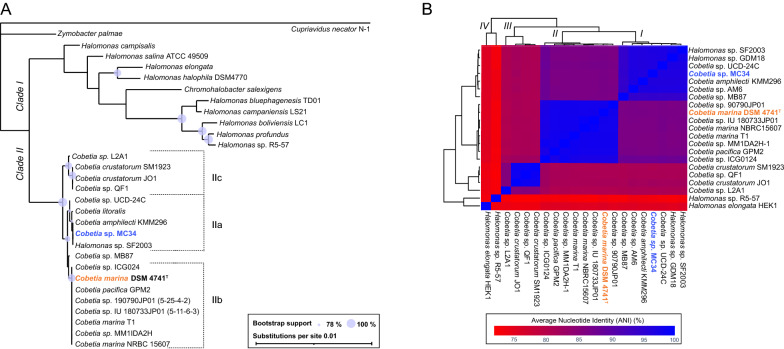
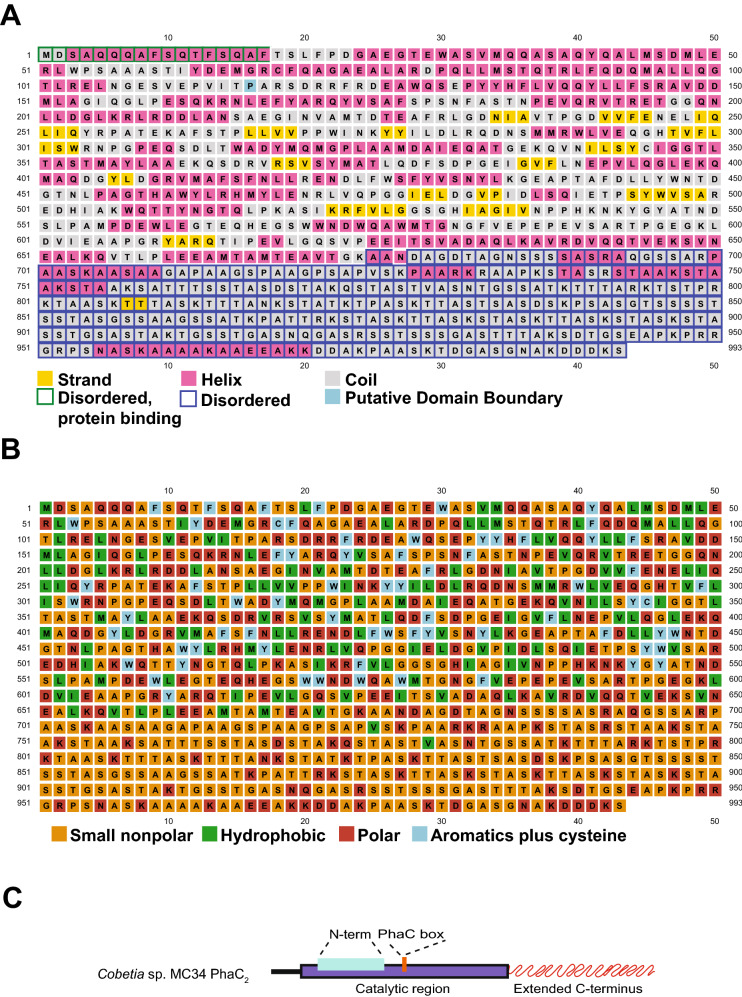
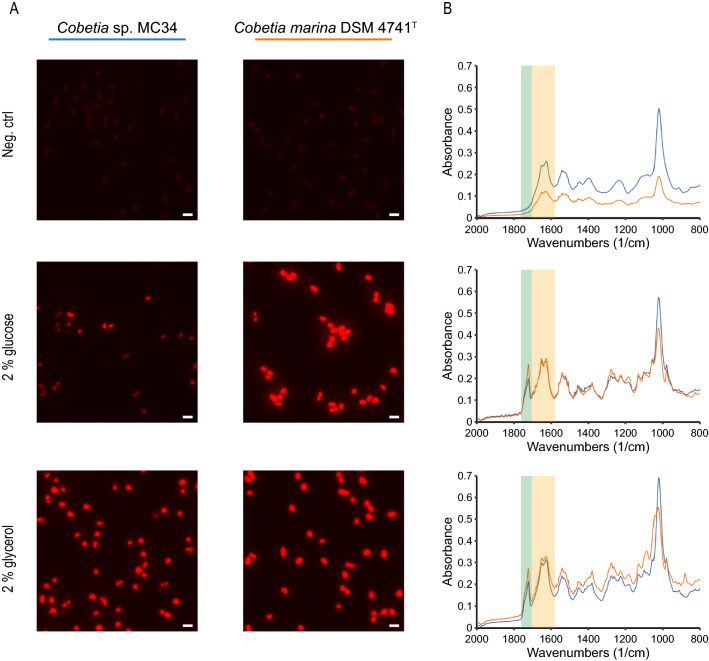
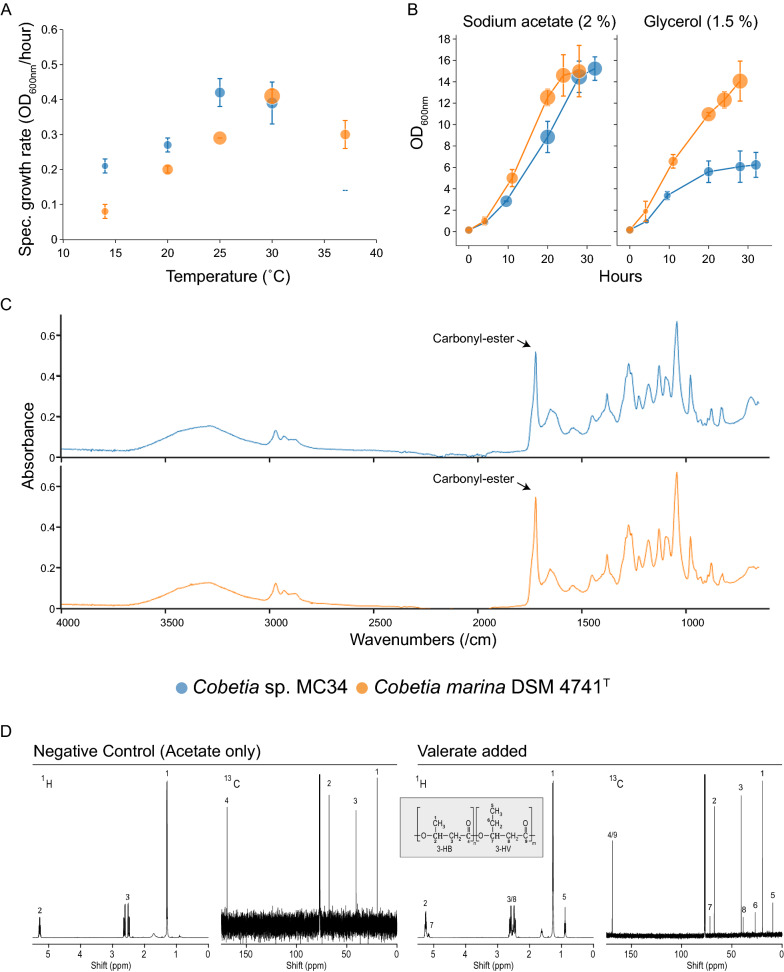
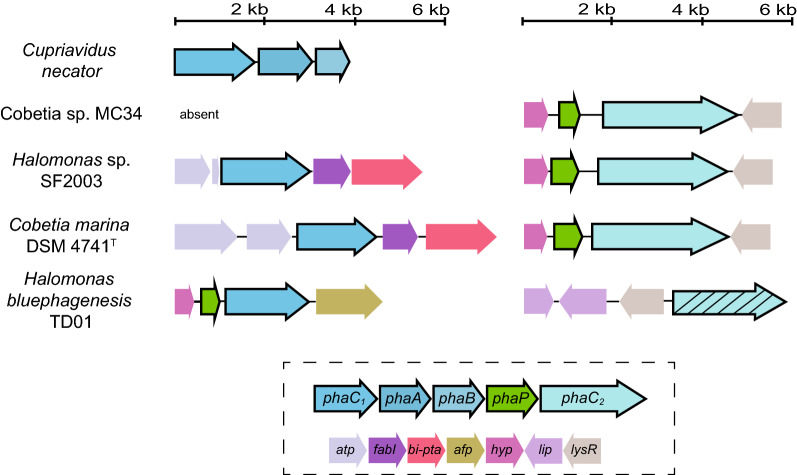
Cobetia sp. MC34 and Cobetia marina DSM 4741 were mesophilic, halotolerant, and produced PHA from four pure substrates. Sodium acetate with- and without co-supplementation of sodium valerate resulted in high PHA production titers, with production of up to 2.5 g poly(3-hydroxybutyrate) (PHB)/L and 2.1 g poly(3-hydroxybutyrate-co-3-hydroxyvalerate) (PHBV)/L in Cobetia sp. MC34, while C. marina DSM 4741 produced 2.4 g PHB/L and 3.7 g PHBV/L. Cobetia marina DSM 4741 also showed production of 2.5 g PHB/L from glycerol. The genome of Cobetia sp. MC34 was sequenced and phylogenetic analyses revealed closest relationship to Cobetia amphilecti. PHA biosynthesis genes were located at separate loci similar to the arrangement in other Halomonadacea. Further genome analyses revealed some differences in acetate- and propanoate metabolism genes between the two strains. Interestingly, only a single PHA polymerase gene (phaC) was found in Cobetia sp. MC34, in contrast to two copies (phaC and phaC) in C. marina DSM 4741. In silico analyses based on phaC genes show that the PhaC variant is conserved in Cobetia and contains an extended C-terminus with a high isoelectric point and putative DNA-binding domains.
Cobetia sp. MC34 and C. marina DSM 4741 are natural producers of PHB and PHBV from industrially relevant pure substrates including acetate. However, further scale up, optimization of growth conditions, or use of metabolic engineering is required to obtain industrially relevant PHA production titers. The putative role of the Cobetia PhaC variant in DNA-binding and the potential implications remains to be addressed by in vitro- or in vivo methods.
几种卤单胞菌科的细菌是聚羟基烷酸酯(PHA)的天然生产者,PHA 是一种有前途的可生物降解生物塑料材料。Cobetia 属的模式菌株被指定为 PHA 阳性,最近的研究表明,该属的一些菌株具有相对较高的 PHA 产量。因此,在未被描述或研究较少的成员中可能存在具有工业相关性的 PHA 生产者。在这项研究中,我们对两种海洋 Cobetia 菌株的 PHA 生产进行了表征。我们进一步分析了它们的基因组,以阐明pha 基因和代谢途径,这可能有助于未来优化这些菌株的 PHA 生产。
嗜温和耐盐的 Cobetia sp. MC34 和 Cobetia marina DSM 4741 可从四种纯底物中生产 PHA。在 Cobetia sp. MC34 中,添加或不添加正戊酸钠的乙酸钠导致 PHA 生产达到高滴度,聚(3-羟基丁酸酯)(PHB)/L 最高产量可达 2.5 g/L,聚(3-羟基丁酸酯-co-3-羟基戊酸酯)(PHBV)/L 最高产量可达 2.1 g/L,而 C. marina DSM 4741 生产 2.4 g/L PHB 和 3.7 g/L PHBV。Cobetia marina DSM 4741 也可从甘油中生产 2.5 g/L PHB。Cobetia sp. MC34 的基因组已测序,系统发育分析表明与 Cobetia amphilecti 的亲缘关系最近。PHA 生物合成基因位于类似其他卤单胞菌的分离基因座上。进一步的基因组分析显示,两种菌株的乙酸和丙酸代谢基因存在一些差异。有趣的是,Cobetia sp. MC34 中只发现了一个 PHA 聚合酶基因(phaC),而 C. marina DSM 4741 中有两个拷贝(phaC 和 phaC)。基于 phaC 基因的计算机分析表明,PhaC 变体在 Cobetia 中是保守的,包含一个具有高等电点和潜在 DNA 结合结构域的扩展 C 末端。
Cobetia sp. MC34 和 C. marina DSM 4741 可从工业相关的纯底物(包括乙酸)中生产 PHB 和 PHBV。然而,需要进一步放大规模、优化生长条件或使用代谢工程才能获得具有工业相关性的 PHA 生产滴度。Cobetia PhaC 变体在 DNA 结合中的潜在作用以及潜在影响有待通过体外或体内方法来解决。