Han Shasha, Zhang Ting, Lyu Yan, Lai Shengjie, Dai Peixi, Zheng Jiandong, Yang Weizhong, Zhou Xiaohua, Feng Luzhao
Beijing International Center for Mathematical Research, Peking University, Beijing, China.
Harvard Medical School, Harvard University, Boston, MA, USA.
China CDC Wkly. 2021 Dec 3;3(49):1039-1045. doi: 10.46234/ccdcw2021.253.
Seasonal influenza activity has declined globally since the widespread of severe acute respiratory syndrome coronavirus 2 (SARS-CoV-2) transmission. There has been scarce information to understand the future dynamics of influenza - and under different hypothesis on relaxation of non-pharmaceutical interventions (NPIs) in particular - after the disruptions to seasonal patterns.
We collected data from public sources in China, the United Kingdom, and the United States, and forecasted the influenza dynamics in the incoming 2021-2022 season under different NPIs. We considered Northern China and Southern China separately, due to the sharp difference in the patterns of seasonal influenza. For the United Kingdom, data were collected for England only.
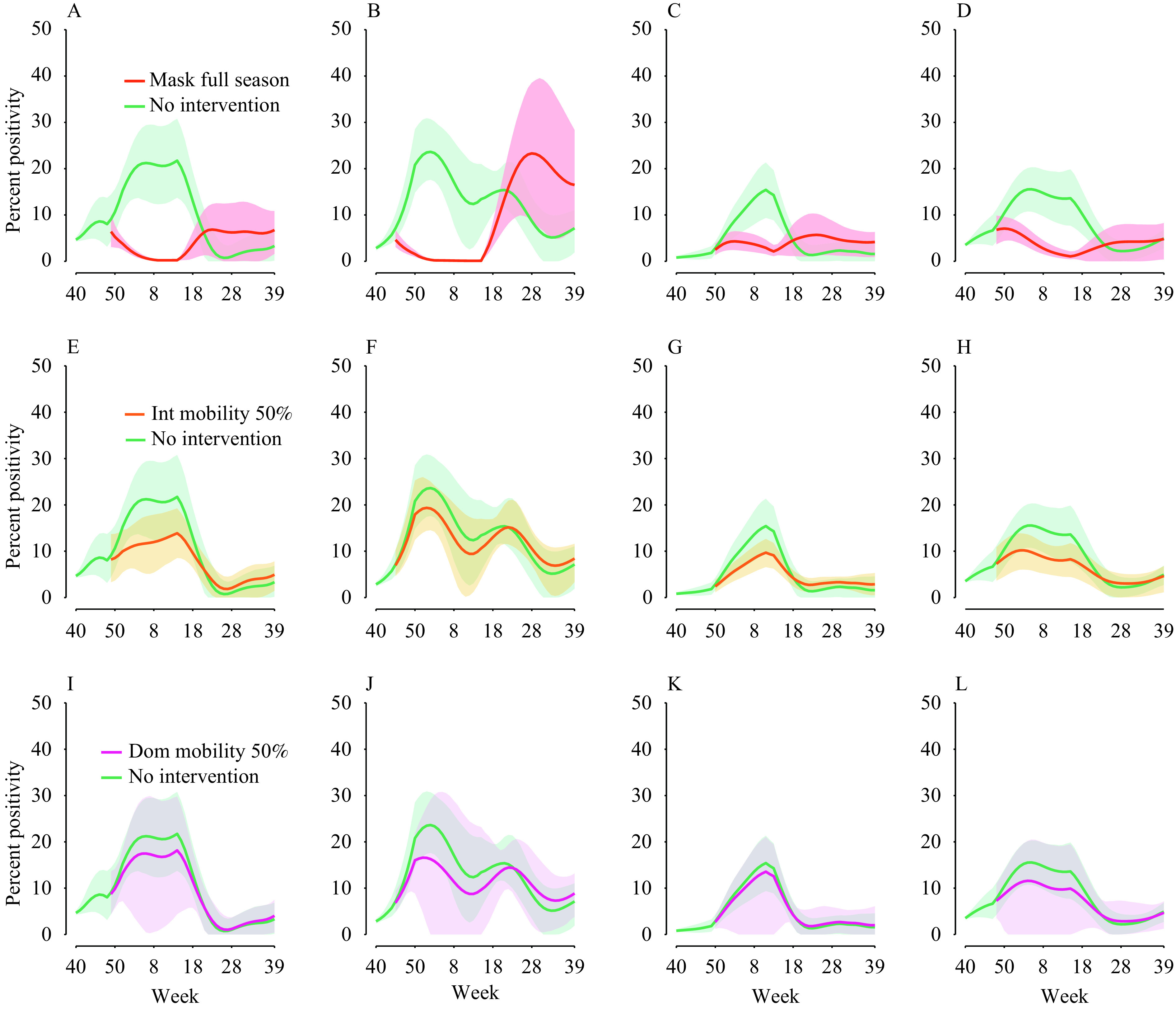
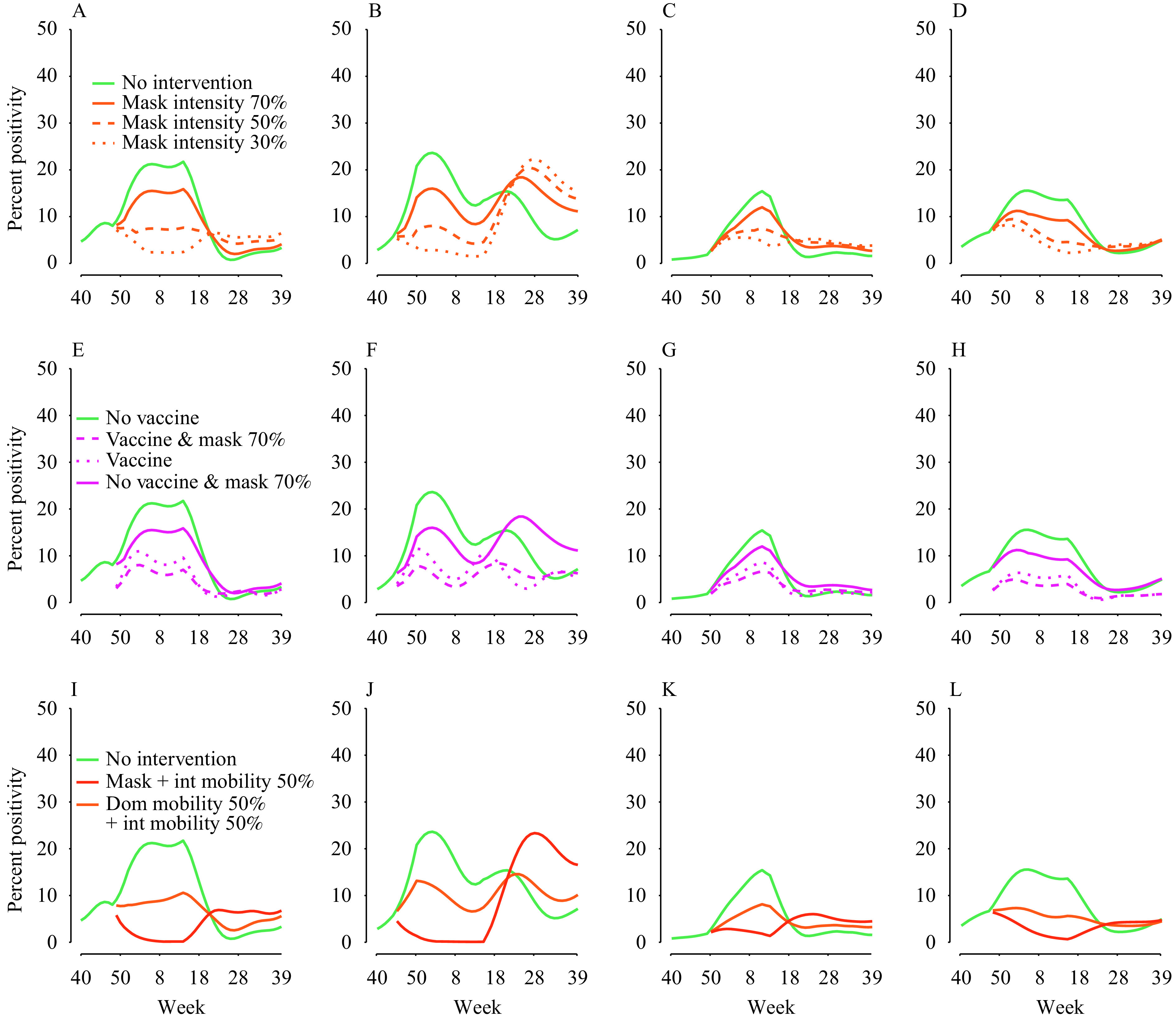
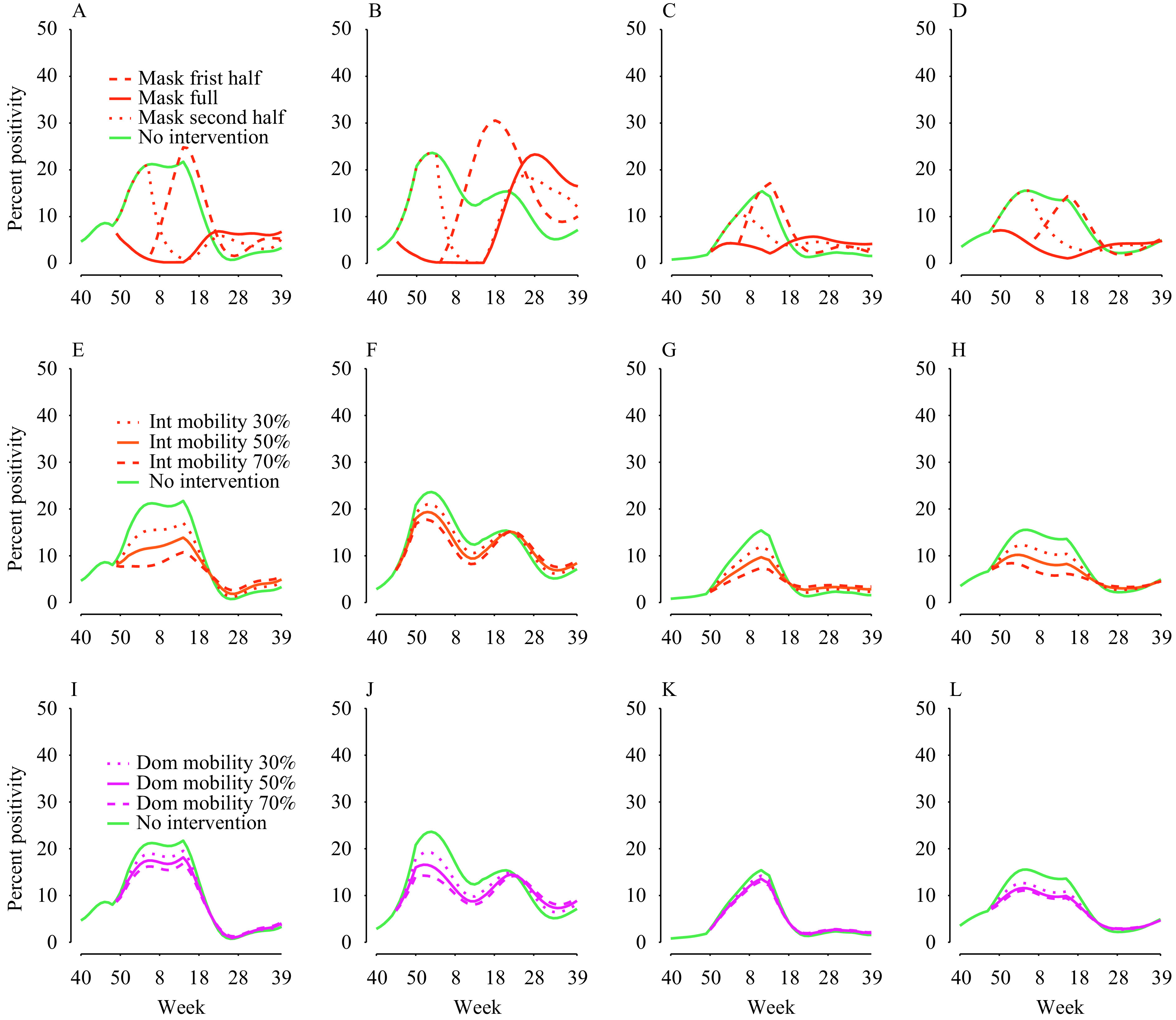
Compared to the epidemics in 2017-2019, longer and blunter influenza outbreaks could occur should NPIs be fully lifted, with percent positivity varying from 10.5 to 18.6 in the studying regions. The rebounds would be smaller if the mask-wearing intervention continued or the international mobility stayed low, but sharper if the mask-wearing intervention was lifted in the middle of influenza season. Further, influenza activity could stay low under a much less stringent mask-wearing intervention coordinated with influenza vaccination.
The results added to our understandings of future influenza dynamics after the global decline during the coronavirus disease 2019 (COVID-19) pandemic. In light of the uncertainty on the incoming circulation strains and the relatively low negative impacts of mask wearing on society, our findings suggested that wearing mask could be considered as an accompanying mitigation measure in influenza prevention and control, especially for seasons after long periods of low-exposure to influenza viruses.
自严重急性呼吸综合征冠状病毒2(SARS-CoV-2)传播以来,全球季节性流感活动有所下降。在季节性模式被打乱后,关于流感未来动态,尤其是在不同的非药物干预措施(NPIs)放松假设下,相关信息匮乏。
我们收集了中国、英国和美国的公开数据,并预测了在不同非药物干预措施下2021 - 2022年流感动态。由于中国南北季节性流感模式差异显著,我们分别考虑了中国北方和南方地区。对于英国,仅收集了英格兰的数据。
与2017 - 2019年的疫情相比,如果完全取消非药物干预措施,流感疫情可能会持续更长时间且更平缓,研究地区的阳性率在10.5%至18.6%之间变化。如果继续实施戴口罩干预措施或国际流动性保持较低水平,反弹幅度会较小;但如果在流感季节中期取消戴口罩干预措施,反弹幅度会更大。此外,在与流感疫苗接种相协调的宽松得多的戴口罩干预措施下,流感活动可能会保持在较低水平。
这些结果增进了我们对2019年冠状病毒病(COVID - 19)大流行期间全球流感活动下降后未来流感动态的理解。鉴于未来流行毒株的不确定性以及戴口罩对社会的负面影响相对较小,我们的研究结果表明,戴口罩可被视为流感防控的一项辅助缓解措施,尤其是在长时间低暴露于流感病毒之后的季节。