70384Schulich School of Medicine and Dentistry, Western University, London, Ontario, Canada.
Department of Ophthalmology, 483166Schulich School of Medicine and Dentistry, Western University, London, Ontario, Canada.
Eur J Ophthalmol. 2022 Jul;32(4):1872-1889. doi: 10.1177/11206721211060963. Epub 2021 Dec 22.
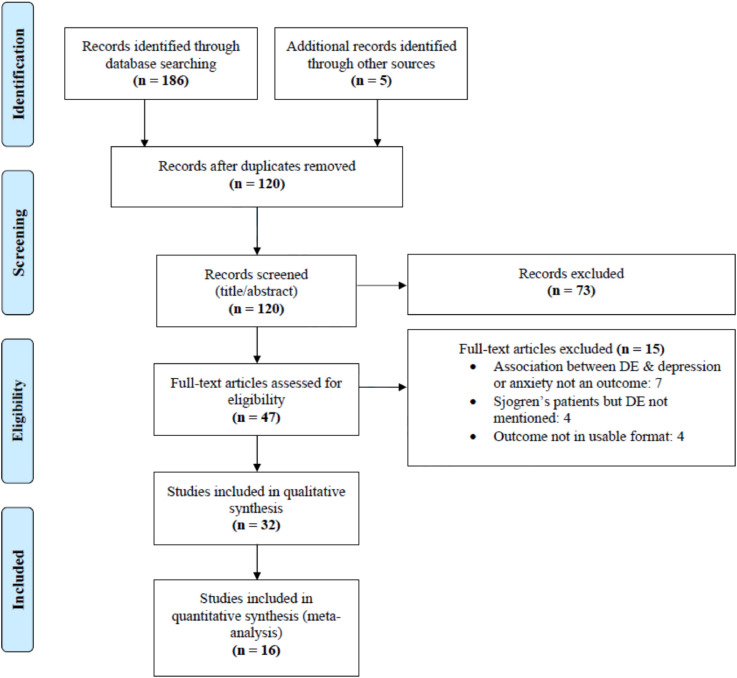
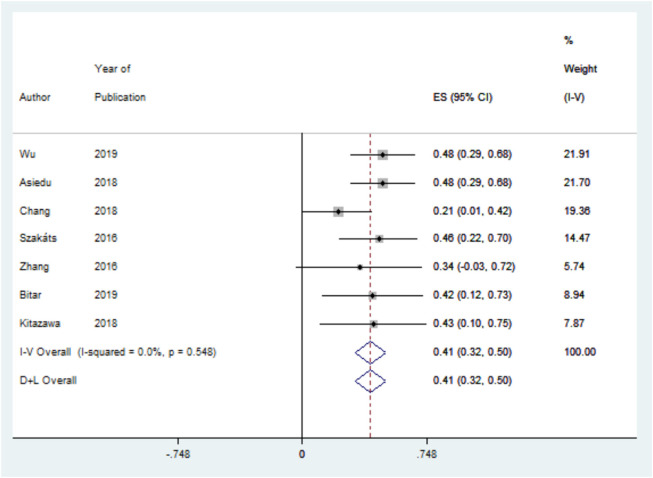
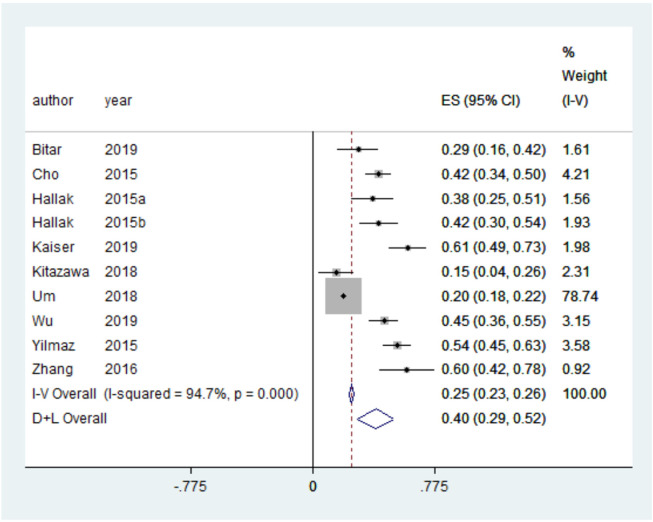
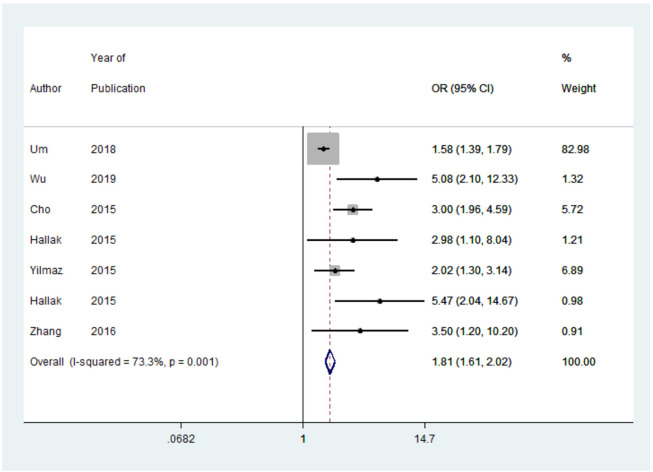
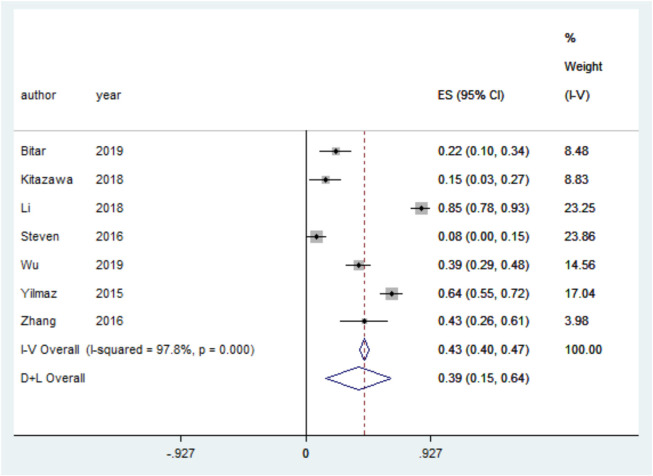
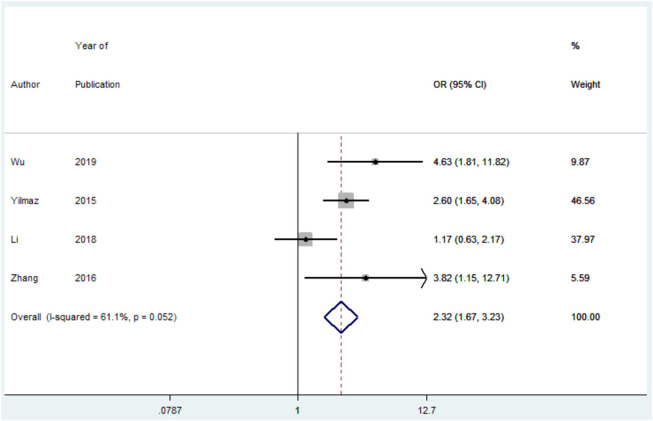
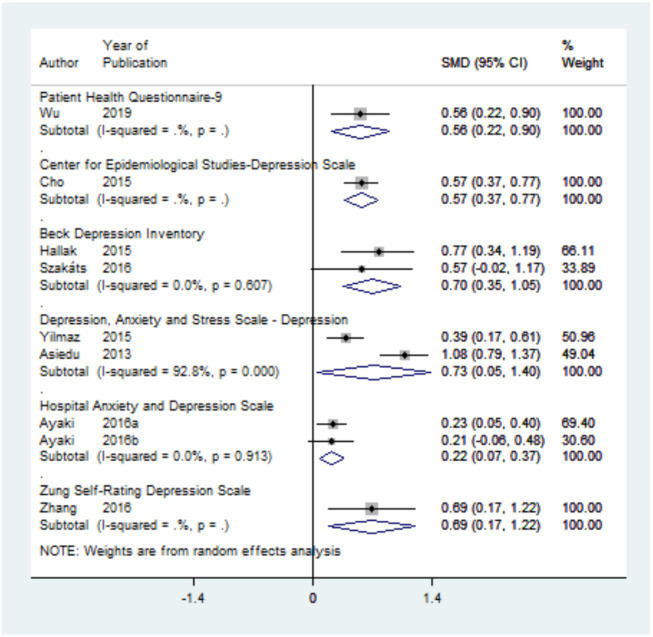
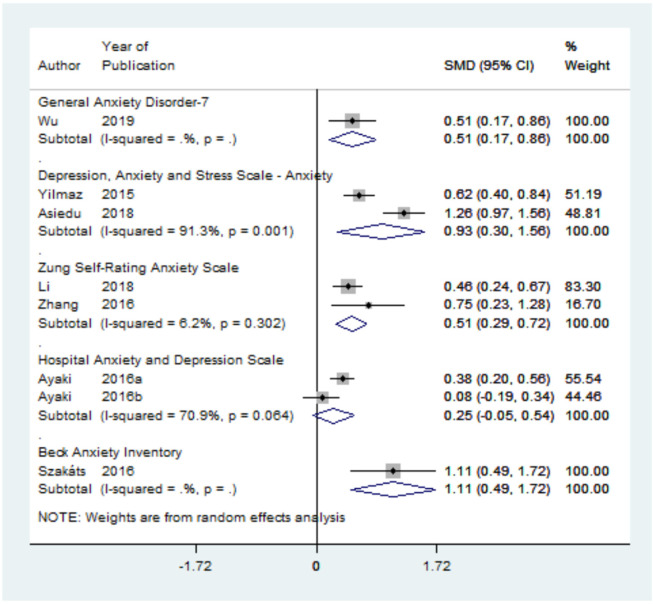
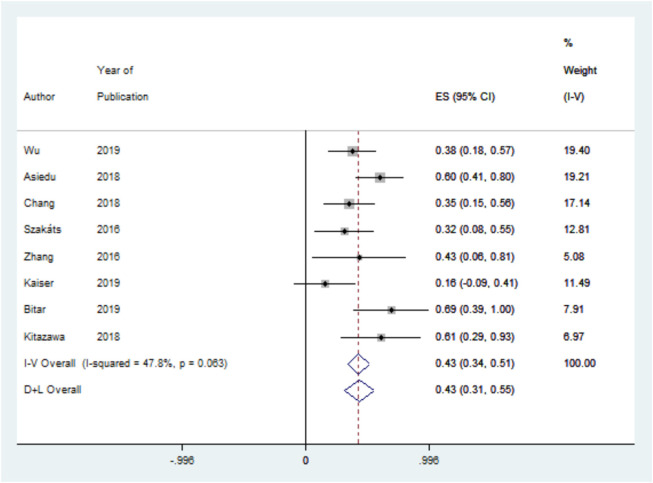
The association between dry eye disease (DED) and psychiatric conditions is a highly researched topic. This work reviews the literature on this relationship, examining the prevalence and correlations of depression and anxiety with dry eye signs and symptoms. A comprehensive literature search of MEDLINE, EMBASE, PsycINFO, and gray literature was conducted, with keywords for dry eye and mood disorders, depression, anxiety, and suicide. Eligible studies underwent quality assessment using the Newcastle-Ottawa Scale. Meta-analysis was performed using STATA 15.0. Fixed- and random-effects models were computed based on the presence of heterogeneity. Thirty-two studies were included, with 31 reporting on depression and 19 on anxiety. Meta-analysis results found a depression prevalence of 40% (CI: [0.29, 0.52]) in DED patients, with 1.81 times higher odds of prevalence compared to controls (CI: [1.61, 2.02]). Prevalence of anxiety was 39% (CI: [0.15, 0.64]), with 2.32 times higher odds of prevalence compared to controls (CI: [1.67, 3.23]). Depression scores were significantly higher in patients with DED in all studies. Anxiety scores were significantly higher in DED patients in studies using all scales except the Hospital Anxiety and Depression Scale-Anxiety Subscale. DED symptom scores were significantly associated with depression (ES = 0.43; CI: [0.31, 0.55]) and anxiety (ES = 0.41; CI: [0.32, 0.50]) scores. In conclusion, depression and anxiety are more prevalent and severe in DED patients and are correlated with dry eye symptoms but not signs. These findings highlight the interrelationship between these disorders and have important implications for providing appropriate care to these patients.
干眼疾病 (DED) 与精神疾病之间的关联是一个备受研究的课题。本综述回顾了相关文献,探讨了抑郁和焦虑与干眼体征和症状的相关性和患病率。通过 MEDLINE、EMBASE、PsycINFO 和灰色文献进行了全面的文献检索,关键词包括干眼和情绪障碍、抑郁、焦虑和自杀。使用纽卡斯尔-渥太华量表对合格研究进行了质量评估。使用 STATA 15.0 进行了荟萃分析。根据异质性的存在,计算了固定效应和随机效应模型。共纳入 32 项研究,其中 31 项报告了抑郁,19 项报告了焦虑。荟萃分析结果发现,DED 患者的抑郁患病率为 40%(CI:[0.29, 0.52]),与对照组相比,患病率的优势比为 1.81 倍(CI:[1.61, 2.02])。焦虑的患病率为 39%(CI:[0.15, 0.64]),与对照组相比,患病率的优势比为 2.32 倍(CI:[1.67, 3.23])。所有研究中,DED 患者的抑郁评分均显著升高。除了医院焦虑和抑郁量表-焦虑分量表外,使用所有量表的研究中,DED 患者的焦虑评分均显著升高。DED 症状评分与抑郁(ES = 0.43;CI:[0.31, 0.55])和焦虑(ES = 0.41;CI:[0.32, 0.50])评分显著相关。总之,抑郁和焦虑在 DED 患者中更为普遍且严重,且与干眼症状相关,但与体征无关。这些发现突出了这些疾病之间的相互关系,对为这些患者提供适当的护理具有重要意义。