• 文献检索
  • 文档翻译
  • 深度研究
  • 学术资讯
  • Suppr Zotero 插件Zotero 插件
  • 邀请有礼
  • 套餐&价格
  • 历史记录
应用&插件
Suppr Zotero 插件Zotero 插件浏览器插件Mac 客户端Windows 客户端微信小程序
定价
高级版会员购买积分包购买API积分包
服务
文献检索文档翻译深度研究API 文档MCP 服务
关于我们
关于 Suppr公司介绍联系我们用户协议隐私条款
关注我们

Suppr 超能文献

核心技术专利:CN118964589B侵权必究
粤ICP备2023148730 号-1Suppr @ 2026

文献检索

告别复杂PubMed语法,用中文像聊天一样搜索,搜遍4000万医学文献。AI智能推荐,让科研检索更轻松。

立即免费搜索

文件翻译

保留排版,准确专业,支持PDF/Word/PPT等文件格式,支持 12+语言互译。

免费翻译文档

深度研究

AI帮你快速写综述,25分钟生成高质量综述,智能提取关键信息,辅助科研写作。

立即免费体验

富氧诱导淀粉核合成及其对 中光合作用响应自然多样性的意义。

The induction of pyrenoid synthesis by hyperoxia and its implications for the natural diversity of photosynthetic responses in .

机构信息

MSU-DOE Plant Research Laboratory, Michigan State University, East Lansing, United States.

Department of Plant Biology, Michigan State University, East Lansing, United States.

出版信息

Elife. 2021 Dec 22;10:e67565. doi: 10.7554/eLife.67565.

DOI:10.7554/eLife.67565
PMID:34936552
原文链接:https://pmc.ncbi.nlm.nih.gov/articles/PMC8694700/
Abstract

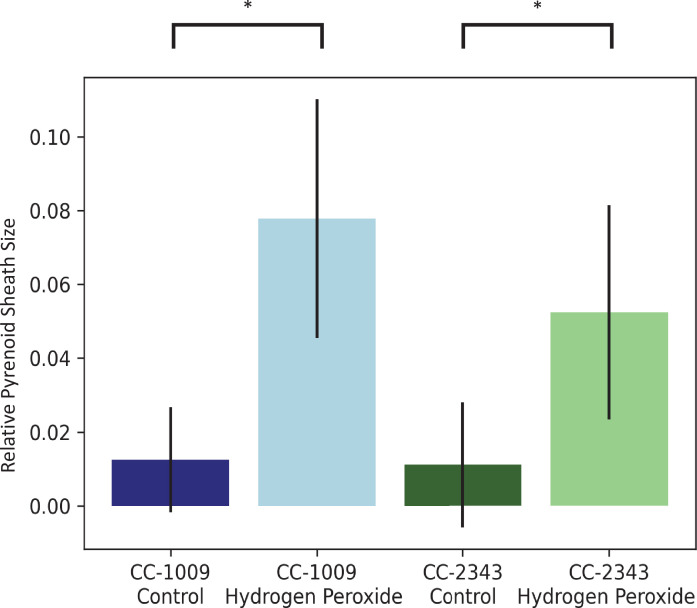
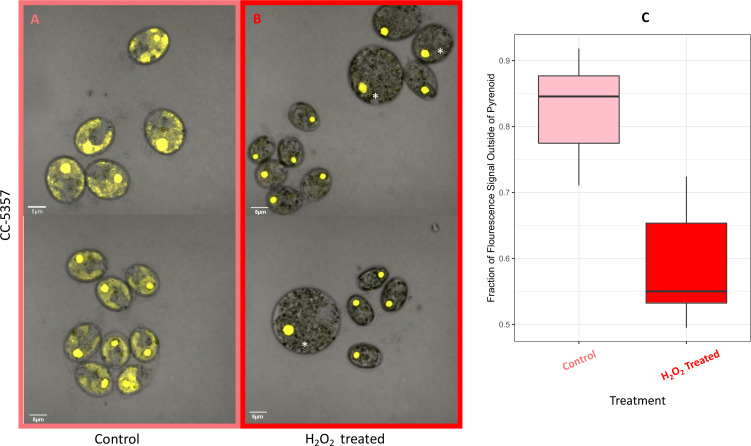
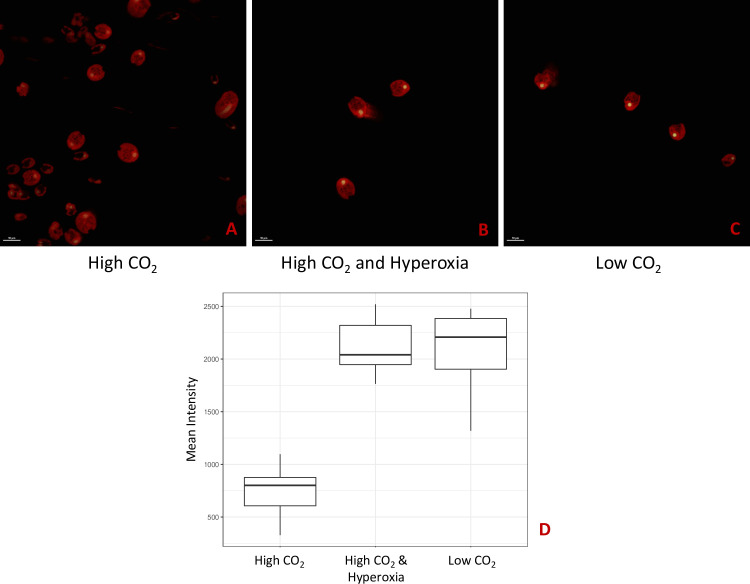
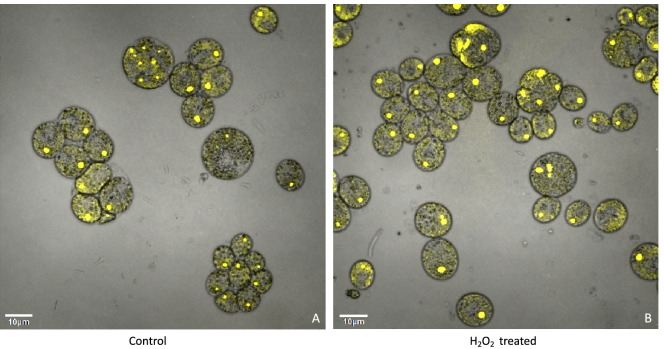
In algae, it is well established that the pyrenoid, a component of the carbon-concentrating mechanism (CCM), is essential for efficient photosynthesis at low CO. However, the signal that triggers the formation of the pyrenoid has remained elusive. Here, we show that, in , the pyrenoid is strongly induced by hyperoxia, even at high CO or bicarbonate levels. These results suggest that the pyrenoid can be induced by a common product of photosynthesis specific to low CO or hyperoxia. Consistent with this view, the photorespiratory by-product, HO, induced the pyrenoid, suggesting that it acts as a signal. Finally, we show evidence for linkages between genetic variations in hyperoxia tolerance, HO signaling, and pyrenoid morphologies.

摘要

在藻类中,已经确定,淀粉核是碳浓缩机制 (CCM) 的一个组成部分,对于在低 CO 下进行高效光合作用至关重要。然而,触发淀粉核形成的信号一直难以捉摸。在这里,我们表明,在 中,即使在高 CO 或碳酸氢盐水平下,超氧也会强烈诱导淀粉核的形成。这些结果表明,淀粉核可以被特定于低 CO 或超氧的光合作用的常见产物诱导。与这一观点一致,光呼吸副产物 HO 诱导淀粉核形成,表明其作为信号发挥作用。最后,我们提供了证据表明,超氧耐受的遗传变异、HO 信号和淀粉核形态之间存在联系。
https://cdn.ncbi.nlm.nih.gov/pmc/blobs/0db3/8694700/4fbc17818e7d/elife-67565-sa2-fig1.jpg
https://cdn.ncbi.nlm.nih.gov/pmc/blobs/0db3/8694700/3d0fb052d4e7/elife-67565-fig1.jpg
https://cdn.ncbi.nlm.nih.gov/pmc/blobs/0db3/8694700/603da5fa1e08/elife-67565-fig2.jpg
https://cdn.ncbi.nlm.nih.gov/pmc/blobs/0db3/8694700/89a3a378379a/elife-67565-fig3.jpg
https://cdn.ncbi.nlm.nih.gov/pmc/blobs/0db3/8694700/af6dcb8ba5a6/elife-67565-fig4.jpg
https://cdn.ncbi.nlm.nih.gov/pmc/blobs/0db3/8694700/3ec8a646dadd/elife-67565-fig5.jpg
https://cdn.ncbi.nlm.nih.gov/pmc/blobs/0db3/8694700/1ce7b929dc1c/elife-67565-fig6.jpg
https://cdn.ncbi.nlm.nih.gov/pmc/blobs/0db3/8694700/de0b71164b79/elife-67565-fig7.jpg
https://cdn.ncbi.nlm.nih.gov/pmc/blobs/0db3/8694700/13e28a4255ce/elife-67565-fig8.jpg
https://cdn.ncbi.nlm.nih.gov/pmc/blobs/0db3/8694700/8006e1d9d6d8/elife-67565-fig9.jpg
https://cdn.ncbi.nlm.nih.gov/pmc/blobs/0db3/8694700/c6989595bce0/elife-67565-fig10.jpg
https://cdn.ncbi.nlm.nih.gov/pmc/blobs/0db3/8694700/d63a323c7e2b/elife-67565-app1-fig1.jpg
https://cdn.ncbi.nlm.nih.gov/pmc/blobs/0db3/8694700/5cf5663d0416/elife-67565-app1-fig2.jpg
https://cdn.ncbi.nlm.nih.gov/pmc/blobs/0db3/8694700/26671806a020/elife-67565-app1-fig3.jpg
https://cdn.ncbi.nlm.nih.gov/pmc/blobs/0db3/8694700/fadd1c7dcbad/elife-67565-app1-fig4.jpg
https://cdn.ncbi.nlm.nih.gov/pmc/blobs/0db3/8694700/59af963d04c8/elife-67565-app1-fig5.jpg
https://cdn.ncbi.nlm.nih.gov/pmc/blobs/0db3/8694700/b6b5e5255006/elife-67565-app1-fig6.jpg
https://cdn.ncbi.nlm.nih.gov/pmc/blobs/0db3/8694700/61bca0bad332/elife-67565-app1-fig7.jpg
https://cdn.ncbi.nlm.nih.gov/pmc/blobs/0db3/8694700/7d31dbb61ecb/elife-67565-app1-fig8.jpg
https://cdn.ncbi.nlm.nih.gov/pmc/blobs/0db3/8694700/617d5dc440b5/elife-67565-app1-fig9.jpg
https://cdn.ncbi.nlm.nih.gov/pmc/blobs/0db3/8694700/3ea569cb8a6e/elife-67565-app1-fig10.jpg
https://cdn.ncbi.nlm.nih.gov/pmc/blobs/0db3/8694700/f3b2bb8282c1/elife-67565-app1-fig11.jpg
https://cdn.ncbi.nlm.nih.gov/pmc/blobs/0db3/8694700/7c6eb270740e/elife-67565-app1-fig12.jpg
https://cdn.ncbi.nlm.nih.gov/pmc/blobs/0db3/8694700/a8e34aba52a8/elife-67565-app1-fig13.jpg
https://cdn.ncbi.nlm.nih.gov/pmc/blobs/0db3/8694700/d4a7b15a34b0/elife-67565-app1-fig14.jpg
https://cdn.ncbi.nlm.nih.gov/pmc/blobs/0db3/8694700/2d1a3c89a87a/elife-67565-app1-fig15.jpg
https://cdn.ncbi.nlm.nih.gov/pmc/blobs/0db3/8694700/cd126354fbc7/elife-67565-app1-fig16.jpg
https://cdn.ncbi.nlm.nih.gov/pmc/blobs/0db3/8694700/457359a17e8b/elife-67565-app1-fig17.jpg
https://cdn.ncbi.nlm.nih.gov/pmc/blobs/0db3/8694700/bc06f6047e5e/elife-67565-app1-fig18.jpg
https://cdn.ncbi.nlm.nih.gov/pmc/blobs/0db3/8694700/0a0b3ba41fe4/elife-67565-app1-fig19.jpg
https://cdn.ncbi.nlm.nih.gov/pmc/blobs/0db3/8694700/e442740d3bac/elife-67565-app1-fig20.jpg
https://cdn.ncbi.nlm.nih.gov/pmc/blobs/0db3/8694700/396770f2ccb1/elife-67565-app1-fig21.jpg
https://cdn.ncbi.nlm.nih.gov/pmc/blobs/0db3/8694700/65d3fb6a817a/elife-67565-app1-fig22.jpg
https://cdn.ncbi.nlm.nih.gov/pmc/blobs/0db3/8694700/e31b7ab0f63d/elife-67565-app1-fig23.jpg
https://cdn.ncbi.nlm.nih.gov/pmc/blobs/0db3/8694700/49cdff32971d/elife-67565-app1-fig24.jpg
https://cdn.ncbi.nlm.nih.gov/pmc/blobs/0db3/8694700/4fbc17818e7d/elife-67565-sa2-fig1.jpg
https://cdn.ncbi.nlm.nih.gov/pmc/blobs/0db3/8694700/3d0fb052d4e7/elife-67565-fig1.jpg
https://cdn.ncbi.nlm.nih.gov/pmc/blobs/0db3/8694700/603da5fa1e08/elife-67565-fig2.jpg
https://cdn.ncbi.nlm.nih.gov/pmc/blobs/0db3/8694700/89a3a378379a/elife-67565-fig3.jpg
https://cdn.ncbi.nlm.nih.gov/pmc/blobs/0db3/8694700/af6dcb8ba5a6/elife-67565-fig4.jpg
https://cdn.ncbi.nlm.nih.gov/pmc/blobs/0db3/8694700/3ec8a646dadd/elife-67565-fig5.jpg
https://cdn.ncbi.nlm.nih.gov/pmc/blobs/0db3/8694700/1ce7b929dc1c/elife-67565-fig6.jpg
https://cdn.ncbi.nlm.nih.gov/pmc/blobs/0db3/8694700/de0b71164b79/elife-67565-fig7.jpg
https://cdn.ncbi.nlm.nih.gov/pmc/blobs/0db3/8694700/13e28a4255ce/elife-67565-fig8.jpg
https://cdn.ncbi.nlm.nih.gov/pmc/blobs/0db3/8694700/8006e1d9d6d8/elife-67565-fig9.jpg
https://cdn.ncbi.nlm.nih.gov/pmc/blobs/0db3/8694700/c6989595bce0/elife-67565-fig10.jpg
https://cdn.ncbi.nlm.nih.gov/pmc/blobs/0db3/8694700/d63a323c7e2b/elife-67565-app1-fig1.jpg
https://cdn.ncbi.nlm.nih.gov/pmc/blobs/0db3/8694700/5cf5663d0416/elife-67565-app1-fig2.jpg
https://cdn.ncbi.nlm.nih.gov/pmc/blobs/0db3/8694700/26671806a020/elife-67565-app1-fig3.jpg
https://cdn.ncbi.nlm.nih.gov/pmc/blobs/0db3/8694700/fadd1c7dcbad/elife-67565-app1-fig4.jpg
https://cdn.ncbi.nlm.nih.gov/pmc/blobs/0db3/8694700/59af963d04c8/elife-67565-app1-fig5.jpg
https://cdn.ncbi.nlm.nih.gov/pmc/blobs/0db3/8694700/b6b5e5255006/elife-67565-app1-fig6.jpg
https://cdn.ncbi.nlm.nih.gov/pmc/blobs/0db3/8694700/61bca0bad332/elife-67565-app1-fig7.jpg
https://cdn.ncbi.nlm.nih.gov/pmc/blobs/0db3/8694700/7d31dbb61ecb/elife-67565-app1-fig8.jpg
https://cdn.ncbi.nlm.nih.gov/pmc/blobs/0db3/8694700/617d5dc440b5/elife-67565-app1-fig9.jpg
https://cdn.ncbi.nlm.nih.gov/pmc/blobs/0db3/8694700/3ea569cb8a6e/elife-67565-app1-fig10.jpg
https://cdn.ncbi.nlm.nih.gov/pmc/blobs/0db3/8694700/f3b2bb8282c1/elife-67565-app1-fig11.jpg
https://cdn.ncbi.nlm.nih.gov/pmc/blobs/0db3/8694700/7c6eb270740e/elife-67565-app1-fig12.jpg
https://cdn.ncbi.nlm.nih.gov/pmc/blobs/0db3/8694700/a8e34aba52a8/elife-67565-app1-fig13.jpg
https://cdn.ncbi.nlm.nih.gov/pmc/blobs/0db3/8694700/d4a7b15a34b0/elife-67565-app1-fig14.jpg
https://cdn.ncbi.nlm.nih.gov/pmc/blobs/0db3/8694700/2d1a3c89a87a/elife-67565-app1-fig15.jpg
https://cdn.ncbi.nlm.nih.gov/pmc/blobs/0db3/8694700/cd126354fbc7/elife-67565-app1-fig16.jpg
https://cdn.ncbi.nlm.nih.gov/pmc/blobs/0db3/8694700/457359a17e8b/elife-67565-app1-fig17.jpg
https://cdn.ncbi.nlm.nih.gov/pmc/blobs/0db3/8694700/bc06f6047e5e/elife-67565-app1-fig18.jpg
https://cdn.ncbi.nlm.nih.gov/pmc/blobs/0db3/8694700/0a0b3ba41fe4/elife-67565-app1-fig19.jpg
https://cdn.ncbi.nlm.nih.gov/pmc/blobs/0db3/8694700/e442740d3bac/elife-67565-app1-fig20.jpg
https://cdn.ncbi.nlm.nih.gov/pmc/blobs/0db3/8694700/396770f2ccb1/elife-67565-app1-fig21.jpg
https://cdn.ncbi.nlm.nih.gov/pmc/blobs/0db3/8694700/65d3fb6a817a/elife-67565-app1-fig22.jpg
https://cdn.ncbi.nlm.nih.gov/pmc/blobs/0db3/8694700/e31b7ab0f63d/elife-67565-app1-fig23.jpg
https://cdn.ncbi.nlm.nih.gov/pmc/blobs/0db3/8694700/49cdff32971d/elife-67565-app1-fig24.jpg
https://cdn.ncbi.nlm.nih.gov/pmc/blobs/0db3/8694700/4fbc17818e7d/elife-67565-sa2-fig1.jpg

相似文献

1
The induction of pyrenoid synthesis by hyperoxia and its implications for the natural diversity of photosynthetic responses in .富氧诱导淀粉核合成及其对 中光合作用响应自然多样性的意义。
Elife. 2021 Dec 22;10:e67565. doi: 10.7554/eLife.67565.
2
Pyrenoid loss impairs carbon-concentrating mechanism induction and alters primary metabolism in Chlamydomonas reinhardtii.淀粉核缺失会损害莱茵衣藻的碳浓缩机制诱导,并改变其初级代谢。
J Exp Bot. 2017 Jun 1;68(14):3891-3902. doi: 10.1093/jxb/erx121.
3
Pyrenoid loss in Chlamydomonas reinhardtii causes limitations in CO2 supply, but not thylakoid operating efficiency.莱茵衣藻中淀粉核的丧失导致 CO2 供应受限,但不会影响类囊体的运行效率。
J Exp Bot. 2017 Jun 1;68(14):3903-3913. doi: 10.1093/jxb/erx197.
4
Pyrenoid: Organelle with efficient CO-Concentrating mechanism in algae.蛋白核:藻类中具有高效二氧化碳浓缩机制的细胞器。
J Plant Physiol. 2023 Aug;287:154044. doi: 10.1016/j.jplph.2023.154044. Epub 2023 Jun 25.
5
Presence of the CO2-concentrating mechanism in some species of the pyrenoid-less free-living algal genus Chloromonas (Volvocales, Chlorophyta).在一些无淀粉核的自由生活绿藻属绿梭藻(团藻目,绿藻门)的物种中存在二氧化碳浓缩机制。
Planta. 1998 Mar;204(3):269-76. doi: 10.1007/s004250050256.
6
Effects of microcompartmentation on flux distribution and metabolic pools in chloroplasts.微区隔化对叶绿体中通量分布和代谢物库的影响。
Elife. 2018 Oct 11;7:e37960. doi: 10.7554/eLife.37960.
7
Chloroplast-mediated regulation of CO2-concentrating mechanism by Ca2+-binding protein CAS in the green alga Chlamydomonas reinhardtii.莱茵衣藻中叶绿体介导的Ca2+结合蛋白CAS对二氧化碳浓缩机制的调控
Proc Natl Acad Sci U S A. 2016 Nov 1;113(44):12586-12591. doi: 10.1073/pnas.1606519113. Epub 2016 Oct 17.
8
Oxygen overload.氧气过荷。
Elife. 2021 Dec 22;10:e75695. doi: 10.7554/eLife.75695.
9
Rubisco and carbon-concentrating mechanism co-evolution across chlorophyte and streptophyte green algae.核酮糖-1,5-二磷酸羧化酶/加氧酶与碳浓缩机制在绿藻纲和链形植物绿藻中的共同进化
New Phytol. 2020 Aug;227(3):810-823. doi: 10.1111/nph.16577. Epub 2020 May 13.
10
Light and low-CO2-dependent LCIB-LCIC complex localization in the chloroplast supports the carbon-concentrating mechanism in Chlamydomonas reinhardtii.叶绿体中光照和低 CO2 依赖性 LCIB-LCIC 复合体的定位支持莱茵衣藻的碳浓缩机制。
Plant Cell Physiol. 2010 Sep;51(9):1453-68. doi: 10.1093/pcp/pcq105. Epub 2010 Jul 21.

引用本文的文献

1
The green algae CO concentrating mechanism and photorespiration jointly operate during acclimation to low CO.绿藻的CO浓缩机制和光呼吸在适应低CO环境的过程中共同起作用。
Nat Commun. 2025 Jun 17;16(1):5296. doi: 10.1038/s41467-025-60525-7.
2
Cultivation modes affect the morphology, biochemical composition, and antioxidant and anti-inflammatory properties of the green microalga Neochloris oleoabundans.培养方式影响绿微藻油囊藻的形态、生化组成以及抗氧化和抗炎特性。
Protoplasma. 2024 Nov;261(6):1185-1206. doi: 10.1007/s00709-024-01958-7. Epub 2024 Jun 12.
3
Chloroplast Methyltransferase Homolog RMT2 is Involved in Photosystem I Biogenesis.

本文引用的文献

1
Influence of monoterpenoids on the growth of freshwater cyanobacteria.单萜类化合物对淡水蓝藻生长的影响。
Appl Microbiol Biotechnol. 2021 Jul;105(13):5675-5687. doi: 10.1007/s00253-021-11260-8. Epub 2021 Jun 23.
2
A gene regulatory network for antenna size control in carbon dioxide-deprived Chlamydomonas reinhardtii cells.二氧化碳饥饿条件下莱茵衣藻触角大小调控的基因调控网络。
Plant Cell. 2021 May 31;33(4):1303-1318. doi: 10.1093/plcell/koab012.
3
Pyrenoids: CO-fixing phase separated liquid organelles.淀粉核:CO2 固定相分离的液体细胞器。
叶绿体甲基转移酶同源物RMT2参与光系统I的生物合成。
bioRxiv. 2024 Apr 5:2023.12.21.572672. doi: 10.1101/2023.12.21.572672.
4
The pyrenoid: the eukaryotic CO2-concentrating organelle.淀粉核:真核生物的 CO2 浓缩细胞器。
Plant Cell. 2023 Sep 1;35(9):3236-3259. doi: 10.1093/plcell/koad157.
5
A phase-separated CO2-fixing pyrenoid proteome determined by TurboID in Chlamydomonas reinhardtii.藻蓝蛋白小体的相分离 CO2 固定蛋白组由 TurboID 在莱茵衣藻中确定。
Plant Cell. 2023 Sep 1;35(9):3260-3279. doi: 10.1093/plcell/koad131.
6
Roles of ApcD and orange carotenoid protein in photoinduction of electron transport upon dark-light transition in the Synechocystis PCC 6803 mutant deficient in flavodiiron protein Flv1.APC 家族蛋白 D(ApcD)和橙色类胡萝卜素蛋白在 Synechocystis PCC 6803 突变体 Flv1 缺失黄素铁蛋白的光暗转换中电子传递的光诱导中的作用。
Photosynth Res. 2024 Mar;159(2-3):97-114. doi: 10.1007/s11120-023-01019-9. Epub 2023 Apr 24.
7
Cellular and molecular mechanisms of Hedgehog signalling.Hedgehog 信号通路的细胞与分子机制。
Nat Rev Mol Cell Biol. 2023 Sep;24(9):668-687. doi: 10.1038/s41580-023-00591-1. Epub 2023 Mar 17.
8
The carbon-concentrating mechanism of the extremophilic red microalga Cyanidioschyzon merolae.极端嗜热红微藻 Cyanidioschyzon merolae 的碳浓缩机制。
Photosynth Res. 2023 May;156(2):247-264. doi: 10.1007/s11120-023-01000-6. Epub 2023 Feb 13.
9
New horizons for building pyrenoid-based CO2-concentrating mechanisms in plants to improve yields.为提高产量,在植物中构建基于淀粉核的 CO2 浓缩机制的新视野。
Plant Physiol. 2022 Oct 27;190(3):1609-1627. doi: 10.1093/plphys/kiac373.
10
Oxygen overload.氧气过荷。
Elife. 2021 Dec 22;10:e75695. doi: 10.7554/eLife.75695.
Biochim Biophys Acta Mol Cell Res. 2021 Apr;1868(5):118949. doi: 10.1016/j.bbamcr.2021.118949. Epub 2021 Jan 7.
4
Condensation of Rubisco into a proto-pyrenoid in higher plant chloroplasts.高等植物叶绿体中 Rubisco 凝聚形成原类囊体。
Nat Commun. 2020 Dec 9;11(1):6303. doi: 10.1038/s41467-020-20132-0.
5
Assembly of the algal CO-fixing organelle, the pyrenoid, is guided by a Rubisco-binding motif.藻类二氧化碳固定细胞器——蛋白核的组装由一个核酮糖-1,5-二磷酸羧化酶结合基序引导。
Sci Adv. 2020 Nov 11;6(46). doi: 10.1126/sciadv.abd2408. Print 2020 Nov.
6
Ascorbate peroxidase 4 plays a role in the tolerance of Chlamydomonas reinhardtii to photo-oxidative stress.抗坏血酸过氧化物酶 4 参与莱茵衣藻耐受光氧化胁迫。
Sci Rep. 2020 Aug 6;10(1):13287. doi: 10.1038/s41598-020-70247-z.
7
Acclimation of Chlamydomonas to changing carbon availability.衣藻对不断变化的碳可用性的适应。
Funct Plant Biol. 2002 Apr;29(3):221-230. doi: 10.1071/PP01182.
8
Rubisco and carbon-concentrating mechanism co-evolution across chlorophyte and streptophyte green algae.核酮糖-1,5-二磷酸羧化酶/加氧酶与碳浓缩机制在绿藻纲和链形植物绿藻中的共同进化
New Phytol. 2020 Aug;227(3):810-823. doi: 10.1111/nph.16577. Epub 2020 May 13.
9
Prospects for Engineering Biophysical CO Concentrating Mechanisms into Land Plants to Enhance Yields.将工程生物物理 CO 浓缩机制纳入陆地植物以提高产量的前景。
Annu Rev Plant Biol. 2020 Apr 29;71:461-485. doi: 10.1146/annurev-arplant-081519-040100. Epub 2020 Mar 9.
10
Pyrenoid Starch Sheath Is Required for LCIB Localization and the CO-Concentrating Mechanism in Green Algae.淀粉核鞘对于绿藻中 LCIB 的定位和 CO2 浓缩机制是必需的。
Plant Physiol. 2020 Apr;182(4):1883-1893. doi: 10.1104/pp.19.01587. Epub 2020 Feb 10.