Dawson Samantha K, Carmona Carlos Pérez, González-Suárez Manuela, Jönsson Mari, Chichorro Filipe, Mallen-Cooper Max, Melero Yolanda, Moor Helen, Simaika John P, Duthie Alexander Bradley
Swedish Species Information Centre Swedish University of Agricultural Sciences Uppsala Sweden.
Institute of Ecology and Earth Sciences University of Tartu Tartu Estonia.
Ecol Evol. 2021 Nov 11;11(23):16434-16445. doi: 10.1002/ece3.8321. eCollection 2021 Dec.
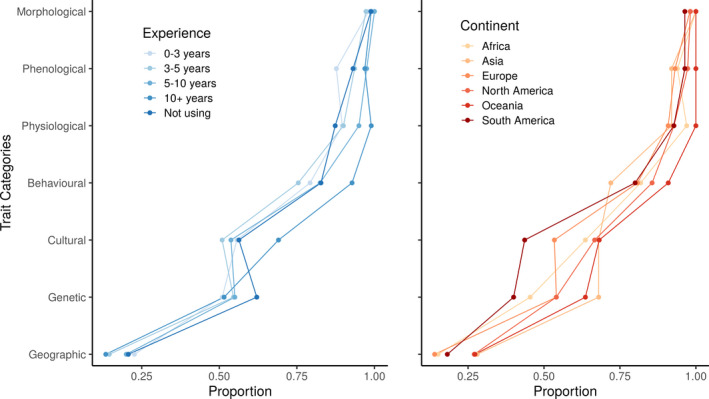
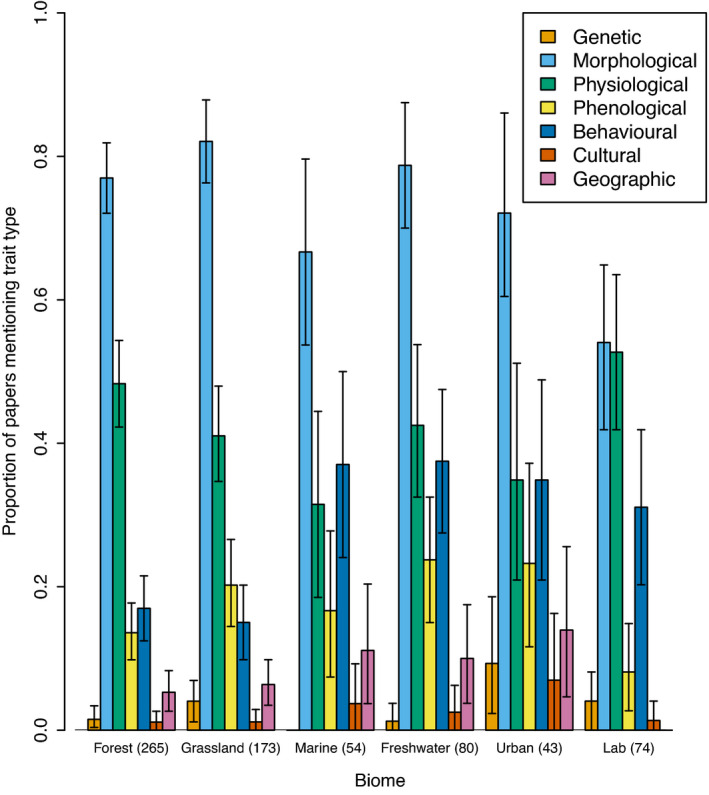
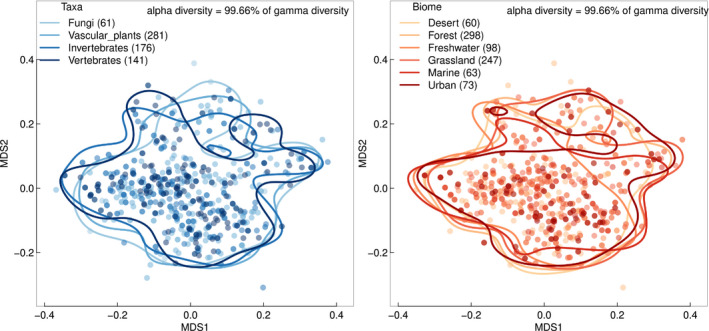
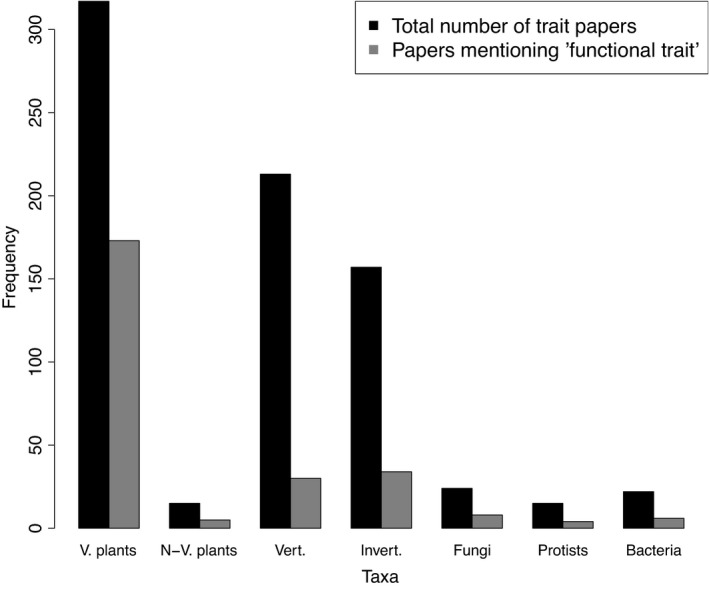
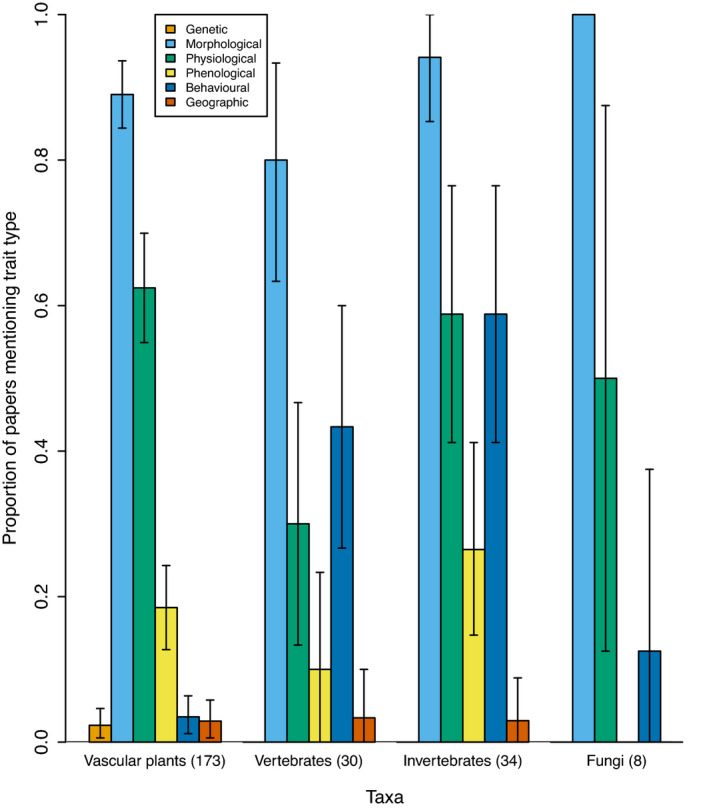
Trait and functional trait approaches have revolutionized ecology improving our understanding of community assembly, species coexistence, and biodiversity loss. Focusing on traits promotes comparability across spatial and organizational scales, but terms must be used consistently. While several papers have offered definitions, it remains unclear how ecologists operationalize "trait" and "functional trait" terms. Here, we evaluate how researchers and the published literatures use these terms and explore differences among subdisciplines and study systems (taxa and biome). By conducting both a survey and a literature review, we test the hypothesis that ecologists' working definition of "trait" is adapted or altered when confronting the realities of collecting, analyzing and presenting data. From 486 survey responses and 712 reviewed papers, we identified inconsistencies in the understanding and use of terminology among researchers, but also limited inclusion of definitions within the published literature. Discrepancies were not explained by subdiscipline, system of study, or respondent characteristics, suggesting there could be an inconsistent understanding even among those working in related topics. Consistencies among survey responses included the use of morphological, phonological, and physiological traits. Previous studies have called for unification of terminology; yet, our study shows that proposed definitions are not consistently used or accepted. Sources of disagreement include trait heritability, defining and interpreting function, and dealing with organisms in which individuals are not clearly recognizable. We discuss and offer guidelines for overcoming these disagreements. The diversity of life on Earth means traits can represent different features that can be measured and reported in different ways, and thus, narrow definitions that work for one system will fail in others. We recommend ecologists embrace the breadth of biodiversity using a simplified definition of "trait" more consistent with its common use. Trait-based approaches will be most powerful if we accept that traits are at least as diverse as trait ecologists.
性状和功能性状方法已经彻底改变了生态学,增进了我们对群落组装、物种共存和生物多样性丧失的理解。关注性状有助于在空间和组织尺度上进行比较,但术语的使用必须保持一致。虽然有几篇论文给出了定义,但生态学家如何将“性状”和“功能性状”术语付诸实践仍不清楚。在这里,我们评估研究人员和已发表文献如何使用这些术语,并探讨不同子学科和研究系统(分类群和生物群落)之间的差异。通过进行一项调查和文献综述,我们检验了这样一个假设,即生态学家对“性状”的工作定义在面对收集、分析和呈现数据的现实情况时会被调整或改变。从486份调查回复和712篇综述论文中,我们发现研究人员在术语的理解和使用上存在不一致之处,而且已发表文献中对定义的纳入也有限。差异并不能由子学科、研究系统或受访者特征来解释,这表明即使是从事相关主题研究的人员之间也可能存在不一致的理解。调查回复中的一致性包括形态、音系和生理性状的使用。先前的研究呼吁统一术语;然而,我们的研究表明,所提出的定义并未得到一致使用或接受。分歧的来源包括性状遗传力、功能的定义和解释,以及处理个体难以清晰识别的生物体。我们讨论并提供了克服这些分歧的指导方针。地球上生命的多样性意味着性状可以代表不同的特征,这些特征可以用不同的方式进行测量和报告,因此,适用于一个系统的狭义定义在其他系统中可能会失效。我们建议生态学家采用一个更符合其常用用法的“性状”简化定义,接受生物多样性的广度。如果我们承认性状至少与性状生态学家一样多样,基于性状的方法将最具威力。