Chen Sibo, Fu Xin, Chen Kexin, Hua Jinguo, Rao Qian, Feng Xuewei, Ji Wenli
College of Landscape Architecture and Arts, Northwest A&F University, Xianyang 712100, China.
College of the Environment and Ecology, Xiamen University, Xiamen 361102, China.
Plants (Basel). 2025 Jul 10;14(14):2130. doi: 10.3390/plants14142130.
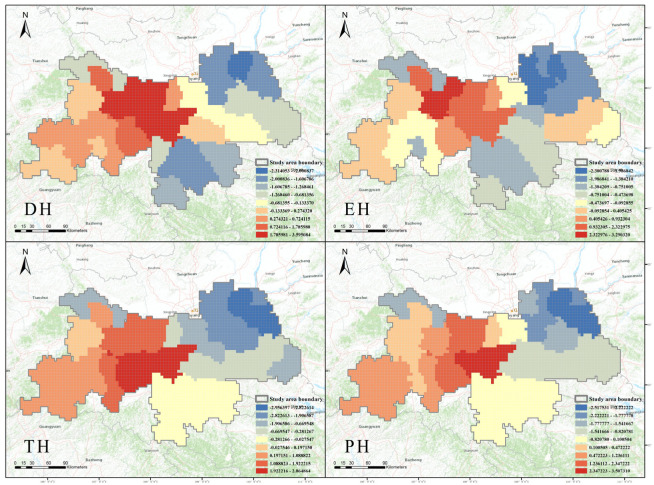
The establishment of conservation areas is considered one of the most effective approaches to address biodiversity loss with limited resources. Identifying hotspots of plant diversity and conservation gaps has played a crucial role in optimizing conservation areas. Utilizing diverse types of research data can effectively enhance the recognition of hotspots and conservation gaps. Phenotypic trait diversity is a functional biogeography that analyzes the geographic distribution patterns, formation, and reasons for the development of specific or multiple phenotypic traits of organisms. Flower color and fruit color phenotypic traits are primary characteristics through which plants interact with other organisms, affecting their own survival and reproduction, and that of their offspring. This study utilized data from 1923 Phenotypic Trait Diversity Species (PTDS) with flower and fruit color characteristics to optimize conservation areas in the Shaanxi Qinling Mountains. Additionally, data from 1838 endemic species (ES), 190 threatened species (TS), and 119 protected species (PS) were used for validation. The data were primarily sourced from the Catalogue of Vascular Plants in Shaanxi, supplemented by the Chinese Virtual Herbarium and the Shaanxi Digital Herbarium. The results reveal that by comparing the existing conservation area boundaries with those determined by four types of data, conservation gaps are found in 14 counties in the Qinling Mountains of Shaanxi. The existing conservation area only accounts for 13.3% of the area determined by the four types of data. There are gaps in biodiversity conservation in the Qinling Mountains of Shaanxi, and the macroscopic use of plant phenotypic trait data contributes to optimizing these conservation gaps.
建立保护区被认为是在资源有限的情况下应对生物多样性丧失的最有效方法之一。识别植物多样性热点和保护缺口在优化保护区方面发挥了关键作用。利用多种类型的研究数据可以有效提高对热点和保护缺口的认识。表型性状多样性是一种功能生物地理学,它分析生物体特定或多个表型性状的地理分布模式、形成及其发展原因。花色和果实颜色表型性状是植物与其他生物相互作用的主要特征,影响着它们自身以及后代的生存和繁殖。本研究利用了1923种具有花色和果实颜色特征的表型性状多样性物种(PTDS)的数据来优化陕西秦岭山区的保护区。此外,还使用了1838种特有物种(ES)、190种受威胁物种(TS)和119种保护物种(PS)的数据进行验证。数据主要来源于《陕西维管植物名录》,并辅以中国数字植物标本馆和陕西数字标本馆。结果表明,通过将现有的保护区边界与由四类数据确定的边界进行比较,发现陕西秦岭的14个县存在保护缺口。现有的保护区仅占由四类数据确定面积的13.3%。陕西秦岭地区的生物多样性保护存在缺口,宏观利用植物表型性状数据有助于优化这些保护缺口。