Department of Trauma Surgery, University Medical Center Regensburg, Franz-Josef-Strauß-Allee 11, 93053, Regensburg, Germany.
Experimental Rheumatology Unit, Department of Orthopedics, Jena University Hospital, Waldkliniken Eisenberg GmbH, Klosterlausnitzer Strasse 81, 07607, Eisenberg, Germany.
J Orthop Traumatol. 2021 Dec 23;22(1):56. doi: 10.1186/s10195-021-00614-7.
Antibiotic-containing cement and bone graft substitute-coated orthopedic implants provide the advantages of simultaneous local antibiotic delivery and internal stable fixation, aiding in both infection eradication and osseous healing. Standardized protocols pertaining to implant coating techniques in various clinical and particularly intraoperative settings are scarce, and available literature is limited. This systematic review aims to provide a summary of the available current literature reporting on custom-made coating techniques of orthopedic implants, indications, outcomes, and associated complications in clinical use.
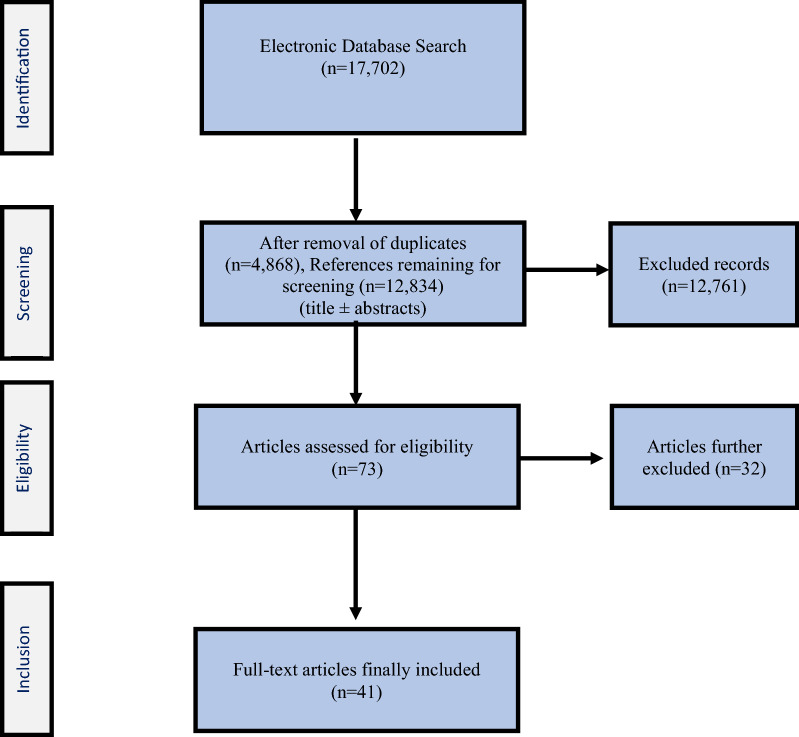
A systematic search of the literature in PubMed, Medline, Embase, and Cochrane Library databases was performed in accordance with PRISMA guidelines. Articles reporting specifically on custom-made coating techniques of orthopedic implants in a clinical setting were eligible.
A total of 41 articles with a cumulative total number of 607 cases were included. Indications for treatment mostly involved intramedullary infections after previous plate osteosynthesis or nailing. A variety of implants ranging from intramedullary nails, plates, wires, and rods served as metal cores for coating. Polymethylmethacrylate (PMMA) bone cement was most commonly used, with vancomycin as the most frequently added antibiotic additive. Chest tubes and silicone tubes were most often used to mold. Common complications are cement debonding and breakage of the metallic implant.
Adequate coating techniques can reduce the burden of treatment and be associated with favorable outcomes. Lack of general consensus and heterogeneity in the reported literature indicate that the perfect all-in-one implant coating method is yet to be found. Further efforts to improve implant coating techniques are warranted.
III.
含抗生素的水泥和骨移植替代物涂层骨科植入物具有局部抗生素递送和内部稳定固定的优势,有助于消除感染和促进骨质愈合。关于各种临床,特别是术中植入物涂层技术的标准化方案很少,可用的文献也有限。本系统评价旨在总结目前关于骨科植入物定制涂层技术的文献,包括临床应用中的适应证、结果和相关并发症。
根据 PRISMA 指南,对 PubMed、Medline、Embase 和 Cochrane 图书馆数据库进行了系统文献检索。符合条件的文章需专门报告骨科植入物的定制涂层技术,并在临床环境中使用。
共纳入 41 篇文章,共计 607 例。治疗的适应证主要涉及先前钢板骨合成或钉内固定后的髓内感染。各种植入物,包括髓内钉、钢板、钢丝和棒,作为涂层的金属核心。聚甲基丙烯酸甲酯(PMMA)骨水泥最常被使用,万古霉素是最常添加的抗生素添加剂。胸管和硅管最常用于成型。常见的并发症是水泥脱粘和金属植入物断裂。
适当的涂层技术可以减轻治疗负担,并带来良好的结果。报告的文献中缺乏普遍共识和异质性表明,完美的一体式植入物涂层方法尚未找到。需要进一步努力改进植入物涂层技术。
III 级。