Escher Felicitas, Aleshcheva Ganna, Pietsch Heiko, Baumeier Christian, Gross Ulrich M, Schrage Benedikt Norbert, Westermann Dirk, Bock Claus-Thomas, Schultheiss Heinz-Peter
Institute of Cardiac Diagnostics and Therapy, IKDT GmbH, 12203 Berlin, Germany.
Department of Internal Medicine and Cardiology, Campus Virchow-Klinikum, Charité-Universitaetsmedizin Berlin, Corporate Member of Freie Universitaet Berlin and Humboldt-Universitaet zu Berlin, 13353 Berlin, Germany.
Biomedicines. 2021 Dec 14;9(12):1898. doi: 10.3390/biomedicines9121898.
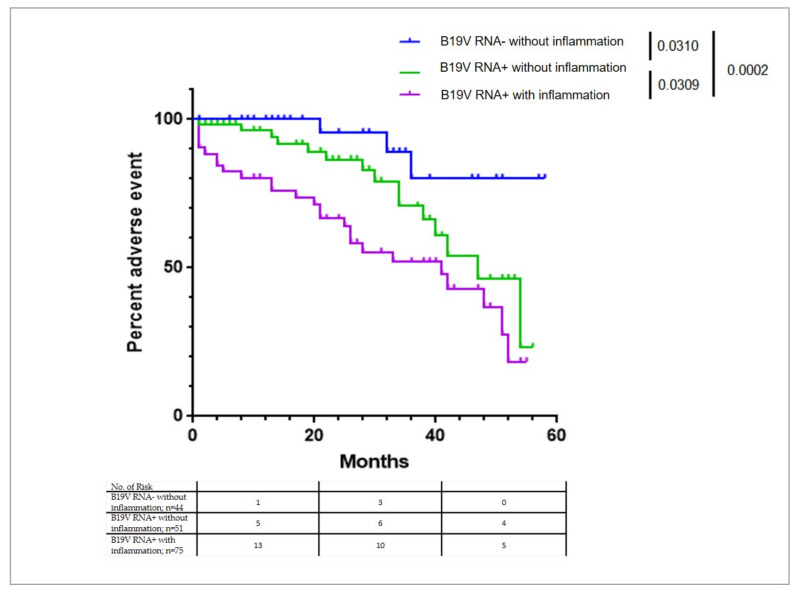
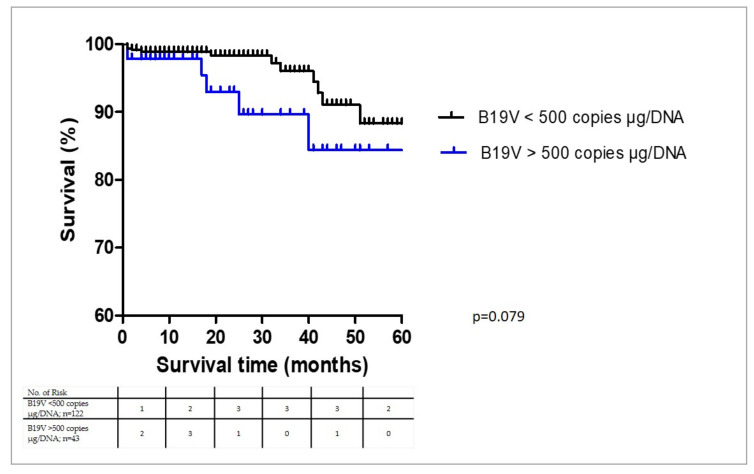
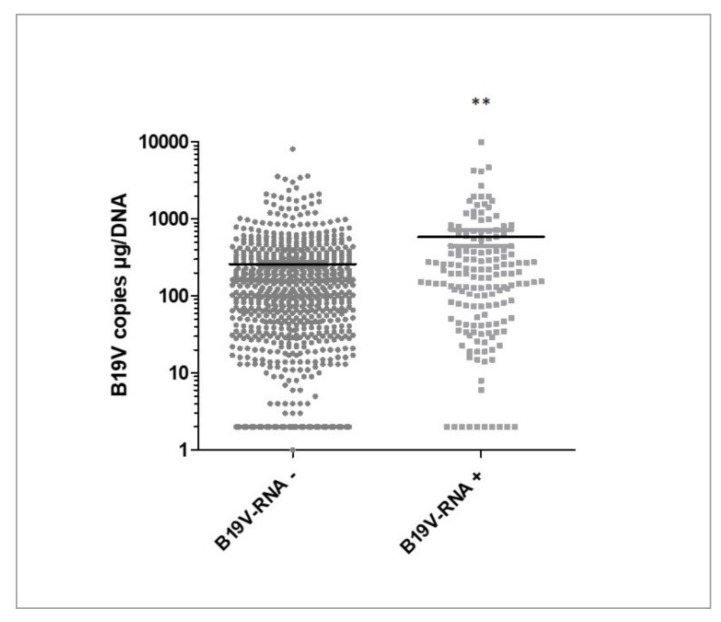
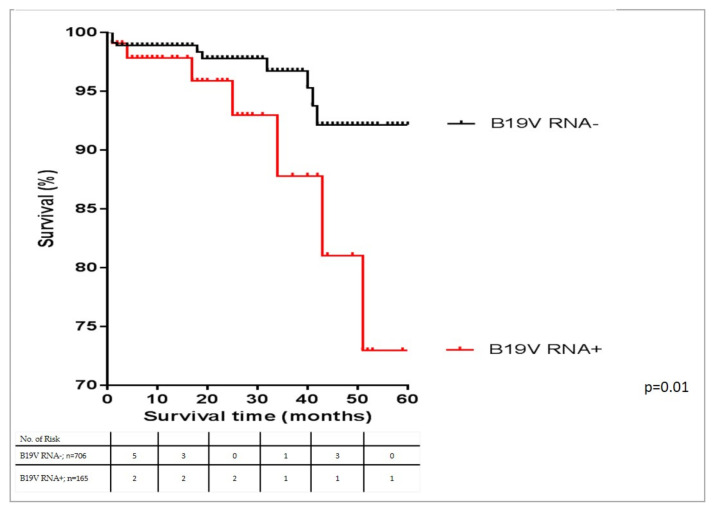
Parvovirus B19 (B19V) is the predominant cardiotropic virus currently found in endomyocardial biopsies (EMBs). However, direct evidence showing a causal relationship between B19V and progression of inflammatory cardiomyopathy are still missing. The aim of this study was to analyze the impact of transcriptionally active cardiotropic B19V infection determined by viral RNA expression upon long-term outcomes in a large cohort of adult patients with non-ischemic cardiomyopathy in a retrospective analysis from a prospective observational cohort. In total, the analyzed study group comprised 871 consecutive B19V-positive patients (mean age 50.0 ± 15.0 years) with non-ischemic cardiomyopathy who underwent EMB. B19V-positivity was ascertained by routine diagnosis of viral genomes in EMBs. Molecular analysis of EMB revealed positive B19V transcriptional activity in = 165 patients (18.9%). Primary endpoint was all-cause mortality in the overall cohort. The patients were followed up to 60 months. On the Cox regression analysis, B19V transcriptional activity was predictive of a worse prognosis compared to those without actively replicating B19V ( = 0.01). Moreover, multivariable analysis revealed transcriptional active B19V combined with inflammation [hazard ratio 4.013, 95% confidence interval 1.515-10.629 ( = 0.005)] as the strongest predictor of impaired survival even after adjustment for age and baseline LVEF ( = 0.005) and independently of viral load. The study demonstrates for the first time the pathogenic clinical importance of B19V with transcriptional activity in a large cohort of patients. Transcriptionally active B19V infection is an unfavourable prognostic trigger of adverse outcome. Our findings are of high clinical relevance, indicating that advanced diagnostic differentiation of B19V positive patients is of high prognostic importance.
细小病毒B19(B19V)是目前在心内膜心肌活检(EMB)中发现的主要嗜心肌病毒。然而,仍缺乏直接证据表明B19V与炎症性心肌病进展之间存在因果关系。本研究的目的是通过对一个前瞻性观察队列的回顾性分析,分析由病毒RNA表达确定的转录活性嗜心肌B19V感染对一大群非缺血性心肌病成年患者长期预后的影响。总共,分析的研究组包括871例连续接受EMB的非缺血性心肌病B19V阳性患者(平均年龄50.0±15.0岁)。通过EMB中病毒基因组的常规诊断确定B19V阳性。EMB的分子分析显示165例患者(18.9%)存在阳性B19V转录活性。主要终点是整个队列的全因死亡率。对患者进行了长达60个月的随访。在Cox回归分析中,与无活跃复制B19V的患者相比,B19V转录活性预示预后更差(P = 0.01)。此外,多变量分析显示,即使在调整年龄和基线左室射血分数后(P = 0.005),转录活性B19V与炎症相结合[风险比4.013,95%置信区间1.515 - 10.629(P = 0.005)]是生存受损的最强预测因素,且独立于病毒载量。该研究首次证明了转录活性B19V在一大群患者中的致病临床重要性。转录活性B19V感染是不良结局的不利预后触发因素。我们的发现具有高度临床相关性,表明对B19V阳性患者进行高级诊断区分具有高度预后重要性。