Nuez-Martinez Miquel, Pinto Catarina I G, Guerreiro Joana F, Mendes Filipa, Marques Fernanda, Muñoz-Juan Amanda, Xavier Jewel Ann Maria, Laromaine Anna, Bitonto Valeria, Protti Nicoletta, Crich Simonetta Geninatti, Teixidor Francesc, Viñas Clara
Institut de Ciència de Materials de Barcelona (ICMAB-CSIC), Campus UAB, 08193 Bellaterra, Spain.
Centro de Ciências e Tecnologias Nucleares, Departamento de Engenharia e Ciências Nucleares, Instituto Superior Técnico, Universidade de Lisboa, 2695-066 Bobadela, Portugal.
Cancers (Basel). 2021 Dec 19;13(24):6367. doi: 10.3390/cancers13246367.
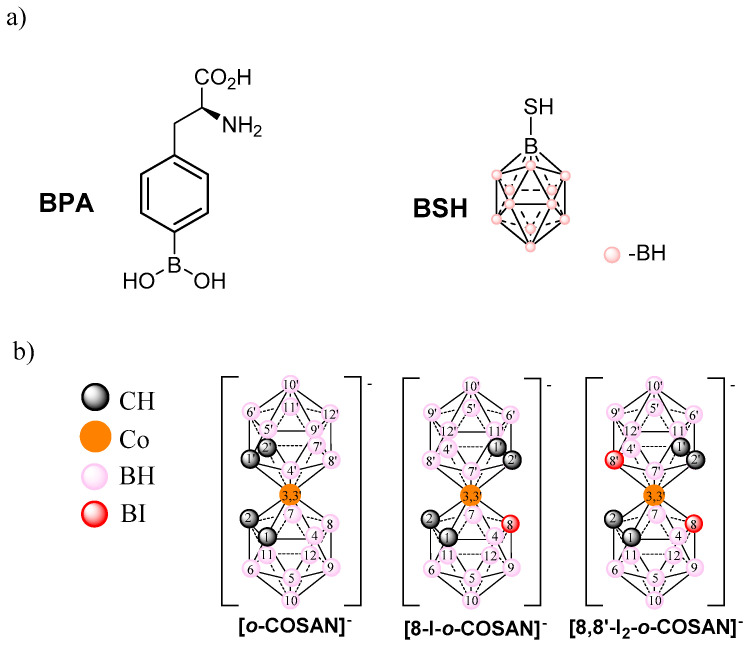
The aim of our study was to assess if the sodium salt of cobaltabis(dicarbollide) and its di-iodinated derivative (Na[-COSAN] and Na[8,8'-I--COSAN]) could be promising agents for dual anti-cancer treatment (chemotherapy + BNCT) for GBM.
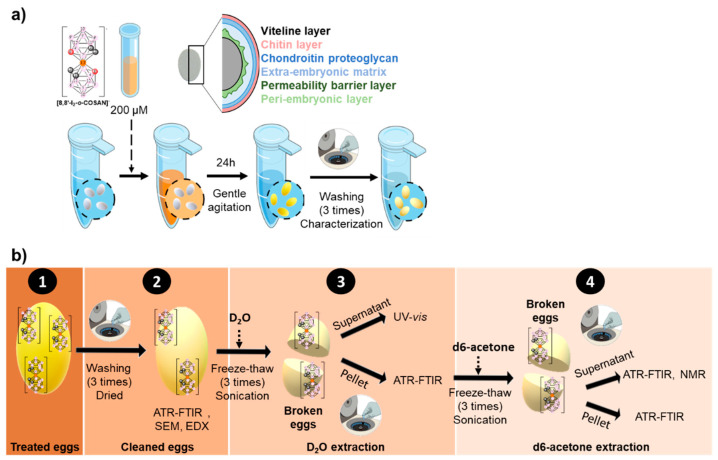
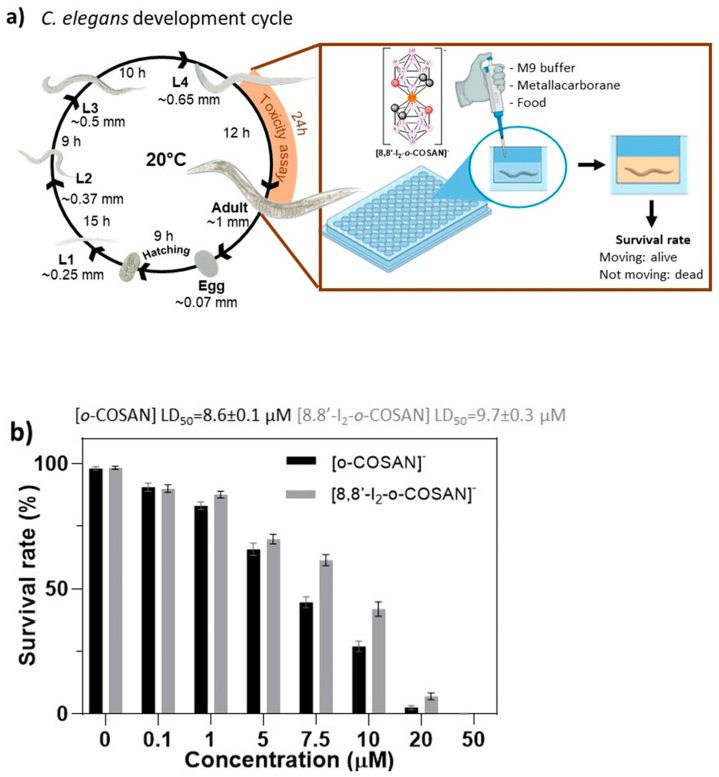
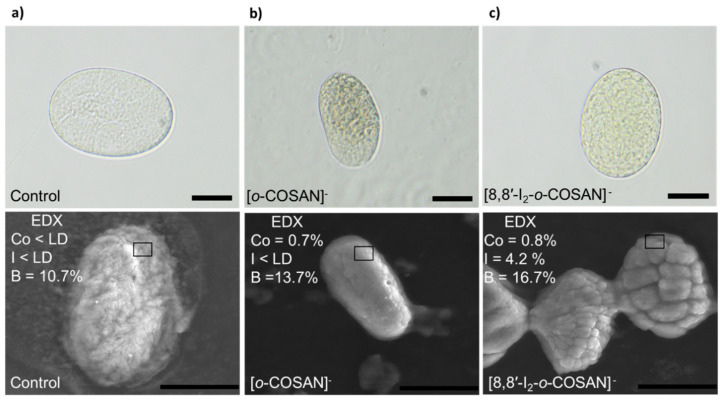
The biological activities of the small molecules were evaluated in vitro with glioblastoma cells lines U87 and T98G in 2D and 3D cell models and in vivo in the small model animal () at the L4-stage and using the eggs.
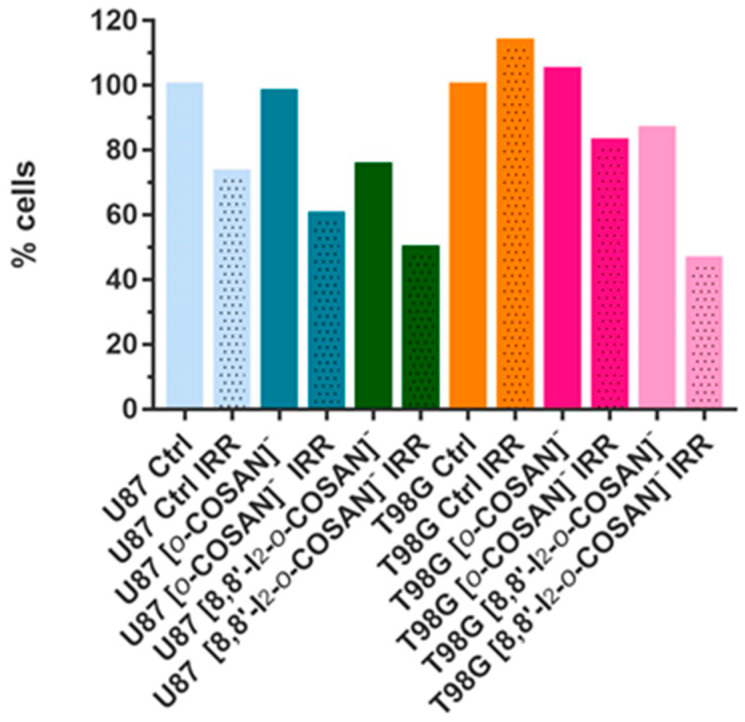
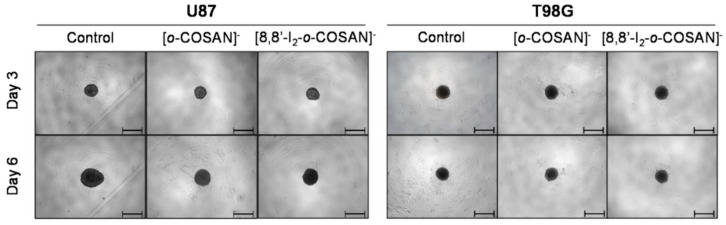
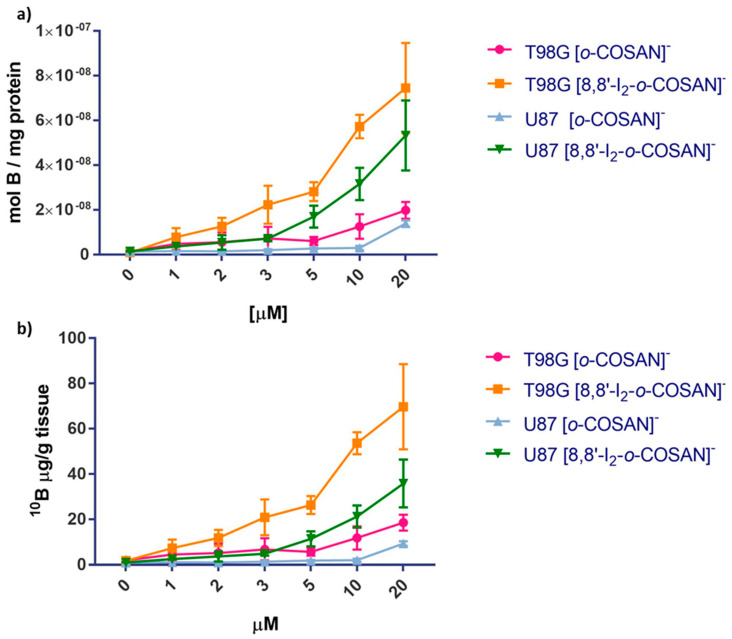
Our studies indicated that only spheroids from the U87 cell line have impaired growth after treatment with both compounds, suggesting an increased resistance from T98G spheroids, contrary to what was observed in the monolayer culture, which highlights the need to employ 3D models for future GBM studies. In vitro tests in U87 and T98G cells conclude that the amount of B inside the cells is enough for BNCT irradiation. BNCT becomes more effective on T98G after their incubation with Na[8,8'-I--COSAN], whereas no apparent cell-killing effect was observed for untreated cells.
These small molecules, particularly [8,8'-I--COSAN], are serious candidates for BNCT now that the facilities of accelerator-based neutron sources are more accessible, providing an alternative treatment for resistant glioblastoma.
我们研究的目的是评估钴双(二碳硼烷)钠盐及其二碘化衍生物(Na[-COSAN]和Na[8,8'-I--COSAN])是否可能成为胶质母细胞瘤双重抗癌治疗(化疗 + 硼中子俘获治疗)的有前景的药物。
在二维和三维细胞模型中,用胶质母细胞瘤细胞系U87和T98G对这些小分子的生物学活性进行体外评估,并在小型模式动物()的L4阶段和使用卵进行体内评估。
我们的研究表明,仅U87细胞系的球体在用这两种化合物处理后生长受损,这表明T98G球体的抗性增加,这与在单层培养中观察到的情况相反,这突出了在未来的胶质母细胞瘤研究中采用三维模型的必要性。在U87和T98G细胞中的体外试验得出结论,细胞内硼的量足以进行硼中子俘获治疗照射。在用Na[8,8'-I--COSAN]孵育后,硼中子俘获治疗对T98G更有效,而未处理的细胞未观察到明显的细胞杀伤作用。
这些小分子特别是[8,8'-I--COSAN],鉴于基于加速器的中子源设施更容易获得,是硼中子俘获治疗的有力候选药物,为耐药胶质母细胞瘤提供了一种替代治疗方法。