Ivanić Maja, Furdek Turk Martina, Tkalčec Zdenko, Fiket Željka, Mešić Armin
Ruđer Bošković Institute, Division for Marine and Environmental Research, Bijenička 54, 10000 Zagreb, Croatia.
J Fungi (Basel). 2021 Dec 12;7(12):1068. doi: 10.3390/jof7121068.
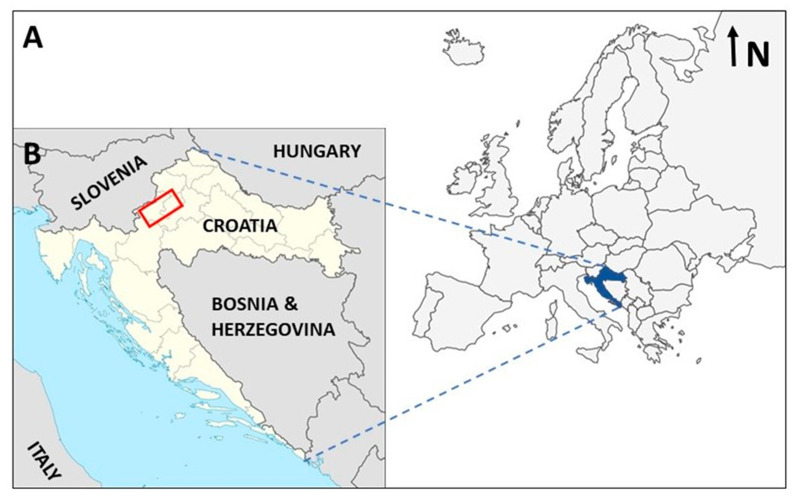
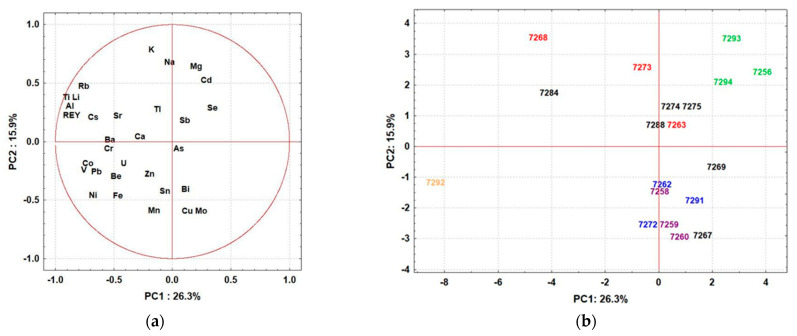
This paper investigates the composition of major, trace, and rare earth elements in 15 different species of wild edible mushrooms and the possible effect of urban pollution on elemental uptake. The collected mushrooms include different species from the green areas of the city, exposed to urban pollution, and from the forests, with limited anthropogenic influence. Through a comprehensive approach that included the analysis of 46 elements, an attempt was made to expand knowledge about element uptake by mushroom fruiting bodies. The results showed a wide variability in the composition of mushrooms, suggesting a number of factors influencing their element uptake capacity. The data obtained do not indicate significant exposure to anthropogenic influences, regardless of sampling location. While major elements' levels appear to be influenced more by species-specific affinities, this is not true for trace elements, whose levels presumably reflect the geochemical characteristics of the sampling site. However, the risk assessment showed that consumption of excessive amounts of the mushrooms studied, both from urban areas and from forests, may have adverse health effects.
本文研究了15种不同野生可食用蘑菇中主要、微量和稀土元素的组成,以及城市污染对元素吸收的可能影响。所采集的蘑菇包括来自城市绿地、受城市污染影响的不同种类,以及来自人为影响有限的森林中的不同种类。通过包括对46种元素进行分析的综合方法,试图扩展关于蘑菇子实体元素吸收的知识。结果表明,蘑菇的组成存在很大差异,这表明有许多因素影响它们的元素吸收能力。无论采样地点如何,所获得的数据均未表明受到显著的人为影响。虽然主要元素的含量似乎更多地受到物种特异性亲和力的影响,但微量元素并非如此,其含量可能反映了采样地点的地球化学特征。然而,风险评估表明,食用来自城市地区和森林的过量所研究蘑菇可能对健康产生不利影响。