Department of Pathology, Fundación Jiménez Díaz University Hospital Health Research Institute (IIS-FJD, UAM)-CIBERONC, 28040 Madrid, Spain.
Translational Oncology Division, OncoHealth Institute, Health Research Institute-Fundación Jiménez Díaz (IIS-FJD, UAM), 28040 Madrid, Spain.
Int J Mol Sci. 2021 Dec 10;22(24):13297. doi: 10.3390/ijms222413297.
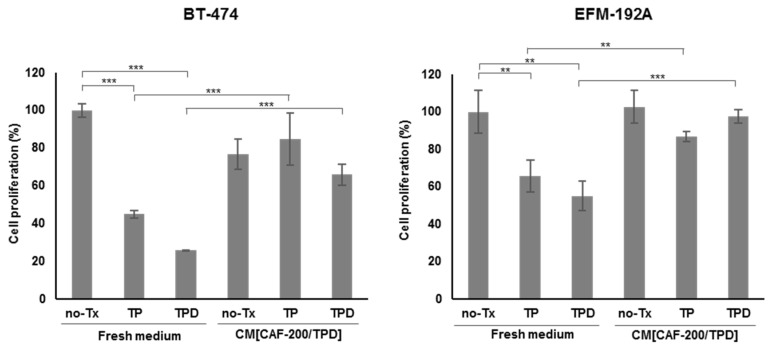
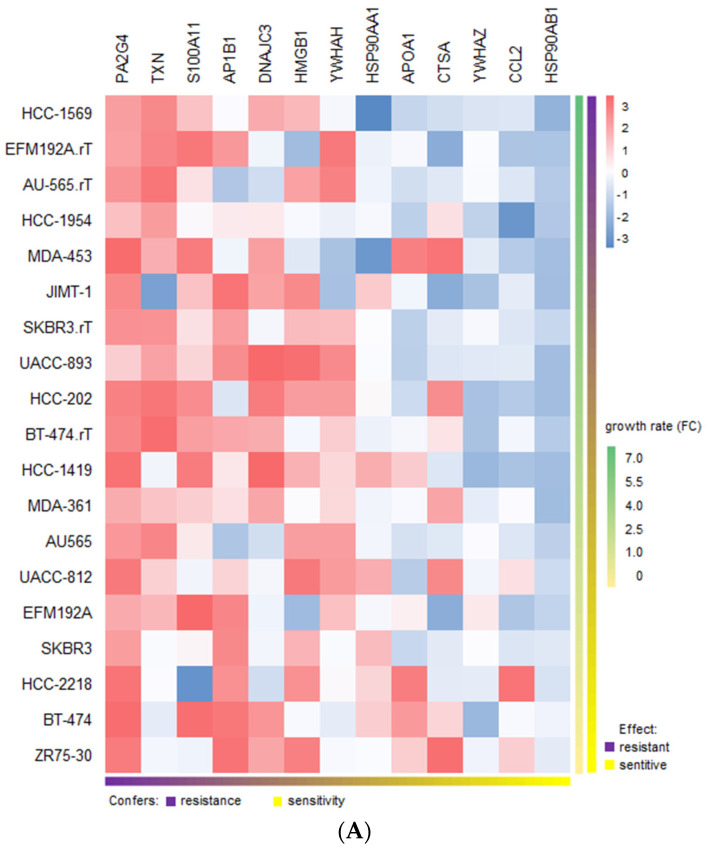
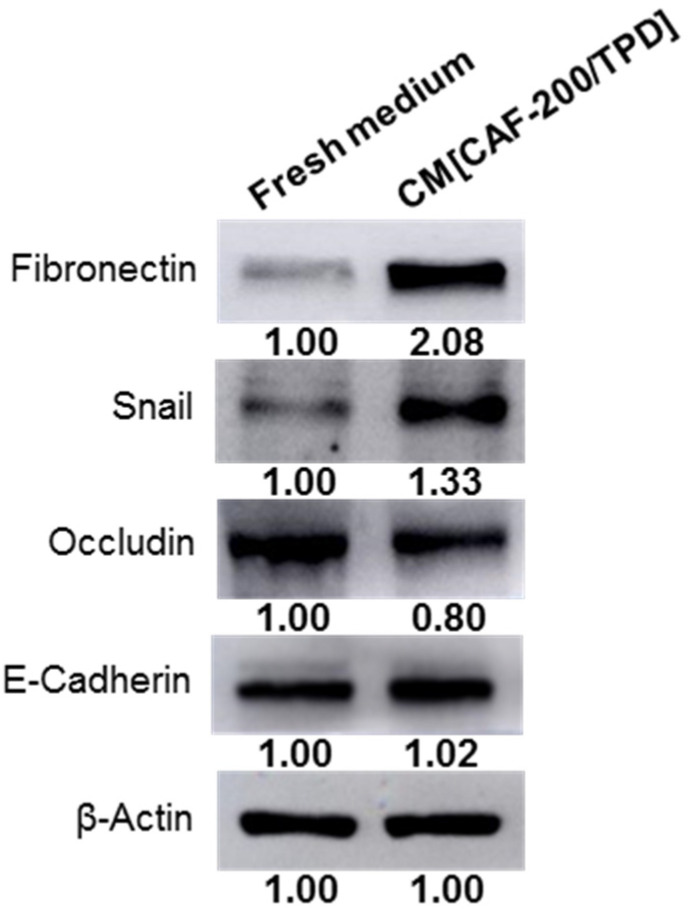
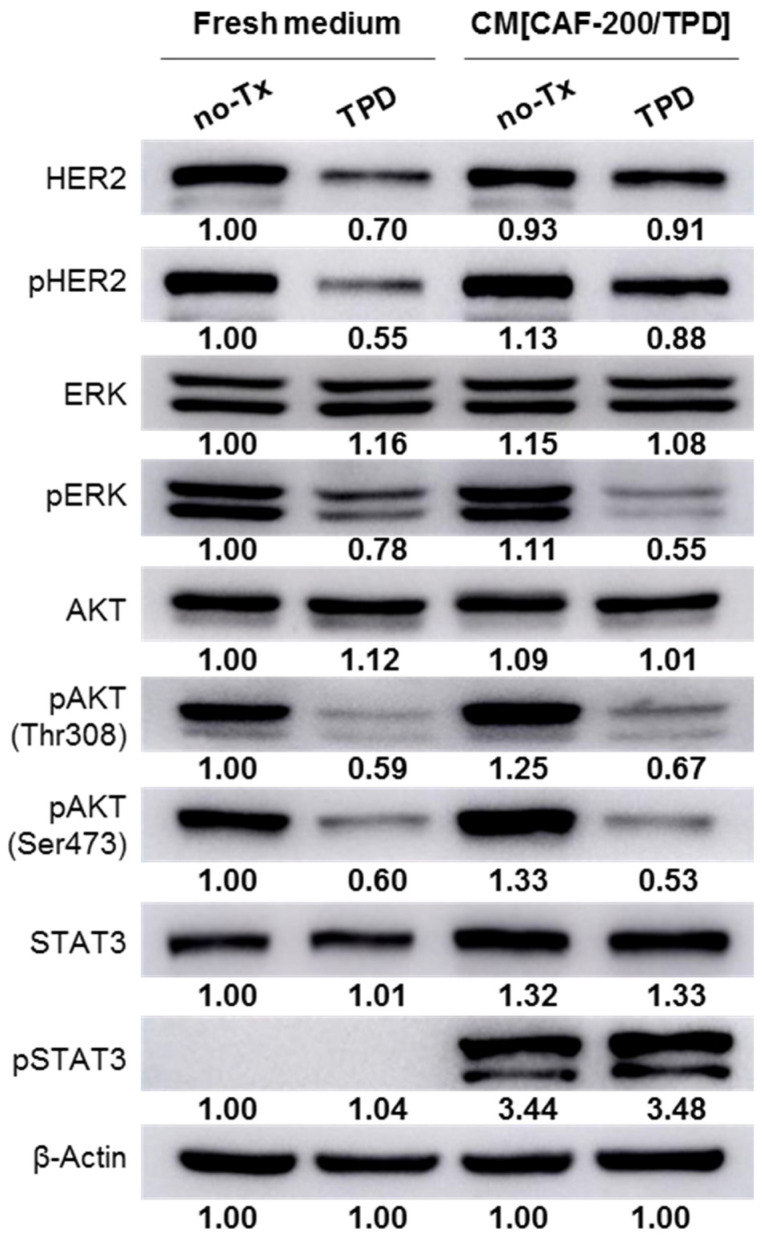
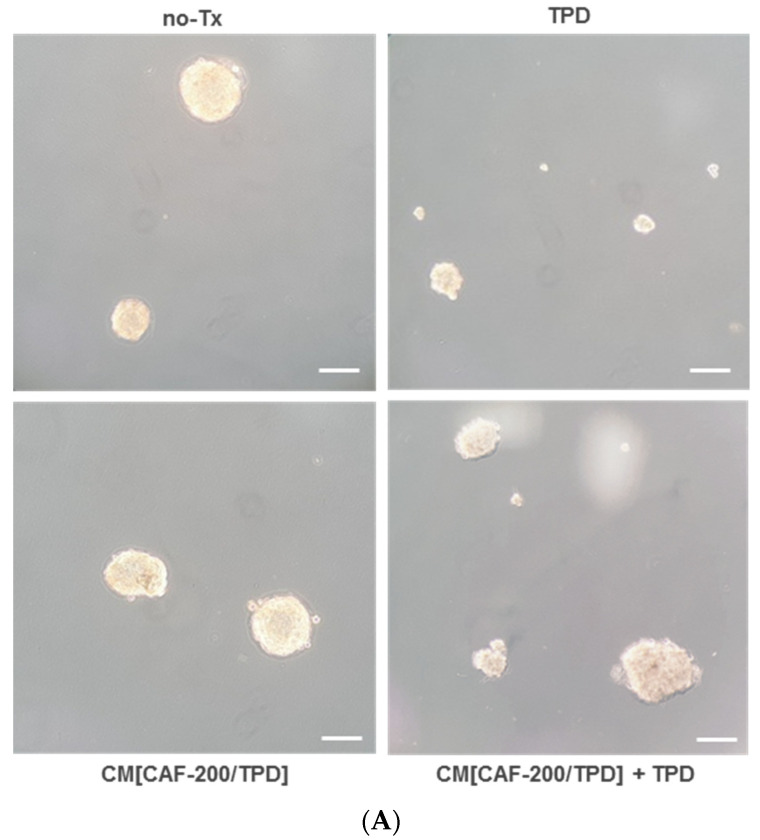
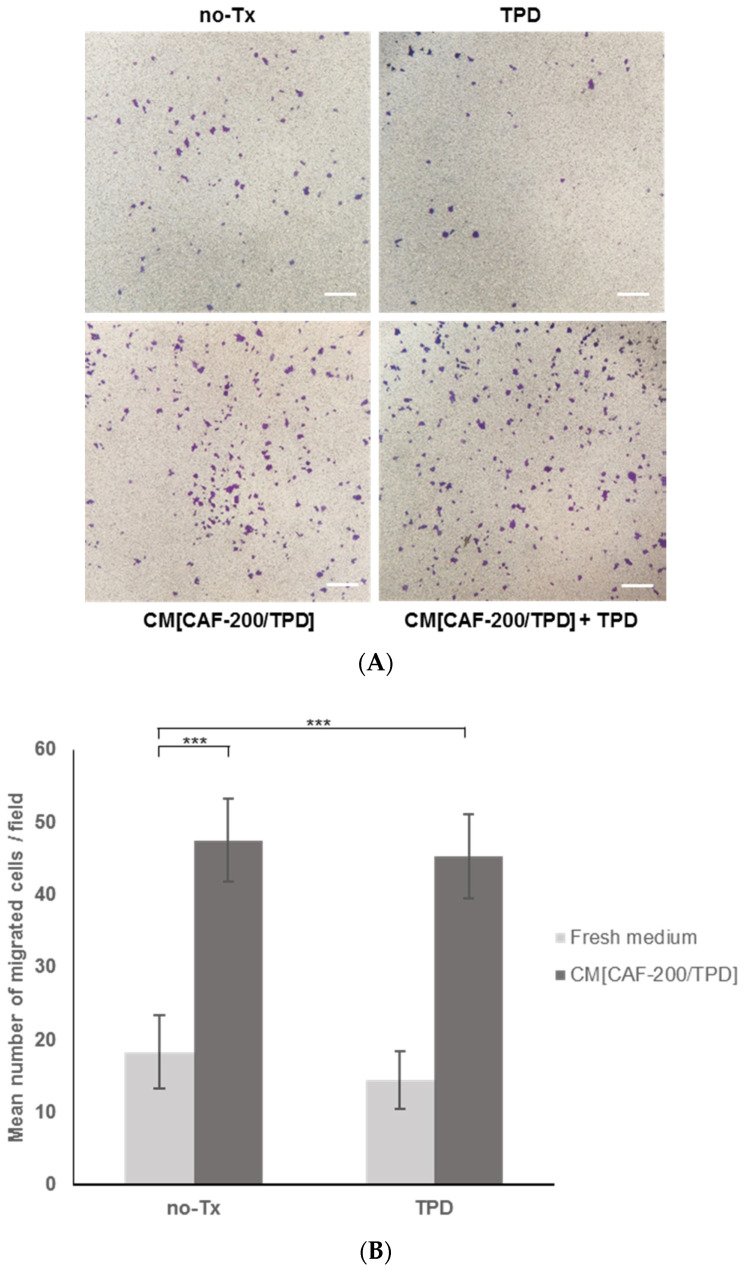
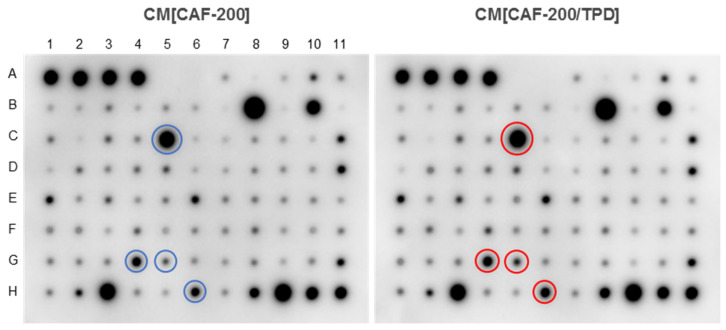
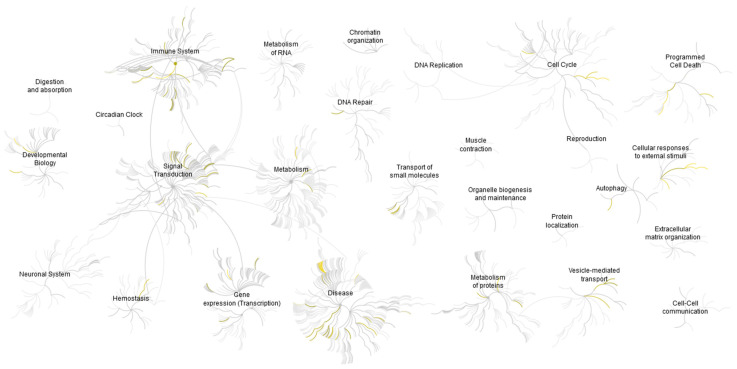
The combination of trastuzumab plus pertuzumab plus docetaxel as a first-line therapy in patients with HER2-positive metastatic breast cancer has provided significant clinical benefits compared to trastuzumab plus docetaxel alone. However, despite the therapeutic success of existing therapies targeting HER2, tumours invariably relapse. Therefore, there is an urgent need to improve our understanding of the mechanisms governing resistance, so that specific therapeutic strategies can be developed to provide improved efficacy. It is well known that the tumour microenvironment (TME) has a significant impact on cancer behaviour. Cancer-associated fibroblasts (CAFs) are essential components of the tumour stroma that have been linked to acquired therapeutic resistance and poor prognosis in breast cancer. For this reason, it would be of interest to identify novel biomarkers in the tumour stroma that could emerge as therapeutic targets for the modulation of resistant phenotypes. Conditioned medium experiments carried out in our laboratory with CAFs derived from HER2-positive patients showed a significant capacity to promote resistance to trastuzumab plus pertuzumab therapies in two HER2-positive breast cancer cell lines (BCCLs), even in the presence of docetaxel. In order to elucidate the components of the CAF-conditioned medium that may be relevant in the promotion of BCCL resistance, we implemented a multiomics strategy to identify cytokines, transcription factors, kinases and miRNAs in the secretome that have specific targets in cancer cells. The combination of cytokine arrays, label-free LC-MS/MS quantification and miRNA analysis to explore the secretome of CAFs under treatment conditions revealed several up- and downregulated candidates. We discuss the potential role of some of the most interesting candidates in generating resistance in HER2-positive breast cancer.
曲妥珠单抗联合帕妥珠单抗加多西他赛作为一线治疗方案,与曲妥珠单抗加多西他赛单药治疗相比,为 HER2 阳性转移性乳腺癌患者带来了显著的临床获益。然而,尽管针对 HER2 的现有治疗方法取得了治疗成功,但肿瘤总是会复发。因此,迫切需要深入了解控制耐药性的机制,以便开发出针对特定治疗策略,从而提供更好的疗效。众所周知,肿瘤微环境(TME)对癌症行为有重大影响。癌症相关成纤维细胞(CAFs)是肿瘤基质的重要组成部分,与乳腺癌获得性治疗耐药和预后不良有关。因此,鉴定肿瘤基质中的新型生物标志物,作为调节耐药表型的治疗靶点,可能会引起关注。我们实验室用源自 HER2 阳性患者的 CAFs 进行的条件培养基实验表明,即使存在多西他赛,CAFs 条件培养基也具有显著促进两种 HER2 阳性乳腺癌细胞系(BCCLs)对曲妥珠单抗联合帕妥珠单抗治疗耐药的能力。为了阐明 CAF 条件培养基中可能与促进 BCCL 耐药相关的成分,我们采用多组学策略来鉴定细胞因子、转录因子、激酶和 miRNA 中的分泌组,这些分泌组在癌细胞中有特定的靶点。细胞因子阵列、无标记 LC-MS/MS 定量和 miRNA 分析相结合,探索处理条件下 CAFs 的分泌组,揭示了几个上调和下调的候选物。我们讨论了一些最有趣的候选物在产生 HER2 阳性乳腺癌耐药性方面的潜在作用。