Tytgat Institute for Liver and Intestinal Research, Amsterdam Gastroenterology, Endocrinology and Metabolism, Amsterdam University Medical Centers, Location AMC, University of Amsterdam, 1105 BK Amsterdam, The Netherlands.
Department of Pediatric Gastroenterology and Nutrition, Amsterdam University Medical Centers, Emma Children's Hospital, 1105 AZ Amsterdam, The Netherlands.
Int J Mol Sci. 2021 Dec 15;22(24):13472. doi: 10.3390/ijms222413472.
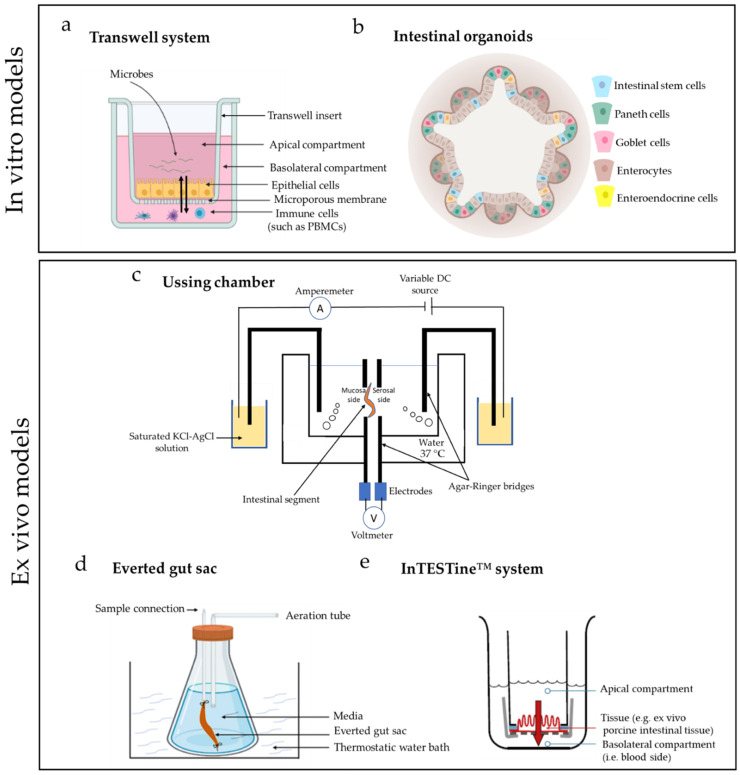
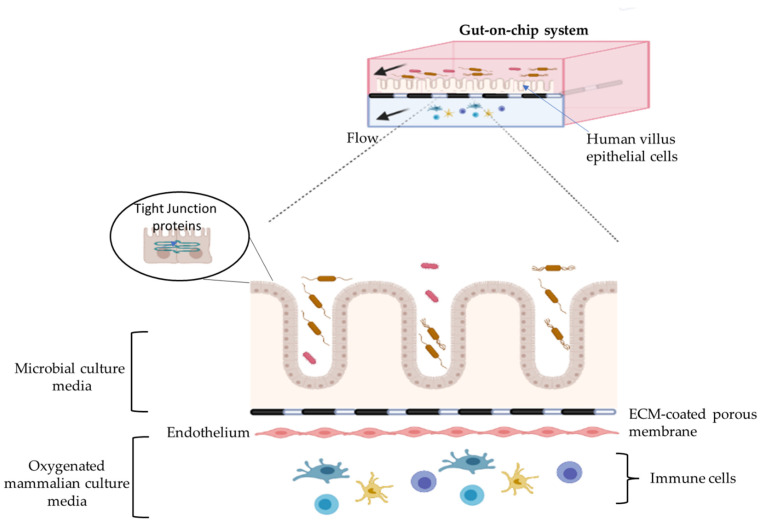
Over the past years, several preclinical in vitro and ex vivo models have been developed that helped to understand some of the critical aspects of intestinal functions in health and disease such as inflammatory bowel disease (IBD). However, the translation to the human in vivo situation remains problematic. The main reason for this is that these approaches fail to fully reflect the multifactorial and complex in vivo environment (e.g., including microbiota, nutrition, and immune response) in the gut system. Although conventional models such as cell lines, Ussing chamber, and the everted sac are still used, increasingly more sophisticated intestinal models have been developed over the past years including organoids, InTESTine™ and microfluidic gut-on-chip. In this review, we gathered the most recent insights on the setup, advantages, limitations, and future perspectives of most frequently used in vitro and ex vivo models to study intestinal physiology and functions in health and disease.
在过去的几年中,已经开发出了几种临床前的体外和离体模型,这些模型有助于了解肠道在健康和疾病(例如炎症性肠病(IBD))中的一些关键功能。然而,将这些模型转化为人类体内情况仍然存在问题。造成这种情况的主要原因是这些方法未能完全反映肠道系统中多因素和复杂的体内环境(例如,包括微生物群、营养和免疫反应)。尽管仍然使用传统的模型,如细胞系、Ussing 室和外翻囊,但近年来已经开发出越来越复杂的肠道模型,包括类器官、InTESTine™和微流控肠芯片。在这篇综述中,我们收集了最常用于研究健康和疾病中的肠道生理学和功能的体外和离体模型的最新见解,包括其设置、优点、局限性和未来展望。