Kopper Jamie J, Iennarella-Servantez Chelsea, Jergens Albert E, Sahoo Dipak K, Guillot Emilie, Bourgois-Mochel Agnes, Martinez Marilyn N, Allenspach Karin, Mochel Jonathan P
Veterinary Clinical Sciences, Iowa State University College of Veterinary Medicine, Ames, IA, United States.
SMART Translational Medicine, Biomedical Sciences, Iowa State University College of Veterinary Medicine, Ames, IA, United States.
Front Toxicol. 2021 Nov 10;3:773953. doi: 10.3389/ftox.2021.773953. eCollection 2021.
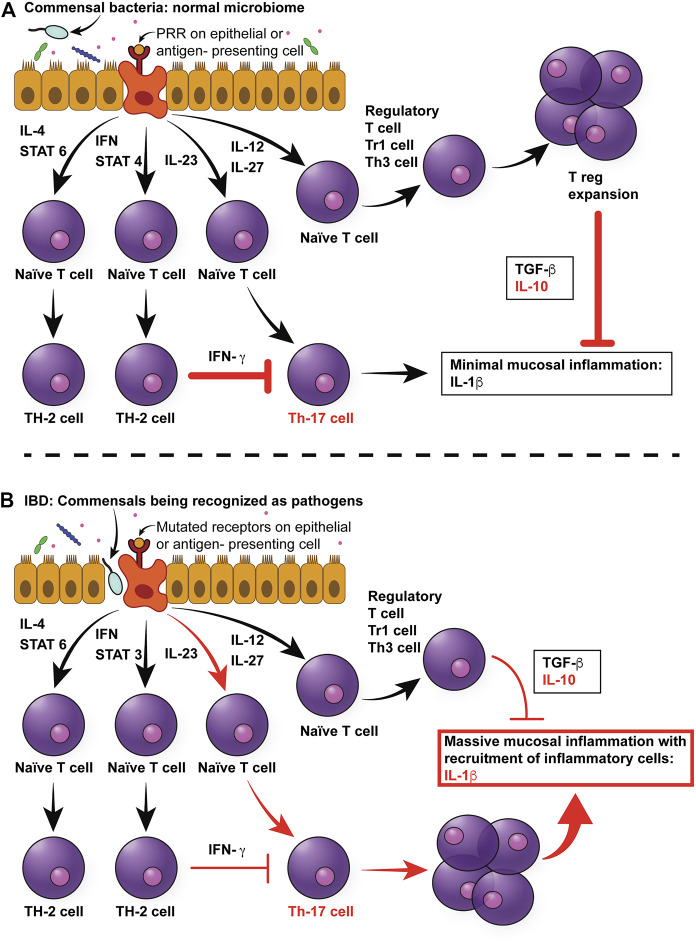
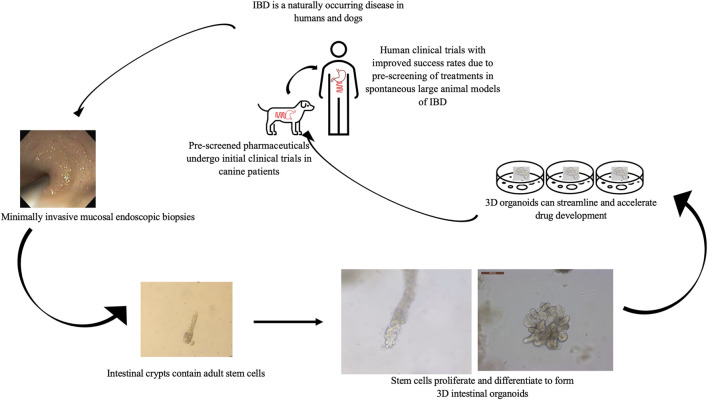
In a recent issue of the Lancet, the prevalence of Inflammatory Bowel Disease (IBD) was estimated at 7 million worldwide. Overall, the burden of IBD is rising globally, with direct and indirect healthcare costs ranging between $14.6 and $31.6 billion in the U.S. alone in 2014. There is currently no cure for IBD, and up to 40% of patients do not respond to medical therapy. Although the exact determinants of the disease pathophysiology remain unknown, the prevailing hypothesis involves complex interplay among host genetics, the intestinal microenvironment (primarily bacteria and dietary constituents), and the mucosal immune system. Importantly, multiple chronic diseases leading to high morbidity and mortality in modern western societies, including type II diabetes, IBD and colorectal cancer, have epidemiologically been linked to the consumption of high-calorie, low-fiber, high monosaccharide, and high-fat diets (HFD). More specifically, data from our laboratory and others have shown that repeated consumption of HFD triggers dysbiotic changes of the gut microbiome concomitant with a state of chronic intestinal inflammation and increased intestinal permeability. However, progress in our understanding of the effect of dietary interventions on IBD pathogenesis has been hampered by a lack of relevant animal models. Additionally, current cell culture systems are unable to emulate the interplay between the gut microbiome and the intestinal epithelium in a realistic and translatable way. There remains, therefore, a critical need to develop translatable and models that faithfully recapitulate human gut-specific physiological functions to facilitate detailed mechanistic studies on the impact of dietary interventions on gut homeostasis. While the study of murine models has been pivotal in advancing genetic and cellular discoveries, these animal systems often lack key clinical signs and temporal pathological changes representative of IBD. Specifically, some limitations of the mouse model are associated with the use of genetic knockouts to induce immune deficiency and disease. This is vastly different from the natural course of IBD developing in immunologically competent hosts, as is the case in humans and dogs. Noteworthily, abundant literature suggests that canine and human IBD share common clinical and molecular features, such that preclinical studies in dogs with naturally occurring IBD present an opportunity to further our understanding on disease pathogenesis and streamline the development of new therapeutic strategies. Using a stepwise approach, mechanistic studies investigating the contribution of dietary interventions to chronic intestinal inflammation and "gut leakiness" could be performed in intestinal organoids and organoid derived monolayers. The biologic potential of organoids stems from the method's ability to harness hard-wired cellular programming such that the complexity of the disease background can be reflected more accurately. Likewise, the effect of therapeutic drug candidates could be evaluated in organoids prior to longitudinal studies in dog and human patients with IBD. In this review, we will discuss the value (and limitations) of intestinal organoids derived from a spontaneous animal disease model of IBD (i.e., the dog), and how it can heighten understanding of the interplay between dietary interventions, the gut microbiota and intestinal inflammation. We will also review how intestinal organoids could be used to streamline the preclinical development of therapeutic drug candidates for IBD patients and their best four-legged friends.
在最近一期的《柳叶刀》杂志上,据估计全球炎症性肠病(IBD)的患病率为700万。总体而言,IBD的负担在全球范围内呈上升趋势,仅2014年美国的直接和间接医疗费用就在146亿至316亿美元之间。目前IBD无法治愈,高达40%的患者对药物治疗无反应。尽管该疾病病理生理学的确切决定因素尚不清楚,但普遍的假说是宿主遗传学、肠道微环境(主要是细菌和饮食成分)和黏膜免疫系统之间存在复杂的相互作用。重要的是,包括II型糖尿病、IBD和结直肠癌在内的多种导致现代西方社会高发病率和高死亡率的慢性疾病,在流行病学上已与高热量、低纤维、高单糖和高脂肪饮食(HFD)的摄入相关联。更具体地说,我们实验室和其他机构的数据表明,反复食用HFD会引发肠道微生物群的生态失调变化,同时伴有慢性肠道炎症状态和肠道通透性增加。然而,由于缺乏相关动物模型,我们对饮食干预对IBD发病机制影响的理解进展受到了阻碍。此外,目前的细胞培养系统无法以现实且可转化的方式模拟肠道微生物群与肠上皮之间的相互作用。因此,迫切需要开发可转化的模型,忠实地再现人类肠道特有的生理功能,以促进对饮食干预对肠道稳态影响的详细机制研究。虽然小鼠模型的研究在推进基因和细胞发现方面发挥了关键作用,但这些动物系统往往缺乏代表IBD的关键临床体征和时间性病理变化。具体而言,小鼠模型的一些局限性与使用基因敲除来诱导免疫缺陷和疾病有关。这与IBD在免疫功能正常宿主中自然发生的过程有很大不同,人类和犬类就是如此。值得注意的是,大量文献表明犬类和人类IBD具有共同的临床和分子特征,因此对患有自然发生IBD的犬类进行临床前研究为进一步了解疾病发病机制和简化新治疗策略的开发提供了机会。采用逐步推进的方法,可以在肠道类器官和类器官衍生的单层中进行机制研究,以探究饮食干预对慢性肠道炎症和“肠道渗漏”的作用。类器官的生物学潜力源于该方法利用固有细胞编程的能力,从而可以更准确地反映疾病背景的复杂性。同样,在对IBD犬类和人类患者进行纵向研究之前,可以在类器官中评估候选治疗药物的效果。在这篇综述中,我们将讨论源自IBD自发动物疾病模型(即犬类)的肠道类器官的价值(和局限性),以及它如何增进对饮食干预、肠道微生物群和肠道炎症之间相互作用的理解。我们还将综述肠道类器官如何用于简化IBD患者及其最好的四条腿朋友(犬类)候选治疗药物的临床前开发。