Department of Food & Nutrition, Sungshin Women's University, Seoul 01133, Korea.
Research Institute of Obesity Sciences, Sungshin Women's University, Seoul 01133, Korea.
Int J Mol Sci. 2021 Dec 17;22(24):13559. doi: 10.3390/ijms222413559.
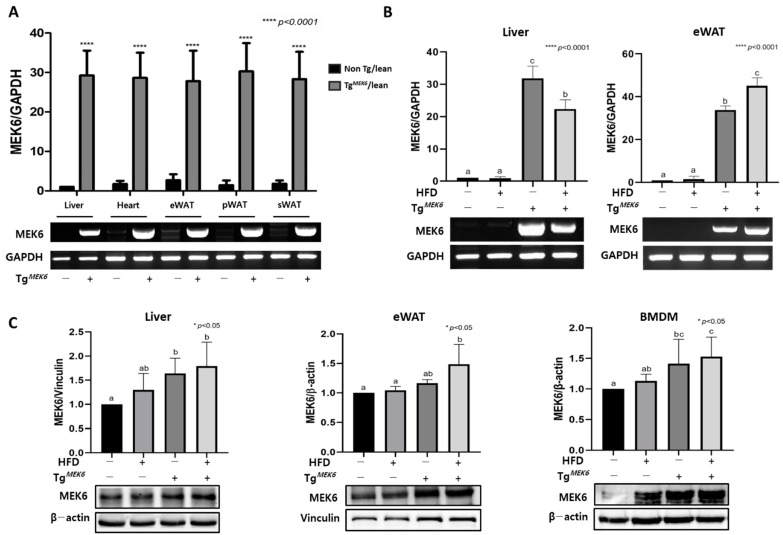
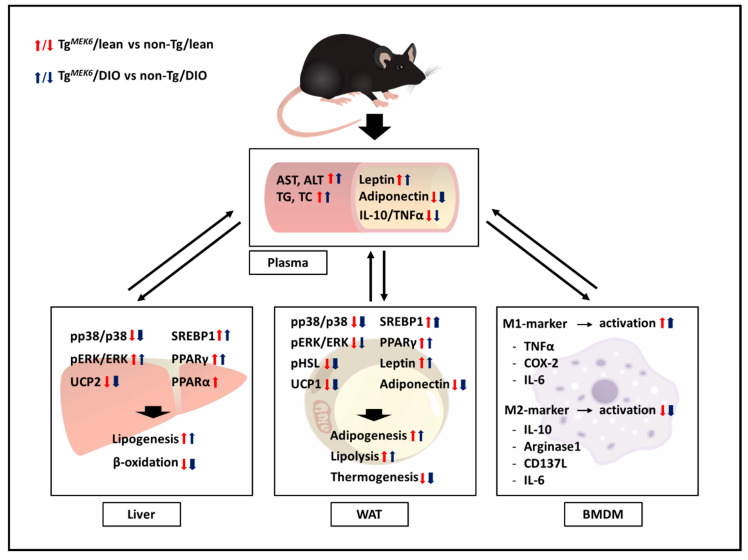
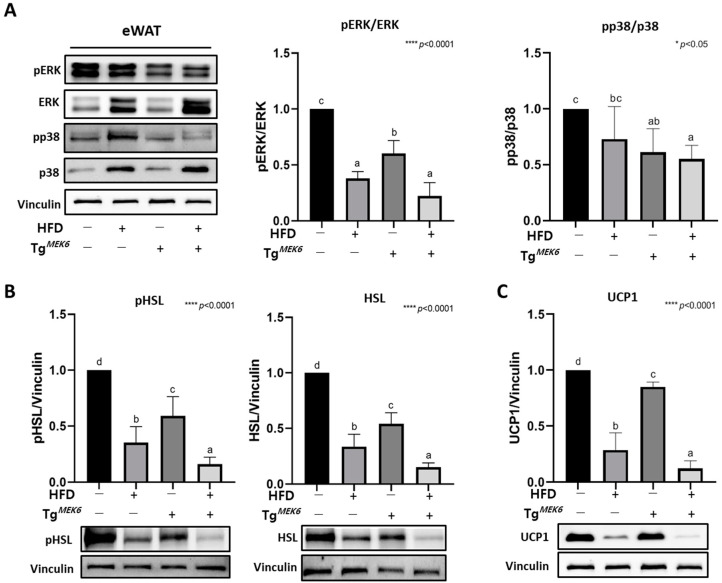
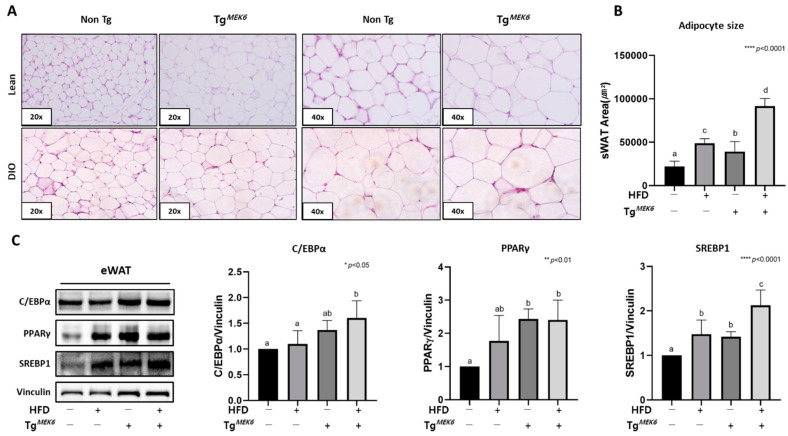
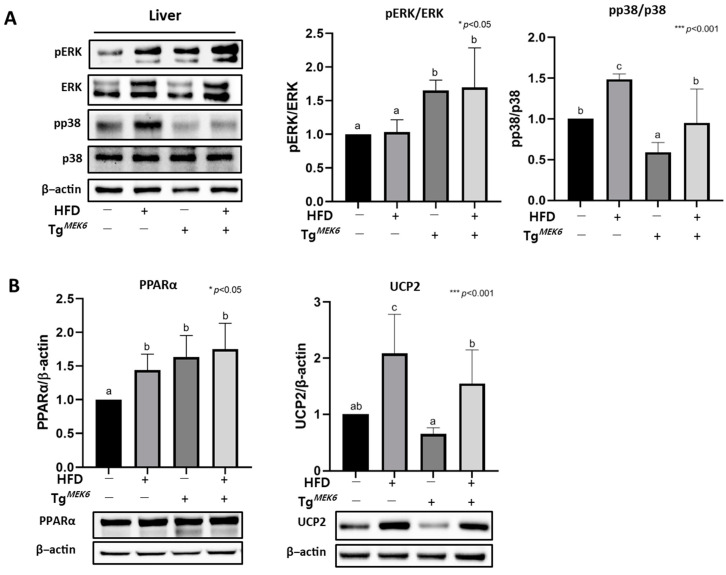
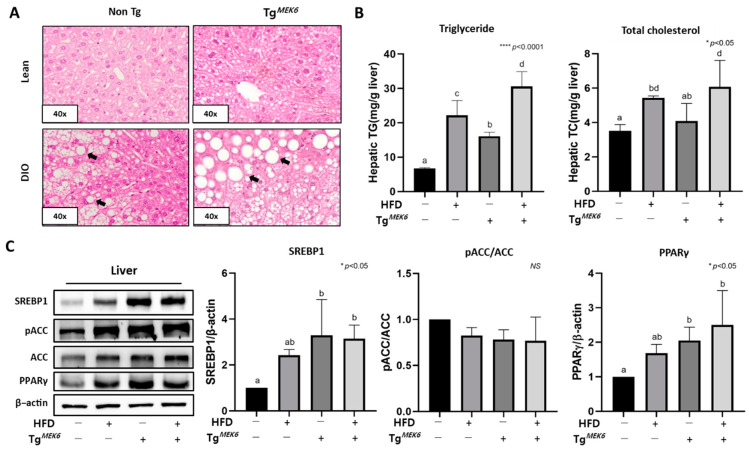
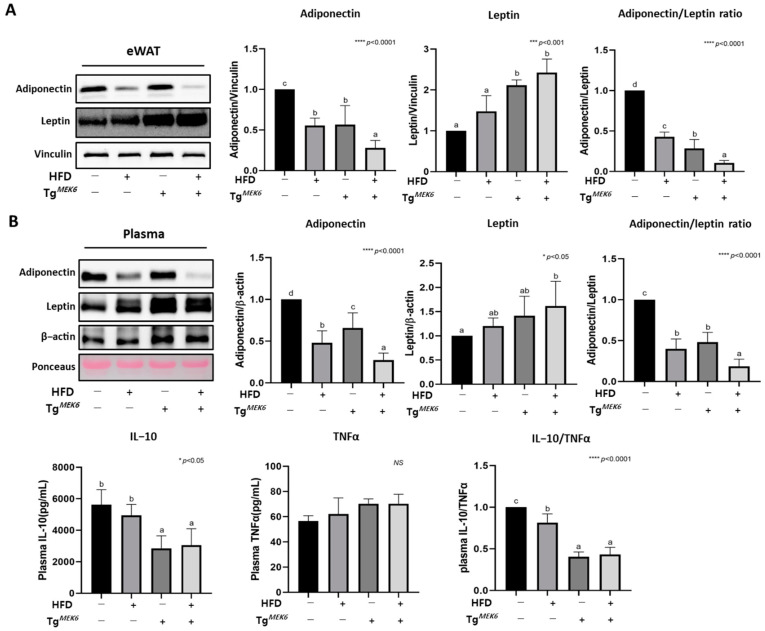
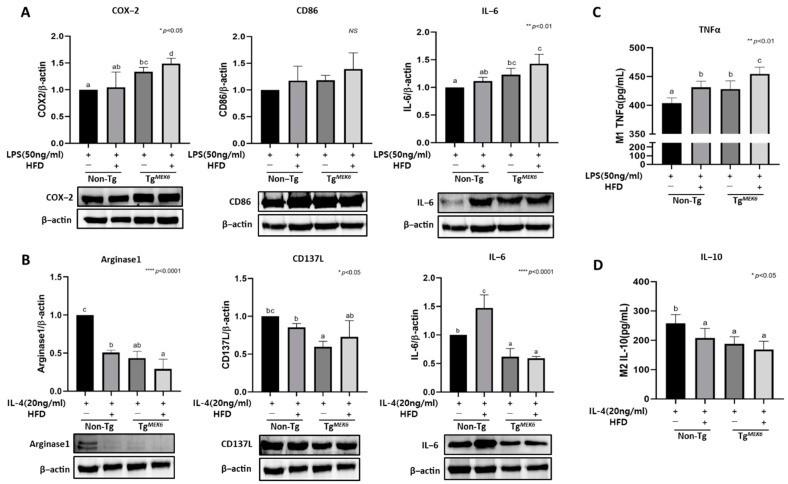
Obesity is a state of abnormal fat accumulation caused by an energy imbalance potentially caused by changes in multiple factors. engages in cell growth, such as inflammation and apoptosis, as one of the MAPK signaling pathways. The gene was found to be related to , a gene associated with obesity. Because only a few studies have investigated the correlation between and obesity or the relevant mechanisms, we conducted an experiment using a Tg model with overexpression with non-Tg and chow diet as the control to determine changes in lipid metabolism in plasma, liver, and adipose tissue after a 15-week high-fat diet (HFD). overexpression in the Tg model significantly increased body weight and plasma triglyceride and total cholesterol levels. p38 activity declined in the liver and adipose tissues and lowered lipolysis, oxidation, and thermogenesis levels, contributing to decreased energy consumption. In the liver, lipid formation and accumulation increased, and in adipose, adipogenesis and hypertrophy increased. The adiponectin/leptin ratio significantly declined in plasma and adipose tissue of the Tg group following expression and the HFD, indicating the role of expression in adipokine regulation. Plasma and bone-marrow-derived macrophages (BMDM) of the Tg group increased expression-dependent secretion of pro-inflammatory cytokines but decreased levels of anti-inflammatory cytokines, further exacerbating the results exhibited by the diet-induced obesity group. In conclusion, this study demonstrated the synergistic effect of with HFD in fat accumulation by significantly inhibiting the mechanisms of lipolysis in the adipose and M2 associated cytokines secretion in the BMDM.
肥胖是一种由能量失衡引起的异常脂肪积累状态,这种失衡可能是由多种因素引起的。 参与细胞生长,如炎症和细胞凋亡,作为 MAPK 信号通路之一。 基因被发现与肥胖相关的 基因有关。由于只有少数研究调查了 与肥胖之间的相关性或相关机制,我们使用过表达 的 Tg 模型和非 Tg 及普通饮食作为对照进行了一项实验,以确定在 15 周高脂肪饮食(HFD)后血浆、肝脏和脂肪组织中脂质代谢的变化。Tg 模型中 的过表达显著增加了体重和血浆甘油三酯和总胆固醇水平。p38 活性在肝脏和脂肪组织中下降,降低了脂肪分解、氧化和产热水平,导致能量消耗减少。在肝脏中,脂质形成和积累增加,而在脂肪组织中,脂肪生成和肥大增加。在 Tg 组中,随着 表达和 HFD 的进行,血浆和脂肪组织中的脂联素/瘦素比值显著下降,表明 表达在脂肪细胞因子调节中的作用。Tg 组的血浆和骨髓源性巨噬细胞(BMDM)中,依赖于 表达的促炎细胞因子的分泌增加,但抗炎细胞因子的水平降低,进一步加剧了由饮食诱导肥胖组所表现出的结果。总之,这项研究表明, 与 HFD 协同作用,通过显著抑制脂肪组织中的脂肪分解机制和 BMDM 中与 M2 相关的细胞因子分泌,导致脂肪堆积。