Convergence Research Center for Diagnosis, Treatment and Care System of Dementia, Korea Institute of Science and Technology, Seoul 02792, Korea.
Future Information Research Center, Korea Institute of Science and Technology Information, Seoul 02456, Korea.
Int J Environ Res Public Health. 2021 Dec 15;18(24):13235. doi: 10.3390/ijerph182413235.
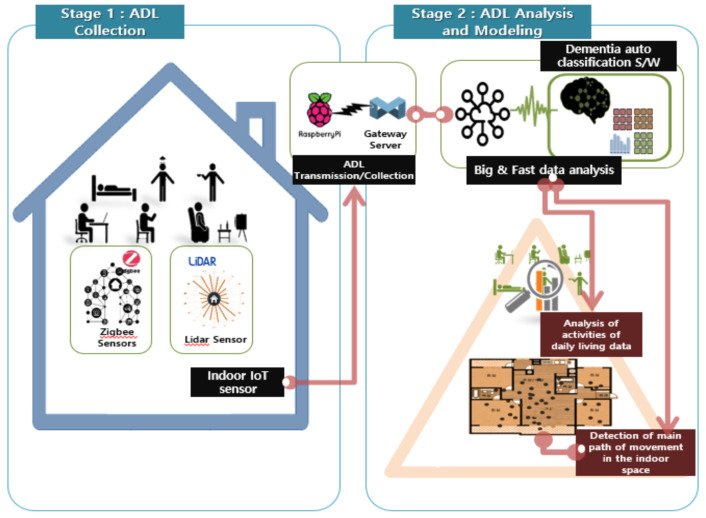
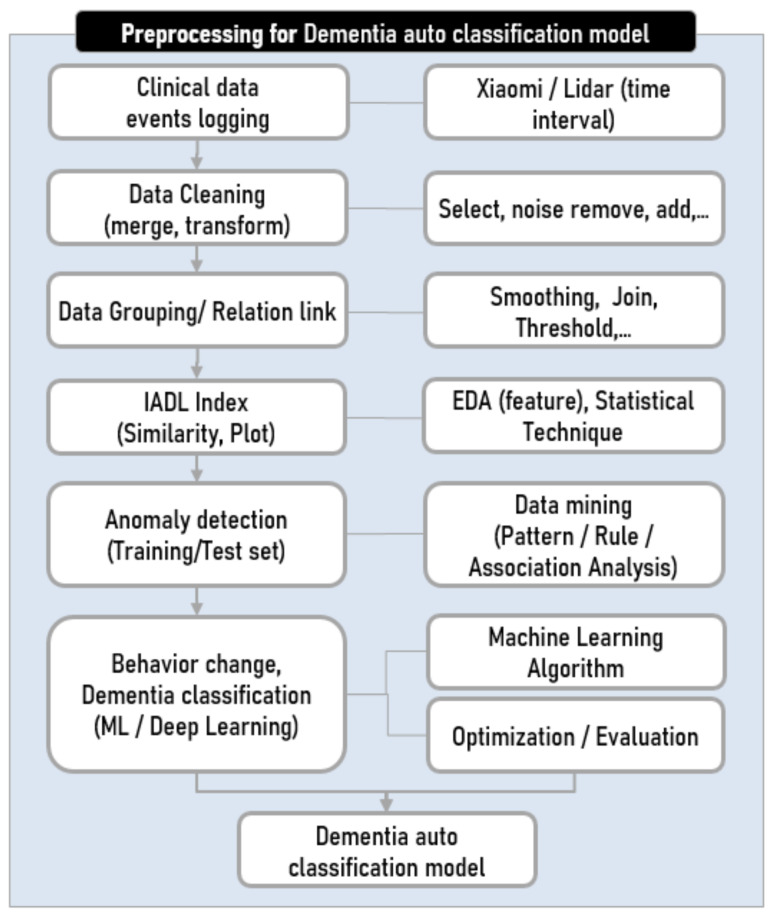
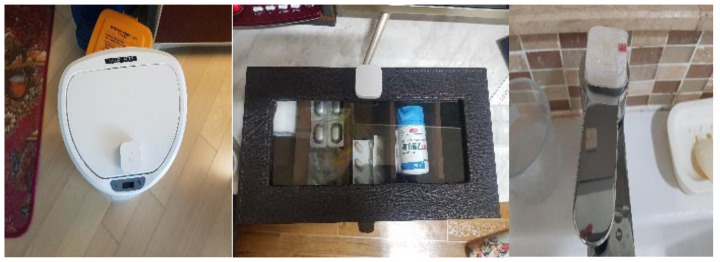
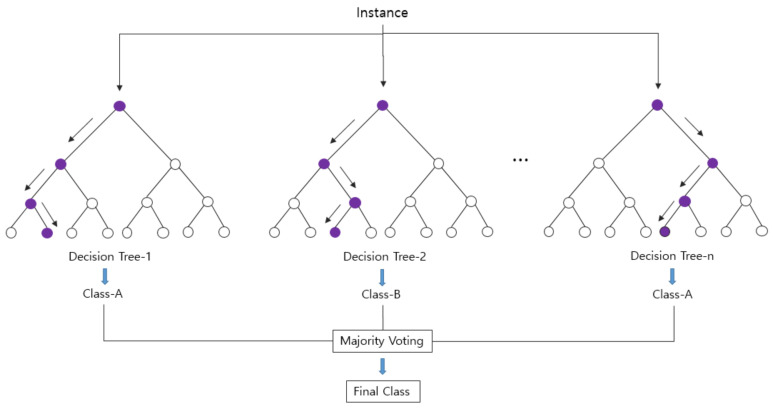
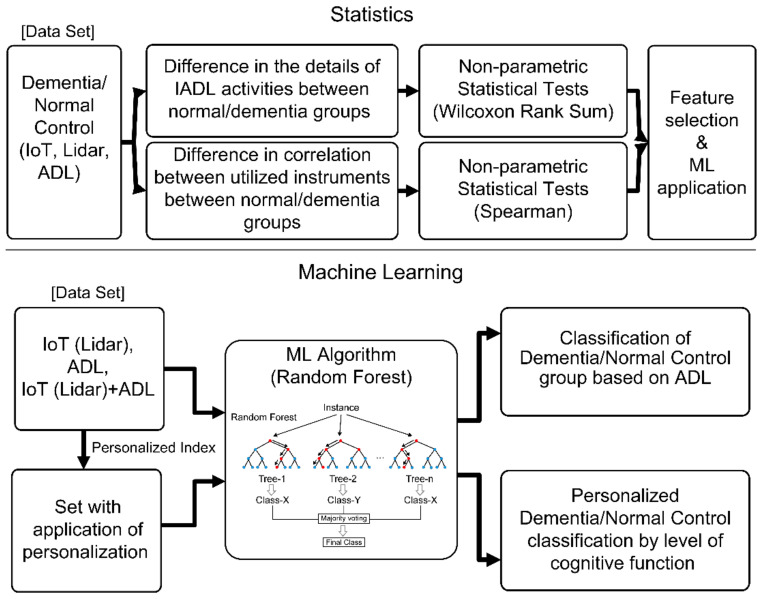
With the global trend toward an aging population, the increasing number of dementia patients and elderly living alone has emerged as a serious social issue in South Korea. The assessment of activities of daily living (ADL) is essential for diagnosing dementia. However, since the assessment is based on the ADL questionnaire, it relies on subjective judgment and lacks objectivity. Seven healthy seniors and six with early-stage dementia participated in the study to obtain ADL data. The derived ADL features were generated by smart home sensors. Statistical methods and machine learning techniques were employed to develop a model for auto-classifying the normal controls and early-stage dementia patients. The proposed approach verified the developed model as an objective ADL evaluation tool for the diagnosis of dementia. A random forest algorithm was used to compare a personalized model and a non-personalized model. The comparison result verified that the accuracy (91.20%) of the personalized model was higher than that (84.54%) of the non-personalized model. This indicates that the cognitive ability-based personalization showed encouraging performance in the classification of normal control and early-stage dementia and it is expected that the findings of this study will serve as important basic data for the objective diagnosis of dementia.
随着全球人口老龄化趋势的加剧,痴呆症患者和独居老人的数量不断增加,这已成为韩国的一个严重社会问题。日常生活活动(ADL)评估对于诊断痴呆症至关重要。然而,由于评估是基于 ADL 问卷,因此它依赖于主观判断,缺乏客观性。本研究招募了 7 名健康老年人和 6 名早期痴呆症患者以获取 ADL 数据。从智能家居传感器中提取 ADL 特征。统计方法和机器学习技术被用于开发一种自动分类正常对照组和早期痴呆症患者的模型。所提出的方法验证了所开发的模型作为痴呆症诊断的客观 ADL 评估工具的有效性。随机森林算法用于比较个性化模型和非个性化模型。比较结果验证了个性化模型的准确率(91.20%)高于非个性化模型(84.54%)。这表明基于认知能力的个性化在正常对照组和早期痴呆症的分类中表现出令人鼓舞的性能,预计本研究的结果将为痴呆症的客观诊断提供重要的基础数据。