Pu Shunchang, Zhang Yu, Lu Ning, Shi Cuie, Yan Shoubao
Department of Biology and Food Engineering, Bozhou University, Bozhou, 236800, Anhui, People's Republic of China.
School of Life Science, Huainan Normal University, Huainan, 232001, Anhui, People's Republic of China.
AMB Express. 2021 Dec 24;11(1):176. doi: 10.1186/s13568-021-01337-y.
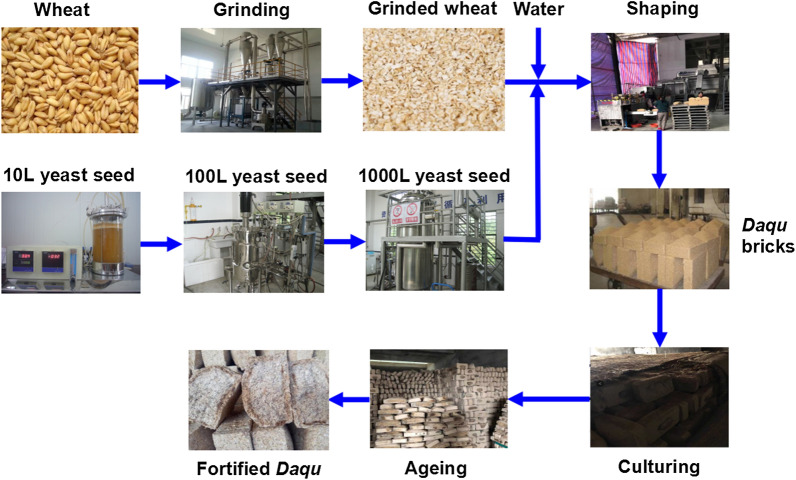
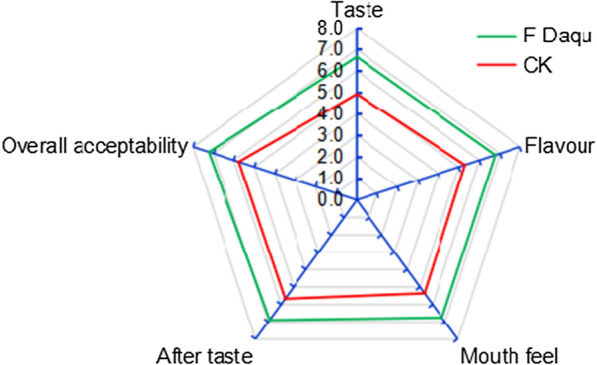
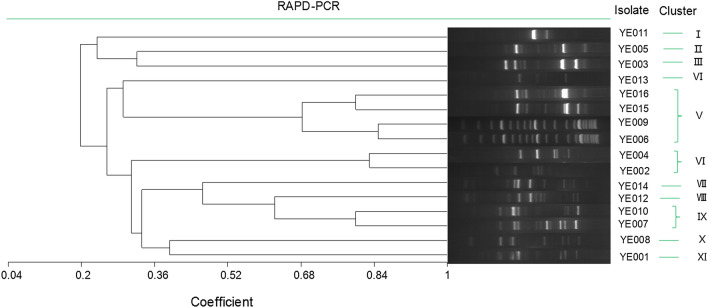
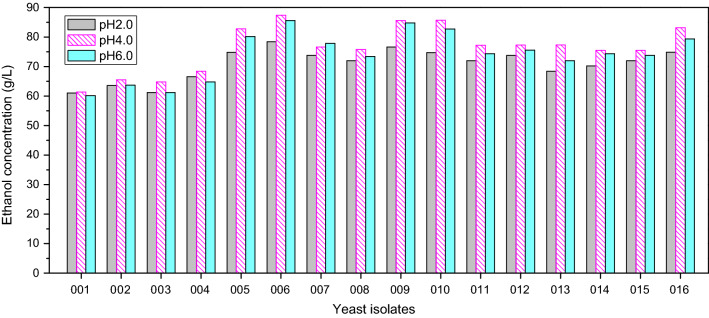
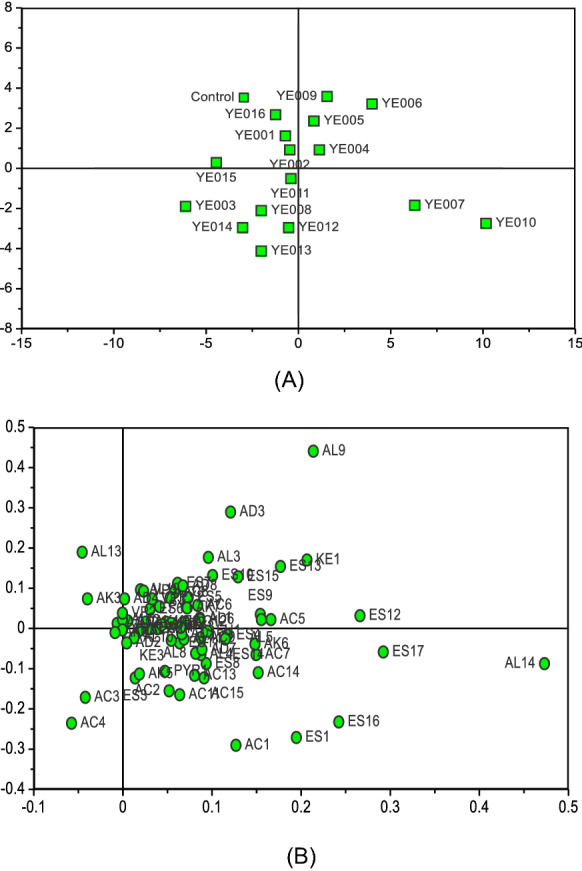
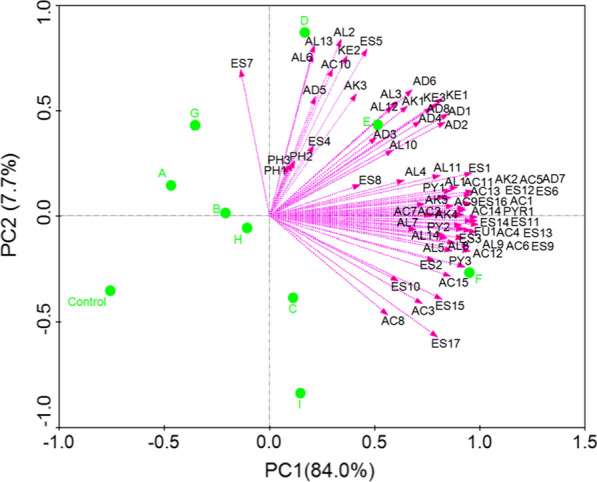
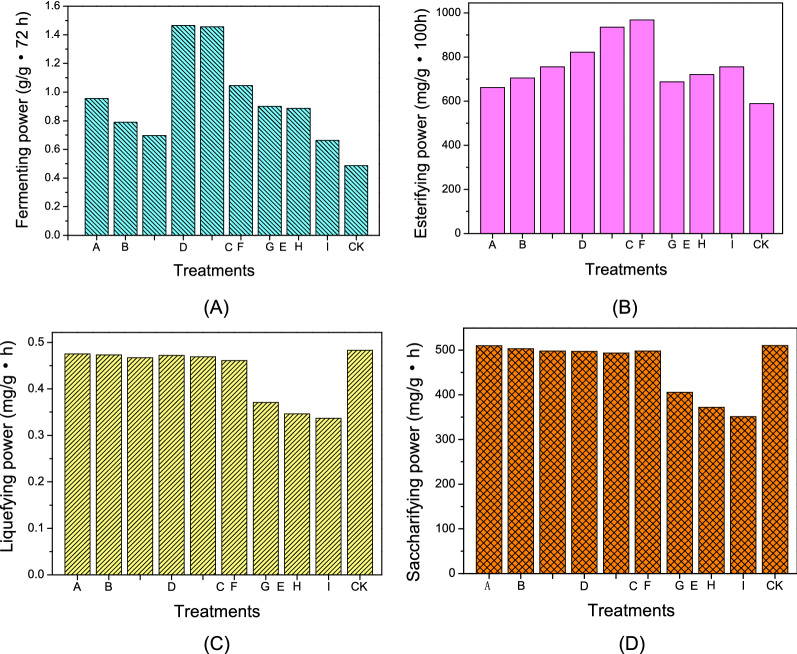
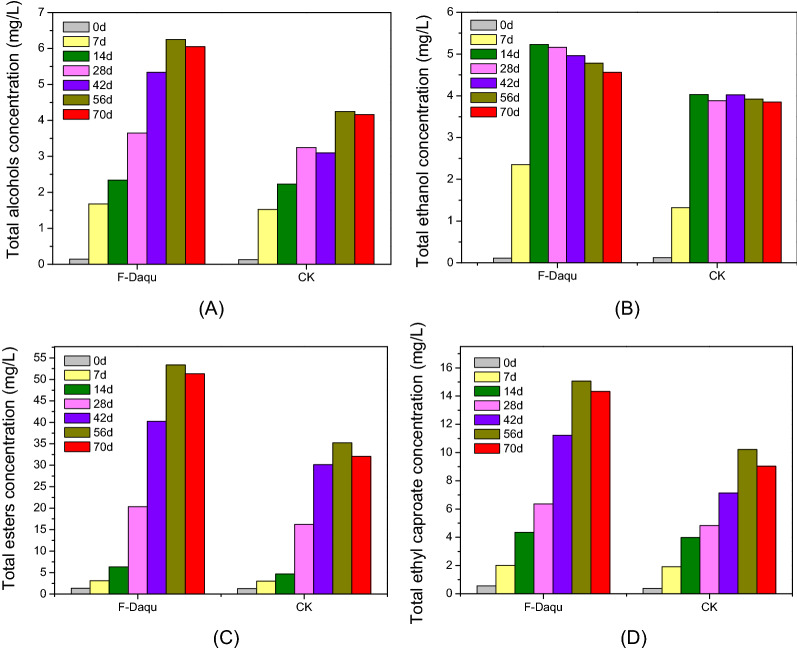
In total, 16 yeast were isolated from Chinese strong flavour Daqu samples and underwent RAPD analysis and identification. Totally, 11 different species were identified among these isolates including Saccharomyces cerevisiae, Hanseniaspora vineae, Pichia kluyveri, Trichosporon asahii, Wickerhamomyces anomalus, Kluyveromyces lactis, Yarrowia lipolytica, Wickerhamomyces mori, Galactomyces geotrichum, Dabaryomyces hansenii, and Saccharomyces kudriavzevii. To understand the impact of these yeast strains on the quality and flavour of Daqu, we then assessed volatile compounds associated with Daqu samples fermented with corresponding strains. These analyses revealed strain YE006 exhibited the most robust ability to produce ethanol via fermentation but yielded relatively low quantities of volatile compounds, whereas strain YE010 exhibited relatively poor fermentation efficiency but produced the greatest quantity of volatile compounds. These two yeast strains were then utilized in a mixed culture to produce fortified Daqu, with the optimal inoculum size being assessed experimentally. These analyses revealed that maximal fermentation, saccharifying, liquefying, and esterifying power as well as high levels of volatile compounds were achieved when using a 2% inoculum composed of YE006/YE010 at a 1:2 (v/v) ratio. When the liquor prepared using this optimized fortified Daqu was compared to unfortified control Daqu, the former was found to exhibit significantly higher levels of flavour compounds and better sensory scores. Overall, our findings may provide a reliable approach to ensuring Daqu quality and improving the consistency and flavour of Chinese strong-flavour liquor through bioaugmentation.
总共从中国浓香型大曲样品中分离出16株酵母,并对其进行了RAPD分析和鉴定。在这些分离菌株中总共鉴定出11个不同的物种,包括酿酒酵母、葡萄汁有孢汉逊酵母、克鲁维毕赤酵母、阿萨希丝孢酵母、异常威克汉姆酵母、乳酸克鲁维酵母、解脂耶氏酵母、森氏威克汉姆酵母、地霉、汉逊德巴利酵母和库德里阿兹威毕赤酵母。为了了解这些酵母菌株对大曲品质和风味的影响,我们随后评估了与用相应菌株发酵的大曲样品相关的挥发性化合物。这些分析表明,菌株YE006通过发酵产生乙醇的能力最强,但产生的挥发性化合物数量相对较少,而菌株YE010的发酵效率相对较差,但产生的挥发性化合物数量最多。然后将这两种酵母菌株用于混合培养以生产强化大曲,并通过实验评估最佳接种量。这些分析表明,当使用由YE006/YE010以1:2(v/v)比例组成的2%接种物时,可实现最大的发酵、糖化、液化和酯化能力以及高水平的挥发性化合物。当将使用这种优化的强化大曲制备的酒与未强化的对照大曲进行比较时,发现前者表现出明显更高水平的风味化合物和更好的感官评分。总体而言,我们的研究结果可能提供一种可靠的方法,通过生物强化来确保大曲质量并提高中国浓香型白酒的一致性和风味。