Mossanen Matthew, Carvalho Filipe L F, Muralidhar Vinayak, Preston Mark A, Reardon Brendan, Conway Jake R, Curran Catherine, Freeman Dory, Sha Sybil, Sonpavde Guru, Hirsch Michelle, Kibel Adam S, Van Allen Eliezer M, Mouw Kent W
Division of Urologic Surgery, Brigham & Women's Hospital, Dana-Farber Cancer Institute, Harvard Medical School, Boston MA, USA.
Department of Radiation Oncology, Dana-Farber Cancer Institute, Brigham & Women's Hospital, Harvard Medical School, Boston, MA, USA; Kaiser Permanente Northwest, Portland, OR, USA.
Eur Urol. 2022 May;81(5):466-473. doi: 10.1016/j.eururo.2021.12.004. Epub 2021 Dec 23.
Muscle-invasive bladder cancer (MIBC) is a rare but serious event following definitive radiation for prostate cancer. Radiation-associated MIBC (RA-MIBC) can be difficult to manage given the challenges of delivering definitive therapy to a previously irradiated pelvis. The genomic landscape of RA-MIBC and whether it is distinct from non-RA-MIBC are unknown.
To define mutational features of RA-MIBC and compare the genomic landscape of RA-MIBC with that of non-RA-MIBC.
DESIGN, SETTING, AND PARTICIPANTS: We identified patients from our institution who received radiotherapy for prostate cancer and subsequently developed MIBC.
We performed whole exome sequencing of bladder tumors from RA-MIBC patients. Tumor genetic alterations including mutations, copy number alterations, and mutational signatures were identified and were compared with genetic features of non-RA-MIBC. We used the Kaplan-Meier method to estimate recurrence-free (RFS) and overall (OS) survival.
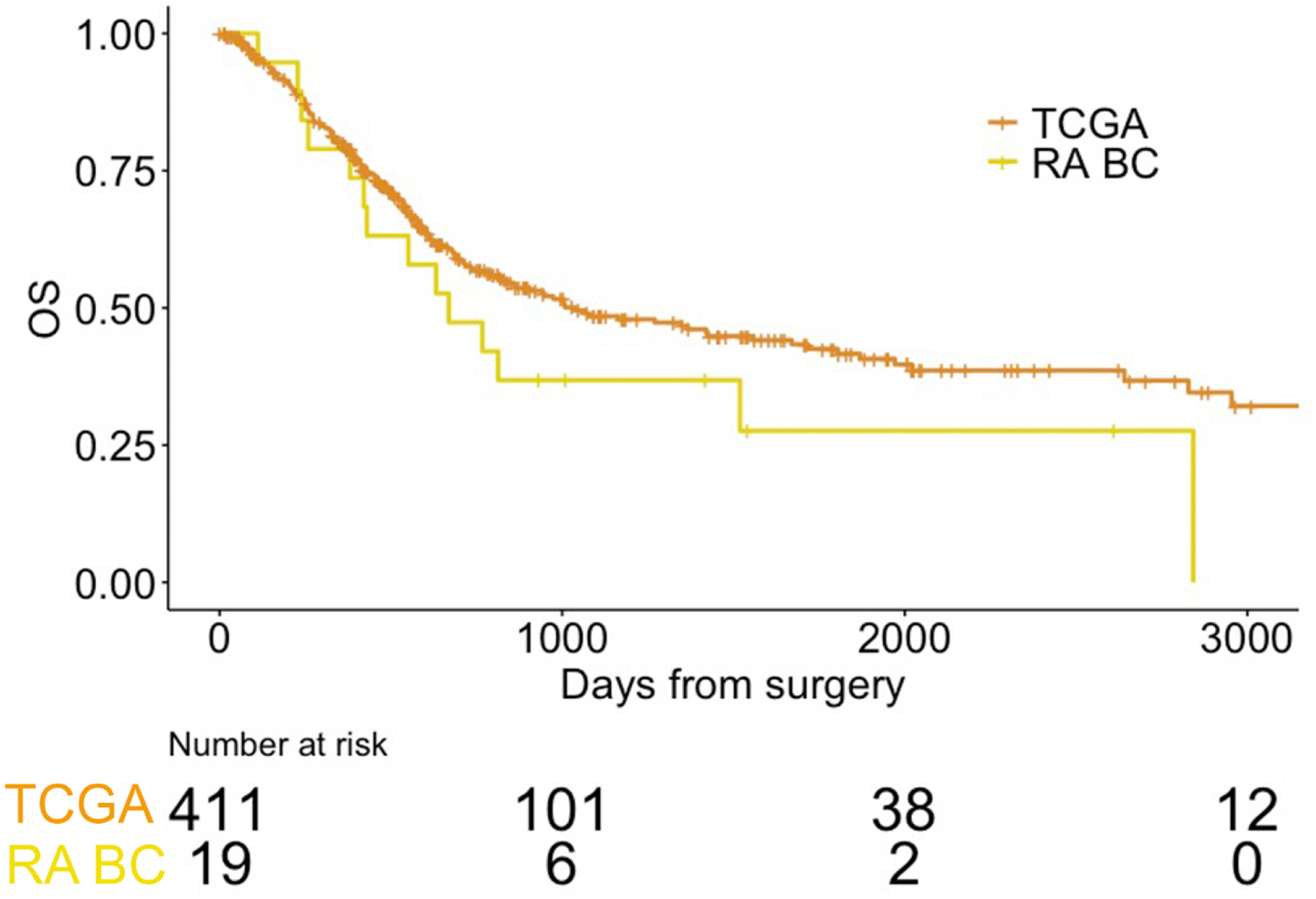
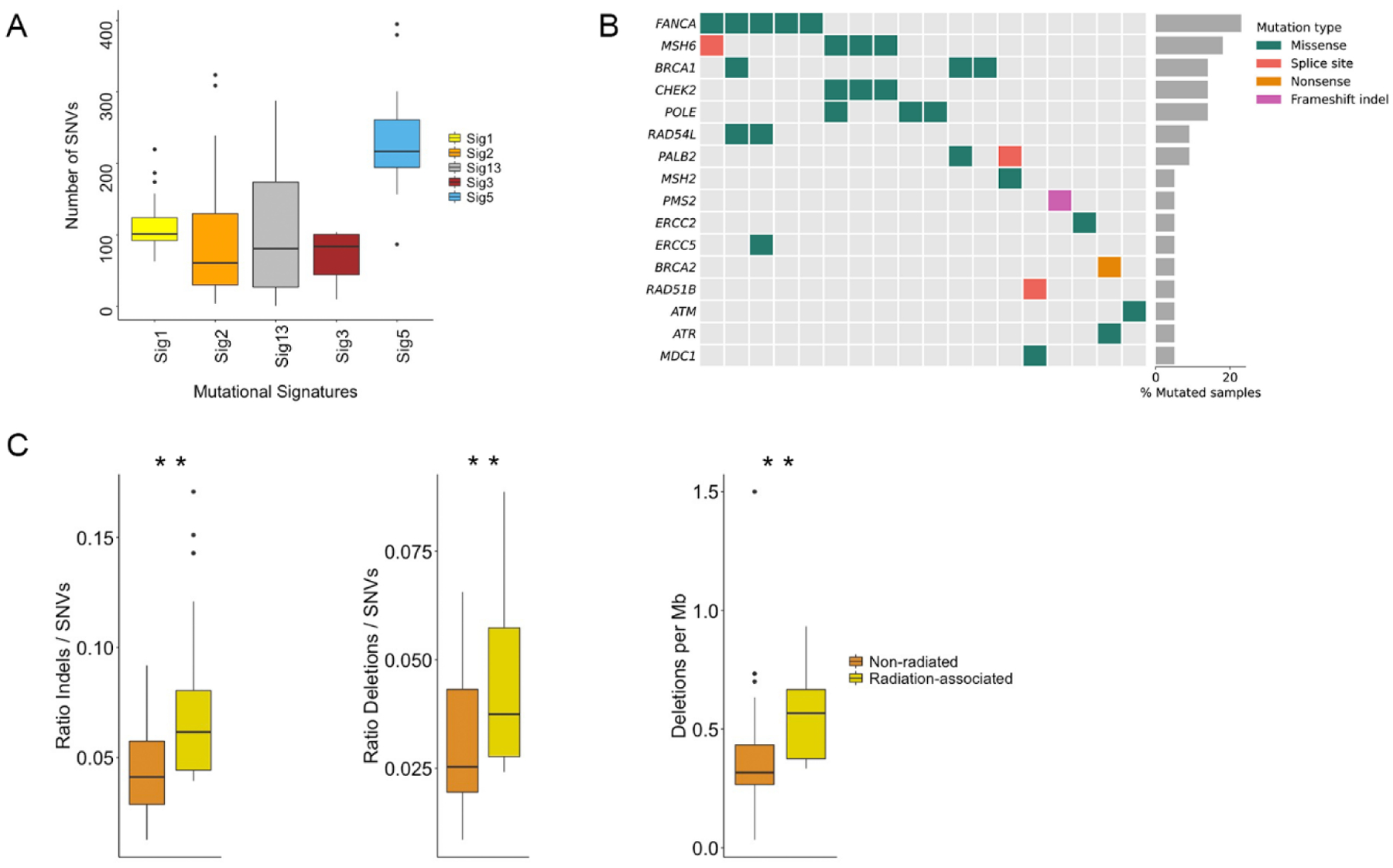
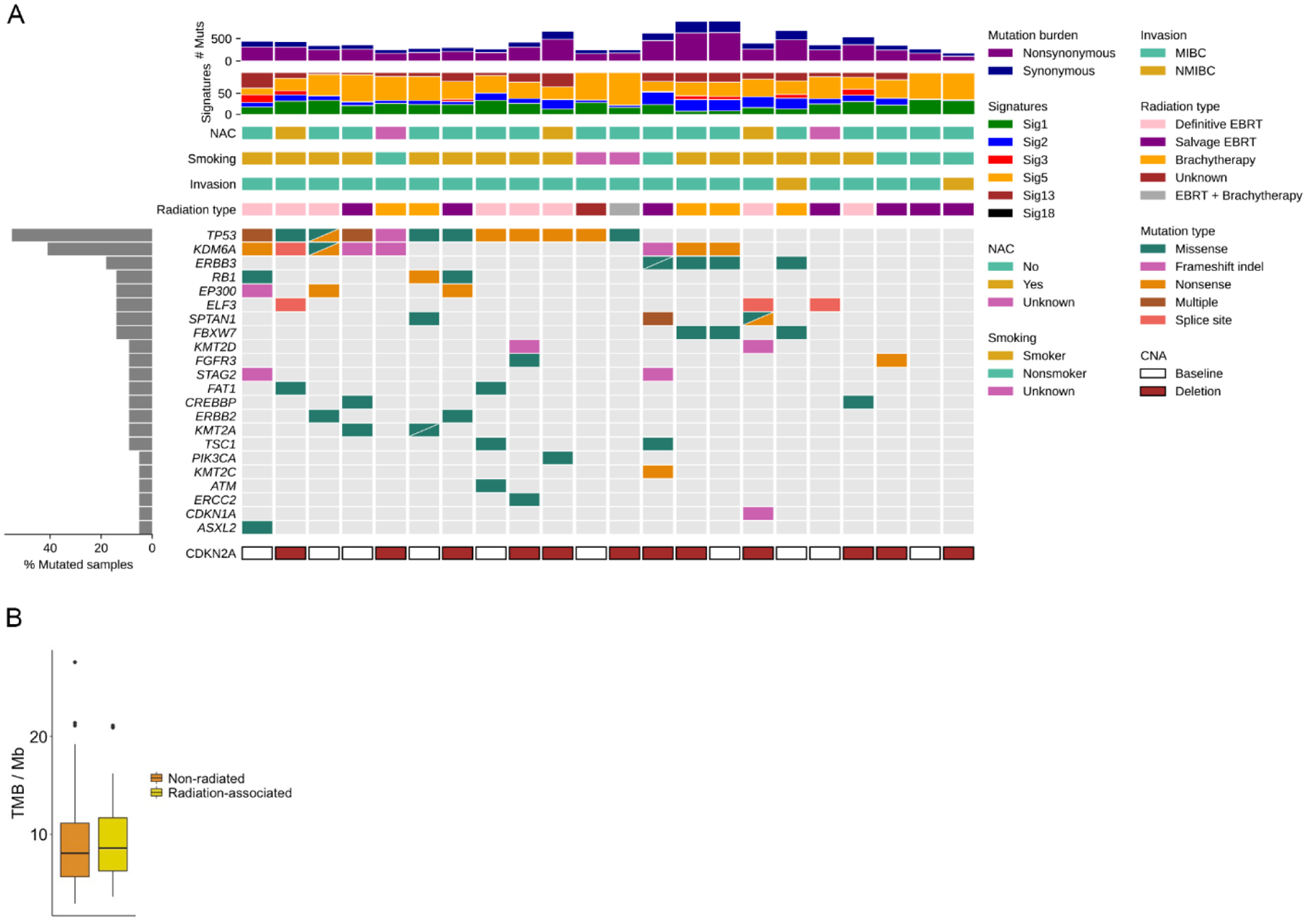
We identified 19 RA-MIBC patients with available tumor tissue (n = 22 tumors) and clinical data. The median age was 76 yr, and the median time from prostate cancer radiation to RA-MIBC was 12 yr. The median RFS was 14.5 mo and the median OS was 22.0 mo. Compared with a cohort of non-RA-MIBC analyzed in parallel, there was no difference in tumor mutational burden, but RA-MIBCs had a significantly increased number of short insertions and deletions (indels) consistent with previous radiation exposure. We identified mutation signatures characteristic of APOBEC-mediated mutagenesis, aging, and homologous recombination deficiency. The frequency of mutations in many known bladder cancer genes, including TP53, KDM6A, and RB1, as well as copy number alterations such as CDKN2A loss was similar in RA-MIBC and non-RA-MIBC.
We identified unique mutational properties that likely contribute to the distinct biological and clinical features of RA-MIBC.
Bladder cancer is a rare but serious diagnosis following radiation for prostate cancer. We characterized genetic features of bladder tumors arising after prostate radiotherapy, and identify similarities with and differences from bladder tumors from patients without previous radiation.
肌肉浸润性膀胱癌(MIBC)是前列腺癌根治性放疗后一种罕见但严重的情况。鉴于对先前接受过放疗的骨盆进行根治性治疗存在挑战,放射性相关的MIBC(RA-MIBC)可能难以处理。RA-MIBC的基因组特征以及它是否与非RA-MIBC不同尚不清楚。
确定RA-MIBC的突变特征,并将RA-MIBC的基因组特征与非RA-MIBC的进行比较。
设计、设置和参与者:我们从本机构中识别出接受过前列腺癌放疗并随后发生MIBC的患者。
我们对RA-MIBC患者的膀胱肿瘤进行了全外显子组测序。识别出肿瘤的基因改变,包括突变、拷贝数改变和突变特征,并与非RA-MIBC的基因特征进行比较。我们使用Kaplan-Meier方法估计无复发生存期(RFS)和总生存期(OS)。
我们识别出19例有可用肿瘤组织(n = 22个肿瘤)和临床数据的RA-MIBC患者。中位年龄为76岁,从前列腺癌放疗到发生RA-MIBC的中位时间为12年。中位RFS为14.5个月,中位OS为22.0个月。与同时分析的非RA-MIBC队列相比,肿瘤突变负荷没有差异,但RA-MIBC中与先前辐射暴露一致的短插入和缺失(插入缺失)数量显著增加。我们识别出APOBEC介导的诱变、衰老和同源重组缺陷的突变特征。许多已知膀胱癌基因(包括TP53、KDM6A和RB1)的突变频率,以及诸如CDKN2A缺失等拷贝数改变在RA-MIBC和非RA-MIBC中相似。
我们识别出了可能导致RA-MIBC独特生物学和临床特征的独特突变特性。
膀胱癌是前列腺癌放疗后一种罕见但严重的诊断。我们描述了前列腺放疗后发生的膀胱肿瘤的基因特征,并确定了与未接受过放疗患者的膀胱肿瘤的异同。