Simpson Hannah L, Roberts Carol L, Thompson Louise M, Leiper Cameron R, Gittens Nehana, Trotter Ellie, Duckworth Carrie A, Papoutsopoulou Stamatia, Miyajima Fabio, Roberts Paul, O'Kennedy Niamh, Rhodes Jonathan M, Campbell Barry J
The Henry Wellcome Laboratories of Molecular & Cellular Gastroenterology, Faculty of Health & Life Sciences, University of Liverpool, Liverpool, United Kingdom.
Department of Clinical Infection, Microbiology and Immunology, Institute of Infection Veterinary and Ecological Sciences, Faculty of Health & Life Sciences, University of Liverpool, Liverpool, United Kingdom.
Front Pharmacol. 2021 Dec 10;12:766293. doi: 10.3389/fphar.2021.766293. eCollection 2021.
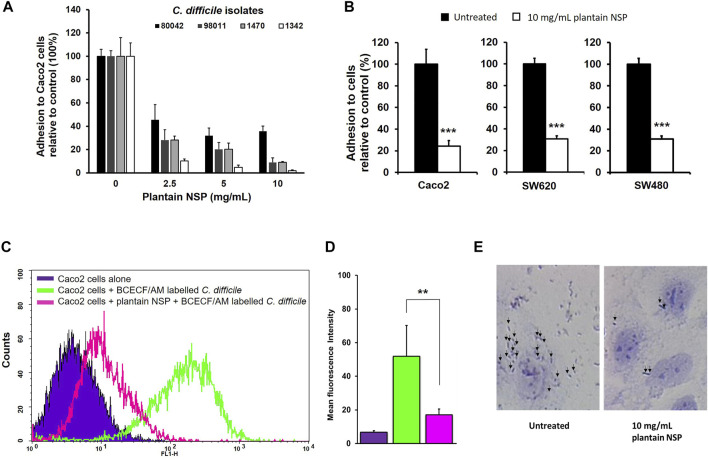
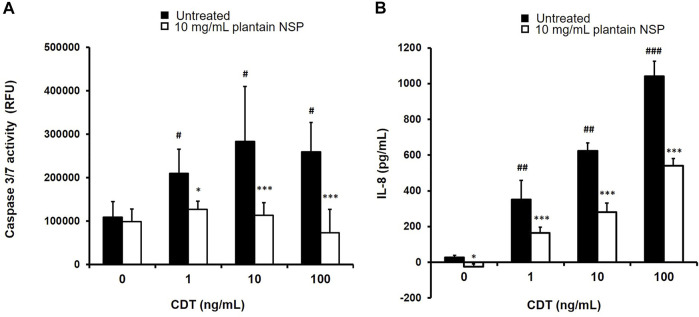
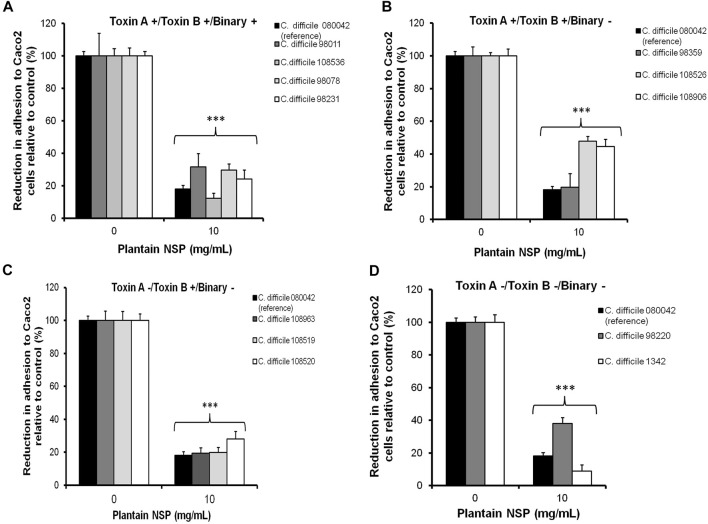
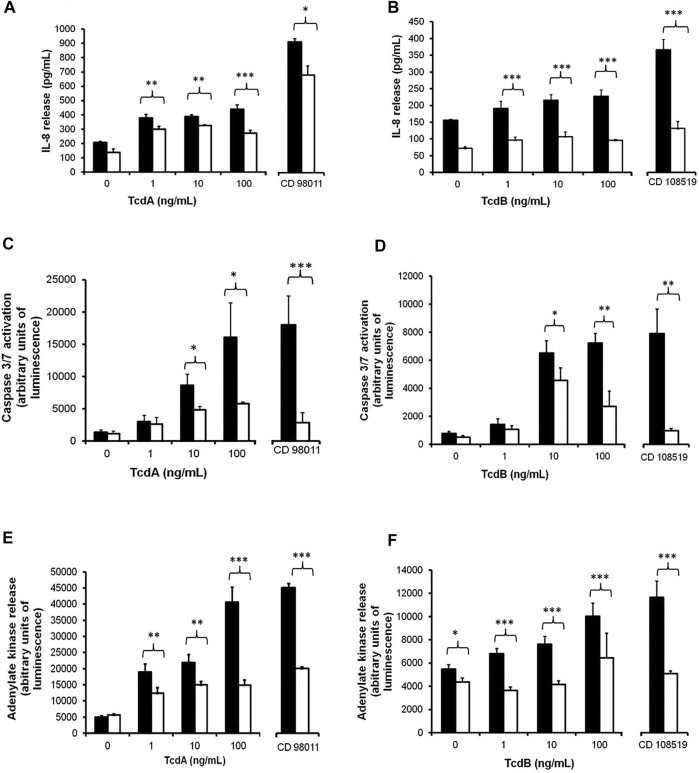
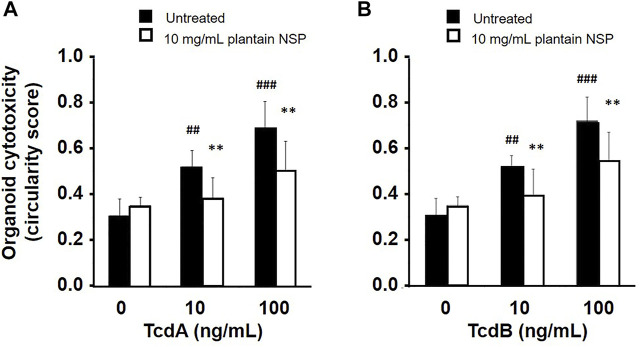
infection (CDI) is a leading cause of antibiotic-associated diarrhoea. Adhesion of this Gram-positive pathogen to the intestinal epithelium is a crucial step in CDI, with recurrence and relapse of disease dependent on epithelial interaction of its endospores. Close proximity, or adhesion of, hypervirulent strains to the intestinal mucosa are also likely to be necessary for the release of toxins, which when internalized, result in intestinal epithelial cell rounding, damage, inflammation, loss of barrier function and diarrhoea. Interrupting these -epithelium interactions could therefore represent a promising therapeutic strategy to prevent and treat CDI. Intake of dietary fibre is widely recognised as being beneficial for intestinal health, and we have previously shown that soluble non-starch polysaccharides (NSP) from plantain banana ( spp.), can block epithelial adhesion and invasion of a number of gut pathogens, such as and Salmonellae. Here, we assessed the action of plantain NSP, and a range of alternative soluble plant fibres, for inhibitory action on epithelial interactions of clinical isolates, purified endospore preparations and toxins. We found that plantain NSP possessed ability to disrupt epithelial adhesion of vegetative cells and spores, with inhibitory activity against found within the acidic (pectin-rich) polysaccharide component, through interaction with the intestinal epithelium. Similar activity was found with NSP purified from broccoli and leek, although seen to be less potent than NSP from plantain. Whilst plantain NSP could not block the interaction and intracellular action of purified toxins, it significantly diminished the epithelial impact of , reducing both bacteria and toxin induced inflammation, activation of caspase 3/7 and cytotoxicity in human intestinal cell-line and murine intestinal organoid cultures. Dietary supplementation with soluble NSP from plantain may therefore confer a protective effect in CDI patients by preventing adhesion of to the mucosa, i.e. a "contrabiotic" effect, and diminishing its epithelial impact. This suggests that plantain soluble dietary fibre may be a therapeutically effective nutritional product for use in the prevention or treatment of CDI and antibiotic-associated diarrhoea.
艰难梭菌感染(CDI)是抗生素相关性腹泻的主要原因。这种革兰氏阳性病原体与肠上皮细胞的黏附是CDI的关键步骤,疾病的复发和再发取决于其芽孢与上皮细胞的相互作用。高毒力菌株与肠黏膜的紧密接近或黏附对于毒素的释放也可能是必要的,毒素内化后会导致肠上皮细胞变圆、损伤、炎症、屏障功能丧失和腹泻。因此,中断这些上皮细胞相互作用可能是预防和治疗CDI的一种有前景的治疗策略。摄入膳食纤维被广泛认为对肠道健康有益,我们之前已经表明,来自车前草香蕉(芭蕉属物种)的可溶性非淀粉多糖(NSP)可以阻止多种肠道病原体(如大肠杆菌和沙门氏菌)对上皮细胞的黏附和侵袭。在这里,我们评估了车前草NSP以及一系列其他可溶性植物纤维对艰难梭菌临床分离株、纯化芽孢制剂和毒素与上皮细胞相互作用的抑制作用。我们发现,车前草NSP具有破坏营养细胞和芽孢与上皮细胞黏附的能力,通过与肠上皮细胞相互作用,在酸性(富含果胶)多糖成分中发现了对艰难梭菌的抑制活性。从西兰花和韭菜中纯化的NSP也发现了类似的活性,尽管其效力不如车前草NSP。虽然车前草NSP不能阻止纯化的艰难梭菌毒素的相互作用和细胞内作用,但它显著降低了艰难梭菌对上皮细胞的影响,减少了细菌和毒素诱导的炎症、半胱天冬酶3/7的激活以及在人肠道细胞系和小鼠肠道类器官培养中的细胞毒性。因此,在饮食中补充来自车前草的可溶性NSP可能通过防止艰难梭菌黏附到黏膜上,即产生“抗生元”效应,并减少其对上皮细胞的影响,从而对CDI患者起到保护作用。这表明车前草可溶性膳食纤维可能是一种用于预防或治疗CDI及抗生素相关性腹泻的具有治疗效果的营养产品。