Gastroenterology Research Unit, Department of Cellular and Molecular Physiology, Institute of Translational Medicine, University of Liverpool, Liverpool, UK.
Institute of Immunology and Immunotherapy, College of Medical and Dental Sciences, University of Birmingham, Birmingham, UK.
Cell Death Dis. 2019 Nov 26;10(12):896. doi: 10.1038/s41419-019-2129-5.
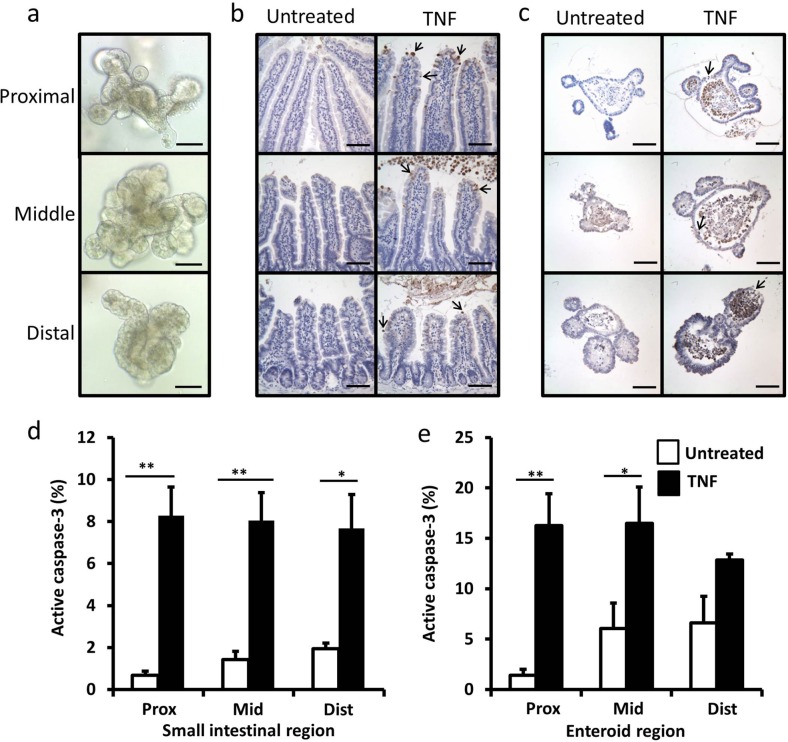
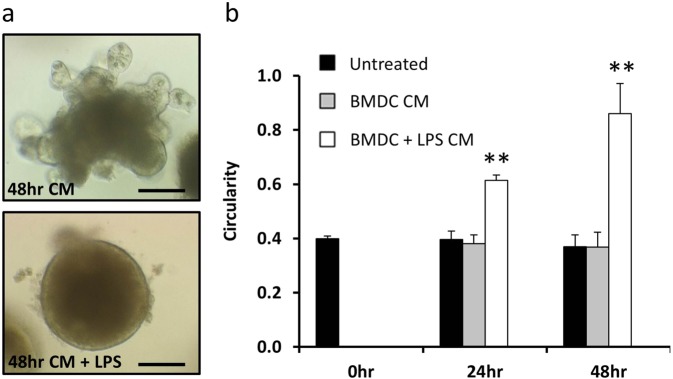
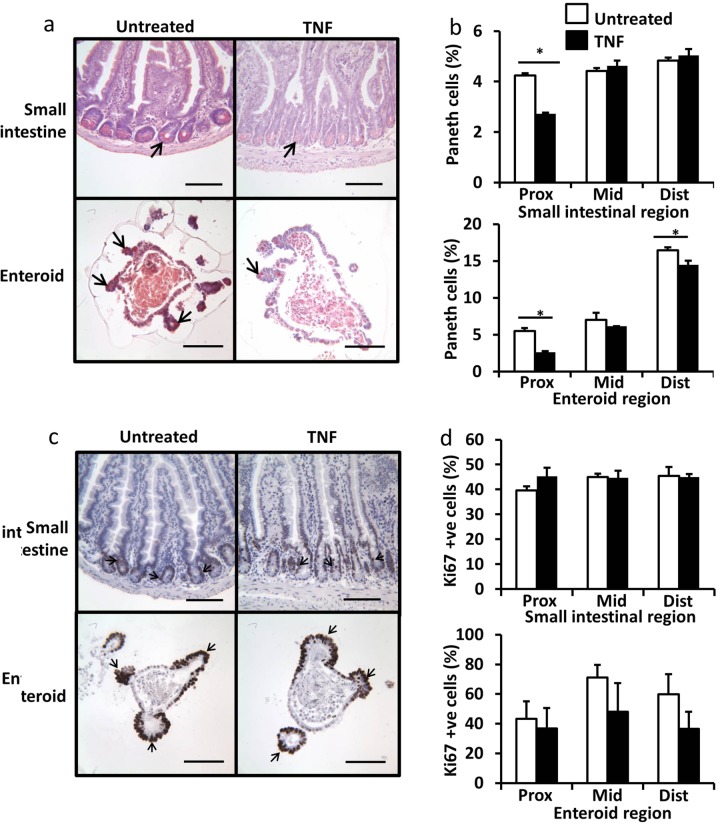
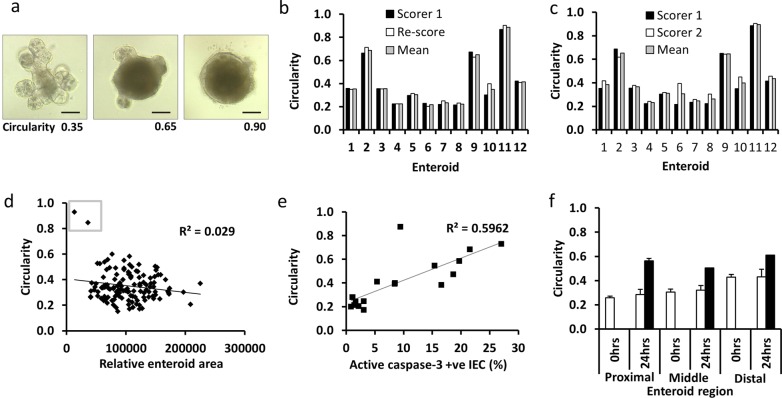
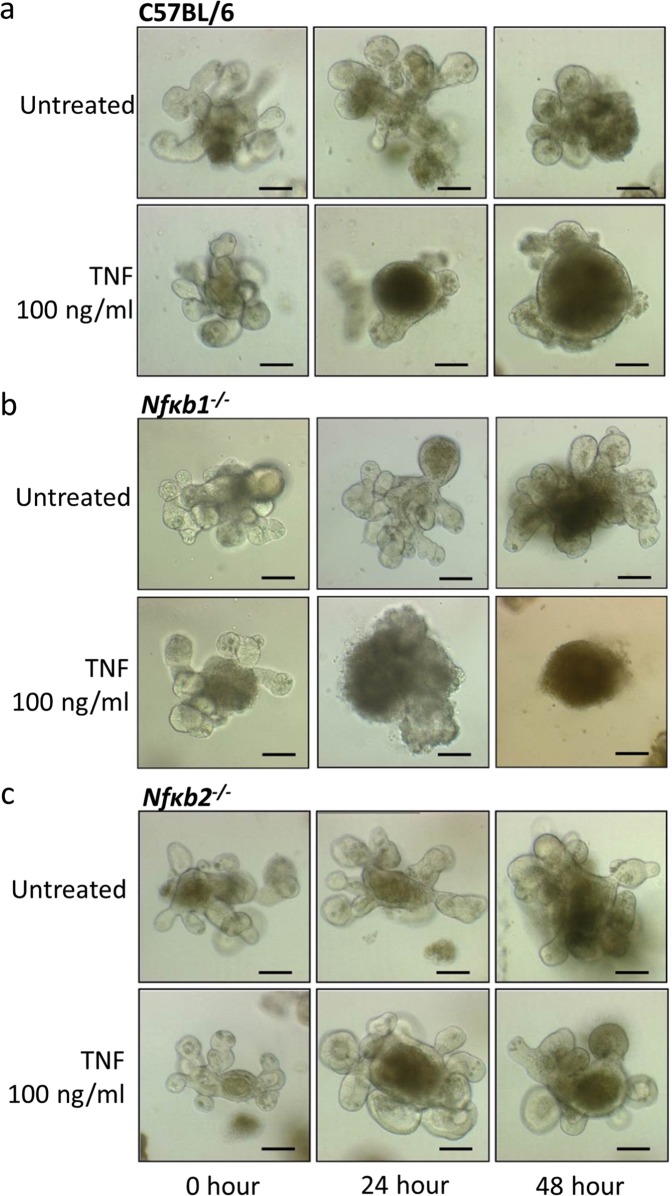
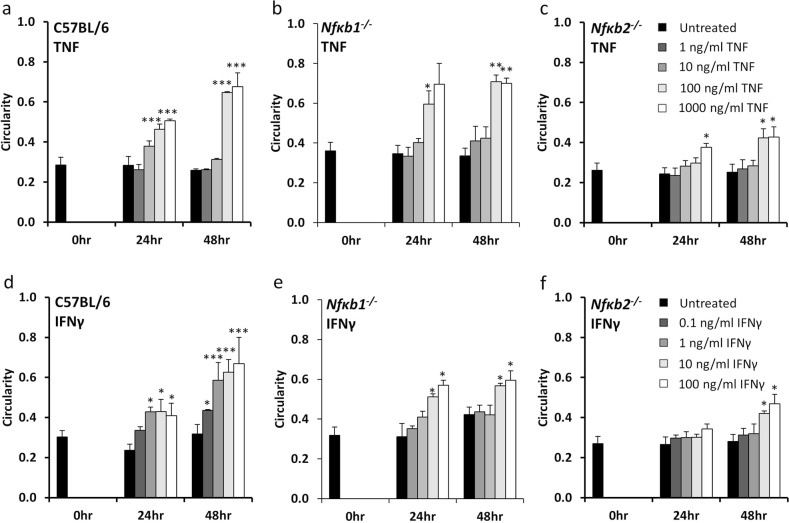
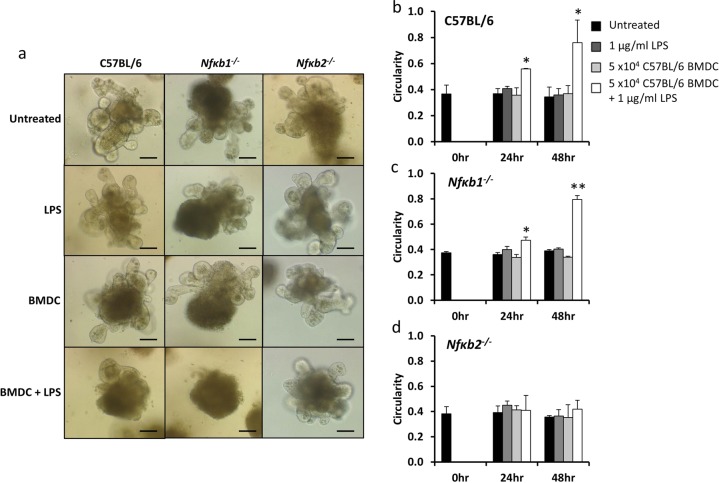
Alternative pathway NF-κB signalling regulates susceptibility towards developing inflammatory bowel disease (IBD), colitis-associated cancer and sepsis-associated intestinal epithelial cell apoptosis and shedding. However, the cell populations responsible for the perturbed alternative pathway NF-κB signalling in intestinal mucosal pathology remain unclear. In order to investigate the contribution of the epithelial compartment, we have tested whether NF-κB2 regulated transcription in intestinal epithelial cells controls the intestinal epithelial response to cytokines that are known to disrupt intestinal barrier permeability. Enteroids were generated from the proximal, middle and distal regions of small intestine (SI) from C57BL/6J wild-type mice and displayed region-specific morphology that was maintained during sub-culture. Enteroids treated with 100 ng/mL TNF were compared with corresponding regions of SI from C57BL/6J mice treated systemically with 0.33 mg/kg TNF for 1.5 h. TNF-induced apoptosis in all regions of the intestine in vitro and in vivo but resulted in Paneth cell degranulation only in proximal tissue-derived SI and enteroids. TNF also resulted in increased enteroid sphericity (quantified as circularity from two-dimensional bright field images). This response was dose and time-dependent and correlated with active caspase-3 immunopositivity. Proximal tissue-derived enteroids generated from Nfκb2 mice showed a significantly blunted circularity response following the addition of TNF, IFNγ, lipopolysaccharide (LPS) activated C57BL/6J-derived bone marrow-derived dendritic cells (BMDC) and secreted factors from LPS-activated BMDCs. However, Nfκb1 mouse-derived enteroids showed no significant changes in response to these stimuli. In conclusion, the selection of SI region is important when designing enteroid studies as region-specific identity and response to stimuli such as TNF are maintained in culture. Intestinal epithelial cells are at least partially responsible for regulating their own fate by modulating NF-κB2 signalling in response to stimuli known to be involved in multiple intestinal and systemic diseases. Future studies are warranted to investigate the therapeutic potential of intestinal epithelial NF-κB2 inhibition.
旁路 NF-κB 信号通路调节炎症性肠病(IBD)、结肠炎相关癌症和脓毒症相关肠上皮细胞凋亡和脱落的易感性。然而,在肠道黏膜病理中导致旁路 NF-κB 信号通路紊乱的细胞群体尚不清楚。为了研究上皮细胞区室的贡献,我们检测了 NF-κB2 是否调节肠上皮细胞中的转录以控制肠上皮细胞对已知破坏肠道屏障通透性的细胞因子的反应。从小鼠的近端、中端和远端小肠(SI)生成类器官,并在亚培养过程中保持区域特异性形态。用 100ng/mL TNF 处理类器官,并与用 0.33mg/kg TNF 全身处理的 C57BL/6J 小鼠的相应 SI 区域进行比较,处理时间为 1.5 小时。TNF 在体外和体内诱导所有肠段的凋亡,但仅在近端组织衍生的 SI 和类器官中导致潘氏细胞脱颗粒。TNF 还导致类器官的球形度增加(通过二维明场图像的圆度量化)。这种反应是剂量和时间依赖性的,与活性 caspase-3 免疫阳性相关。从小鼠的近端组织生成的 Nfκb2 类器官在加入 TNF、IFNγ、脂多糖(LPS)激活的 C57BL/6J 衍生骨髓来源的树突状细胞(BMDC)和 LPS 激活的 BMDC 分泌因子后,其球形度反应明显减弱。然而,Nfκb1 小鼠衍生的类器官对这些刺激没有明显的反应变化。总之,在设计类器官研究时,选择 SI 区域很重要,因为在培养过程中保留了区域特异性和对 TNF 等刺激的反应。肠上皮细胞至少部分负责通过调节 NF-κB2 信号通路来调节自身命运,以响应已知参与多种肠道和系统性疾病的刺激。需要进一步的研究来探讨肠道上皮细胞 NF-κB2 抑制的治疗潜力。