School of Kinesiology, Shanghai University of Sport, Shanghai, China.
State Key Laboratory of Translational Medicine and Innovative Drug Development, Jiangsu Simcere Diagnostics Co., Ltd., Nanjing, China.
Front Immunol. 2021 Dec 9;12:796647. doi: 10.3389/fimmu.2021.796647. eCollection 2021.
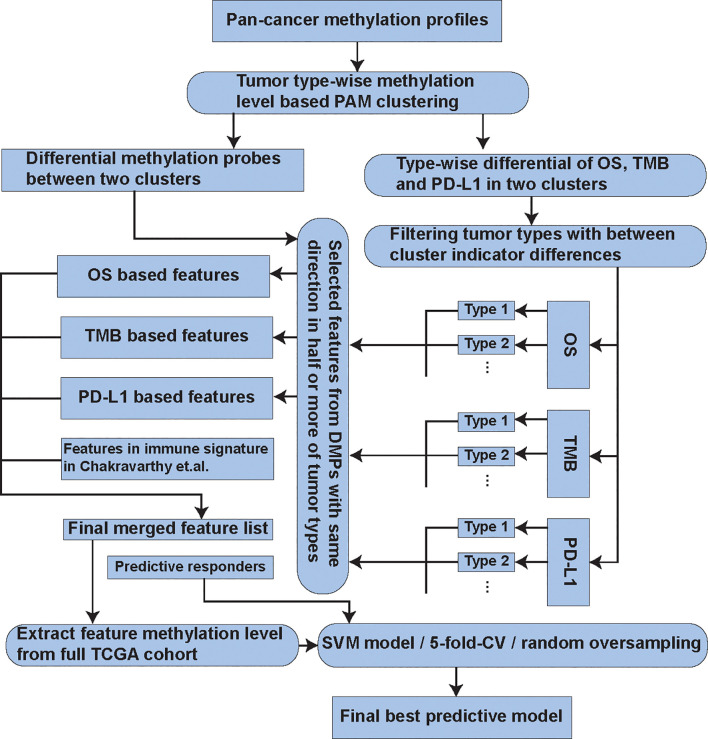
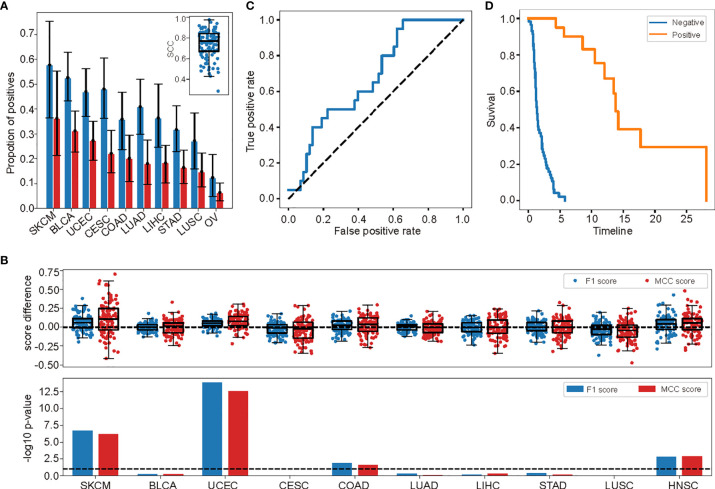
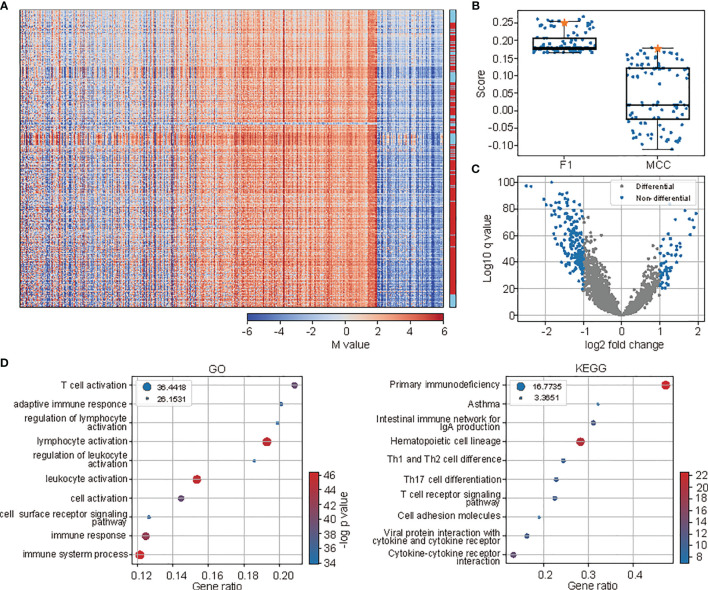
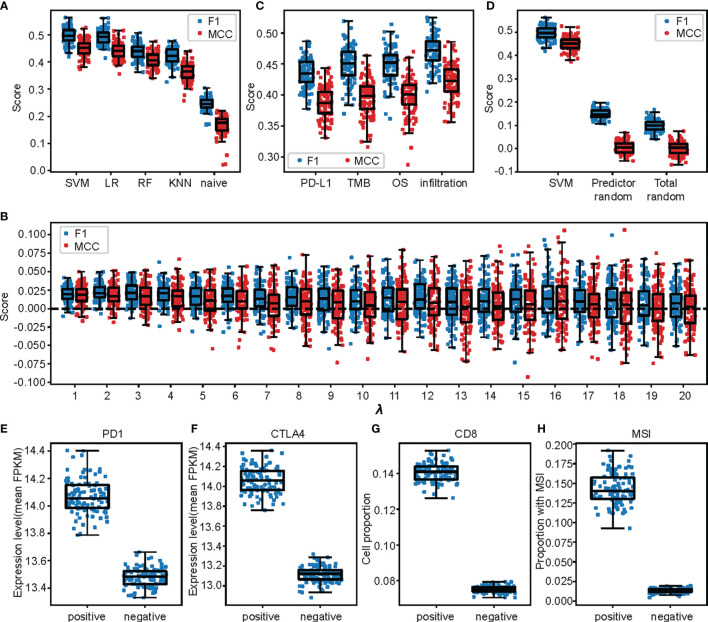
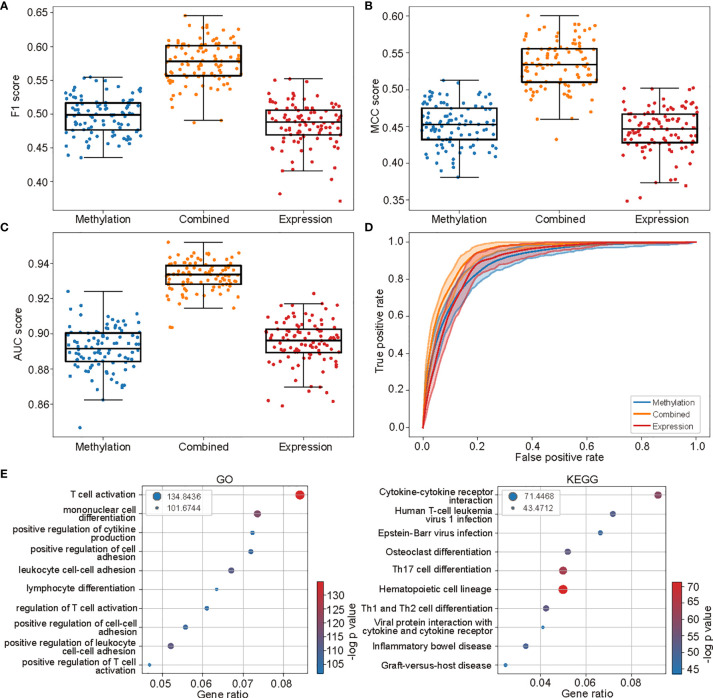
Recently, tumor immunotherapy based on immune checkpoint inhibitors (ICI) has been introduced and widely adopted for various tumor types. Nevertheless, tumor immunotherapy has a few drawbacks, including significant uncertainty of outcome, the possibility of severe immune-related adverse events for patients receiving such treatments, and the lack of effective biomarkers to determine the ICI treatments' responsiveness. DNA methylation profiles were recently identified as an indicator of the tumor immune microenvironment. They serve as a potential hot spot for predicting responses to ICI treatment for their stability and convenience of measurement by liquid biopsy. We demonstrated the possibility of DNA methylation profiles as a predictor for responses to the ICI treatments at the pan-cancer level by analyzing DNA methylation profiles considered responsive and non-responsive to the treatments. An SVM model was built based on this differential analysis in the pan-cancer levels. The performance of the model was then assessed both at the pan-cancer level and in specific tumor types. It was also compared to the existing gene expression profile-based method. DNA methylation profiles were shown to be predictable for the responses to the ICI treatments in the TCGA cases in pan-cancer levels. The proposed SVM model was shown to have high performance in pan-cancer and specific cancer types. This performance was comparable to that of gene expression profile-based one. The combination of the two models had even higher performance, indicating the potential complementarity of the DNA methylation and gene expression profiles in the prediction of ICI treatment responses.
最近,基于免疫检查点抑制剂(ICI)的肿瘤免疫疗法已经被引入并广泛应用于各种肿瘤类型。然而,肿瘤免疫疗法也存在一些缺点,包括疗效的不确定性、接受此类治疗的患者发生严重免疫相关不良事件的可能性,以及缺乏有效的生物标志物来确定 ICI 治疗的反应性。DNA 甲基化谱最近被确定为肿瘤免疫微环境的一个指标。它们作为预测对 ICI 治疗反应的潜在热点,具有稳定性和通过液体活检进行测量的便利性。我们通过分析对治疗有反应和无反应的 DNA 甲基化谱,在泛癌水平上证明了 DNA 甲基化谱作为对 ICI 治疗反应的预测因子的可能性。在泛癌水平上,基于此差异分析构建了 SVM 模型。然后在泛癌水平和特定肿瘤类型上评估了该模型的性能,并与现有的基于基因表达谱的方法进行了比较。结果表明,在 TCGA 泛癌病例中,DNA 甲基化谱可预测对 ICI 治疗的反应。所提出的 SVM 模型在泛癌和特定癌症类型中具有较高的性能,与基于基因表达谱的方法相当。两种模型的组合具有更高的性能,表明 DNA 甲基化和基因表达谱在预测 ICI 治疗反应方面具有潜在的互补性。