Kaushik Neha, Oh Hyunji, Lim Yeasol, Kumar Kaushik Nagendra, Nguyen Linh Nhat, Choi Eun Ha, Kim June Hyun
Department of Biotechnology, College of Engineering, The University of Suwon, Hwaseong, South Korea.
Department of Electrical and Biological Physics, Plasma Bioscience Research Center, Kwangwoon University, Seoul, South Korea.
Front Bioeng Biotechnol. 2021 Dec 9;9:779393. doi: 10.3389/fbioe.2021.779393. eCollection 2021.
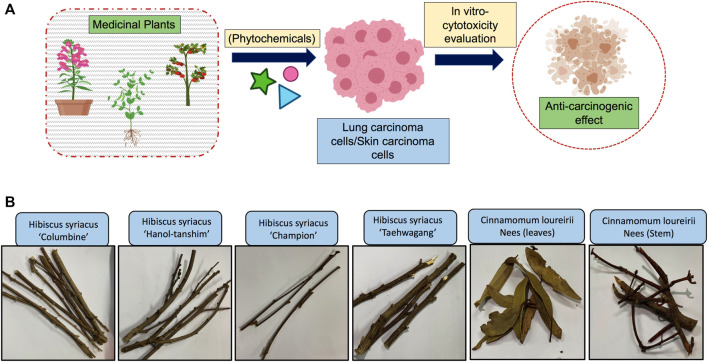
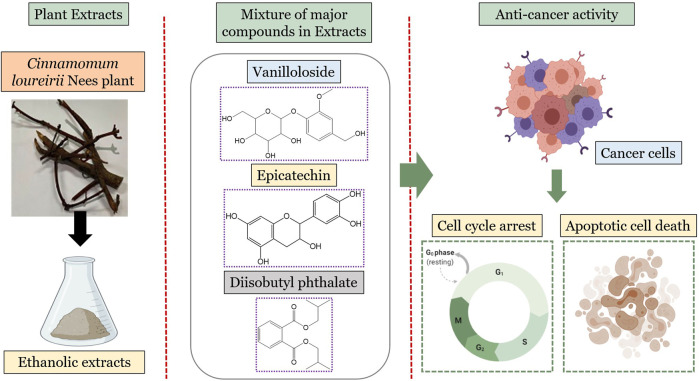
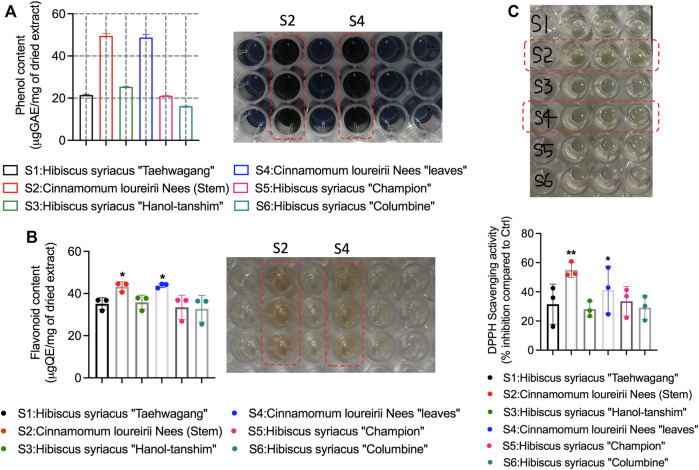
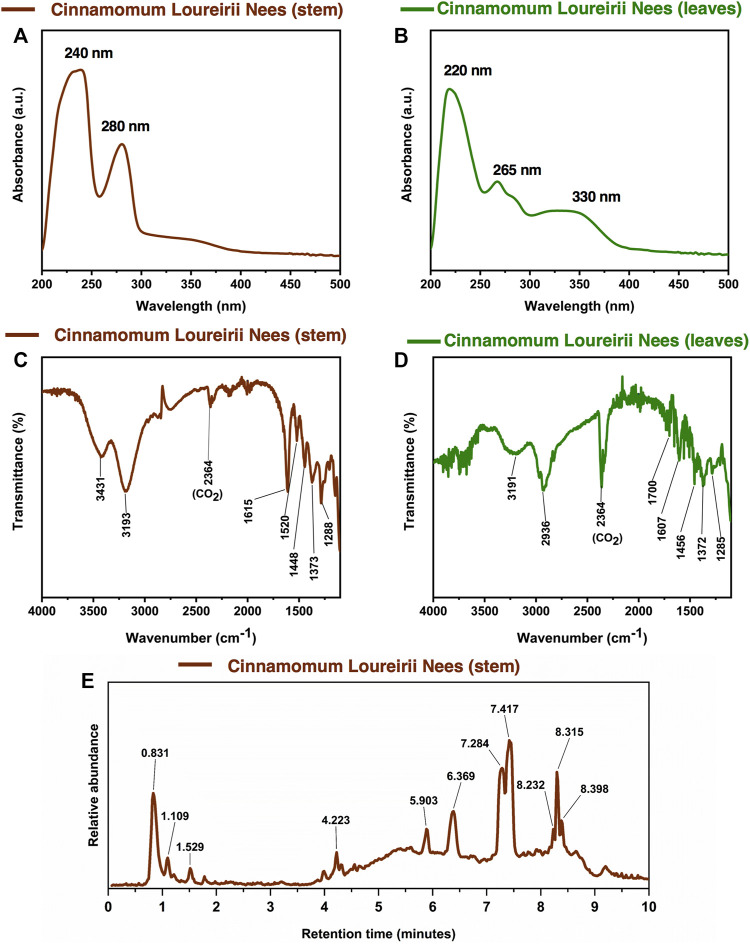
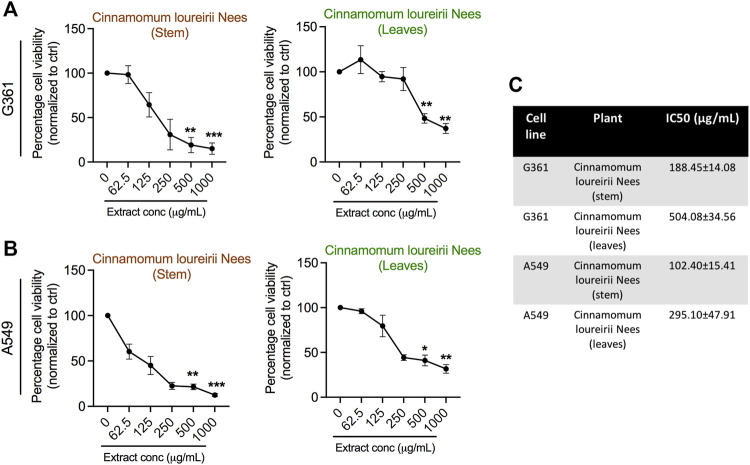
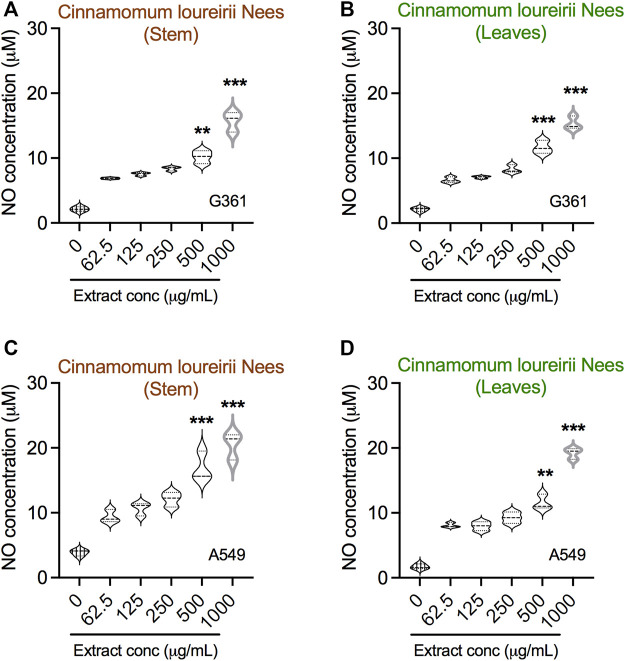
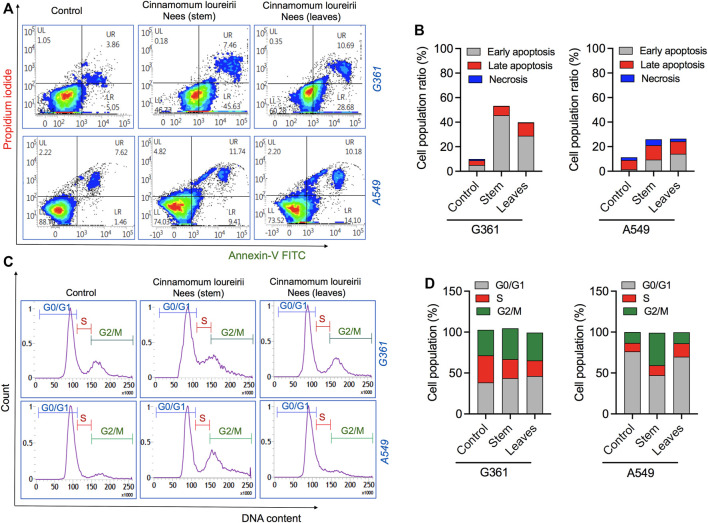
Carcinogenesis is a major concern that severely affects the human population. Owing to persistent demand for novel therapies to treat and prohibit this lethal disease, research interest among scientists is drawing its huge focus toward natural products, as they have minimum toxicity comparable with existing treatment methods. The plants produce secondary metabolites, which are known to have the anticancer potential for clinical drug development. Furthermore, the use of nanocarriers could boost the solubility and stability of phytocompounds to obtain site-targeting delivery. The identification of potential phytochemicals in natural compounds would be beneficial for the synthesis of biocompatible nanoemulsions. The present study aimed to investigate the potential cytotoxicity of ethanol extracts of and Nees plant parts on human skin melanoma (G361) and lung adenocarcinoma (A549) cells. Importantly, biochemical analysis results showed the presence of high phenol (50-55 µgGAE/mg) and flavonoids [42-45 µg quercetin equivalents (QE)/mg] contents with good antioxidant activity (40-58%) in Nees plants extracts. This plant possesses potent antiproliferative activity (60-90%) on the malignant G361 and A549 and cell lines correlated with the production of nitric oxide. Especially, plant extracts have major metabolites that exhibit cancer cell death associated with cell cycle arrest. These findings support the potential application of for the development of therapeutic nanoemulsion in future cancer therapy.
致癌作用是一个严重影响人类群体的主要问题。由于对治疗和预防这种致命疾病的新型疗法的持续需求,科学家们的研究兴趣正极大地聚焦于天然产物,因为与现有治疗方法相比,它们的毒性最小。植物产生次生代谢产物,已知这些次生代谢产物具有用于临床药物开发的抗癌潜力。此外,使用纳米载体可以提高植物化合物的溶解度和稳定性,以实现靶向递送。鉴定天然化合物中的潜在植物化学物质将有利于合成生物相容性纳米乳液。本研究旨在调查[植物名称]和Nees植物各部分的乙醇提取物对人皮肤黑色素瘤(G361)和肺腺癌(A549)细胞的潜在细胞毒性。重要的是,生化分析结果表明,Nees植物提取物中存在高含量的酚(50 - 55μgGAE/mg)和黄酮类化合物[42 - 45μg槲皮素当量(QE)/mg],并具有良好的抗氧化活性(40 - 58%)。这种植物对恶性G361和A549细胞系具有强大的抗增殖活性(60 - 90%),且与一氧化氮的产生相关。特别是,[植物名称]植物提取物具有主要代谢产物,这些代谢产物表现出与细胞周期停滞相关的癌细胞死亡。这些发现支持了[植物名称]在未来癌症治疗中用于开发治疗性纳米乳液的潜在应用。