Wieteska-Miłek Maria, Szmit Sebastian, Florczyk Michał, Kuśmierczyk-Droszcz Beata, Ryczek Robert, Kurzyna Marcin
Department of Pulmonary Circulation, Thromboembolic Diseases and Cardiology, Centre of Postgraduate Medical Education, European Health Center, 05-400 Otwock, Poland.
Department of Congenital Heart Disease, National Institute of Cardiology, 04-628 Warsaw, Poland.
Vaccines (Basel). 2021 Nov 25;9(12):1395. doi: 10.3390/vaccines9121395.
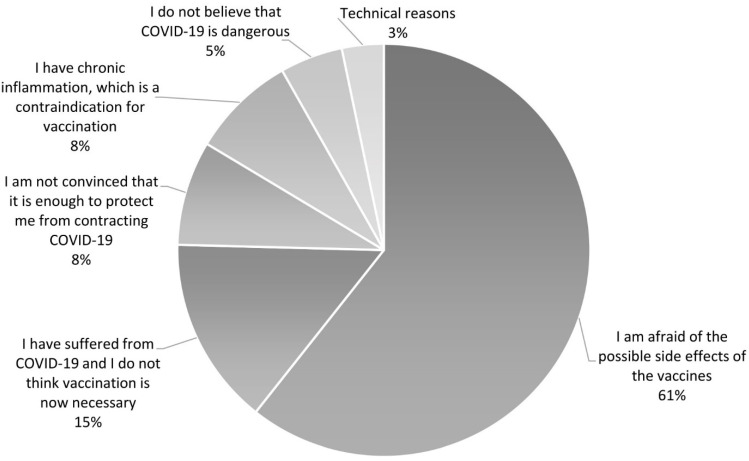
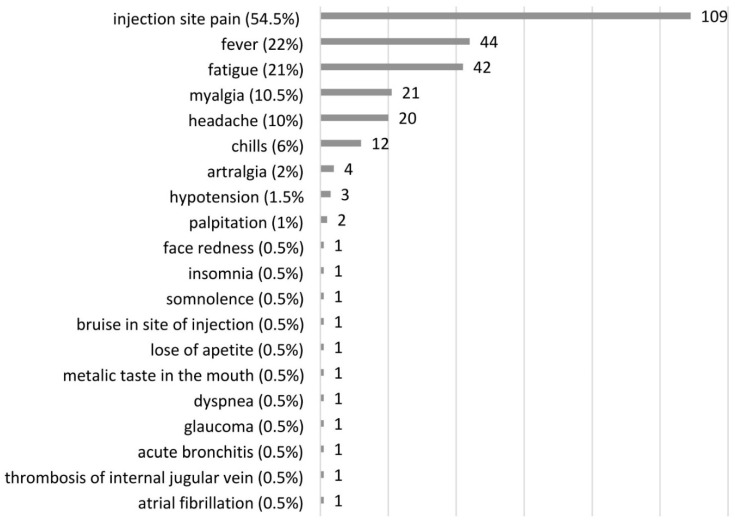
The incidence of COVID-19 infection in patients with pulmonary arterial hypertension (PAH) and chronic thromboembolic pulmonary hypertension (CTEPH) is similar to that in the general population, but the mortality rate is much higher. COVID-19 vaccination is strongly recommended for PAH/CTEPH patients. The aim of our cross-sectional study was to identify reasons why PAH/CTEPH patients refused vaccination against COVID-19. Moreover, we assessed the safety profile of approved COVID-19 vaccines in PAH/CTEPH patients. We examined 261 patients (164 PAH patients and 97CTEPH patients) with a median age of 60 (18-92) years, 62% of which were female. Sixty-one patients (23%) refused to be vaccinated. The main reason for unwillingness to be vaccinated was anxiety about adverse events (AEs, 61%). Age and fear of COVID-19 in the univariate analysis and age ≥60 years in the multivariate regression analysis were factors that impacted willingness to be vaccinated (OR = 2.5; = 0.005). AEs were reported in 61% of vaccinated patients after the first dose and in 40.5% after the second dose ( = 0.01). The most common reported AEs were pain at the injection site (54.5%), fever (22%), fatigue (21%), myalgia (10.5%), and headache (10%). A lower percentage of AEs was reported in older patients (OR = 0.3; = 0.001). The COVID-19 vaccines are safe for PAH/CTEPH patients. The results obtained in this study may encourage patients of these rare but severe cardio-pulmonary diseases to get vaccinated against COVID-19.
肺动脉高压(PAH)和慢性血栓栓塞性肺动脉高压(CTEPH)患者感染新型冠状病毒肺炎(COVID-19)的发生率与普通人群相似,但死亡率要高得多。强烈建议PAH/CTEPH患者接种COVID-19疫苗。我们横断面研究的目的是确定PAH/CTEPH患者拒绝接种COVID-19疫苗的原因。此外,我们评估了已获批的COVID-19疫苗在PAH/CTEPH患者中的安全性。我们检查了261例患者(164例PAH患者和97例CTEPH患者),中位年龄为60岁(18-92岁),其中62%为女性。61例患者(23%)拒绝接种。不愿接种的主要原因是对不良事件的焦虑(不良事件,61%)。单因素分析中的年龄和对COVID-19的恐惧以及多因素回归分析中年龄≥60岁是影响接种意愿的因素(比值比=2.5;P=0.005)。61%的接种患者在第一剂后报告了不良事件,40.5%在第二剂后报告了不良事件(P=0.01)。报告的最常见不良事件是注射部位疼痛(54.5%)、发热(22%)、疲劳(21%)、肌痛(10.5%)和头痛(10%)。老年患者报告的不良事件百分率较低(比值比=0.3;P=0.001)。COVID-19疫苗对PAH/CTEPH患者是安全的。本研究获得的结果可能会鼓励这些罕见但严重的心肺疾病患者接种COVID-19疫苗。