Minúe Lorenzo Sergio, Astier-Peña Maria Pilar, Coll Benejam Txema
Escuela Andaluza de Salud Pública, Jefe del Servicio Integrado de Salud basado en la Atención Primaria de Salud. Centro Colaborador de la OMS, Granada, España.
Servicio Aragonés de Salud, Universidad de Zaragoza, GIBA-IIS Aragón, Zaragoza, España; Grupo de Seguridad del Paciente de la Sociedad Española de Medicina de Familia y Comunitaria (semFYC), Barcelona, España.
Aten Primaria. 2021 Dec;53 Suppl 1(Suppl 1):102227. doi: 10.1016/j.aprim.2021.102227.
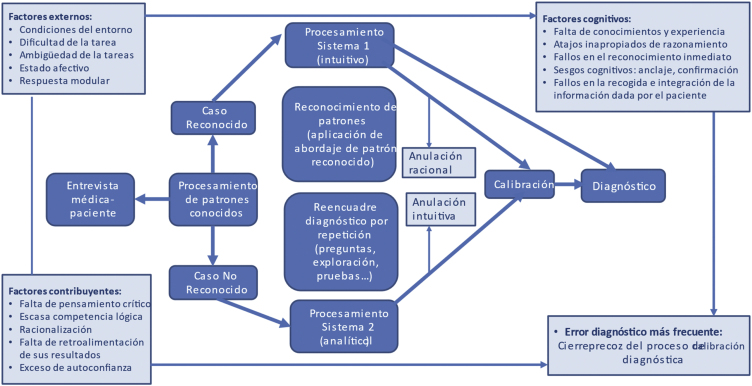
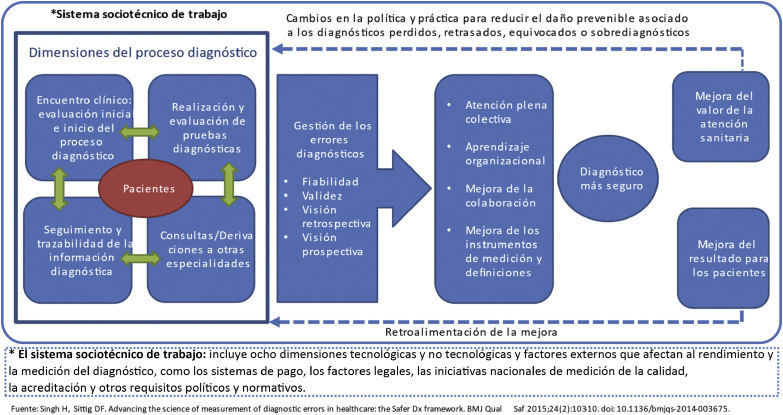
Family doctors see a wide range of patients, with a wide range of complexity, in a short time and with few diagnostic resources. This situation makes primary care professionals more vulnerable to diagnostic errors. For this reason, an adequate clinical reasoning process is the most powerful tool family doctors have to safely guide the patient care process. Considering these errors as missed opportunities for a correct diagnosis, which may cause harm to the patient, leads us as professionals to review how to improve this process. The review includes, among other aspects, identifying cognitive biases, analysing the ways in which work is organised in primary care teams, and situations in the care context that may contribute to such errors. In this article we describe the most frequent diagnostic errors and their causal factors in primary care, the impact of cognitive process failures, situations of overdiagnosis and the diagnostic and therapeutic cascades associated with them. Finally, we propose a set of tools to improve decision-making in the diagnostic process in primary care.
家庭医生在短时间内,凭借有限的诊断资源,接待各种复杂程度各异的患者。这种情况使基层医疗专业人员更容易出现诊断错误。因此,恰当的临床推理过程是家庭医生安全指导患者护理过程的最有力工具。将这些错误视为正确诊断的错失机会,而这可能对患者造成伤害,促使我们这些专业人员审视如何改进这一过程。该审视包括,除其他方面外,识别认知偏差、分析基层医疗团队的工作组织方式以及护理环境中可能导致此类错误的情况。在本文中,我们描述了基层医疗中最常见的诊断错误及其因果因素、认知过程失误的影响、过度诊断情况以及与之相关的诊断和治疗级联反应。最后,我们提出了一套工具,以改善基层医疗诊断过程中的决策。