Boston University School of Medicine, Department of Microbiology, Boston, Massachusetts, United States of America.
Boston University School of Medicine, Department of Medicine, Section of Infectious Diseases; Boston, Massachusetts, United States of America.
PLoS Pathog. 2021 Dec 28;17(12):e1009982. doi: 10.1371/journal.ppat.1009982. eCollection 2021 Dec.
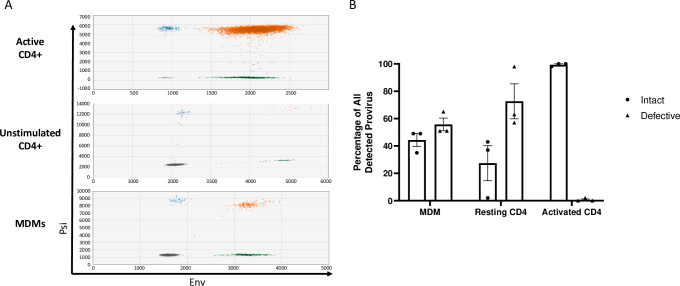
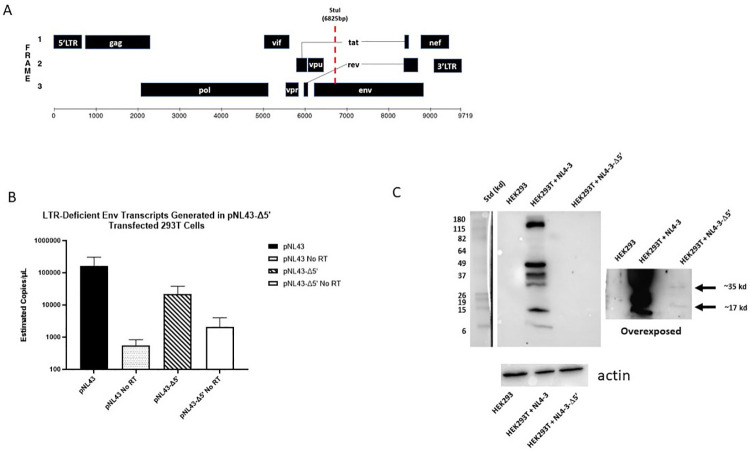
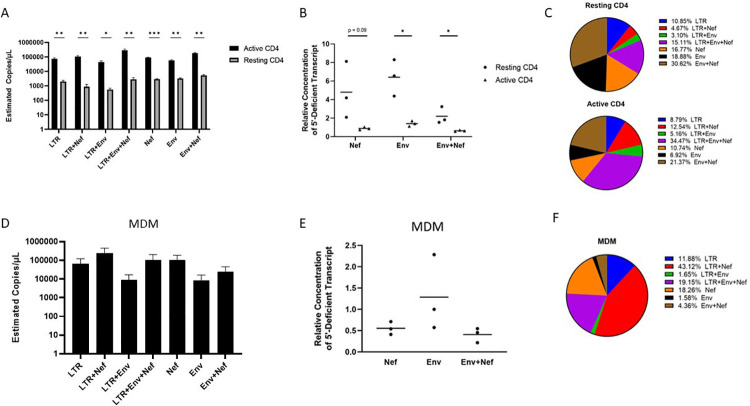
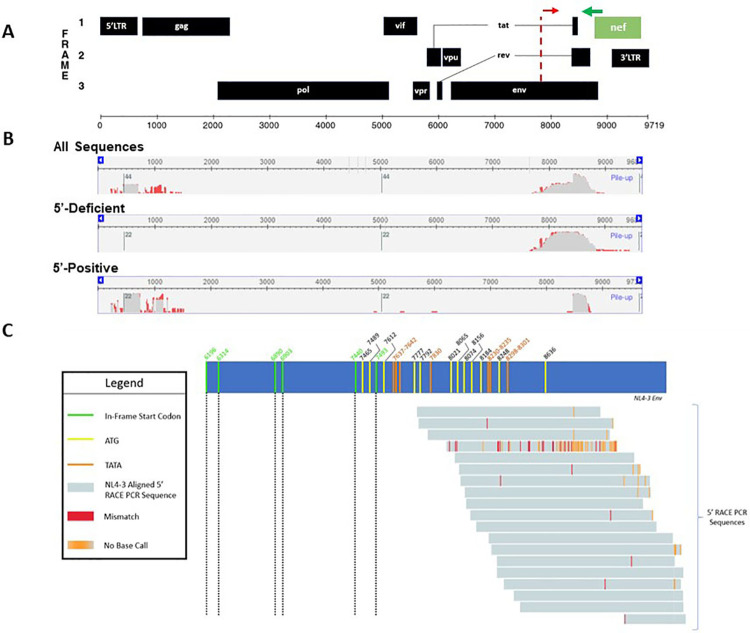
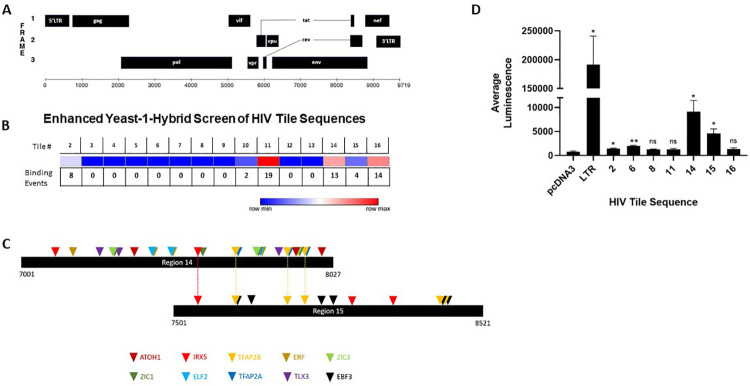
HIV-1 establishes a persistent proviral reservoir by integrating into the genome of infected host cells. Current antiretroviral treatments do not target this persistent population of proviruses which include latently infected cells that upon treatment interruption can be reactivated to contribute to HIV-1 rebound. Deep sequencing of persistent HIV proviruses has revealed that greater than 90% of integrated HIV genomes are defective and unable to produce infectious virions. We hypothesized that intragenic elements in the HIV genome support transcription of aberrant HIV-1 RNAs from defective proviruses that lack long terminal repeats (LTRs). Using an intact provirus detection assay, we observed that resting CD4+ T cells and monocyte-derived macrophages (MDMs) are biased towards generating defective HIV-1 proviruses. Multiplex reverse transcription droplet digital PCR identified env and nef transcripts which lacked 5' untranslated regions (UTR) in acutely infected CD4+ T cells and MDMs indicating transcripts are generated that do not utilize the promoter within the LTR. 5'UTR-deficient env transcripts were also identified in a cohort of people living with HIV (PLWH) on ART, suggesting that these aberrant RNAs are produced in vivo. Using 5' rapid amplification of cDNA ends (RACE), we mapped the start site of these transcripts within the Env gene. This region bound several cellular transcription factors and functioned as a transcriptional regulatory element that could support transcription and translation of downstream HIV-1 RNAs. These studies provide mechanistic insights into how defective HIV-1 proviruses are persistently expressed to potentially drive inflammation in PLWH.
HIV-1 通过整合到感染宿主细胞的基因组中建立持久的前病毒库。目前的抗逆转录病毒治疗并不针对这种持久存在的前病毒群体,其中包括潜伏感染的细胞,这些细胞在治疗中断后可以被重新激活,导致 HIV-1 反弹。对持久存在的 HIV 前病毒进行深度测序表明,超过 90%的整合 HIV 基因组是有缺陷的,无法产生感染性病毒颗粒。我们假设 HIV 基因组中的基因内元件支持从缺乏长末端重复序列(LTR)的有缺陷前病毒转录异常的 HIV-1 RNA。使用完整的前病毒检测测定法,我们观察到静止的 CD4+ T 细胞和单核细胞衍生的巨噬细胞(MDMs)偏向于产生有缺陷的 HIV-1 前病毒。多重逆转录液滴数字 PCR 鉴定出 env 和 nef 转录本在急性感染的 CD4+ T 细胞和 MDM 中缺乏 5'非翻译区(UTR),表明产生了不利用 LTR 内启动子的转录本。在接受抗逆转录病毒治疗的 HIV 感染者(PLWH)的队列中也鉴定出了缺乏 5'UTR 的 env 转录本,表明这些异常 RNA 是在体内产生的。使用 5'快速扩增 cDNA 末端(RACE),我们在 Env 基因内定位了这些转录本的起始位点。该区域结合了几种细胞转录因子,作为转录调节元件发挥作用,可支持下游 HIV-1 RNA 的转录和翻译。这些研究提供了对有缺陷的 HIV-1 前病毒如何持续表达以潜在驱动 PLWH 炎症的机制见解。