Moretti Caio B, Edwards Dylan J, Hamilton Taya, Cortes Mar, Peltz Avrielle Rykman, Chang Johanna L, Delbem Alexandre C B, Volpe Bruce T, Krebs Hermano I
Department of Mechanical Engineering, Massachusetts Institute of Technology, 77 Massachusetts Avenue, office 3-137, Cambridge, MA, 02139, USA.
Universidade de Sao Paulo, Avenida Trabalhador Saocarlense - 400, Sao Carlos, SP, Brazil.
Bioelectron Med. 2021 Dec 29;7(1):20. doi: 10.1186/s42234-021-00081-9.
Effectiveness of robotic therapy and transcranial direct current stimulation is conventionally assessed with clinical measures. Robotic metrics may be more objective and sensitive for measuring the efficacy of interventions on stroke survivor's motor recovery. This study investigated if robotic metrics detect a difference in outcomes, not seen in clinical measures, in a study of transcranial direct current stimulation (tDCS) preceding robotic therapy. Impact of impairment severity on intervention response was also analyzed to explore optimization of outcomes by targeting patient sub-groups.
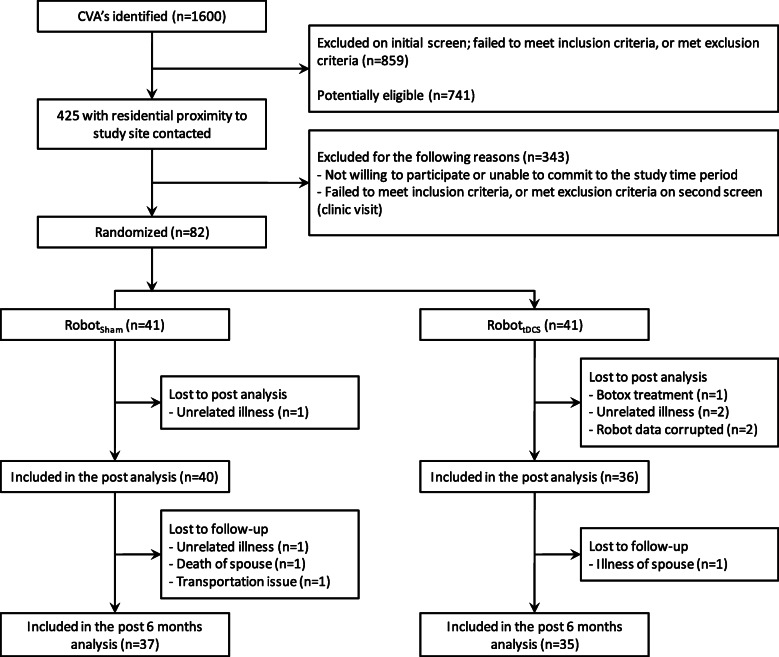
This 2020 study analyzed data from a double-blind, sham-controlled, randomized multi-center trial conducted from 2012 to 2016, including a six-month follow-up. 82 volunteers with single chronic ischemic stroke and right hemiparesis received anodal tDCS or sham stimulation, prior to robotic therapy. Robotic therapy involved 1024 repetitions, alternating shoulder-elbow and wrist robots, for a total of 36 sessions. Shoulder-elbow and wrist kinematic and kinetic metrics were collected at admission, discharge, and follow-up.
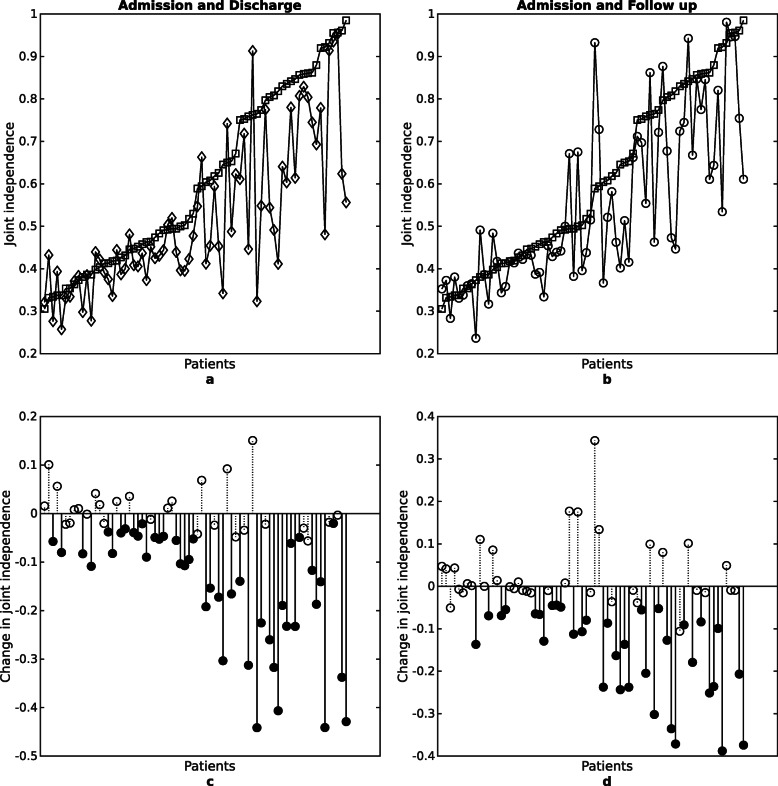
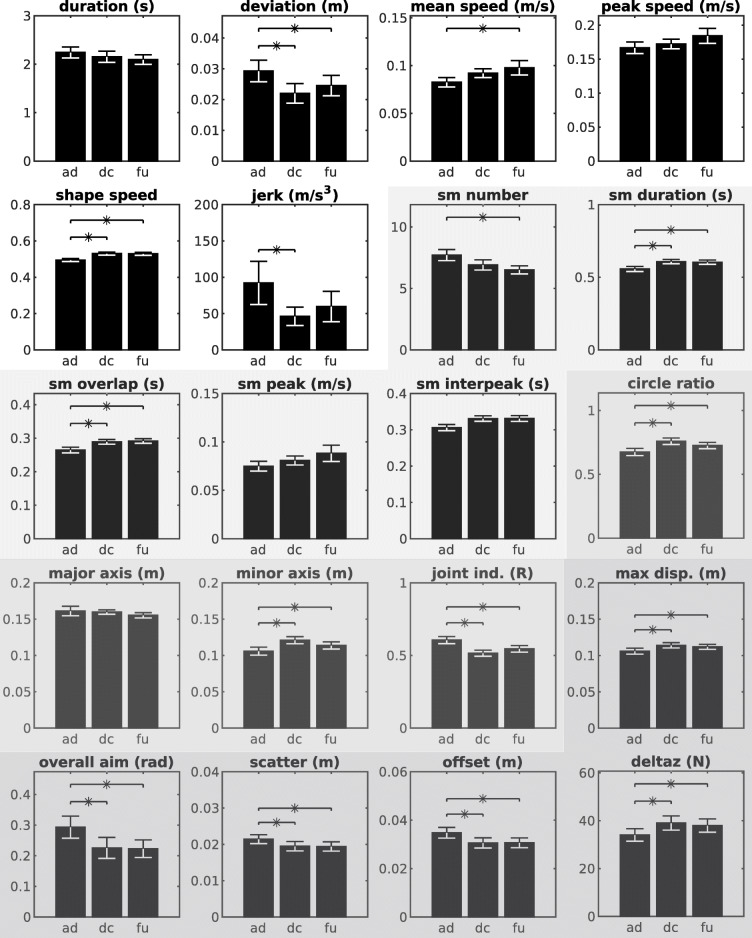
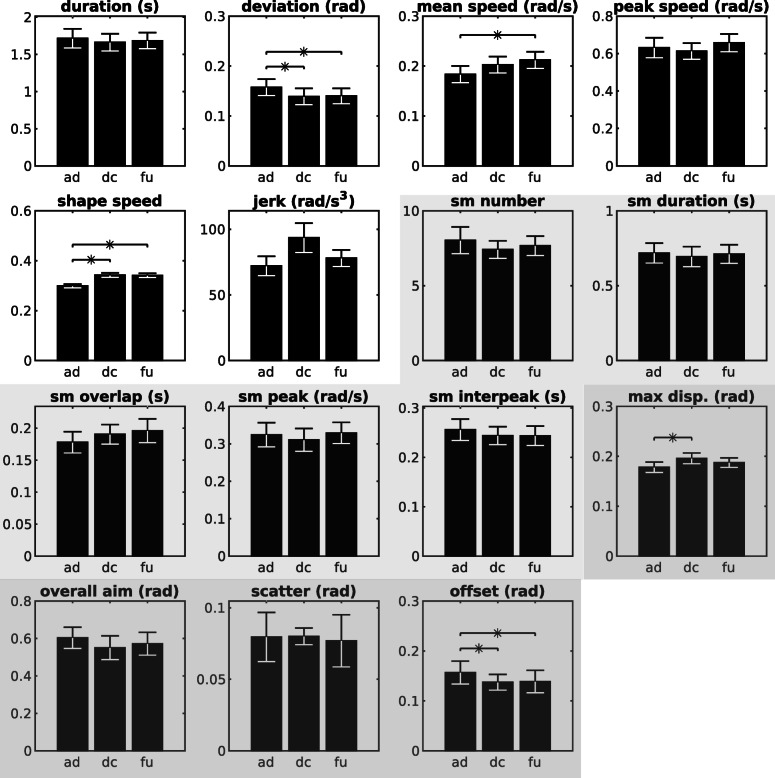
No difference was detected between the tDCS or sham stimulation groups in the analysis of robotic shoulder-elbow or wrist metrics. Significant improvements in all metrics were found for the combined group analysis. Novel wrist data showed smoothness significantly improved (P < ·001) while submovement number trended down, overlap increased, and interpeak interval decreased. Post-hoc analysis showed only patients with severe impairment demonstrated a significant difference in kinematics, greater for patients receiving sham stimulation.
Robotic data confirmed results of clinical measures, showing intensive robotic therapy is beneficial, but no additional gain from tDCS. Patients with severe impairment did not benefit from the combined intervention. Wrist submovement characteristics showed a delayed pattern of motor recovery compared to the shoulder-elbow, relevant to intensive intervention-related recovery of upper extremity function in chronic stroke.
http://www.clinicaltrials.gov . Actual study start date September 2012. First registered on 15 November 2012. Retrospectively registered. Unique identifiers: NCT01726673 and NCT03562663 .
机器人疗法和经颅直流电刺激的有效性通常通过临床测量来评估。机器人指标在测量干预对中风幸存者运动恢复的疗效方面可能更客观、更敏感。本研究调查了在机器人疗法之前进行经颅直流电刺激(tDCS)的研究中,机器人指标是否能检测出临床测量中未发现的结果差异。还分析了损伤严重程度对干预反应的影响,以探索通过针对患者亚组来优化结果。
这项2020年的研究分析了2012年至2016年进行的一项双盲、假对照、随机多中心试验的数据,包括为期六个月的随访。82名单发慢性缺血性中风和右半身轻瘫的志愿者在机器人疗法之前接受了阳极tDCS或假刺激。机器人疗法包括1024次重复,交替使用肩肘和腕部机器人,共36节。在入院、出院和随访时收集肩肘和腕部的运动学和动力学指标。
在机器人肩肘或腕部指标分析中,tDCS组和假刺激组之间未发现差异。联合组分析发现所有指标均有显著改善。新的腕部数据显示平滑度显著提高(P < 0.001),而子运动数量呈下降趋势,重叠增加,峰间间隔减小。事后分析表明,只有严重损伤的患者在运动学上有显著差异,接受假刺激的患者差异更大。
机器人数据证实了临床测量结果,表明强化机器人疗法是有益的,但tDCS没有额外的益处。严重损伤的患者没有从联合干预中受益。与肩肘相比,腕部子运动特征显示出运动恢复的延迟模式,这与慢性中风中上肢功能的强化干预相关恢复有关。
http://www.clinicaltrials.gov 。实际研究开始日期为2012年9月。首次注册于2012年11月15日。回顾性注册。唯一标识符:NCT01726673和NCT03562663 。