Medical Center of Hematology, the Second Affiliated Hospital, Army Medical University, Chongqing, China.
State Key Laboratory of Trauma, Burn and Combined Injury, Army Medical University, Chongqing, China.
Clin Transl Med. 2021 Dec;11(12):e650. doi: 10.1002/ctm2.650.
The heterogeneity of mesenchymal stem cells (MSCs) is poorly understood, thus limiting clinical application and basic research reproducibility. Advanced single-cell RNA sequencing (scRNA-seq) is a robust tool used to analyse for dissecting cellular heterogeneity. However, the comprehensive single-cell atlas for human MSCs has not been achieved.
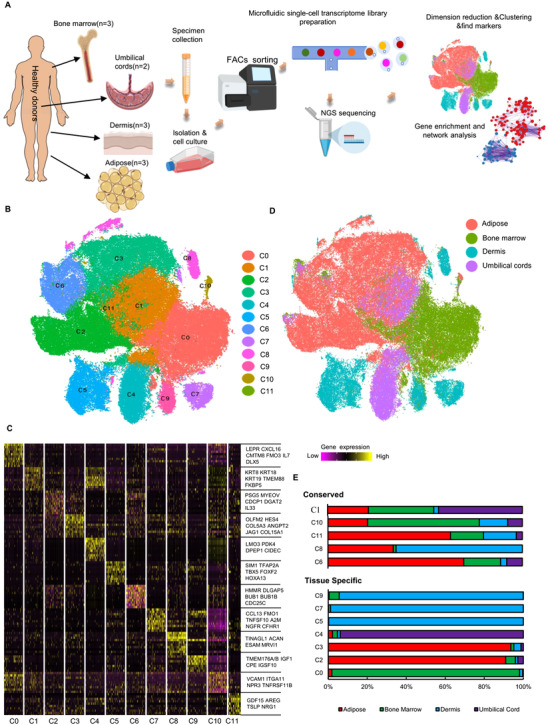
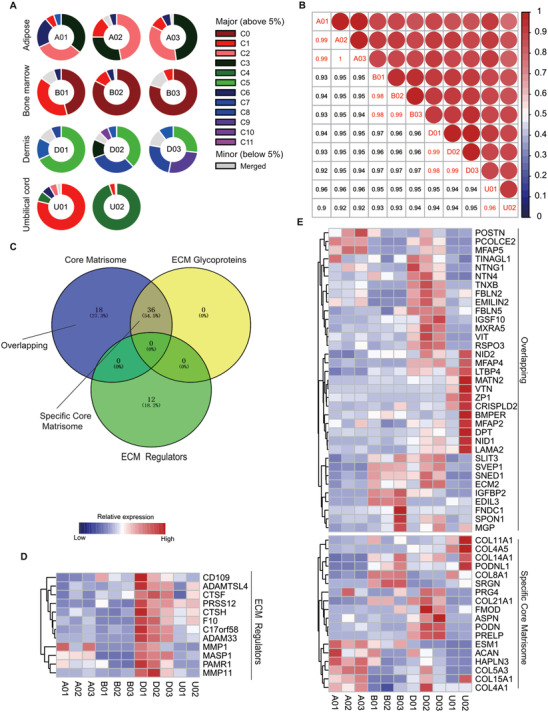
This study used massive parallel multiplexing scRNA-seq to construct an atlas of > 130 000 single-MSC transcriptomes across multiple tissues and donors to assess their heterogeneity. The most widely clinically utilised tissue resources for MSCs were collected, including normal bone marrow (n = 3), adipose (n = 3), umbilical cord (n = 2), and dermis (n = 3).
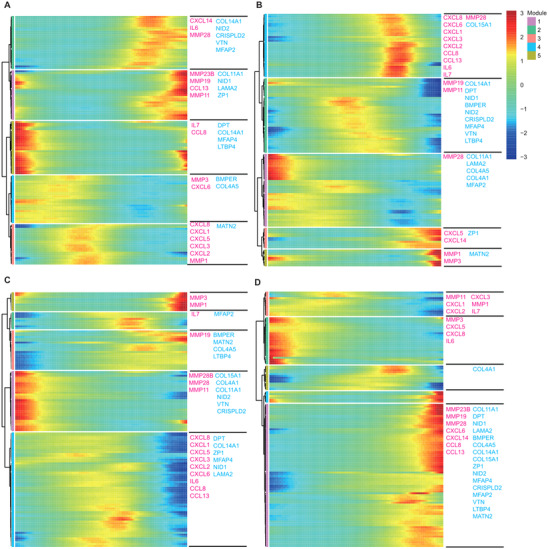
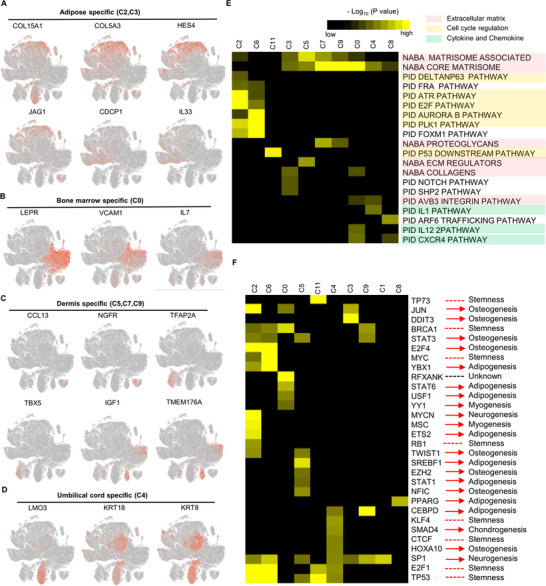
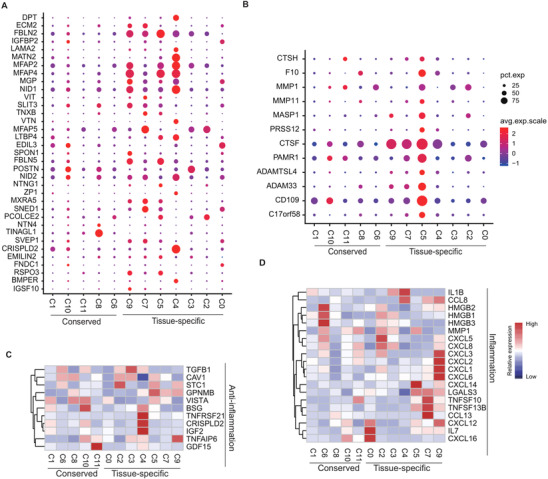
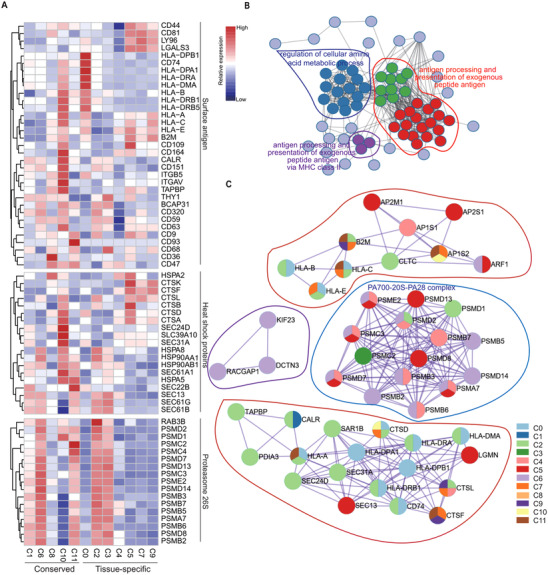
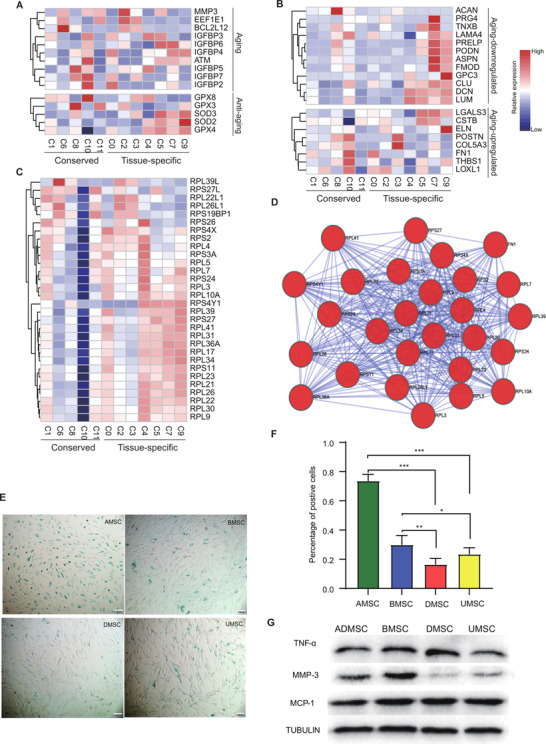
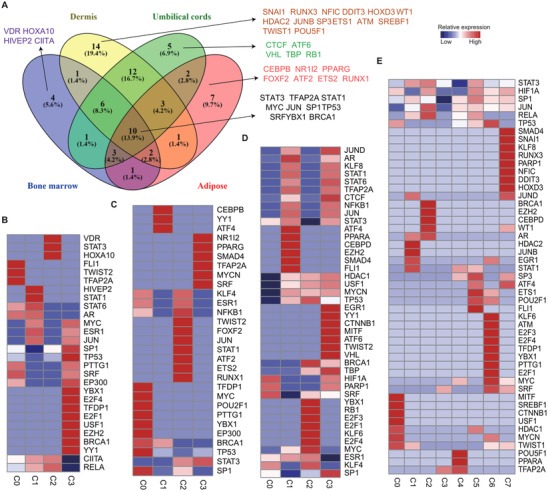
Seven tissue-specific and five conserved MSC subpopulations with distinct gene-expression signatures were identified from multiple tissue origins based on the high-quality data, which has not been achieved previously. This study showed that extracellular matrix (ECM) highly contributes to MSC heterogeneity. Notably, tissue-specific MSC subpopulations were substantially heterogeneous on ECM-associated immune regulation, antigen processing/presentation, and senescence, thus promoting inter-donor and intra-tissue heterogeneity. The variable dynamics of ECM-associated genes had discrete trajectory patterns across multiple tissues. Additionally, the conserved and tissue-specific transcriptomic-regulons and protein-protein interactions were identified, potentially representing common or tissue-specific MSC functional roles. Furthermore, the umbilical-cord-specific subpopulation possessed advantages in immunosuppressive properties.
In summary, this work provides timely and great insights into MSC heterogeneity at multiple levels. This MSC atlas taxonomy also provides a comprehensive understanding of cellular heterogeneity, thus revealing the potential improvements in MSC-based therapeutic efficacy.
间充质干细胞(MSCs)的异质性尚未得到充分了解,这限制了其临床应用和基础研究的可重复性。先进的单细胞 RNA 测序(scRNA-seq)是一种强大的工具,用于分析细胞异质性。然而,人类 MSCs 的全面单细胞图谱尚未实现。
本研究使用大规模平行多重 scRNA-seq 构建了超过 130000 个单个 MSC 转录组的图谱,涵盖了多个组织和供体,以评估其异质性。收集了 MSCs 最广泛使用的临床组织资源,包括正常骨髓(n=3)、脂肪(n=3)、脐带(n=2)和真皮(n=3)。
根据高质量数据,从多个组织来源中确定了七个组织特异性和五个保守的 MSC 亚群,具有不同的基因表达特征,这是以前从未实现过的。本研究表明细胞外基质(ECM)高度影响 MSC 的异质性。值得注意的是,组织特异性 MSC 亚群在 ECM 相关免疫调节、抗原加工/呈递和衰老方面存在显著的异质性,从而促进了供体间和组织内的异质性。ECM 相关基因的可变动力学在多个组织中具有离散的轨迹模式。此外,还鉴定了保守和组织特异性转录组调控网络和蛋白质-蛋白质相互作用,它们可能代表常见或组织特异性 MSC 的功能作用。此外,脐带特异性亚群在免疫抑制特性方面具有优势。
总之,这项工作在多个层面及时提供了对 MSC 异质性的深刻见解。该 MSC 图谱分类法还提供了对细胞异质性的全面理解,从而揭示了改善 MSC 为基础的治疗效果的潜力。