Department of Biology, Saint Louis University, 3507 Laclede Avenue, St. Louis, MO 63103-2010, USA.
Donald Danforth Plant Science Center, 975 N. Warson Road, St. Louis, MO 63132-2918, USA.
Gigascience. 2021 Dec 29;10(12). doi: 10.1093/gigascience/giab087.
Modern biological approaches generate volumes of multi-dimensional data, offering unprecedented opportunities to address biological questions previously beyond reach owing to small or subtle effects. A fundamental question in plant biology is the extent to which below-ground activity in the root system influences above-ground phenotypes expressed in the shoot system. Grafting, an ancient horticultural practice that fuses the root system of one individual (the rootstock) with the shoot system of a second, genetically distinct individual (the scion), is a powerful experimental system to understand below-ground effects on above-ground phenotypes. Previous studies on grafted grapevines have detected rootstock influence on scion phenotypes including physiology and berry chemistry. However, the extent of the rootstock's influence on leaves, the photosynthetic engines of the vine, and how those effects change over the course of a growing season, are still largely unknown.
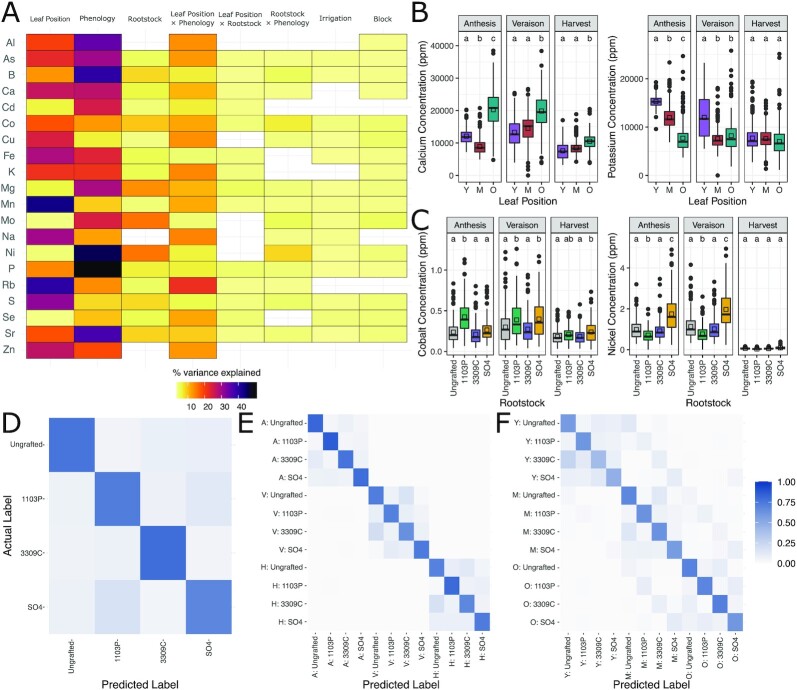
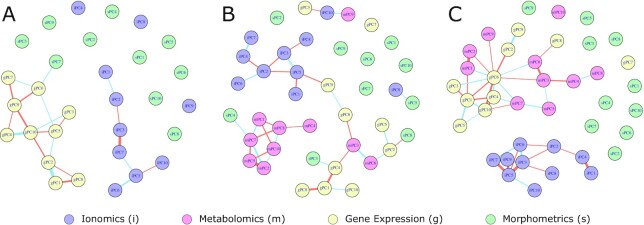
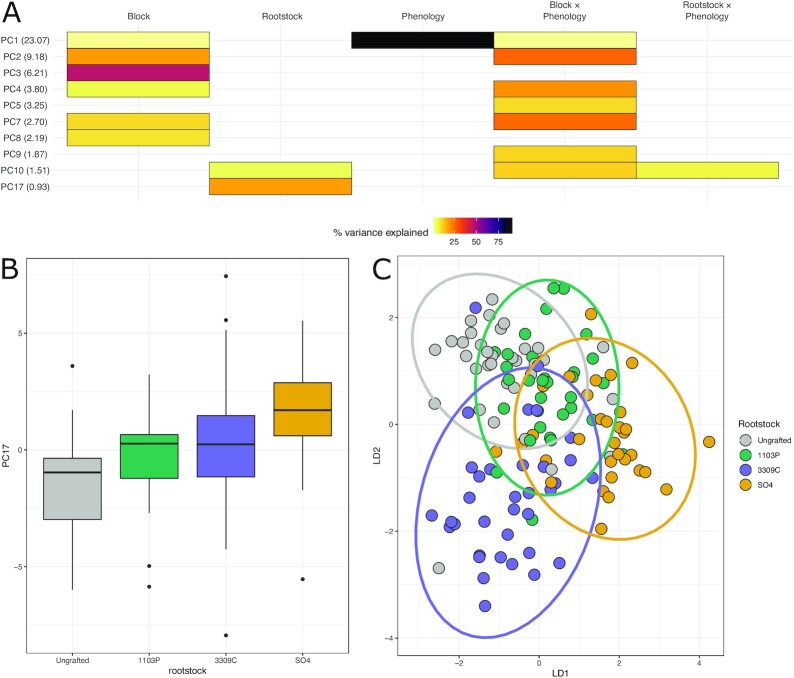
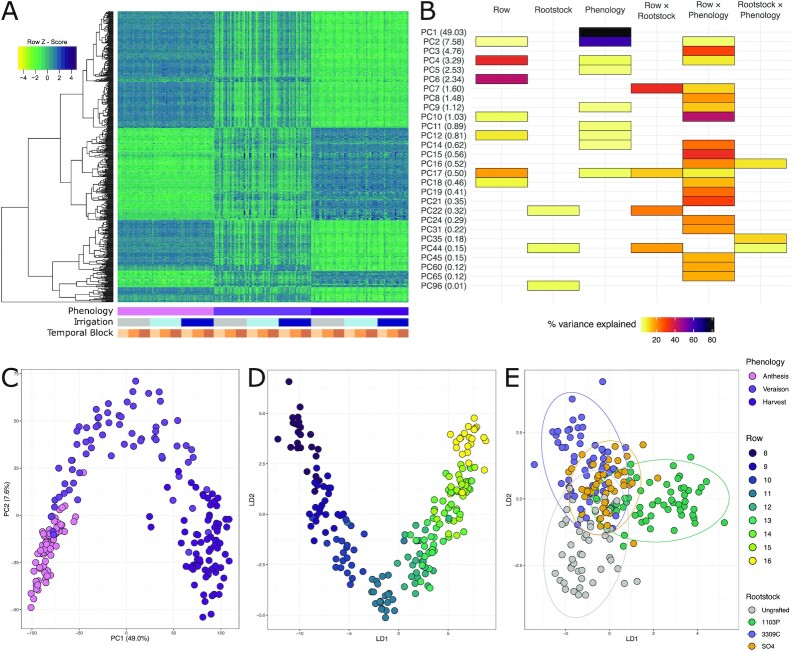
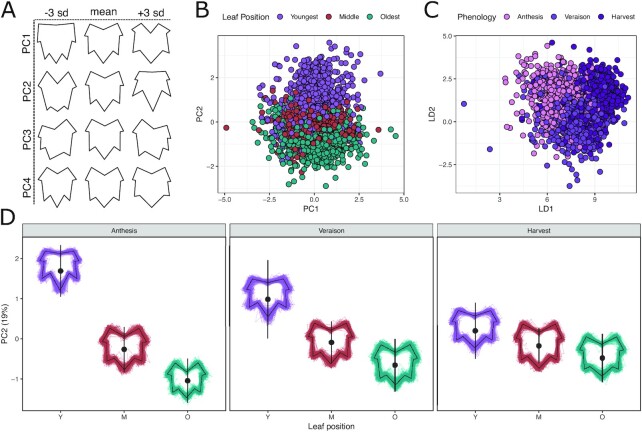
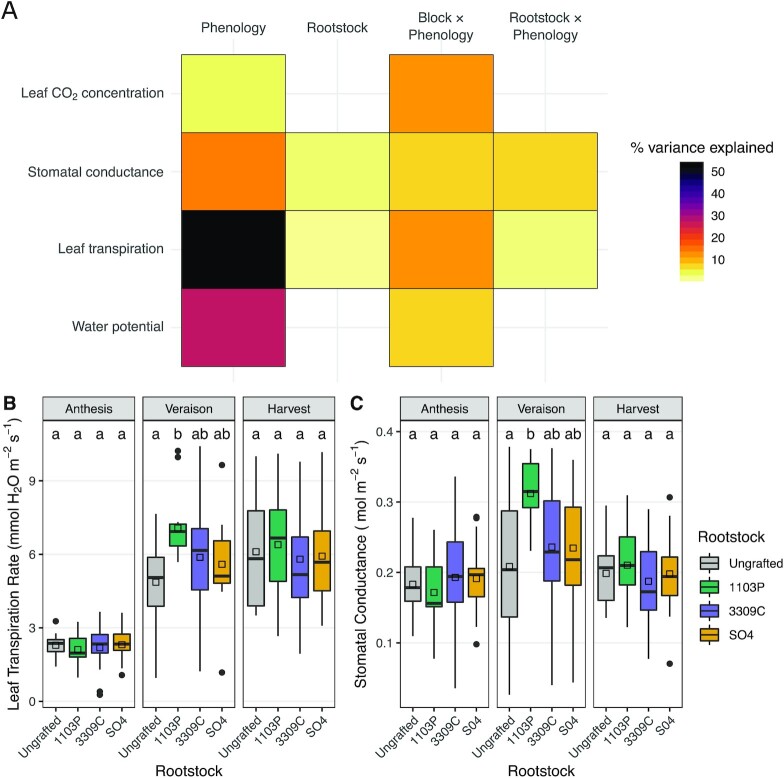
Here, we investigate associations between rootstock genotype and shoot system phenotypes using 5 multi-dimensional leaf phenotyping modalities measured in a common grafted scion: ionomics, metabolomics, transcriptomics, morphometrics, and physiology. Rootstock influence is ubiquitous but subtle across modalities, with the strongest signature of rootstock observed in the leaf ionome. Moreover, we find that the extent of rootstock influence on scion phenotypes and patterns of phenomic covariation are highly dynamic across the season.
These findings substantially expand previously identified patterns to demonstrate that rootstock influence on scion phenotypes is complex and dynamic and underscore that broad understanding necessitates volumes of multi-dimensional data previously unmet.
现代生物学方法生成了大量多维数据,为解决以前由于效果小或细微而无法触及的生物学问题提供了前所未有的机会。植物生物学中的一个基本问题是,根系在地下的活动在多大程度上影响了地上部分的表型。嫁接是一种古老的园艺实践,它将一个个体的根系(砧木)与第二个遗传上不同的个体的地上部分(接穗)融合在一起,是一种理解地下对地上表型影响的强大实验系统。以前对嫁接葡萄的研究已经检测到砧木对接穗表型的影响,包括生理学和浆果化学。然而,砧木对叶片(葡萄藤的光合作用引擎)的影响程度以及这些影响在生长季节中的变化,在很大程度上仍然未知。
在这里,我们使用在常见嫁接接穗中测量的 5 种多维叶片表型模式来研究砧木基因型与地上系统表型之间的关联:离子组学、代谢组学、转录组学、形态计量学和生理学。砧木的影响在各种模式中普遍存在但很细微,在叶片离子组中观察到砧木的最强特征。此外,我们发现砧木对接穗表型的影响程度以及表型相关性的模式在整个季节中高度动态。
这些发现大大扩展了以前确定的模式,表明砧木对接穗表型的影响是复杂和动态的,并强调广泛的理解需要以前未满足的大量多维数据。