Department of Oncology, Division of Biostatistics and Bioinformatics, Sidney Kimmel Comprehensive Cancer Center, Johns Hopkins School of Medicine, Baltimore, MD, USA; Department of Neuroscience, Johns Hopkins School of Medicine, Baltimore, MD, USA; McKusick-Nathans Institute of Genetic Medicine, Johns Hopkins School of Medicine, Baltimore, MD, USA.
Department of Computer Science, Institute for Data Intensive Engineering and Science, Johns Hopkins University, Baltimore, MD, USA.
Trends Genet. 2018 Oct;34(10):790-805. doi: 10.1016/j.tig.2018.07.003. Epub 2018 Aug 22.
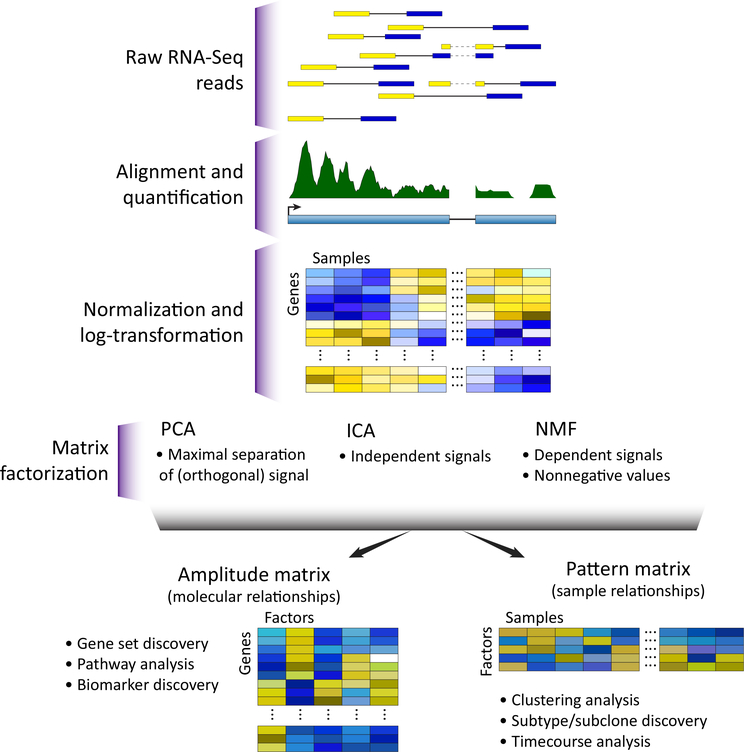
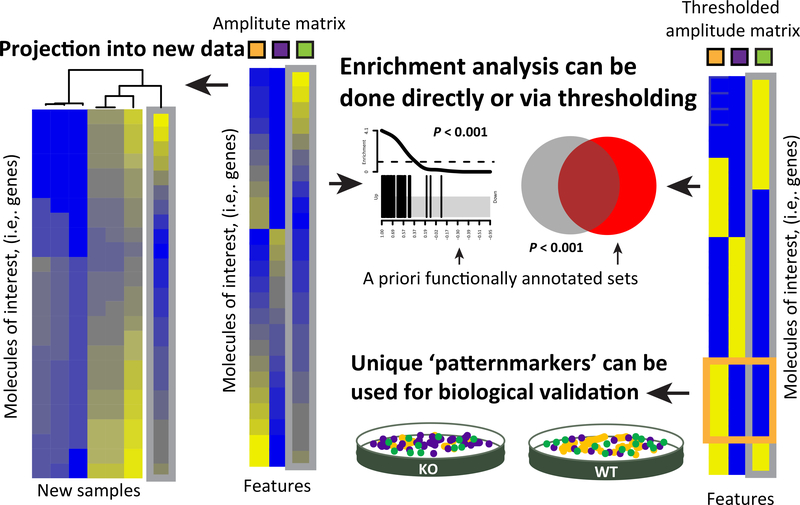
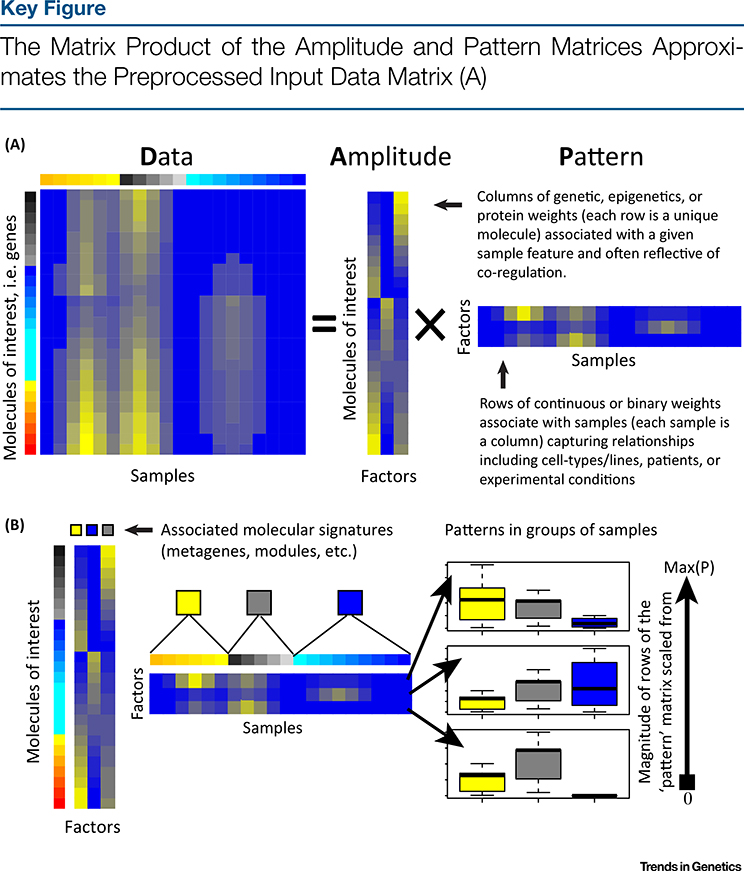
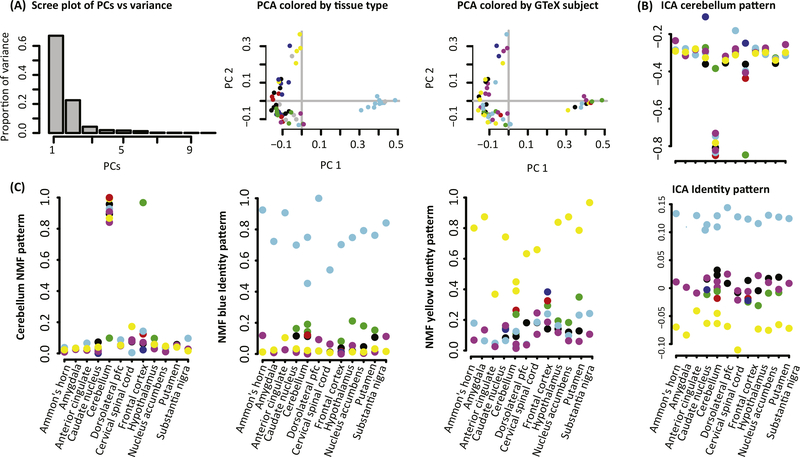
Omics data contain signals from the molecular, physical, and kinetic inter- and intracellular interactions that control biological systems. Matrix factorization (MF) techniques can reveal low-dimensional structure from high-dimensional data that reflect these interactions. These techniques can uncover new biological knowledge from diverse high-throughput omics data in applications ranging from pathway discovery to timecourse analysis. We review exemplary applications of MF for systems-level analyses. We discuss appropriate applications of these methods, their limitations, and focus on the analysis of results to facilitate optimal biological interpretation. The inference of biologically relevant features with MF enables discovery from high-throughput data beyond the limits of current biological knowledge - answering questions from high-dimensional data that we have not yet thought to ask.
组学数据包含控制生物系统的分子、物理和动力学相互作用和细胞内相互作用的信号。矩阵分解 (MF) 技术可以从反映这些相互作用的高维数据中揭示低维结构。这些技术可以从途径发现到时间过程分析等各种应用中,从多样化的高通量组学数据中揭示新的生物学知识。我们回顾了 MF 在系统水平分析中的典型应用。我们讨论了这些方法的适当应用、它们的局限性,并重点分析了结果,以促进最佳的生物学解释。通过 MF 推断生物学上相关的特征,可以从超出当前生物学知识限制的高通量数据中发现问题——回答我们尚未想到要问的高维数据中的问题。