Department of Electronic Systems, Aalborg University, Aalborg, Denmark.
Department of Clinical Medicine, Aalborg University, Aalborg, Denmark.
Sci Rep. 2021 Dec 30;11(1):24498. doi: 10.1038/s41598-021-04108-8.
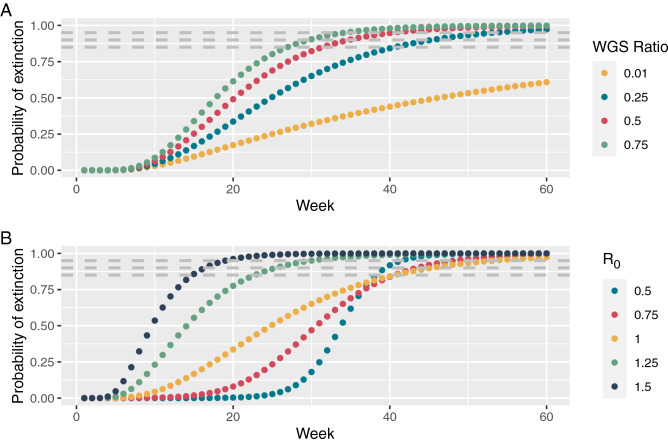
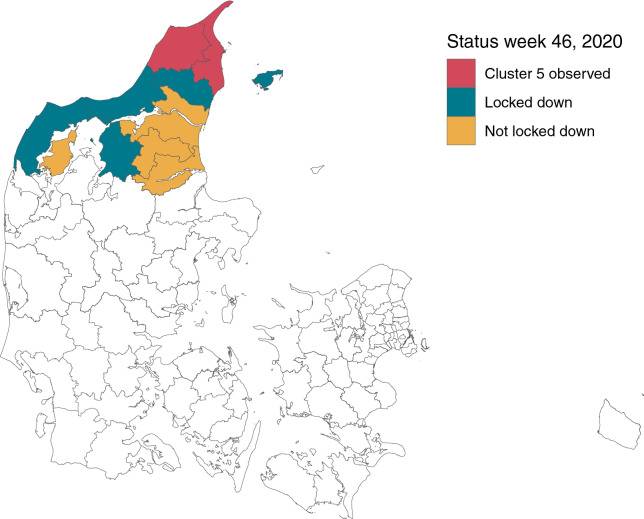
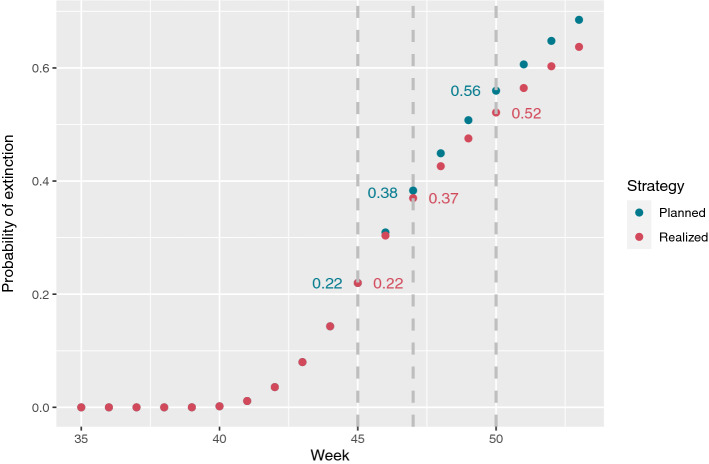
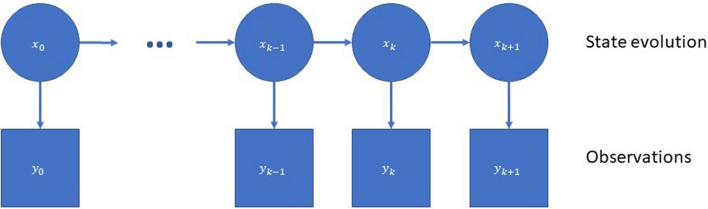
When a virus spreads, it may mutate into, e.g., vaccine resistant or fast spreading lineages, as was the case for the Danish Cluster-5 mink variant (belonging to the B.1.1.298 lineage), the British B.1.1.7 lineage, and the South African B.1.351 lineage of the SARS-CoV-2 virus. A way to handle such spreads is through a containment strategy, where the population in the affected area is isolated until the spread has been stopped. Under such circumstances, it is important to monitor whether the mutated virus is extinct via massive testing for the virus sub-type. If successful, the strategy will lead to lower and lower numbers of the sub-type, and it will eventually die out. An important question is, for how long time one should wait to be sure the sub-type is extinct? We use a hidden Markov model for infection spread and an approximation of a two stage sampling scheme to infer the probability of extinction. The potential of the method is illustrated via a simulation study. Finally, the model is used to assess the Danish containment strategy when SARS-CoV-2 spread from mink to man during the summer of 2020, including the Cluster-5 sub-type. In order to avoid further spread and mink being a large animal virus reservoir, this situation led to the isolation of seven municipalities in the Northern part of the country, the culling of the entire Danish 17 million large mink population, and a bill to interim ban Danish mink production until the end of 2021.
当病毒传播时,它可能会发生突变,例如产生对疫苗有抗性或传播速度更快的谱系,例如丹麦的 5 号集群水貂变种(属于 B.1.1.298 谱系)、英国的 B.1.1.7 谱系和南非的 SARS-CoV-2 病毒的 B.1.351 谱系。处理这种传播的一种方法是通过隔离策略,将受影响地区的人群隔离,直到传播停止。在这种情况下,通过对病毒亚型进行大规模检测来监测突变病毒是否已经灭绝非常重要。如果成功,该策略将导致该亚型的数量越来越少,最终将灭绝。一个重要的问题是,需要等待多长时间才能确定该亚型已经灭绝?我们使用感染传播的隐马尔可夫模型和两阶段抽样方案的近似值来推断灭绝的概率。通过模拟研究说明了该方法的潜力。最后,该模型用于评估 2020 年夏季 SARS-CoV-2 从水貂传播到人期间丹麦的隔离策略,包括 5 号集群亚型。为了避免进一步传播和水貂成为大型动物病毒库,这种情况导致该国北部的七个市被隔离,丹麦 1700 万只大型水貂被扑杀,以及一项临时禁止丹麦水貂生产的法案直至 2021 年底。