Division of Biostatistics, University of Minnesota, Minneapolis, Minnesota, United States of America.
Division of Biostatistics, University of Miami, Miami, Florida, United States of America.
PLoS One. 2024 Jan 30;19(1):e0296964. doi: 10.1371/journal.pone.0296964. eCollection 2024.
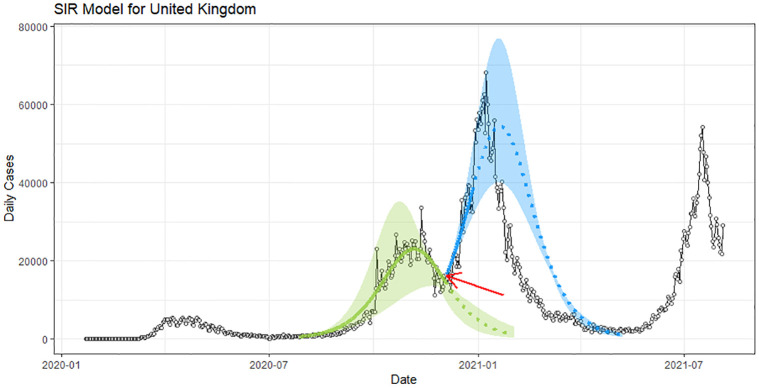
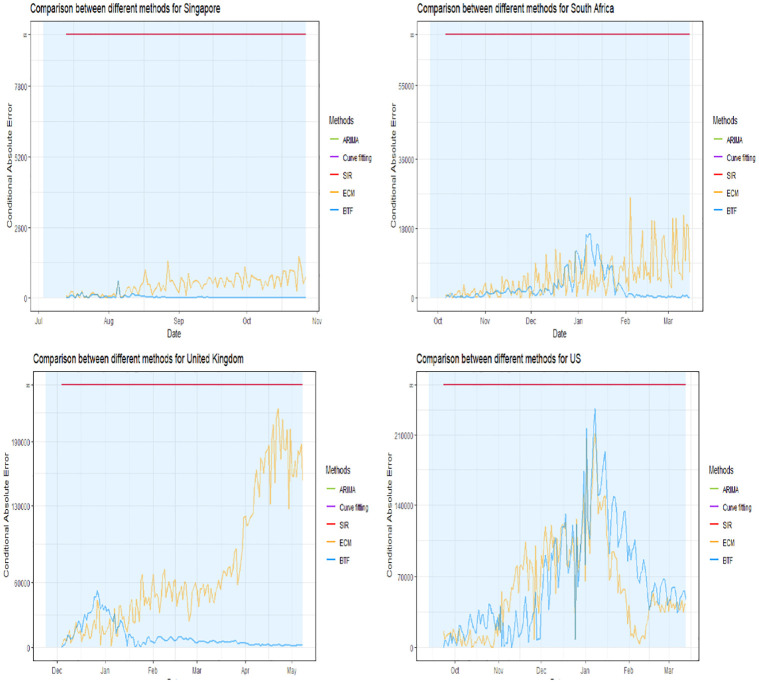
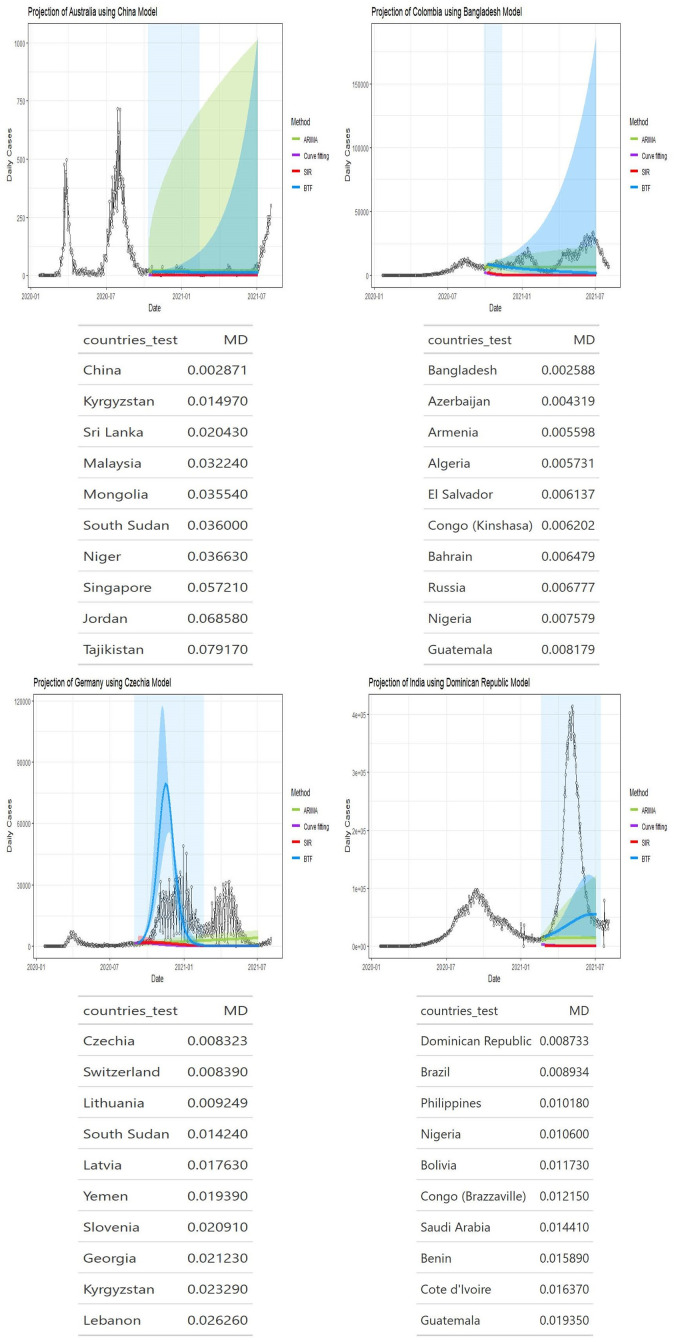
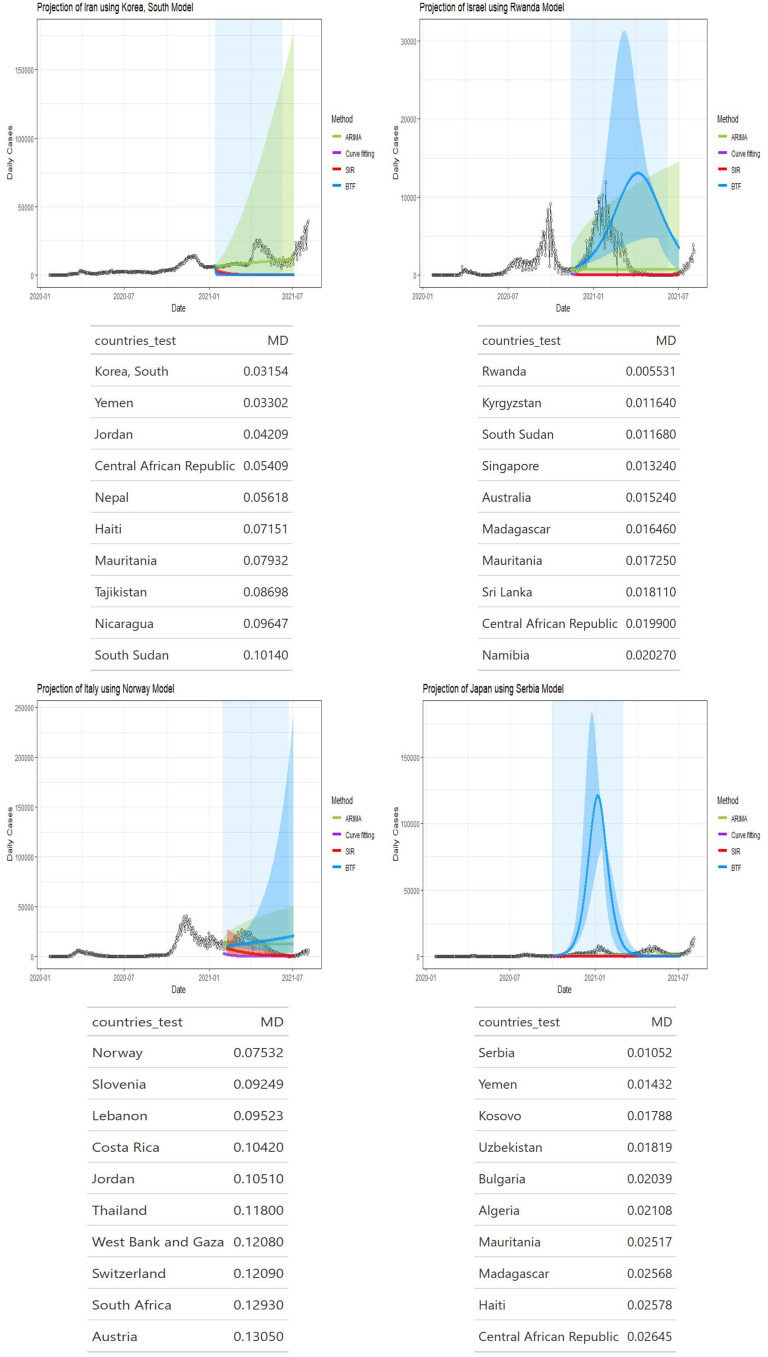
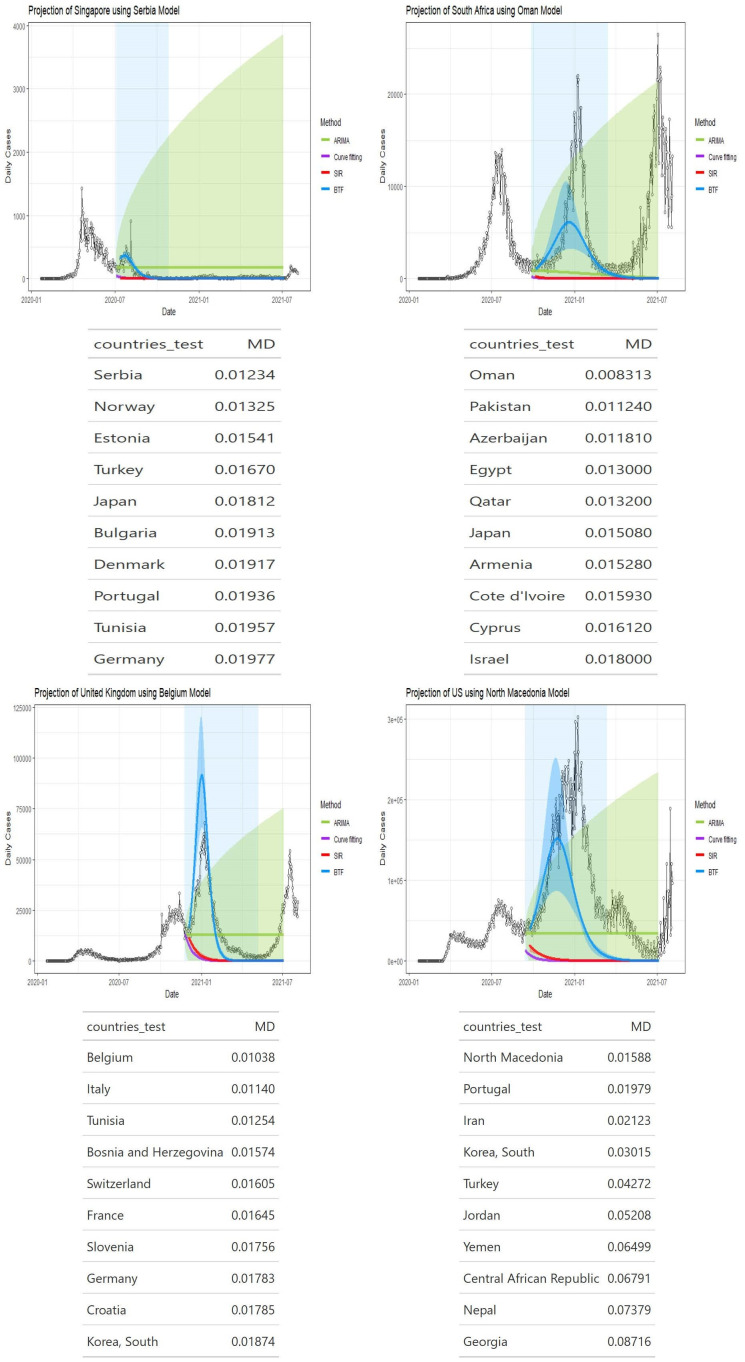
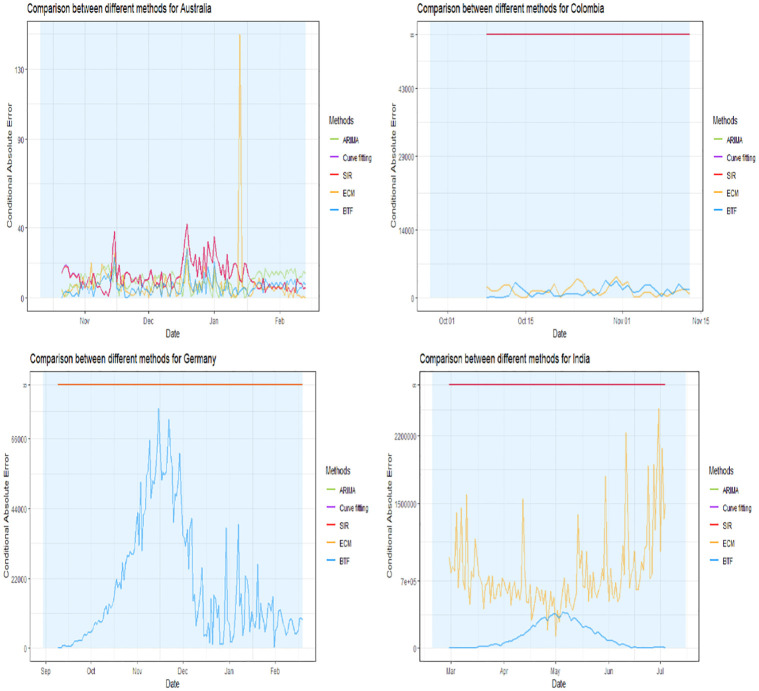
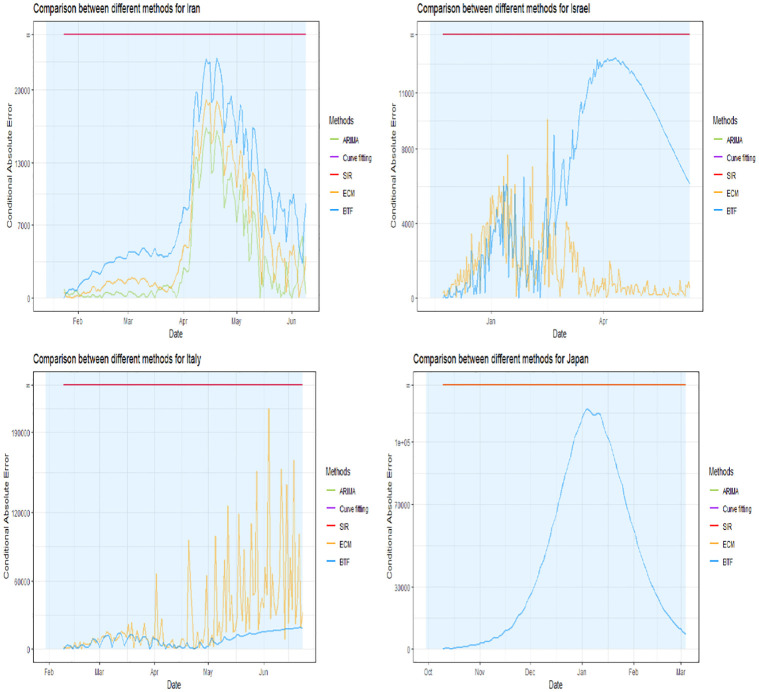
We argue that information from countries who had earlier COVID-19 surges can be used to inform another country's current model, then generating what we call back-to-the-future (BTF) projections. We show that these projections can be used to accurately predict future COVID-19 surges prior to an inflection point of the daily infection curve. We show, across 12 different countries from all populated continents around the world, that our method can often predict future surges in scenarios where the traditional approaches would always predict no future surges. However, as expected, BTF projections cannot accurately predict a surge due to the emergence of a new variant. To generate BTF projections, we make use of a matching scheme for asynchronous time series combined with a response coaching SIR model.
我们认为,来自先前 COVID-19 疫情爆发国家的信息可以用于为另一个国家的当前模型提供信息,从而产生我们所谓的“回溯未来”(BTF)预测。我们表明,这些预测可以在每日感染曲线的拐点之前,准确预测未来的 COVID-19 疫情爆发。我们展示了,在来自全球各大洲的 12 个不同国家中,我们的方法可以在传统方法总是预测没有未来疫情爆发的情况下,经常预测未来的疫情爆发。然而,正如预期的那样,由于新变体的出现,BTF 预测无法准确预测疫情爆发。为了生成 BTF 预测,我们使用异步时间序列的匹配方案和响应辅导 SIR 模型。