Xu Chao, Zhang Keying, Yang Fa, Zhou Xiang, Liu Shaojie, Li Yu, Ma Shanjin, Zhao Xiaolong, Lu Tong, Lu Shiqi, Zhang JiaYu, Li Hongji, Han Donghui, Wen Weihong, Qin Weijun
Department of Urology, Xijing Hospital, Fourth Military Medical University, Xi'an, China.
Department of Clinical Laboratory, Innovation Port Hospital of Xi'an Jiaotong University, Xi'an Jiaotong University, Xi'an, China.
Front Oncol. 2021 Dec 14;11:773063. doi: 10.3389/fonc.2021.773063. eCollection 2021.
The tumor microenvironment (TME) plays an important role in the progression of renal cell carcinoma (RCC). Cancer-associated fibroblasts (CAFs) are considered to constitute a major component of the TME and participate in various tumor-promoting molecular events. We have previously confirmed that CD248 represents a promising biomarker of CAFs, which may provide insight into CAF-based tumor-promoting effects. However, CAF-mediated tumor progression and the potential mechanism of CD248 remain largely unknown in RCC patients.
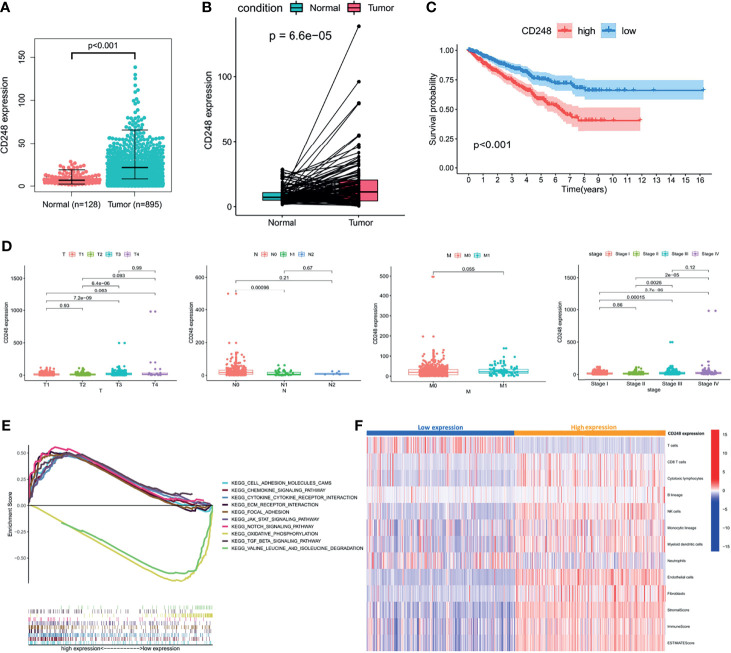
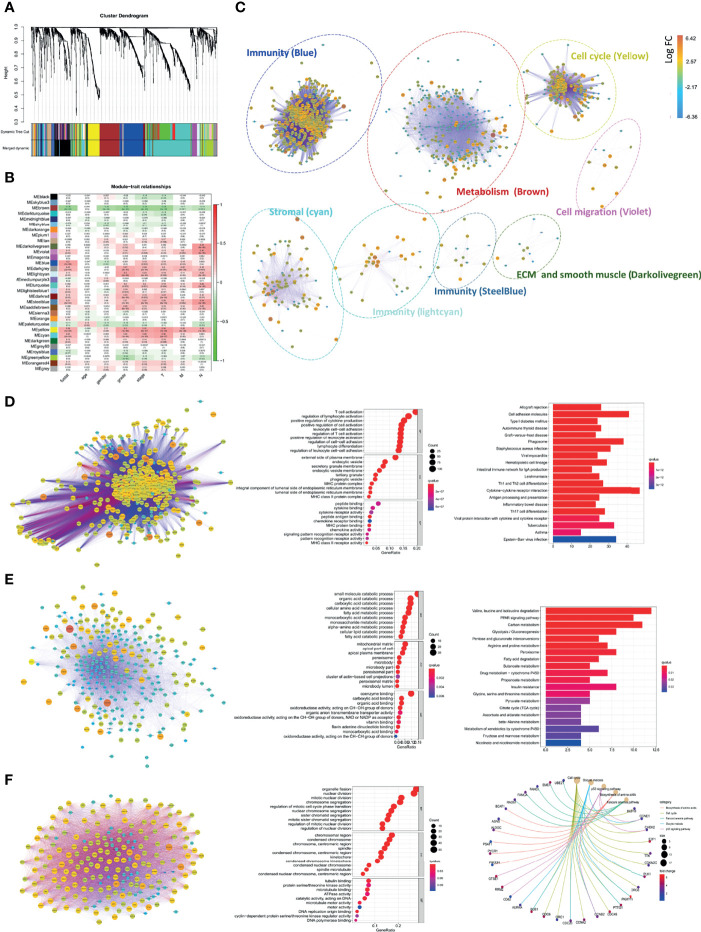
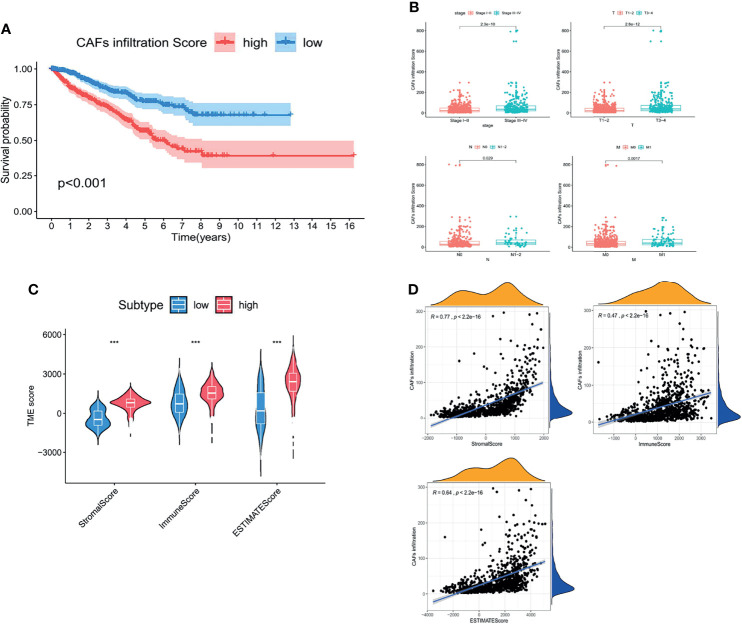
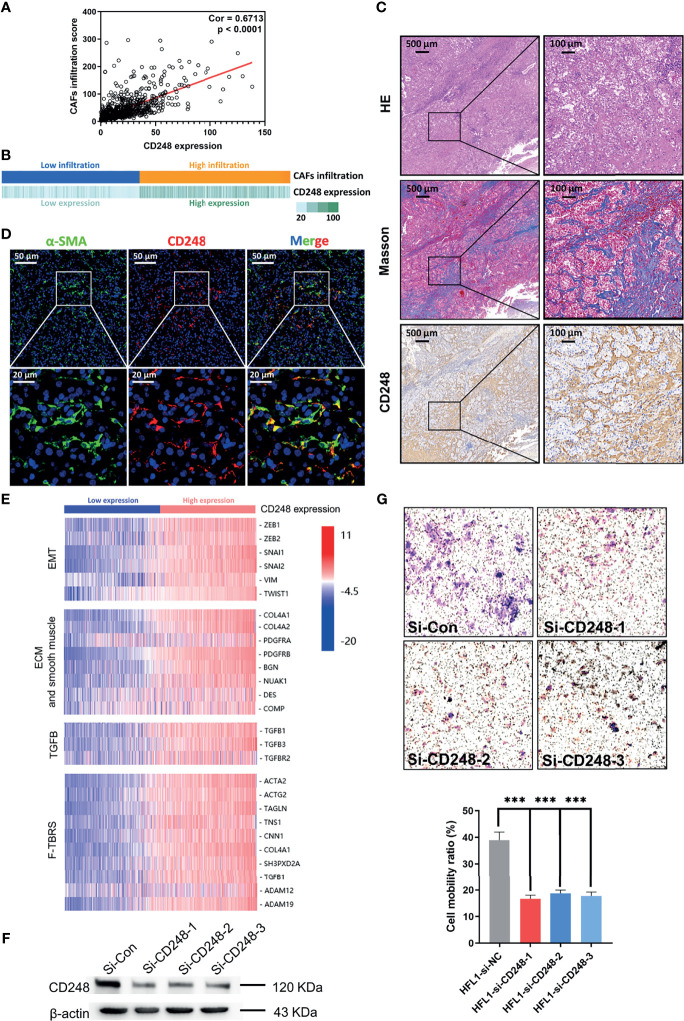
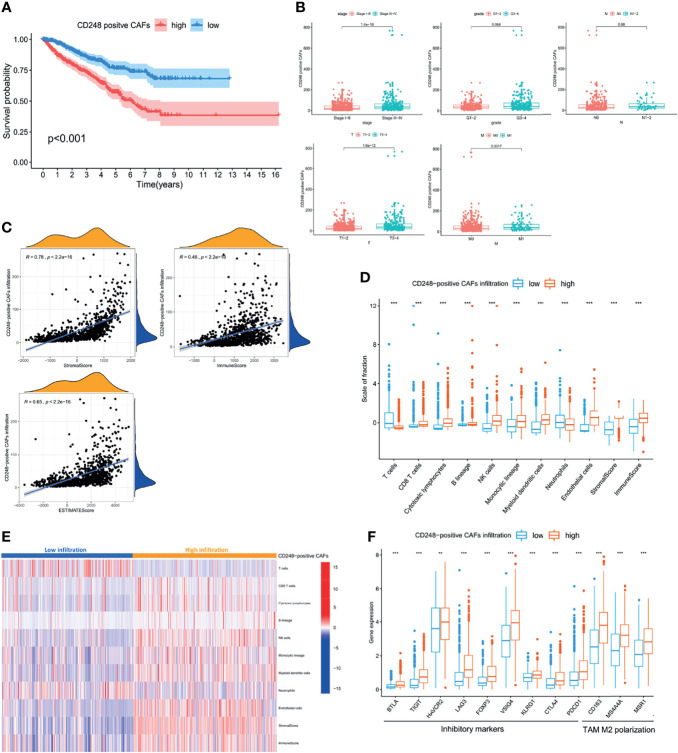
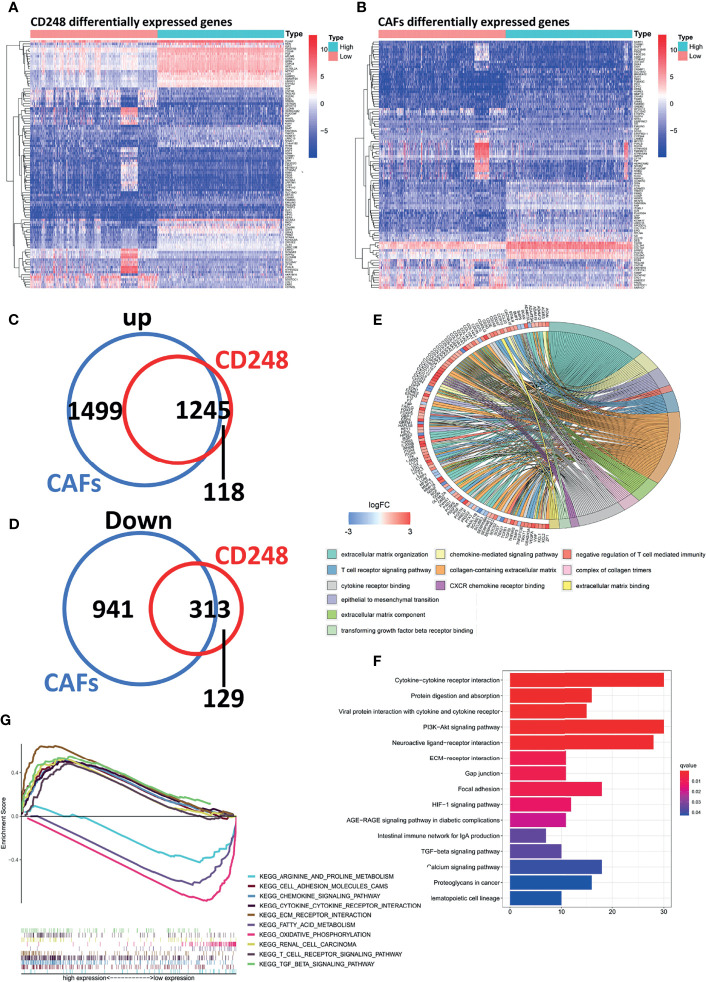
Expression profiling and clinical data of RCC patients were obtained from The Cancer Genome Atlas (TCGA) database. An MCP-counter algorithm and Kaplan-Meier survival analysis were performed to explore the prognostic value of CAFs and CD248, respectively. A Pearson correlation coefficient test and Student's -test were employed to evaluate the relationship between immunosuppressive TME and CD248 or CAFs. Immunohistochemistry and immunofluorescence staining were performed to confirm CD248 expression within CAFs. CD248-specific siRNA was used to investigate the potential function of CD248 in CAF tumor promotion. Differentially expressed genes (DEGs), weighted gene co-expression network analysis (WGCNA), and enrichment analysis were conducted to clarify the function of CD248 CAFs in RCC progression and the associated regulatory mechanism.
CD248 overexpression and CAF infiltration could predict poor RCC prognosis, which may involve the immunosuppressive TME. CD248 may serve as a promising CAFs biomarker and be involved with the tumor-promoting effect of CAFs. Moreover, CD248 CAF infiltration may contribute to RCC progression and an immunosuppressive TME through cell-extracellular matrix (ECM) interactions and metabolism regulation.
CD248 CAFs participate in the regulation of RCC progression and immunosuppressive TME, which may represent a novel prognostic and therapeutic target for RCC.
肿瘤微环境(TME)在肾细胞癌(RCC)进展中起重要作用。癌症相关成纤维细胞(CAFs)被认为是TME的主要组成部分,并参与各种促进肿瘤的分子事件。我们之前已经证实,CD248是CAFs的一个有前景的生物标志物,这可能为基于CAF的肿瘤促进作用提供见解。然而,在RCC患者中,CAF介导的肿瘤进展以及CD248的潜在机制仍 largely未知。
从癌症基因组图谱(TCGA)数据库中获取RCC患者的表达谱和临床数据。分别进行MCP-counter算法和Kaplan-Meier生存分析,以探讨CAFs和CD248的预后价值。采用Pearson相关系数检验和Student's检验来评估免疫抑制性TME与CD248或CAFs之间的关系。进行免疫组织化学和免疫荧光染色以确认CAFs内CD248的表达。使用CD248特异性siRNA来研究CD248在CAF促进肿瘤中的潜在功能。进行差异表达基因(DEGs)、加权基因共表达网络分析(WGCNA)和富集分析,以阐明CD248 CAFs在RCC进展中的功能及相关调控机制。
CD248过表达和CAF浸润可预测RCC预后不良,这可能涉及免疫抑制性TME。CD248可能是一种有前景的CAFs生物标志物,并参与CAFs的肿瘤促进作用。此外,CD248 CAF浸润可能通过细胞-细胞外基质(ECM)相互作用和代谢调节促进RCC进展和免疫抑制性TME。
CD248 CAFs参与RCC进展和免疫抑制性TME的调节,这可能代表RCC的一种新的预后和治疗靶点。