Yingtaweesittikul Hatairat, Ko Karrie, Abdul Rahman Nurdyana, Tan Shireen Yan Ling, Nagarajan Niranjan, Suphavilai Chayaporn
Advanced Research Center for Computational Simulation, Faculty of Science, Chiang Mai University, Chiang Mai, Thailand.
Department of Mathematics, Faculty of Science, Chiang Mai University, Chiang Mai, Thailand.
Front Med (Lausanne). 2021 Dec 14;8:790662. doi: 10.3389/fmed.2021.790662. eCollection 2021.
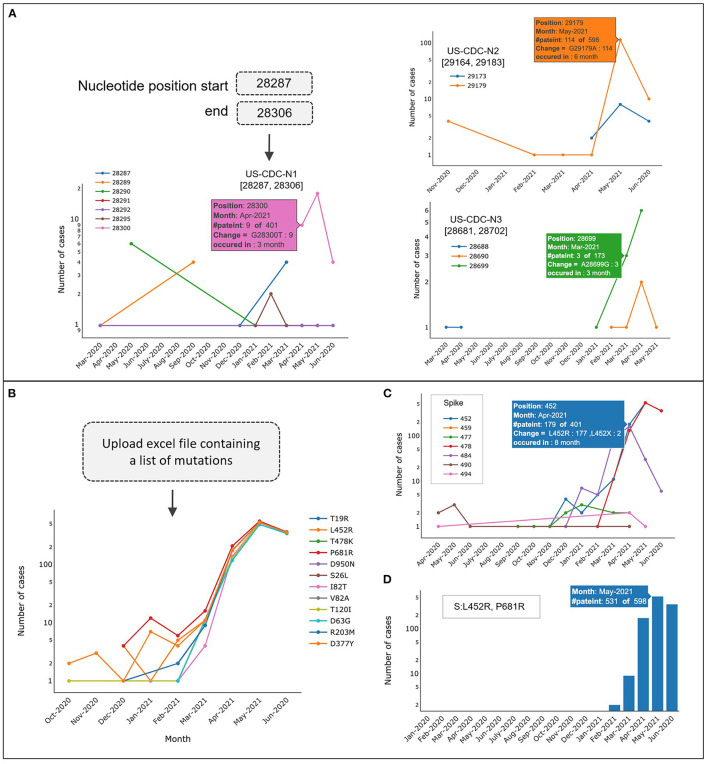
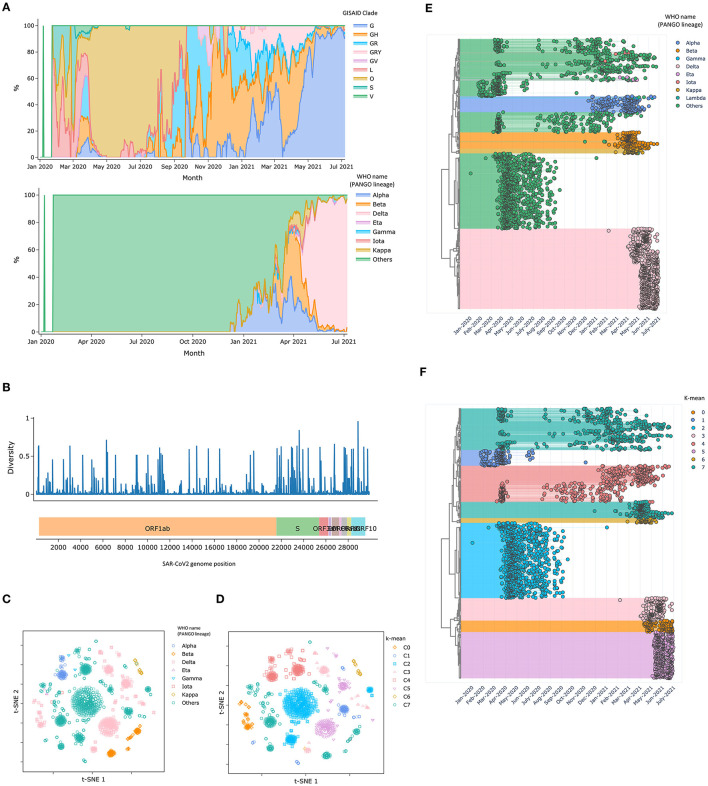
The ongoing COVID-19 pandemic is a global health crisis caused by the spread of SARS-CoV-2. Establishing links between known cases is crucial for the containment of COVID-19. In the healthcare setting, the ability to rapidly identify potential healthcare-associated COVID-19 clusters is critical for healthcare worker and patient safety. Increasing sequencing technology accessibility has allowed routine clinical diagnostic laboratories to sequence SARS-CoV-2 in clinical samples. However, these laboratories often lack specialized informatics skills required for sequence analysis. Therefore, an on-site, intuitive sequence analysis tool that enables clinical laboratory users to analyze multiple genomes and derive clinically relevant information within an actionable timeframe is needed. We propose CalmBelt, an integrated framework for on-site whole genome characterization and outbreak tracking. Nanopore sequencing technology enables on-site sequencing and construction of draft genomes for multiple SARS-CoV-2 samples within 12 h. CalmBelt's interactive interface allows users to analyse multiple SARS-CoV-2 genomes by utilizing whole genome information, collection date, and additional information such as predefined potential clusters from epidemiological investigations. CalmBelt also integrates established SARS-CoV-2 nomenclature assignments, GISAID clades and PANGO lineages, allowing users to visualize relatedness between samples together with the nomenclatures. We demonstrated multiple use cases including investigation of potential hospital transmission, mining transmission patterns in a large outbreak, and monitoring possible diagnostic-escape. This paper presents an on-site rapid framework for SARS-CoV-2 whole genome characterization. CalmBelt interactive web application allows non-technical users, such as routine clinical laboratory users in hospitals to determine SARS-CoV-2 variants of concern, as well as investigate the presence of potential transmission clusters. The framework is designed to be compatible with routine usage in clinical laboratories as it only requires readily available sample data, and generates information that impacts immediate infection control mitigations.
持续的新冠疫情是由严重急性呼吸综合征冠状病毒2(SARS-CoV-2)传播引发的全球健康危机。建立已知病例之间的联系对于控制新冠疫情至关重要。在医疗环境中,快速识别潜在的医疗相关新冠疫情聚集性病例的能力对于医护人员和患者的安全至关重要。测序技术的日益普及使常规临床诊断实验室能够对临床样本中的SARS-CoV-2进行测序。然而,这些实验室往往缺乏序列分析所需的专业信息学技能。因此,需要一种现场直观的序列分析工具,使临床实验室用户能够在可操作的时间范围内分析多个基因组并得出临床相关信息。我们提出了CalmBelt,这是一个用于现场全基因组特征分析和疫情追踪的综合框架。纳米孔测序技术能够在12小时内对多个SARS-CoV-2样本进行现场测序并构建基因组草图。CalmBelt的交互式界面允许用户利用全基因组信息、采集日期以及流行病学调查中预定义的潜在聚集性病例等其他信息来分析多个SARS-CoV-2基因组。CalmBelt还整合了既定的SARS-CoV-2命名法、全球共享流感数据倡议组织(GISAID)分支和Pango谱系,允许用户将样本之间的相关性与命名法一起可视化。我们展示了多个用例,包括调查潜在的医院传播、挖掘大规模疫情中的传播模式以及监测可能的诊断逃逸情况。本文介绍了一个用于SARS-CoV-2全基因组特征分析的现场快速框架。CalmBelt交互式网络应用程序允许非技术用户,如医院的常规临床实验室用户确定关注的SARS-CoV-2变异株,并调查潜在传播聚集性病例的存在情况。该框架设计为与临床实验室的常规使用兼容,因为它只需要现成的样本数据,并生成影响即时感染控制措施的信息。