Department of Biostatistics, Epidemiology and Informatics, University of Pennsylvania, Philadelphia, Pa.
Channing Division of Network Medicine, Brigham and Women's Hospital, Boston, Mass; Division of Allergy and Clinical Immunology, Brigham and Women's Hospital, Boston, Mass.
J Allergy Clin Immunol. 2022 Jun;149(6):1981-1991. doi: 10.1016/j.jaci.2021.11.025. Epub 2021 Dec 28.
Inhaled corticosteroid (ICS) response among patients with asthma is influenced by genetics, but biologically actionable insights based on associations have not been found. Various glucocorticoid response omics data sets are available to interrogate their biological effects.
We sought to identify functionally relevant ICS-response genetic associations by integrating complementary multiomics data sets.
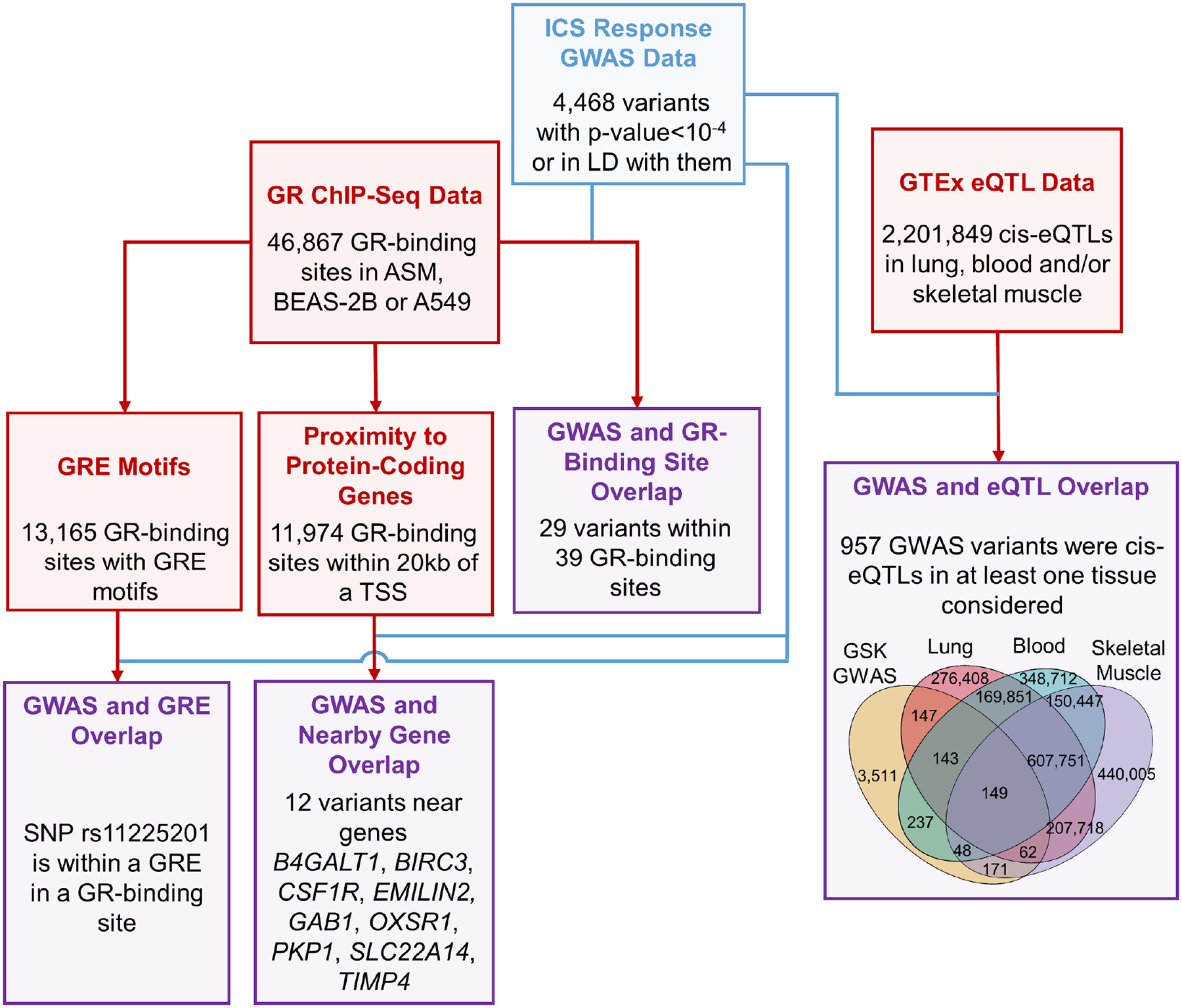
Variants with P values less than 10 from a previous ICS-response genome-wide association study were reranked on the basis of integrative scores determined from (1) glucocorticoid receptor- and (2) RNA polymerase II-binding regions inferred from ChIP-Seq data for 3 airway cell types, (3) glucocorticoid response element motifs, (4) differentially expressed genes in response to glucocorticoid exposure according to 20 transcriptomic data sets, and (5) expression quantitative trait loci from GTEx. Candidate variants were tested for association with ICS response and asthma in 6 independent studies.
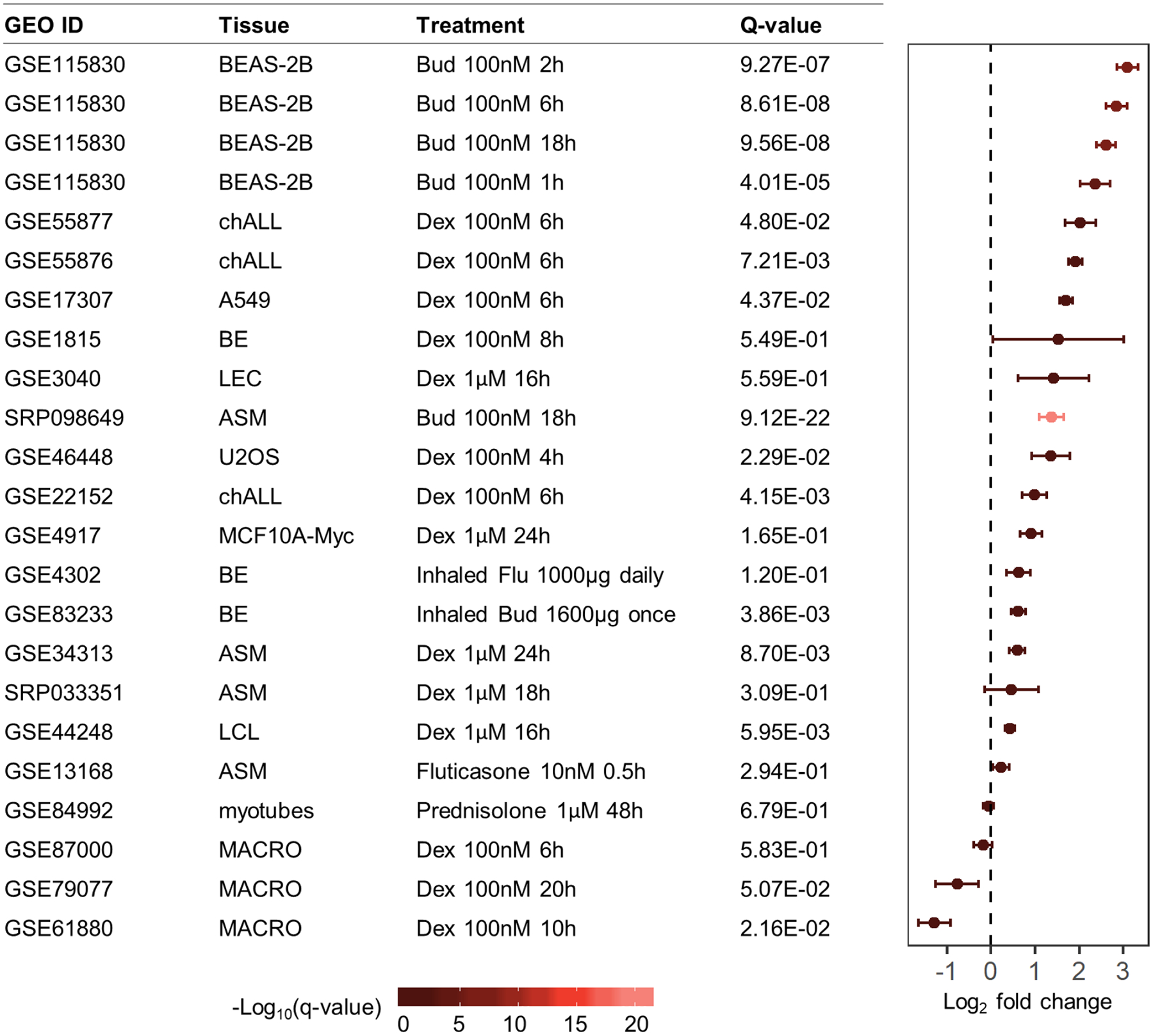
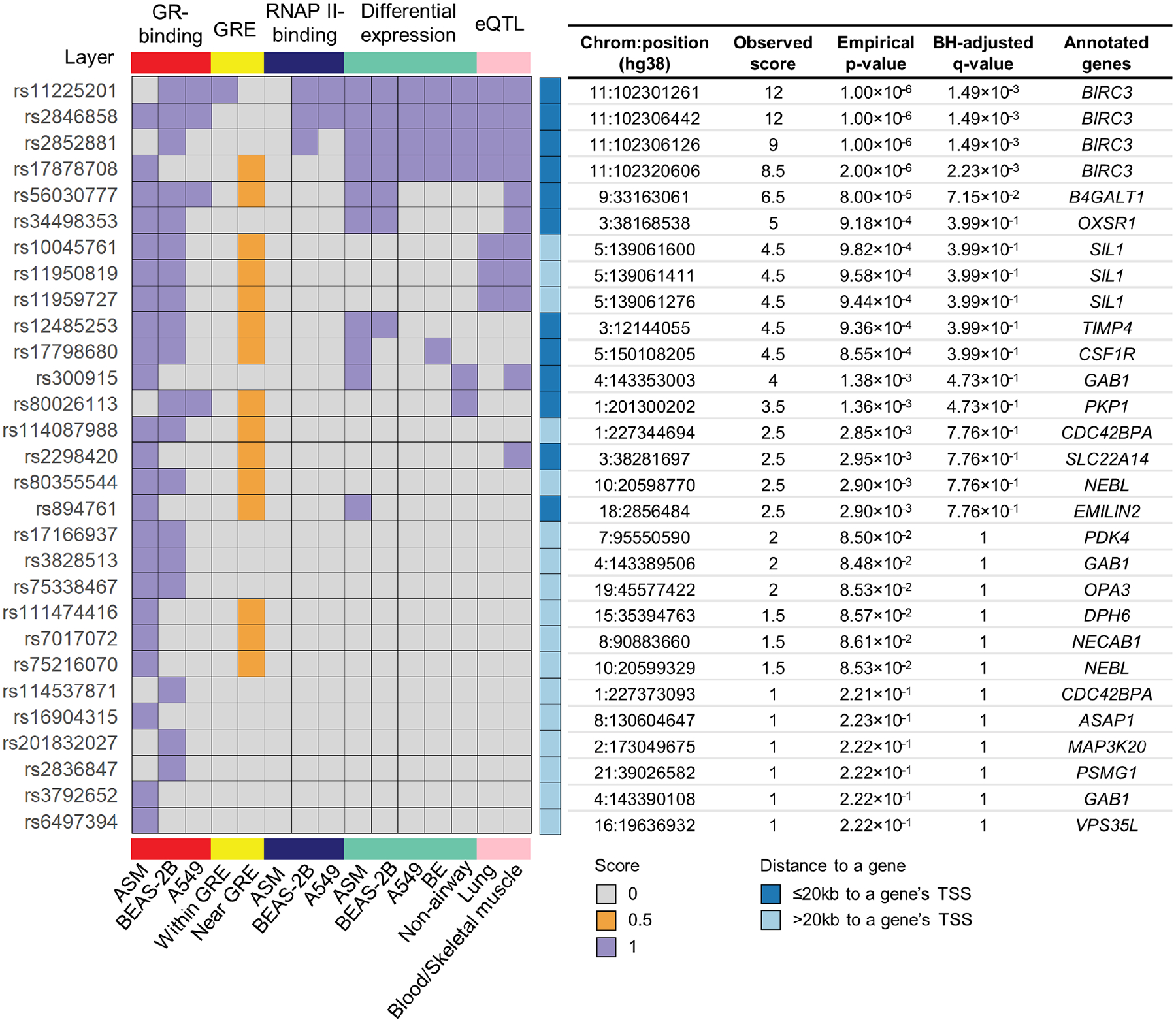
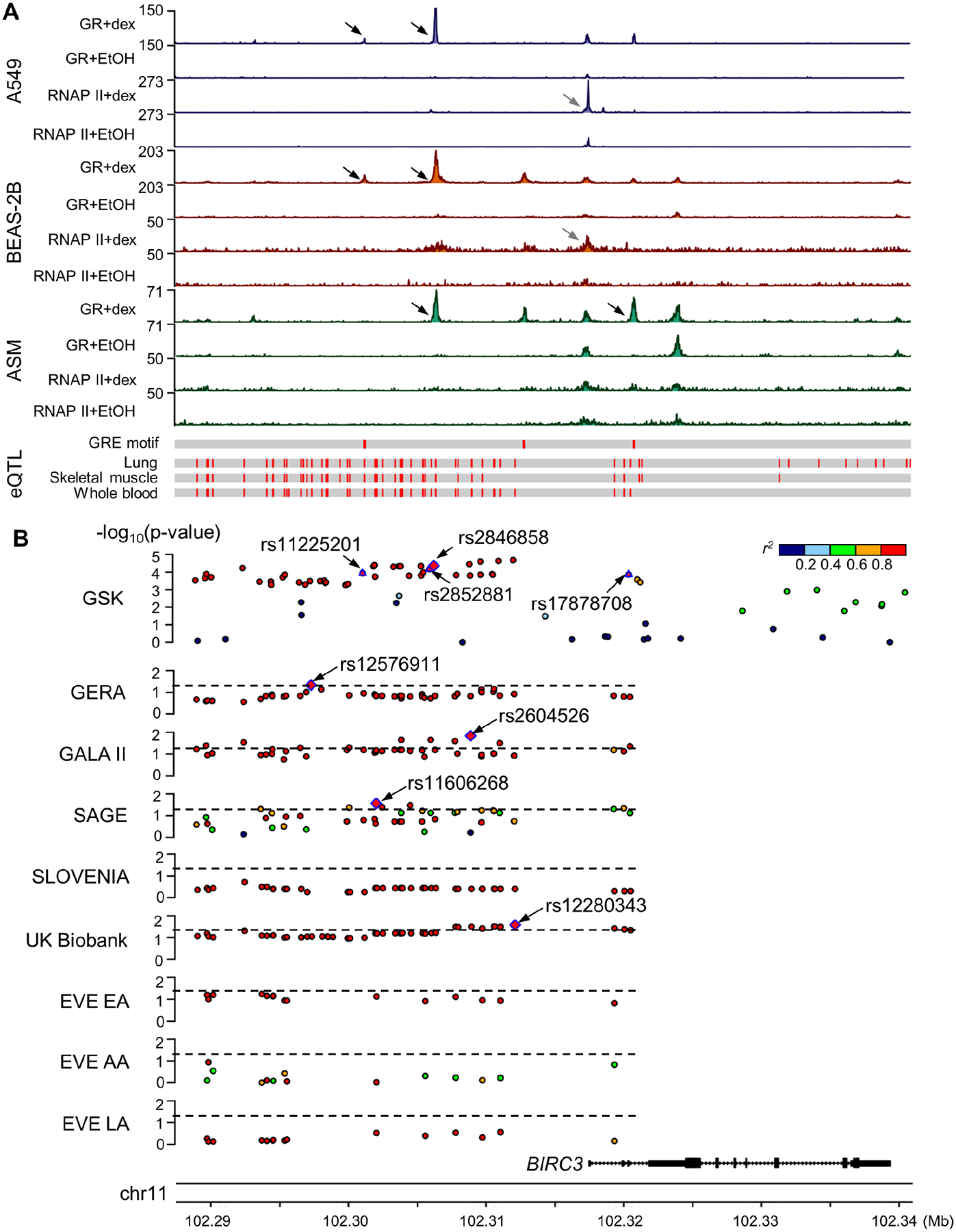
Four variants had significant (q value < 0.05) multiomics integrative scores. These variants were in a locus consisting of 52 variants in high linkage disequilibrium (r ≥ 0.8) near glucocorticoid receptor-binding sites by the gene BIRC3. Variants were also BIRC3 expression quantitative trait loci in lung, and 2 were within/near putative glucocorticoid response element motifs. BIRC3 had increased RNA polymerase II occupancy and gene expression, with glucocorticoid exposure in 2 ChIP-Seq and 13 transcriptomic data sets. Some BIRC3 variants in the 52-variant locus were associated (P < .05) with ICS response in 3 independent studies and others with asthma in 1 study.
BIRC3 should be prioritized for further functional studies of ICS response.
哮喘患者吸入皮质类固醇(ICS)的反应受遗传因素影响,但尚未发现基于关联的可操作生物学见解。现已有各种糖皮质激素反应组学数据集可用于研究其生物学效应。
我们试图通过整合互补的多组学数据集来确定与 ICS 反应相关的功能相关遗传关联。
对先前的 ICS 反应全基因组关联研究中 P 值小于 10 的变体,根据以下综合评分进行重新排序:(1)基于 ChIP-Seq 数据推断出的糖皮质激素受体和(2)RNA 聚合酶 II 结合区域;(3)糖皮质激素反应元件基序;(4)根据 20 个转录组数据集,暴露于糖皮质激素后差异表达的基因;(5)来自 GTEx 的表达数量性状基因座。候选变体在 6 项独立研究中进行了与 ICS 反应和哮喘的关联测试。
有 4 个变体的多组学综合评分具有显著意义(q 值 < 0.05)。这些变体位于基因 BIRC3 附近的一个包含 52 个高度连锁不平衡(r ≥ 0.8)变体的基因座中,该基因座位于糖皮质激素受体结合位点附近。变体也是肺中的 BIRC3 表达数量性状基因座,其中 2 个位于/附近假定的糖皮质激素反应元件基序中。BIRC3 在 2 个 ChIP-Seq 和 13 个转录组数据集中,在糖皮质激素暴露时增加了 RNA 聚合酶 II 的占有率和基因表达。在 52 个变体的基因座中有一些 BIRC3 变体与 3 项独立研究中的 ICS 反应相关(P < 0.05),而其他变体与 1 项研究中的哮喘相关。
BIRC3 应优先进行进一步的 ICS 反应功能研究。