Cypress Grove Research Center, Audubon Canyon Ranch, Marshall, California, United States of America.
PLoS One. 2021 Dec 31;16(12):e0261963. doi: 10.1371/journal.pone.0261963. eCollection 2021.
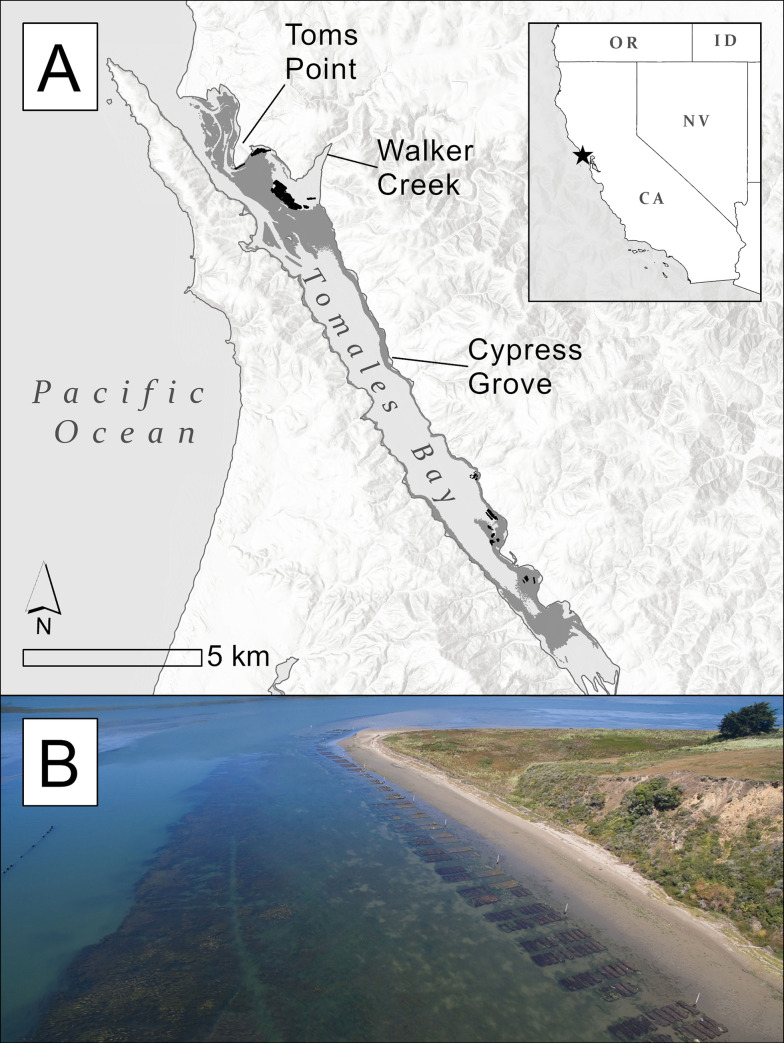
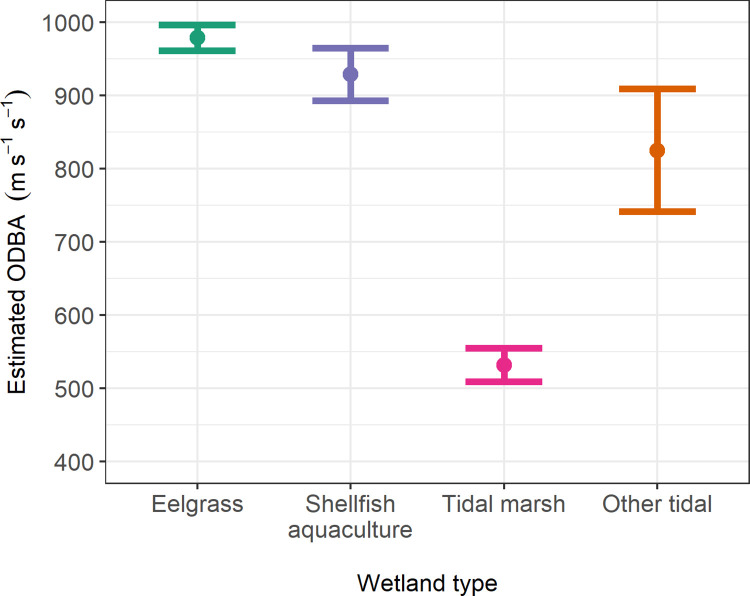
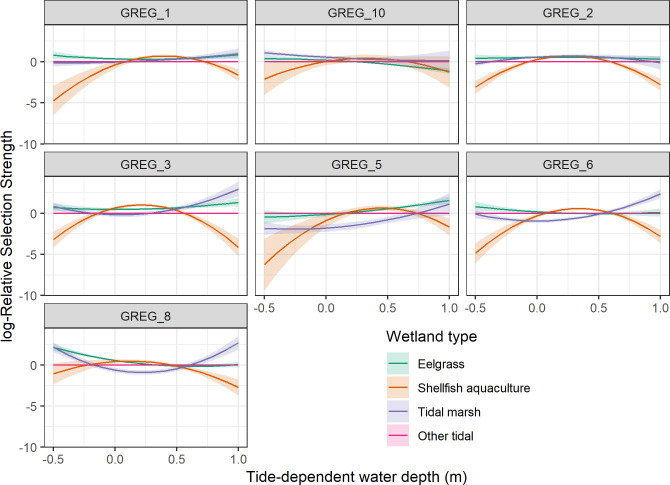
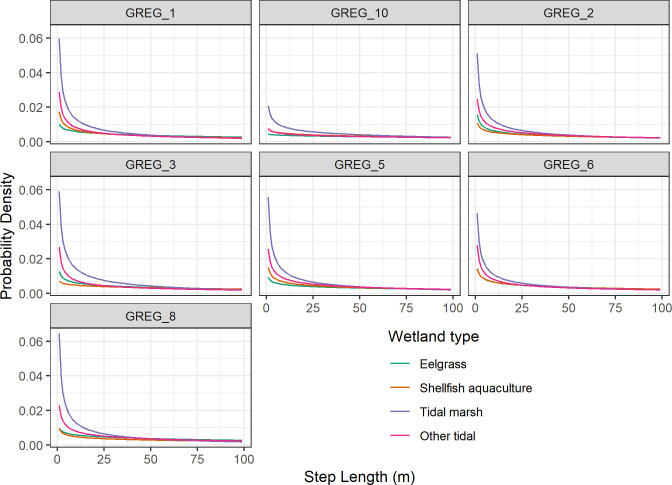
Movement by animals to obtain resources and avoid predation often depends on natural cycles, and human alteration of the landscape may disrupt or enhance the utility of different habitats or resources to animals through the phases of these cycles. We studied habitat selection by GPS/accelerometer-tagged great egrets (Ardea alba) foraging in areas with shellfish aquaculture infrastructure and adjacent natural wetlands, while accounting for tide-based changes in water depth. We used integrated step selection analysis to test the prediction that egrets would express stronger selection for natural wetlands (eelgrass, tidal marsh, and other tidal wetlands) than for shellfish aquaculture areas. We also evaluated differences in foraging behavior among shellfish aquaculture areas and natural wetlands by comparing speed travelled (estimated from distance between GPS locations) and energy expended (Overall Dynamic Body Acceleration) while foraging. We found evidence for stronger overall habitat selection for eelgrass than for shellfish aquaculture areas, with results conditional on water depth: egrets used shellfish aquaculture areas, but only within a much narrower range of water depths than they used eelgrass and other natural wetlands. We found only slight differences in our metrics of foraging behavior among shellfish aquaculture areas and natural wetlands. Our results suggest that although great egrets appear to perceive or experience shellfish aquaculture areas as suitable foraging habitat during some conditions, those areas provide less foraging opportunity throughout tidal cycles than natural wetlands. Thus, expanding the footprint of shellfish aquaculture into additional intertidal areas may reduce foraging opportunities for great egrets across the range of tidal cycles. Over longer time scales, the ways in which natural wetlands and shellfish aquaculture areas adapt to rising sea levels (either through passive processes or active management) may change the ratios of these wetland types and consequently change the overall value of Tomales Bay to foraging great egrets.
动物为获取资源和躲避捕食者而进行的运动通常依赖于自然周期,而人类对景观的改变可能会通过这些周期的各个阶段,破坏或增强不同栖息地或资源对动物的利用。我们研究了在贝类养殖基础设施和相邻自然湿地地区觅食的 GPS/加速度计标记的大白鹭的栖息地选择,同时考虑了水深的潮汐变化。我们使用综合步长选择分析来检验白鹭对自然湿地(鳗草、潮汐沼泽和其他潮汐湿地)的选择比贝类养殖区更强的预测。我们还通过比较觅食时的行进速度(根据 GPS 位置之间的距离估计)和消耗的能量(总体动态身体加速度),评估了贝类养殖区和自然湿地之间觅食行为的差异。我们发现,大白鹭对鳗草的整体栖息地选择比贝类养殖区更强,结果取决于水深:白鹭使用贝类养殖区,但只有在比鳗草和其他自然湿地更窄的水深范围内使用。我们在贝类养殖区和自然湿地之间的觅食行为指标上只发现了轻微的差异。我们的研究结果表明,尽管大白鹭在某些条件下似乎将贝类养殖区视为适宜的觅食栖息地,但与自然湿地相比,这些区域在整个潮汐周期中提供的觅食机会较少。因此,将贝类养殖的足迹扩展到更多的潮间带区域可能会减少大白鹭在整个潮汐周期中的觅食机会。在更长的时间尺度上,自然湿地和贝类养殖区适应海平面上升的方式(通过被动过程或主动管理)可能会改变这些湿地类型的比例,从而改变汤玛斯湾对觅食大白鹭的整体价值。