Dipartimento di Medicina Clinica e Chirurgia, Sezione di Endocrinologia, Unità di Andrologia e Medicina della Riproduzione e della Sessualità Maschile e Femminile (FERTISEXCARES), Università Federico II di Napoli, Via Sergio Pansini 5, 80131, Naples, Italy.
Unesco Chair for Health Education and Sustainable Development, Federico II University, Naples, Italy.
J Endocrinol Invest. 2022 May;45(5):941-961. doi: 10.1007/s40618-021-01704-3. Epub 2022 Jan 1.
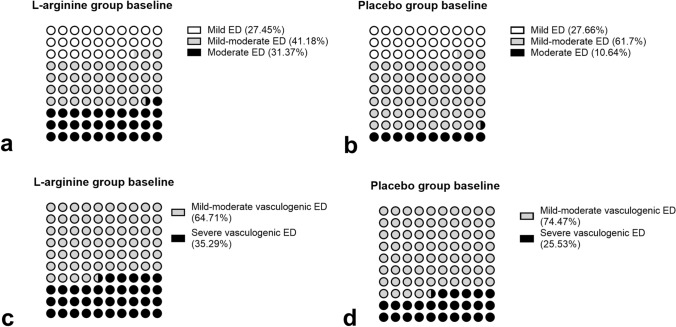
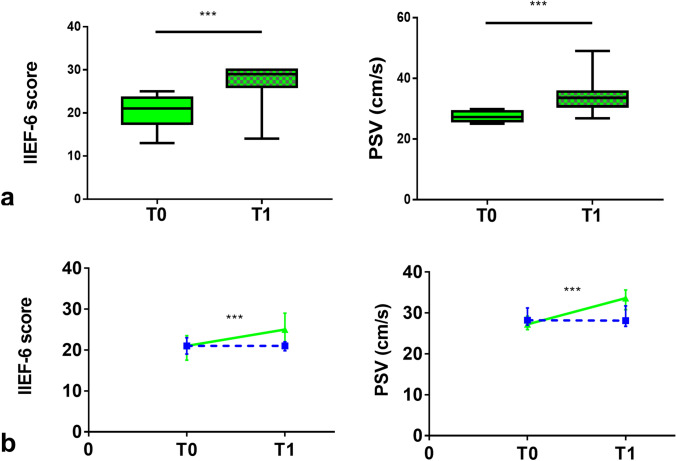
The current randomized, double-blind, placebo-controlled clinical trial addressed the effects on penile erectile function of relatively high daily oral doses (6 g/day) of L-ARG for 3 months (N = 51) compared to placebo (N = 47), in patients with vasculogenic ED, with comparison between mild-moderate and severe vasculogenic ED.
The outcome measures included IIEF-6 score and cavernous arteries peak systolic flow velocity (PSV) at dynamic penile duplex ultrasonography (PDU).
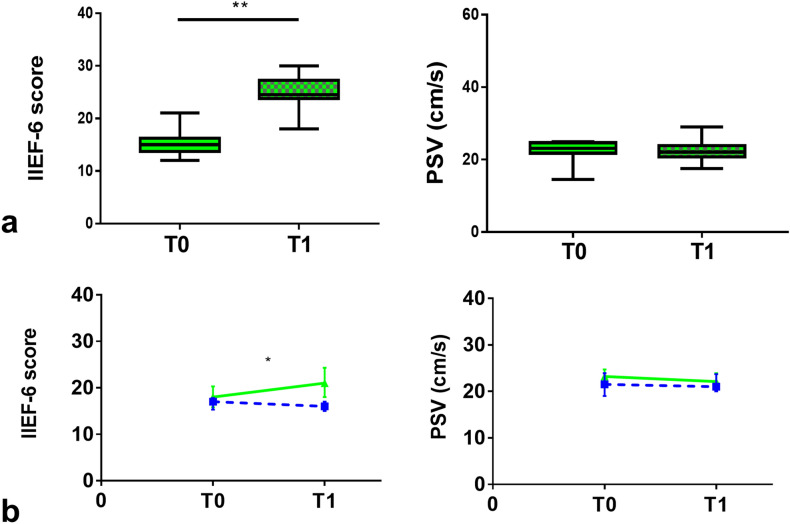
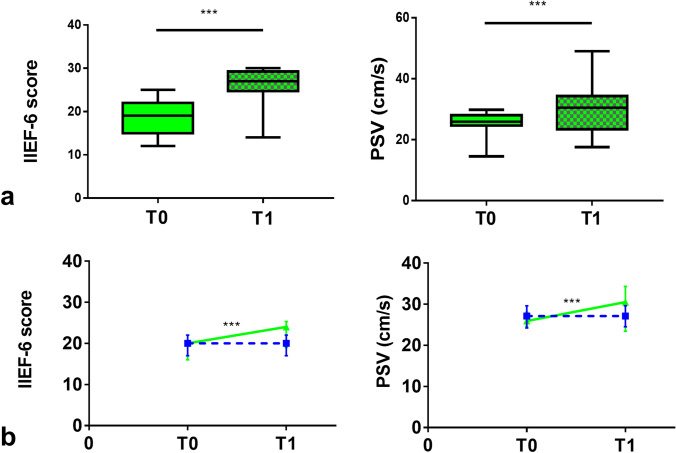
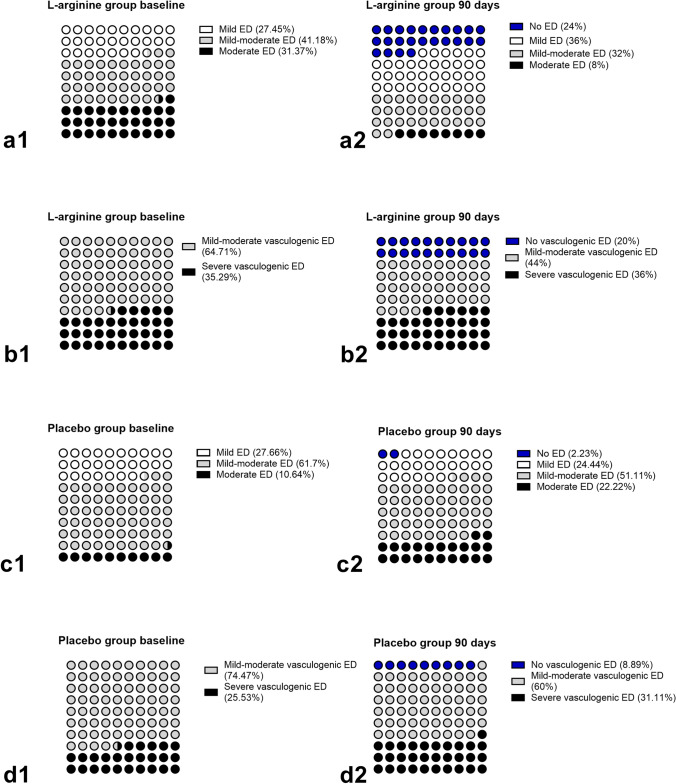
L-ARG supplementation for 3 months significantly increased IIEF-6 score in the overall cohort (p < 0.0001) and in subgroups of patients with mild-moderate (p < 0.0001) and severe (p = 0.007) vasculogenic ED; PSV was significantly increased in the overall cohort (p < 0.0001) and in patients with mild-moderate (p < 0.0001), but not severe vasculogenic ED. At study completion, 74% of patients improved ED degree category, although only 24% of patients, mainly belonging to the baseline category of mild ED, reached IIEF-6 scores compatible with absence of ED; moreover, 20% of patients, exclusively belonging to the baseline category of mild-moderate vasculogenic ED, reached PSV values compatible with absence of ED.
The results of the current study demonstrated that supplementation with relatively high doses of L-ARG as a single compound for 3 months significantly improved penile erectile function, assessed by both IIEF-6 score and PSV at dynamic PDU in patients with mild-moderate, and improved IIEF-6 score, but not PSV, in patients with severe vasculogenic ED, therefore suggesting that L-ARG might be an alternative treatment in mild-moderate vasculogenic ED patients experiencing adverse effects or with contraindications for chronic treatment with PDE5i compounds.
本随机、双盲、安慰剂对照临床试验旨在研究相对高剂量(6 克/天)L-精氨酸(L-ARG)每日口服 3 个月对血管性 ED 患者阴茎勃起功能的影响(N=51),并与安慰剂(N=47)进行比较,同时比较轻度-中度和重度血管性 ED 患者之间的差异。
本研究的主要观察指标包括国际勃起功能指数问卷(IIEF-6)评分和阴茎彩色双功能超声(PDU)下海绵体动脉收缩期峰值血流速度(PSV)。
L-ARG 补充治疗 3 个月后,总体队列的 IIEF-6 评分显著增加(p<0.0001),轻度-中度(p<0.0001)和重度(p=0.007)血管性 ED 患者亚组也显著增加;总体队列的 PSV 也显著增加(p<0.0001),轻度-中度(p<0.0001),但重度血管性 ED 患者亚组无明显变化。研究结束时,74%的患者 ED 严重程度类别得到改善,尽管只有 24%的患者,主要是基线轻度 ED 类别,达到了 IIEF-6 评分,表明不存在 ED;此外,20%的患者,仅属于基线轻度-中度血管性 ED 类别,达到了不存在 ED 的 PSV 值。
本研究结果表明,3 个月内使用相对高剂量的 L-ARG 作为单一化合物补充治疗,可显著改善轻度-中度和改善 IIEF-6 评分(但不改善 PSV),但重度血管性 ED 患者的阴茎勃起功能,通过 IIEF-6 评分和 PDU 下的 PSV 来评估,因此提示 L-ARG 可能是对经历不良事件或对 PDE5i 类药物慢性治疗有禁忌的轻度-中度血管性 ED 患者的一种替代治疗方法。