Clonal Dynamics in Epithelia Laboratory, Queen Mary University of London, London, United Kingdom.
School of Mathematical Sciences, Queen Mary University of London, London, United Kingdom.
Gastroenterology. 2022 Apr;162(4):1197-1209.e13. doi: 10.1053/j.gastro.2021.12.271. Epub 2021 Dec 29.
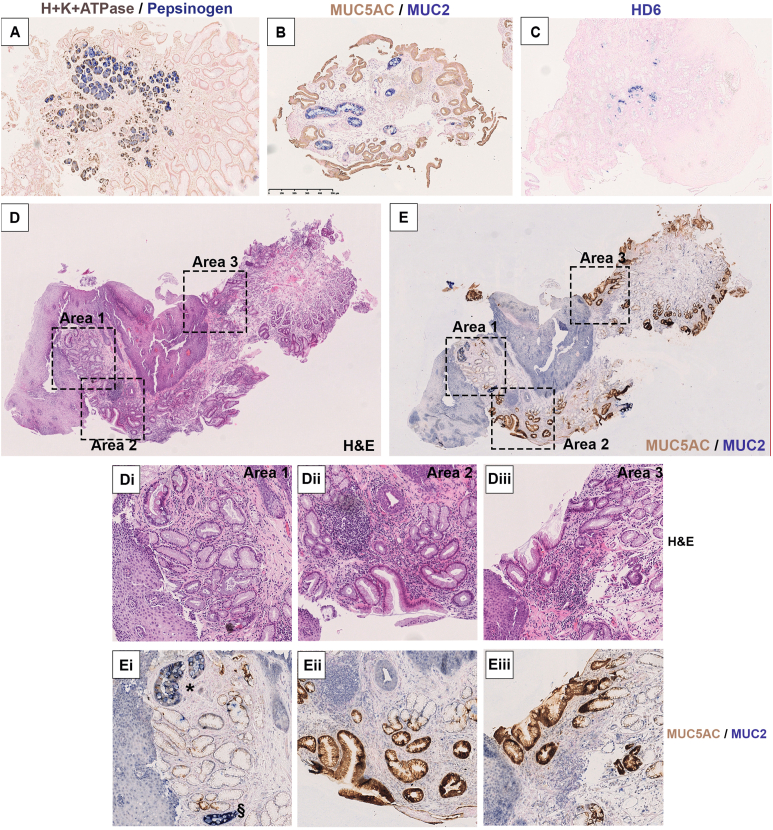
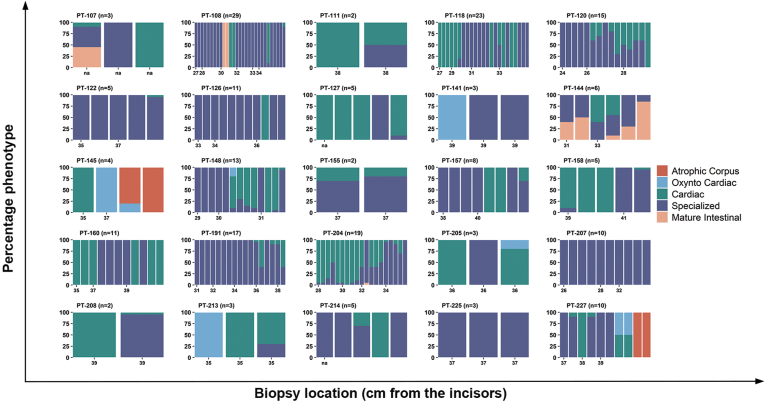
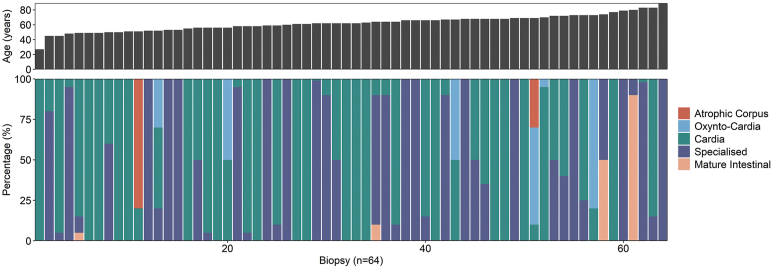
BACKGROUND & AIMS: Barrett's esophagus (BE) is a risk factor for esophageal adenocarcinoma but our understanding of how it evolves is poorly understood. We investigated BE gland phenotype distribution, the clonal nature of phenotypic change, and how phenotypic diversity plays a role in progression.
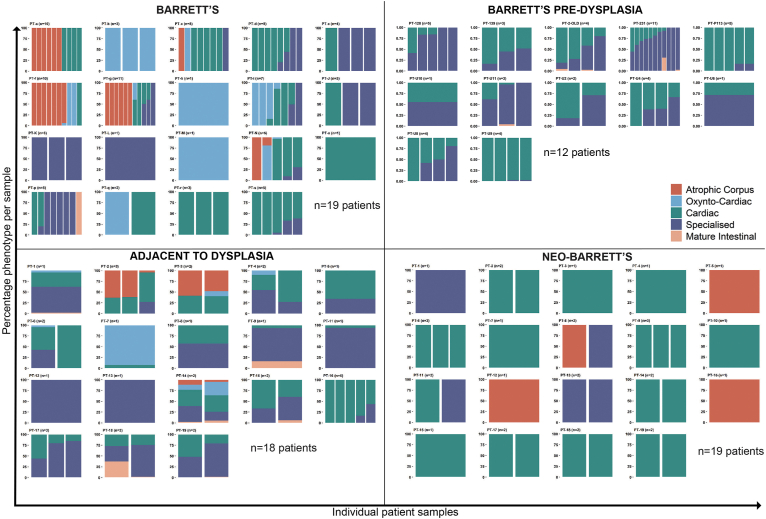
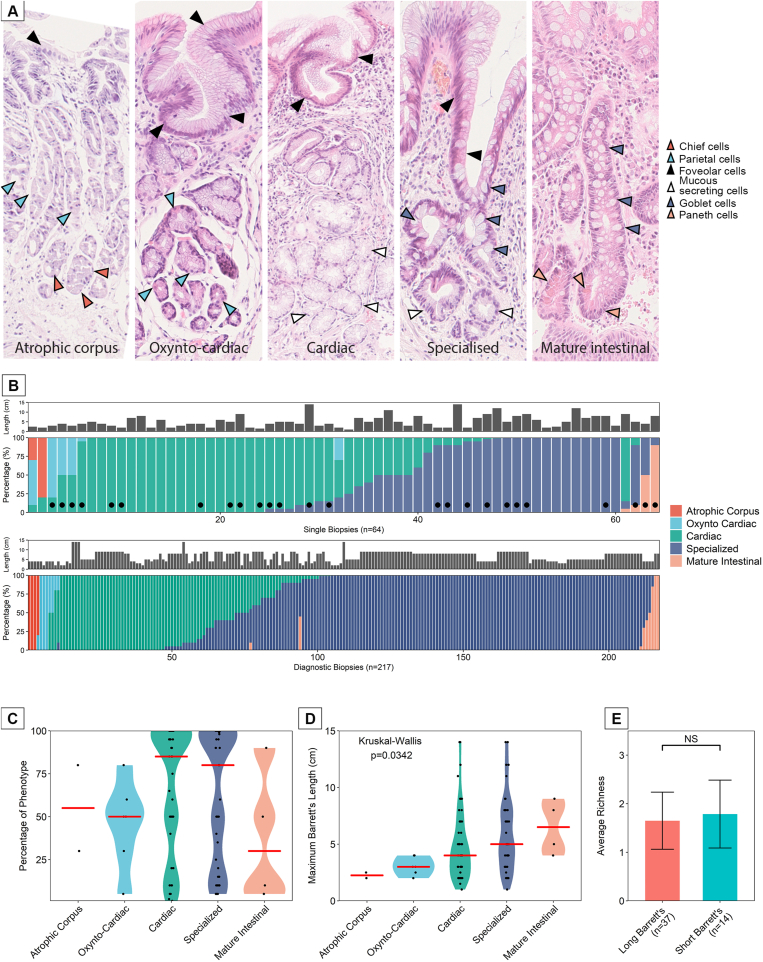
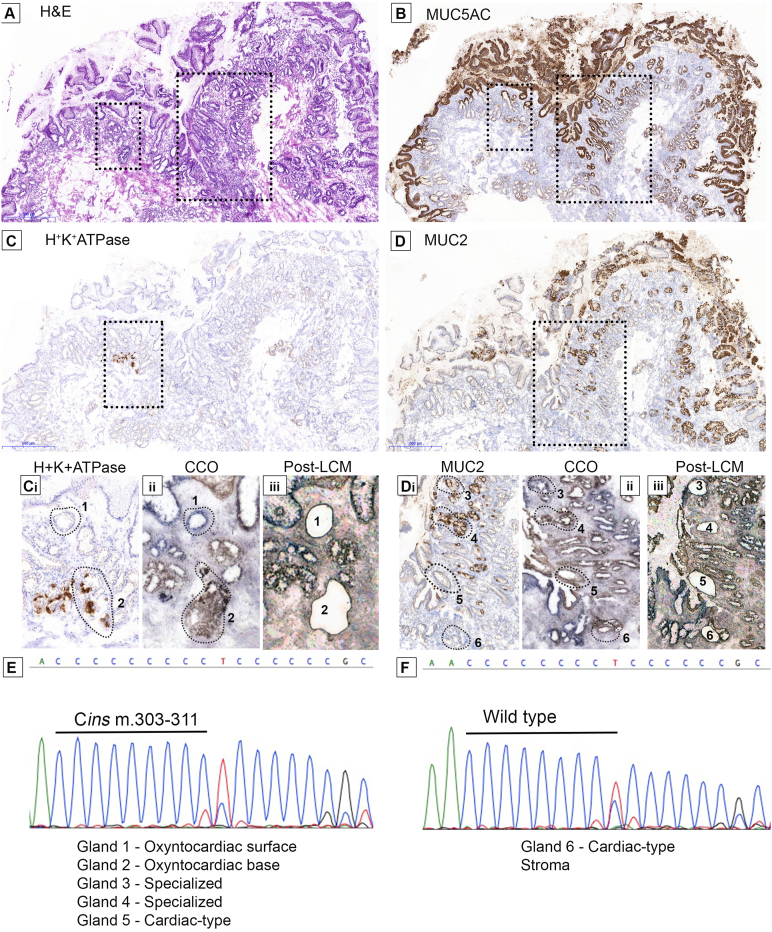
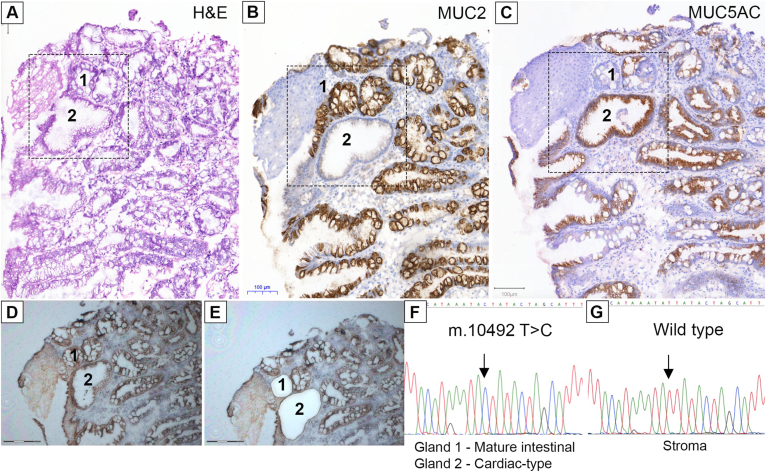
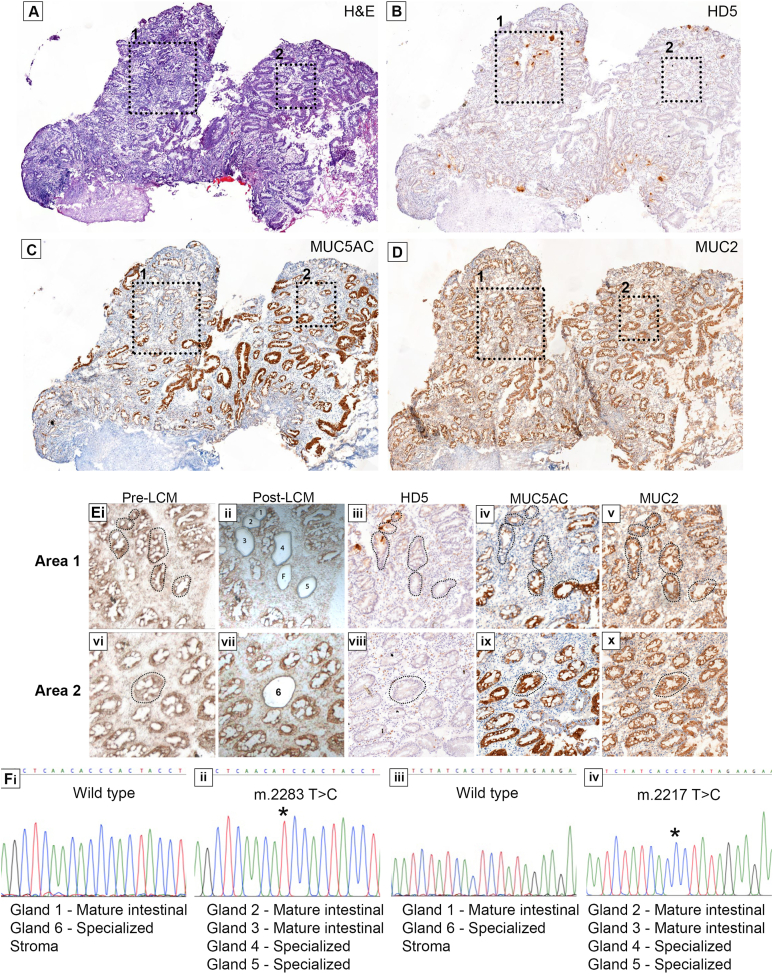
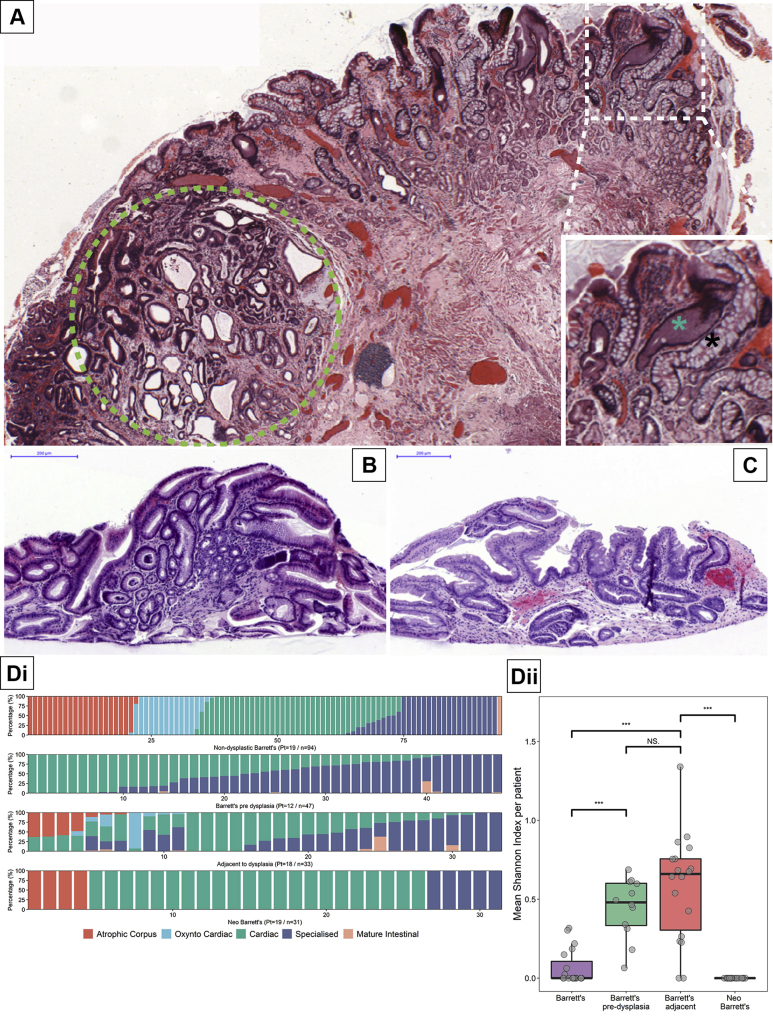
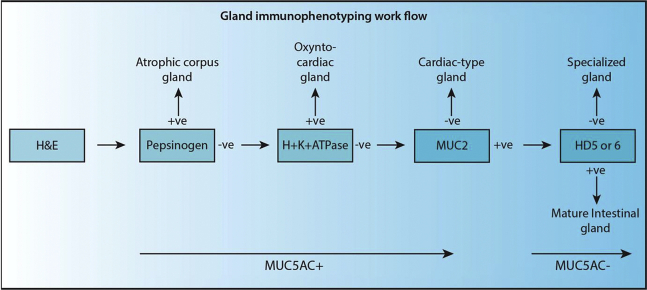
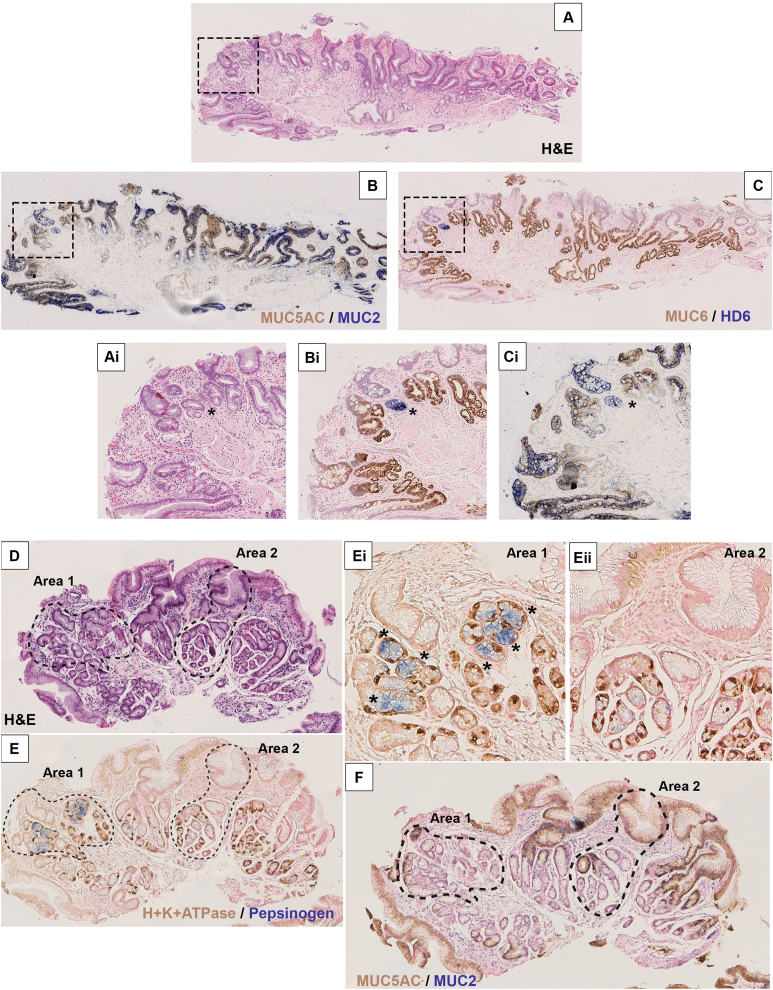
Using immunohistochemistry and histology, we analyzed the distribution and the diversity of gland phenotype between and within biopsy specimens from patients with nondysplastic BE and those who had progressed to dysplasia or had developed postesophagectomy BE. Clonal relationships were determined by the presence of shared mutations between distinct gland types using laser capture microdissection sequencing of the mitochondrial genome.
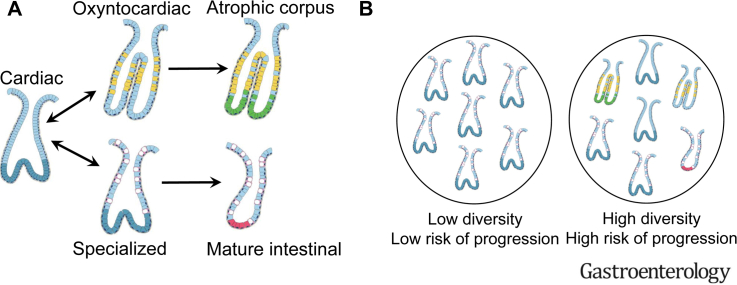
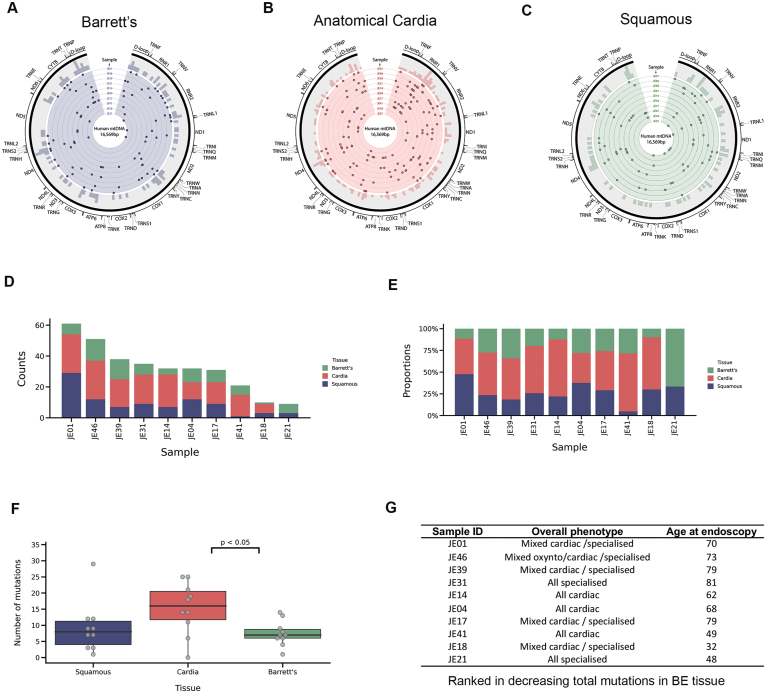
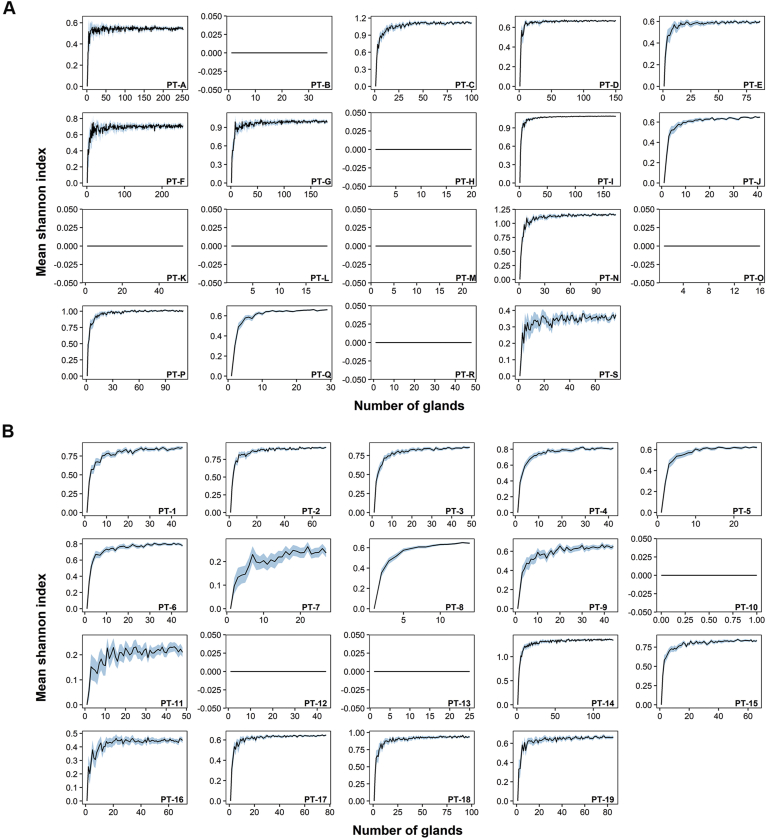
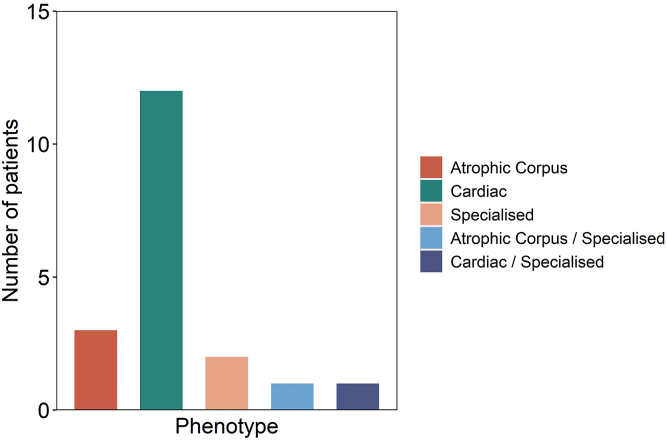
We identified 5 different gland phenotypes in a cohort of 51 nondysplastic patients where biopsy specimens were taken at the same anatomic site (1.0-2.0 cm superior to the gastroesophageal junction. Here, we observed the same number of glands with 1 and 2 phenotypes, but 3 phenotypes were rare. We showed a common ancestor between parietal cell-containing, mature gastric (oxyntocardiac) and goblet cell-containing, intestinal (specialized) gland phenotypes. Similarly, we have shown a clonal relationship between cardiac-type glands and specialized and mature intestinal glands. Using the Shannon diversity index as a marker of gland diversity, we observed significantly increased phenotypic diversity in patients with BE adjacent to dysplasia and predysplasia compared to nondysplastic BE and postesophagectomy BE, suggesting that diversity develops over time.
We showed that the range of BE phenotypes represents an evolutionary process and that changes in gland diversity may play a role in progression. Furthermore, we showed a common ancestry between gastric and intestinal-type glands in BE.
巴雷特食管(BE)是食管腺癌的危险因素,但我们对其演变过程的了解还很有限。我们研究了 BE 腺体表型分布、表型变化的克隆性质以及表型多样性如何在进展中发挥作用。
我们使用免疫组织化学和组织学分析,研究了非异型增生 BE 患者和进展为异型增生或发展为食管切除术后 BE 的患者的活检标本之间和内部腺体表型的分布和多样性。通过对线粒体基因组进行激光捕获显微切割测序,确定不同腺体类型之间存在共享突变的情况下克隆关系。
我们在 51 名非异型增生患者的队列中鉴定出 5 种不同的腺体表型,这些患者在同一解剖部位(胃食管交界处上方 1.0-2.0 厘米处)进行了活检。在这里,我们观察到具有 1 种和 2 种表型的腺体数量相同,但 3 种表型很少见。我们显示出含有壁细胞的成熟胃(贲门)和含有杯状细胞的肠(特化)腺体表型之间存在共同的祖先。同样,我们已经显示出心脏型腺体和特化的和成熟的肠型腺体之间存在克隆关系。使用香农多样性指数作为腺体多样性的标志物,我们观察到与非异型增生 BE 和食管切除术后 BE 相比,BE 伴异型增生和异型前区的患者表型多样性显著增加,这表明多样性随时间发展。
我们表明,BE 表型的范围代表了一个进化过程,并且腺体多样性的变化可能在进展中发挥作用。此外,我们显示 BE 中的胃型和肠型腺体之间存在共同的祖先。